 Anacortes Window
 Ship Harbor's Weather Asks More of a Roof Than Most of Skagit County
Ship Harbor sits right where Fidalgo Island meets Rosario Strait, and that exposure changes what a roof has to deal with. Homes a mile inland get some shelter from tree cover and terrain. Homes near the water get the full package: salt-laden air off the strait, wind that isn't slowed down by much before it hits the roofline, and rain that often comes in sideways instead of straight down. Add in the long stretch of gray, damp months that Western Washington is known for, and you have a roof environment that's genuinely tougher than a standard suburban install a few miles east.
None of that means asphalt shingle roofing is a poor fit for Ship Harbor. It's still the most practical, cost-effective roofing material for the vast majority of homes here. But it does mean the installation details matter more than they would in a milder climate. A roof that would hold up fine in a sheltered inland neighborhood can fail early here if it's built to a generic standard instead of a coastal one.
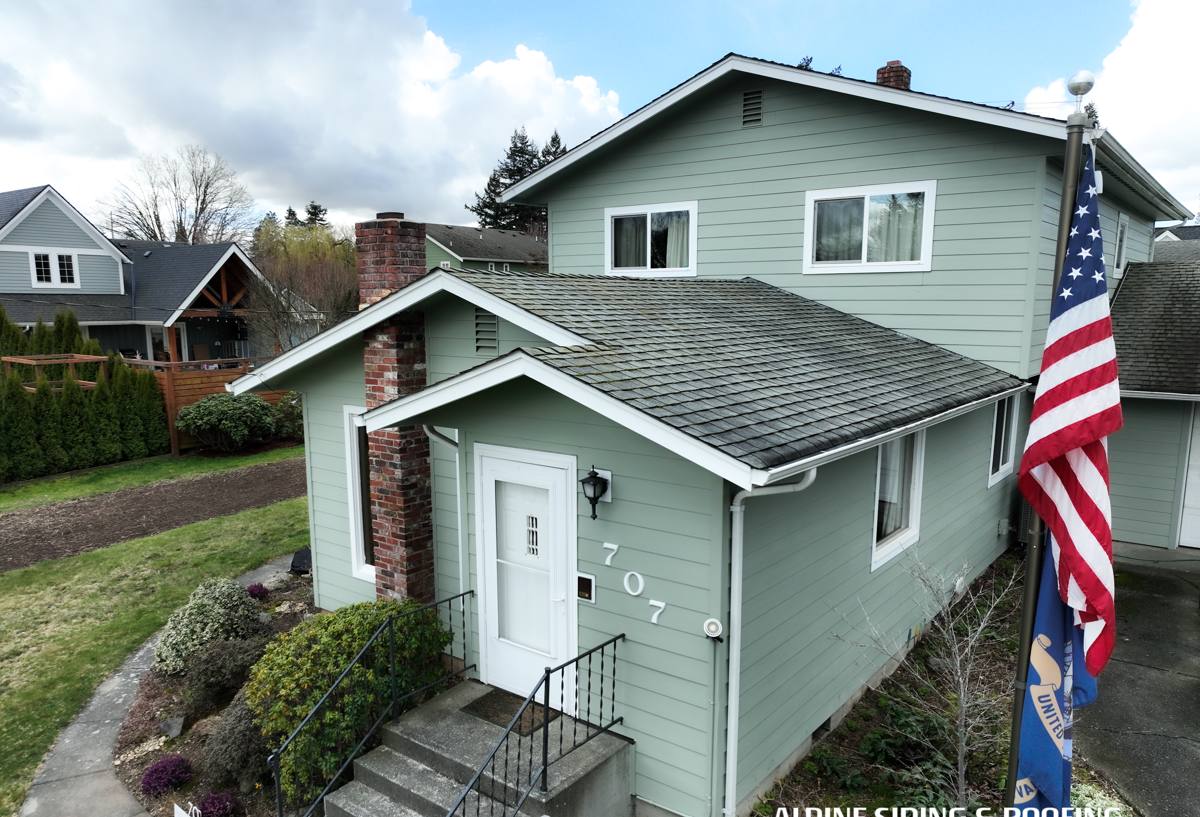
What a Roof Built for This Location Actually Needs
The core difference between a roof that lasts and one that doesn't in a place like Ship Harbor usually isn't the shingle brand printed on the wrapper — it's what's underneath and around the shingles. That's where water actually gets in, and it's where salt air does its quiet damage over time.
Underlayment and Water Barrier
Driving rain off the strait doesn't just fall on a roof, it pushes against it, working its way under shingle tabs and through nail penetrations that would stay dry in calmer weather. A synthetic underlayment with strong wind and water resistance, installed with the correct lap and fastening pattern, is the first real line of defense — the shingles are the second. In vulnerable spots like eaves, valleys, and low-slope transitions, a self-adhering ice-and-water membrane adds a sealed layer that ordinary felt or synthetic underlayment can't match.
Fasteners and Flashing Metal
Salt air corrodes exposed metal faster than inland air does. Standard electro-galvanized nails and thin flashing can start showing rust streaks and weakening well before the shingles above them are due for replacement. Stainless steel or hot-dip galvanized fasteners, and heavier-gauge flashing metal at valleys, chimneys, and wall intersections, cost a little more up front and save a homeowner from an early repair bill later. This is one of the clearest examples of a detail that's easy to skip and expensive to have skipped.
Picking the Right Shingle for Wind and Moss Resistance
Not every asphalt shingle is built for the same conditions. For a Ship Harbor home, two ratings matter more than the color or the brand name: wind resistance and algae resistance. The table below is a general guide to what to look for and why.
| Shingle Feature | Why It Matters Near Ship Harbor |
|---|---|
| High wind rating (110+ mph rated products) | Open exposure to the strait means gusts here can run higher than in sheltered inland yards; a higher wind rating reduces tab lift and blow-off risk |
| Algae-resistant (AR) granules | Copper or zinc-infused granules slow the black streaking common on damp, shaded, north-facing roof slopes |
| Architectural (dimensional) profile | Thicker laminate construction generally holds up better to wind uplift than basic 3-tab shingles |
| Sealant strip quality | A strong factory sealant bond is what actually keeps tabs from lifting in sustained wind — this varies by product line |
| Manufacturer wind warranty terms | Warranty coverage for wind damage is usually tied to installation method (nail count, placement) — proper install protects the warranty, not just the roof |
We don't push homeowners toward the most expensive shingle on the market. We do steer away from basic economy-grade shingles for anything within a few blocks of the water, simply because the gap in wind and algae performance is real and the roof has to earn its keep for fifteen to twenty-five years or more.
The Details That Determine Whether a Roof Leaks
Shingles cover roughly 90% of a roof's visible surface, but they're rarely where leaks start. Leaks start at the transitions — valleys, chimneys, skylights, dormers, and where a roof plane meets a wall. Getting these right is a bigger factor in a roof's success than which shingle sits in the field.
Valleys
Open metal valleys or properly woven closed valleys both work when installed correctly, but they need the right underlayment beneath them and clean, consistent metal work if left open. Valleys collect more water volume than any other part of the roof, so any shortcut here shows up as a leak sooner rather than later.
Chimneys, Skylights, and Wall Intersections
Step flashing woven correctly with each course of shingles, paired with counter-flashing set into the wall or chimney material, is the standard that actually keeps water out. Roofing cement smeared over a gap is not flashing — it's a temporary patch that fails faster in a wet climate like ours than it would somewhere drier.
Roof Penetrations
Plumbing vents, exhaust fans, and any other roof penetration needs a properly sized boot or flashing, sealed and shingled correctly on the upslope side. Rubber boot gaskets are one of the most common failure points on roofs over ten years old, and they're worth checking during any inspection.
Ventilation, Moss, and Why North-Facing Slopes Struggle Here
Moss doesn't grow because a roof is old — it grows because a roof surface stays damp and shaded longer than it can dry out. Anacortes' tree cover, marine humidity, and long overcast stretches all work against a roof's ability to shed moisture quickly, especially on north-facing slopes that see less direct sun. Left alone, moss holds moisture against the shingle surface, works its way under tabs, and can lift granules over time, shortening the shingle's effective life.
Proper attic ventilation plays a bigger role in this than most homeowners expect. A balanced system of intake vents at the eaves and exhaust at or near the ridge keeps attic temperature and humidity closer to outdoor conditions, which reduces condensation on the underside of the roof deck and helps the shingles above dry out evenly after rain. A roof with poor or blocked ventilation stays damp longer, ages faster, and gives moss and algae exactly the conditions they need to take hold.
Our Process for a Ship Harbor Roofing Project
Whether the job is a full replacement or a targeted repair, the approach we use is built around the conditions this neighborhood actually sees, not a one-size-fits-all checklist.
- Inspection and assessment — we look at the shingles, but just as closely at flashing, valleys, vent boots, fascia condition, and signs of moss or trapped moisture, along with a look at attic ventilation where accessible.
- Honest scope of work — we tell you plainly whether the roof needs a repair, a partial re-roof, or a full replacement, and why, including the trade-offs of each option.
- Tear-off and deck check — on a full replacement, we remove old material down to the deck and check for soft spots or rot that need to be addressed before anything new goes down.
- Underlayment and ice-and-water membrane — installed at eaves, valleys, and other vulnerable areas appropriate for this climate, before any shingle goes on.
- Flashing and metal work — new flashing at valleys, chimneys, and wall intersections rather than reusing old, corroded pieces.
- Shingle installation — installed to manufacturer nailing specifications, which protects both wind performance and warranty coverage.
- Ventilation check — confirming intake and exhaust venting is adequate for the attic space, and correcting it where it isn't.
- Cleanup and final walkthrough — magnetic sweep for stray fasteners, debris removal, and a walkthrough so you know exactly what was done.
Keeping a Ship Harbor Roof Healthy Between Installs
A well-built roof still benefits from basic upkeep in this climate, especially given the moss and salt exposure. A short annual routine catches small problems while they're still cheap to fix.
- Have gutters and downspouts cleared at least twice a year so water isn't backing up under the eave line
- Remove moss growth gently — by hand or with a soft-wash approach — rather than aggressive pressure washing, which can strip protective granules
- Trim back overhanging branches to reduce shade and debris buildup on north-facing slopes
- Check exposed metal flashing periodically for early rust or corrosion, particularly on homes closest to the water
- Look at vent boots and roof penetrations every couple of years — rubber gaskets degrade faster in coastal UV and salt exposure than most people expect
- After any significant windstorm, do a visual check from the ground for lifted or missing shingle tabs
Repair or Replace? What We Actually Look At
Not every roofing problem in Ship Harbor means a full replacement, and we won't tell you it does. The decision usually comes down to a few honest factors: how much of the roof's service life is left, whether the damage is isolated or widespread, and whether the underlying deck and structure are still sound. A roof with a handful of wind-lifted shingles and otherwise good granule coverage is often a straightforward repair. A roof with widespread granule loss, multiple past patch repairs, or moisture damage showing on the attic side of the deck is usually past the point where another patch makes sense. We'll walk you through what we're seeing and why, so the decision is yours to make with real information, not pressure.
Why Hiring a Crew That Already Works This Neighborhood Matters
A roofing crew that mainly works inland jobs isn't necessarily going to under-build a Ship Harbor roof on purpose — but they may default to standard materials and details that are adequate for a sheltered lot and undersized for a home facing open water and salt air. Working regularly in this specific setting means knowing which corners genuinely can't be cut here: the fastener grade, the flashing gauge, the underlayment coverage at vulnerable transitions, and the ventilation balance that keeps moss from taking hold. It's the accumulation of those decisions, not any single product choice, that determines whether a roof is still performing well in fifteen or twenty years.
If you're dealing with an aging roof, storm damage, or you're simply planning ahead for a home in this part of Anacortes, we're happy to take a look and talk through what your roof actually needs. Reach out for a free, no-pressure estimate using the form below.