 Anacortes Window
 Ship Harbor's Exposure to Anacortes' Marine Climate
Ship Harbor sits right up against the water on Fidalgo Island, close enough to the ferry landing and the Strait that homes here take a different kind of weather beating than houses inland. It's not just rain totals — Skagit County gets plenty of that everywhere — it's the combination of salt-laden air coming off the water, near-constant humidity, and long stretches of overcast, damp weather that never quite lets exterior surfaces fully dry out. Add in the tree cover common to this part of Anacortes, and you get the third piece of the puzzle: shade that keeps moisture sitting on siding, roofing, and window frames far longer than it would on a home in full sun.
None of this is unusual for the Pacific Northwest coast. But it does mean that exterior materials and installation details that hold up fine in a drier or more sheltered part of the county can fail early in a spot like Ship Harbor. Salt air is corrosive to certain metals and hardware. Driving rain, especially when it comes with wind off the water, finds gaps that would never be a problem in calmer weather. And moss doesn't just grow on roofs — it takes hold in window sills, deck boards, and siding laps if those areas aren't detailed to shed water properly.
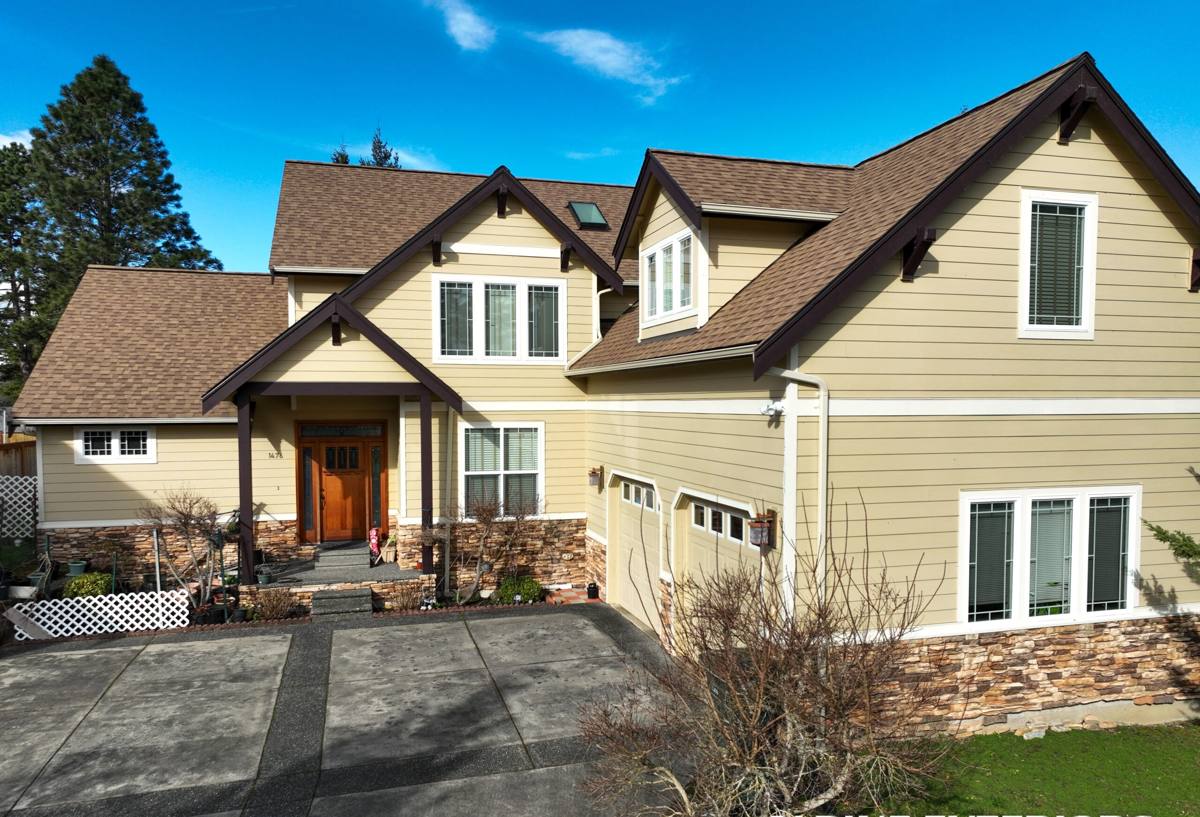
How Salt Air, Rain, and Moss Actually Affect Your Home
Windows
Window frames and hardware near the water deal with two separate problems: moisture intrusion around the frame, and slow corrosion of fasteners, hinges, and locks exposed to salt-carrying air. Wood windows that aren't well-sealed and maintained will show rot at the sill first — that's the spot where water collects and sits. Vinyl and fiberglass frames don't rot, but poor flashing details around any window, in any material, will let water behind the frame and into the wall assembly, where the damage is hidden until it's significant.
Siding
Siding takes the brunt of wind-driven rain, and in a shaded, damp spot like Ship Harbor, it also takes on moss and algae growth if it doesn't get enough sun or airflow to dry between rain events. Lap siding with poor overlap or failed caulking lets water track behind the material. Over years, that shows up as soft spots, paint failure, or in wood-based products, actual decay.
Roofing
Moss is the signature roofing problem in this part of Skagit County, and shaded, water-adjacent lots like Ship Harbor tend to grow it faster than most. Moss holds moisture against roofing material, works its way under shingle edges, and accelerates wear well beyond a roof's expected lifespan if it's left unchecked. Metal roofing components and fasteners also need to be rated for coastal exposure — standard hardware corrodes faster this close to the water.
Decks
Decks are the most exposed structure on most properties — no walls, direct sun and rain exposure, and in Ship Harbor, direct salt air exposure too. Fasteners, ledger connections, and any metal hardware are the first things to show wear. Decking material that isn't rated for ground contact or high-moisture exposure will cup, crack, or rot at the board ends and around post connections well before the rest of the structure shows its age.
Choosing Materials That Actually Hold Up Here
There's no single "best" material for every home — it depends on budget, the home's exposure, and how much upkeep an owner wants to take on. Here's how the common options generally compare for a location like Ship Harbor:
| Material | Coastal/Marine Performance | Maintenance | Typical Trade-off |
|---|---|---|---|
| Vinyl windows | Good — won't rot or corrode | Low | Frame flexes more in temperature swings; quality varies widely by manufacturer |
| Fiberglass windows | Very good — stable, low expansion | Low | Higher upfront cost |
| Wood/wood-clad windows | Fair — needs sealed, maintained exterior | High | Best appearance option for some homes; requires ongoing upkeep near salt air |
| Fiber cement siding | Very good — resists moisture and pests | Moderate (repaint cycle) | Heavier install, needs proper flashing detail |
| Vinyl siding | Good | Low | Can fade or become brittle over long-term UV/salt exposure |
| Composite decking | Very good | Low | Higher material cost than wood |
| Cedar decking | Fair — needs sealing and regular care | High | Natural look many homeowners still prefer |
The material matters, but installation detail matters just as much — a well-installed mid-range product will outperform a premium product that's flashed or fastened incorrectly. That's true everywhere, but the margin for error shrinks considerably this close to the water.
Our Approach to Window Replacement and Repair in Ship Harbor
When we're working on windows for a Ship Harbor home, the conversation usually starts with exposure: which sides of the house face the water or take the most driving rain, whether there's tree cover keeping certain windows shaded and damp, and what condition the existing sills and framing are in. That shapes both the product recommendation and the installation approach.
On the installation side, we pay particular attention to:
- Flashing details around the rough opening, not just caulk at the trim — caulk alone isn't a substitute for proper flashing
- Sill pan installation so any water that does get past the frame drains back out instead of sitting against the wall assembly
- Hardware and fastener selection suited to salt air exposure, particularly on the water-facing sides of a home
- Sealing and weatherstripping sized correctly for the frame, since a gap that's a minor nuisance inland can be a real leak point with driving rain off the water
We're honest about trade-offs. If a homeowner wants a wood-frame look on a fully water-exposed elevation, we'll walk through what that maintenance commitment actually looks like rather than just selling the product. Sometimes a wood-clad or fiberglass window with the same appearance is the more realistic long-term choice for that specific wall.
Siding, Roofing, and Deck Work for a Coastal Anacortes Property
Windows rarely fail in isolation — the same conditions that stress a window frame stress the siding around it, the roof above it, and any deck attached to the house. We look at the exterior as one connected system rather than treating each component separately.
On siding, that means checking how water sheds off the wall above and around window and door openings, making sure laps and seams are detailed to handle wind-driven rain rather than just vertical rain, and choosing materials that can handle a shaded, slow-to-dry site if the lot has heavy tree cover. On roofing, it means addressing moss proactively — cleaning and treating growth before it works under shingles or panels, and making sure flashing, fasteners, and any metal components are appropriate for salt air rather than standard inland-grade hardware. On decks, it means paying close attention to ledger board connections, post bases, and fastener choice, since those are the points most likely to show corrosion first in a spot like Ship Harbor.
Handling all four trades — windows, siding, roofing, and decks — under one crew means we can catch a problem in one area before it becomes a problem in another. A window replacement is also the right time to check the siding and flashing around it. A deck rebuild is the right time to check the ledger connection into the house wall. We flag what we see, even when it's outside the scope of the original request.
Why a Local Skagit County Crew Matters
A contractor who works across Skagit County regularly, rather than one crew that occasionally drives up from somewhere else, has a better feel for how a specific microclimate like Ship Harbor behaves compared to, say, a more sheltered inland Anacortes neighborhood or a drier part of the county. That shows up in small decisions — how much overhang or drip edge detail a given wall needs, which fastener grade is worth the extra cost on a water-facing elevation, when moss treatment needs to happen relative to the wet season.
It also matters for accountability. A local crew is going to be around next year, and the year after, if a callback is needed. We're not asking homeowners to take our word for material or installation choices on faith — we're happy to explain the reasoning behind a recommendation, including when the honest answer is that a lower-cost option will perform just fine for a particular part of the house.
A Seasonal Maintenance Checklist for Ship Harbor Homes
Regular upkeep goes a long way toward protecting an exterior in this climate. A few things worth doing on a routine basis:
- Inspect window sills and frames each fall for early signs of water staining, soft spots, or failed caulk before the wet season sets in
- Clear moss and debris from roof surfaces and gutters at least once a year, more often under heavy tree cover
- Check deck fasteners, ledger connections, and post bases annually for corrosion or movement
- Rinse salt residue off siding and window exteriors periodically, especially on wind-exposed or water-facing walls
- Re-caulk and re-seal exterior trim and window perimeters as soon as gaps or cracking appear, rather than waiting for a full season to pass
- Keep gutters and downspouts clear and directed away from the foundation and any ground-contact decking
None of these are big jobs individually, but skipping them in a marine environment lets small issues turn into structural ones faster than most homeowners expect.
Get a Straightforward Estimate
If you're noticing wear on your windows, siding, roof, or deck — or you just want an honest read on how your home is holding up against Ship Harbor's climate — we're glad to take a look. There's no pressure and no obligation. Fill out the form below and we'll set up a time to walk the property and talk through what we see.