 Anacortes Window
 Windows Built for Edison's Coastal Conditions
Edison sits in that stretch of Skagit County where farmland meets saltwater air, and the houses out here take a different kind of beating than homes twenty miles inland. Between the marine humidity rolling off the bay flats, wind-driven rain that doesn't just fall but travels sideways, and the deep shade a lot of older lots have from mature trees and low winter sun angles, windows in this area age faster than the sales brochure ever tells you. We've replaced and repaired enough of them around Skagit County to know which failure patterns are climate-driven and which are just bad installs from years back.
This page is about what actually happens to windows in and around Edison, what we do differently because of it, and how to think about a replacement or repair project without getting oversold.
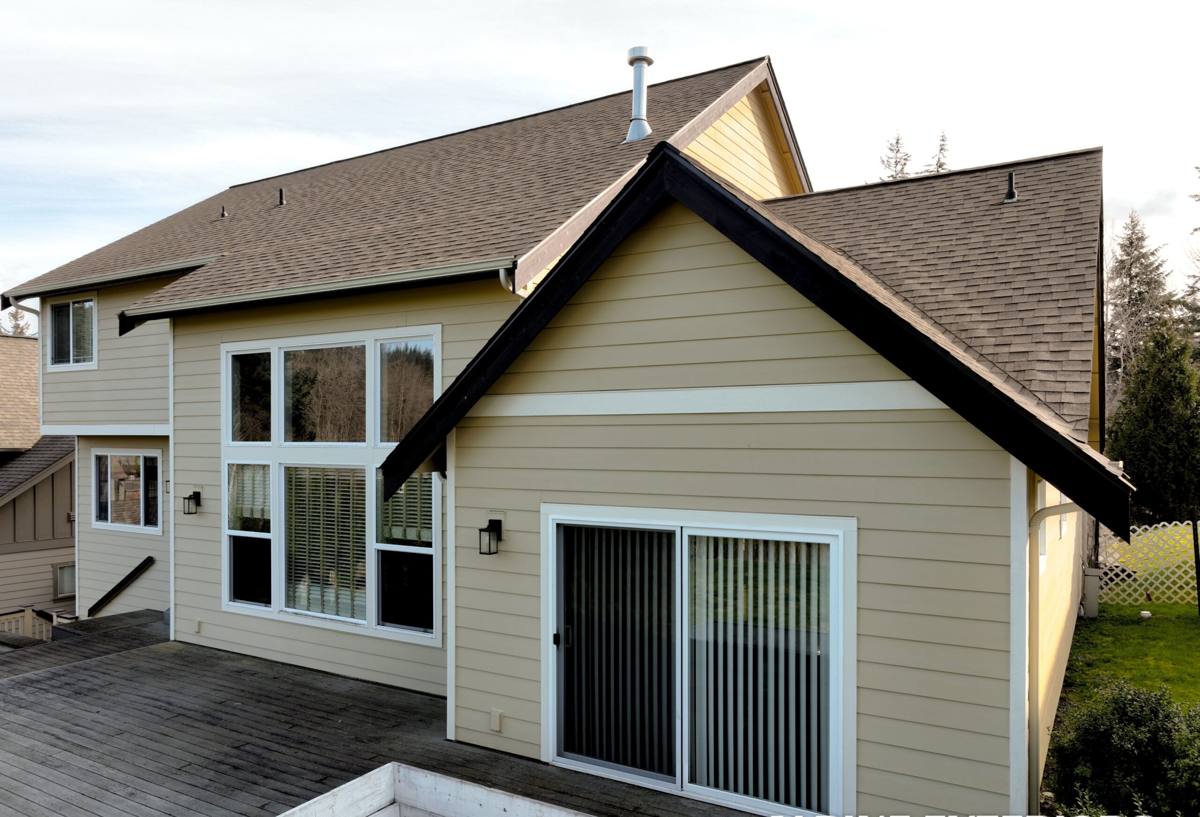
What the Climate Actually Does to a Window
Salt Air and Metal Fatigue
Being close to Samish Bay and the broader Salish Sea means the air here carries salt even a few miles inland, especially on windy days. Salt-laden air accelerates corrosion on window hardware, aluminum components, and screen frames. Locks stick, cranks seize up, and finishes chalk out faster than manufacturer literature assumes, because that literature is usually written for a dry-climate baseline. It's not dramatic, it's just steady wear that shows up as "this window doesn't latch right anymore" a few years earlier than it should.
Driving Rain and Wind-Driven Water
Rain in this part of Skagit County rarely falls straight down. Storms coming off the water push moisture sideways and force it into any gap in flashing, trim, or sealant. A window that would be fine in a calmer climate can develop slow leaks here simply because water is being pushed at it horizontally instead of resting on the sill. This is one of the biggest reasons window failures around Edison trace back to installation and flashing detail, not the window unit itself.
Moss, Shade, and Trapped Moisture
Long moss seasons aren't just a roof problem. On shaded elevations, moss and algae take hold on sills, trim, and the lower corners of window frames, holding moisture against wood and painted surfaces for months at a time. That trapped moisture is what turns a small paint failure into soft wood, and soft wood around a window frame is what eventually lets water past the seal entirely.
Temperature Swings and Condensation
Skagit County doesn't get brutal cold, but the daily swing between cool nights and warmer, humid days is enough to cause condensation on older single-pane or poorly sealed double-pane windows. Persistent condensation between panes usually means a failed seal, and condensation on the interior glass is usually a ventilation or insulation issue rather than a window defect — worth knowing before you assume a window needs full replacement.
Signs an Edison-Area Window Needs Attention
- Visible fogging or a cloudy haze between the panes of a double-pane window (seal failure, not cleanable)
- Wood trim or sills that feel soft, spongy, or show dark staining, especially on shaded sides of the house
- Locks, cranks, or sliders that have gotten stiff or need force to operate
- Moss or green growth building up in the frame corners or on the sill
- Noticeable draft or a cold spot near the window even when it's fully closed and latched
- Paint that's bubbling, peeling, or chalking heavily around the frame
- Higher energy bills without any other obvious explanation
How We Approach Window Replacement Here
Material Choices That Make Sense for This Climate
We generally steer clients toward vinyl or fiberglass window frames for this area over bare aluminum or unclad wood exteriors. Vinyl and fiberglass don't corrode from salt exposure, and they hold up to sustained moisture without the ongoing maintenance that painted wood exteriors demand. That's not a knock on wood-frame windows as a product — they have their place, particularly on historic homes where appearance matters more than low maintenance — it's an honest trade-off call based on what holds up with the least fuss in a marine climate. If a homeowner wants a wood interior look with a low-maintenance exterior, wood-clad options can bridge that, and we'll walk through what that means for upkeep.
Glass Packages Worth Considering
Double-pane with low-E coating and argon gas fill is the practical baseline for this region — it manages both the temperature swings and the condensation issue better than older single-pane or basic double-pane glass. Triple-pane is available and does offer better performance, but for most Edison-area homes the added cost doesn't pencil out against double-pane low-E unless the home also has unusual noise exposure or a north-facing wall with heavy wind load.
Flashing and Installation Detail — Where Failures Actually Start
Given how much wind-driven rain this area sees, the flashing and moisture barrier detail around a window matters as much as the window unit itself. We install with proper head flashing, sill pans, and integration into the existing weather-resistive barrier so water is directed out and down rather than trapped behind the trim. A premium window installed without correct flashing will leak eventually; a mid-grade window installed correctly will often outperform it. This is the detail that separates a window job that lasts fifteen-plus years from one that needs attention again in five.
Repair vs. Full Replacement
Not every problem window needs to come out. We'll always tell you honestly which category yours falls into.
| Situation | Usually Repair | Usually Replace |
|---|---|---|
| Stiff or corroded hardware | Yes — clean, lubricate, or replace hardware | Rarely necessary alone |
| Foggy glass between panes | Sometimes — glass unit swap if frame is sound | If frame is also failing or window is older/discontinued |
| Soft or rotted sill/trim | Small sections can be repaired | If rot has reached the frame or jamb |
| Persistent draft or leak | Often re-flashing or re-sealing fixes it | If frame has warped or water has been entering for years |
| Single-pane, no low-E | Not applicable | Usually worth replacing for comfort and efficiency |
Beyond Windows: Thinking About the Whole Exterior
Windows don't fail in isolation — they're one piece of a home's exterior envelope, and in a climate like this one, the siding, roofing, and window details around a home all interact. A window can be installed perfectly and still leak if the siding above it is trapping moisture, or if roof runoff is dumping water directly onto a wall section. Because we handle siding, roofing, windows, and decks, we look at a window request in the context of the surrounding exterior rather than treating it as an isolated swap. If there's a related issue — a gutter dumping water where it shouldn't, siding that's holding moisture against a wall, a deck ledger board that needs attention — we'll flag it plainly, without turning a window estimate into a sales pitch for unrelated work.
Why a Local Crew Matters for Edison Homes
We're based out of Anacortes and work throughout Skagit County, which means we're familiar with the specific conditions this stretch of coastline produces — not generic marine-climate advice, but what we've actually seen fail and hold up on homes near the water and out on the flats. That matters for a few practical reasons:
- We know the wind and rain exposure patterns for different elevations and can plan flashing detail accordingly
- We're not driving in from out of the area, so scheduling and follow-up service are realistic, not theoretical
- We're familiar with Skagit County permitting requirements for exterior work, so there are no surprises mid-project
- We see the long-term results of our own installs on other homes nearby, which keeps us honest about what actually holds up
What a Window Project Typically Involves
- On-site assessment of the existing windows, framing condition, and any related moisture or siding issues
- Honest recommendation on repair vs. replacement, with the reasoning explained, not just a quote
- Material and glass package selection based on the home's exposure and your priorities (efficiency, appearance, budget)
- Proper removal, with attention to what the flashing and sheathing look like once the old window is out
- Installation with correct flashing, sill pan, and air/moisture sealing before trim goes back on
- Final walk-through so you understand how the new windows operate and what maintenance, if any, they need
Cost Factors Worth Understanding
Every home is different, and we won't quote a number without seeing the actual windows and openings, but a few things reliably move the price on a window project:
| Factor | How It Affects Cost |
|---|---|
| Frame material (vinyl vs. fiberglass vs. wood-clad) | Vinyl is typically the most budget-friendly; fiberglass and wood-clad run higher |
| Glass package (double-pane low-E vs. triple-pane) | Triple-pane and specialty coatings add cost per unit |
| Number of openings and access | Second-story or hard-to-access windows take more labor time |
| Condition of existing framing | Rot or water damage found during removal adds repair scope |
| New construction vs. retrofit | Retrofit into existing siding is usually simpler than a full frame-out replacement |
Maintenance That Actually Extends Window Life Here
A little seasonal attention goes a long way in this climate. We tell every client the same short list, regardless of who installed their windows:
- Rinse salt residue off frames and hardware a couple times a year, especially on wind-exposed sides of the house
- Keep moss and debris cleared from sills and frame corners before it can hold moisture against the material
- Lubricate locks and cranks annually to prevent salt-driven corrosion from seizing them up
- Check caulking and sealant around trim each fall, before the wet season sets in
- Watch for soft spots in wood trim or sills and address them early, before rot spreads into the frame
Let's Take a Look
If you're dealing with a drafty window, a fogged-up pane, or you're just planning ahead before the wet season hits, we're happy to come take a look and give you a straight answer about what's going on. There's no pressure and no obligation — just a local assessment from a crew that knows what this climate does to a house. Fill out the form below for a free estimate.