 Anacortes Window
 Exterior Work Built for Flounder Bay's Waterfront Conditions
Flounder Bay sits on the water side of Fidalgo Island, and homes here take a different kind of beating than a house a few miles inland in Anacortes. Salt-laden air moves off the water and settles on everything it touches. Wind-driven rain comes in sideways more often than straight down. And the long stretch of gray, wet months between fall and spring gives moss and algae plenty of time to get a foothold on roofs, siding, and anything shaded or slow to dry. None of that is unusual for Skagit County's coastline, but it does mean the materials and installation details that work fine in a drier climate often fall short here.
We've built our approach around that reality. Whether we're replacing a few windows, re-siding a whole house, putting on a new roof, or building a deck that has to face the weather off the bay, the goal is the same: work that's still doing its job in twenty years, not just looking good at the walkthrough.
What Salt Air and Marine Exposure Actually Do to a Home
Corrosion Where You Don't Expect It
Salt air accelerates corrosion on anything metal — fasteners, flashing, hinges, window hardware, gutter brackets. A screw or flashing piece that would last decades inland can start showing rust in a few years on a waterfront lot. This is why fastener and flashing selection matters more here than it does for a job a few miles east.
Moisture That Doesn't Get a Chance to Dry Out
Driving rain finds gaps that vertical rain never would. Combine that with our marine layer and the shoulder-season damp that hangs around Anacortes for weeks at a time, and you get wood, trim, and siding that stay wet longer than they should. Wood that stays damp is wood that rots, and paint or stain that's constantly wet fails faster than the can label suggests.
Moss, Algae, and Shade
North-facing roof slopes, shaded siding under mature trees, and anything that doesn't get direct afternoon sun is prime territory for moss and algae growth through our wet season. Left alone, moss holds moisture against roofing material and works its way under shingle edges, which shortens roof life well before the shingles themselves would otherwise wear out.
Windows for a Salt-Air, High-Wind-Driven-Rain Environment
Window failure near the water usually isn't dramatic — it's slow. Seals degrade, weep holes clog with salt residue and debris, and hardware starts to bind or corrode before glass or frames show any visible problem. By the time a homeowner notices fogging between panes or a window that won't latch cleanly, the seal or hardware has usually been failing for a while.
What We Look At for Flounder Bay Homes
- Frame material and finish rated for coastal/marine exposure, not just standard residential grade
- Corrosion-resistant hardware and fasteners at every point of contact
- Weep holes and drainage paths sized and placed so wind-driven rain actually clears instead of pooling
- Flashing details at the rough opening that account for wind-driven rain hitting the wall at an angle, not just falling straight down
- Glazing and seal quality suited to constant humidity swings, not just insulation value
Vinyl, fiberglass, and clad-wood windows can all work well on the water, but the finish and hardware package matters more than the base material. We'll walk through what's appropriate for a specific exposure — a window facing open water and prevailing wind needs a different spec than one on a sheltered side of the same house.
Siding That Holds Up Against Salt and Standing Moisture
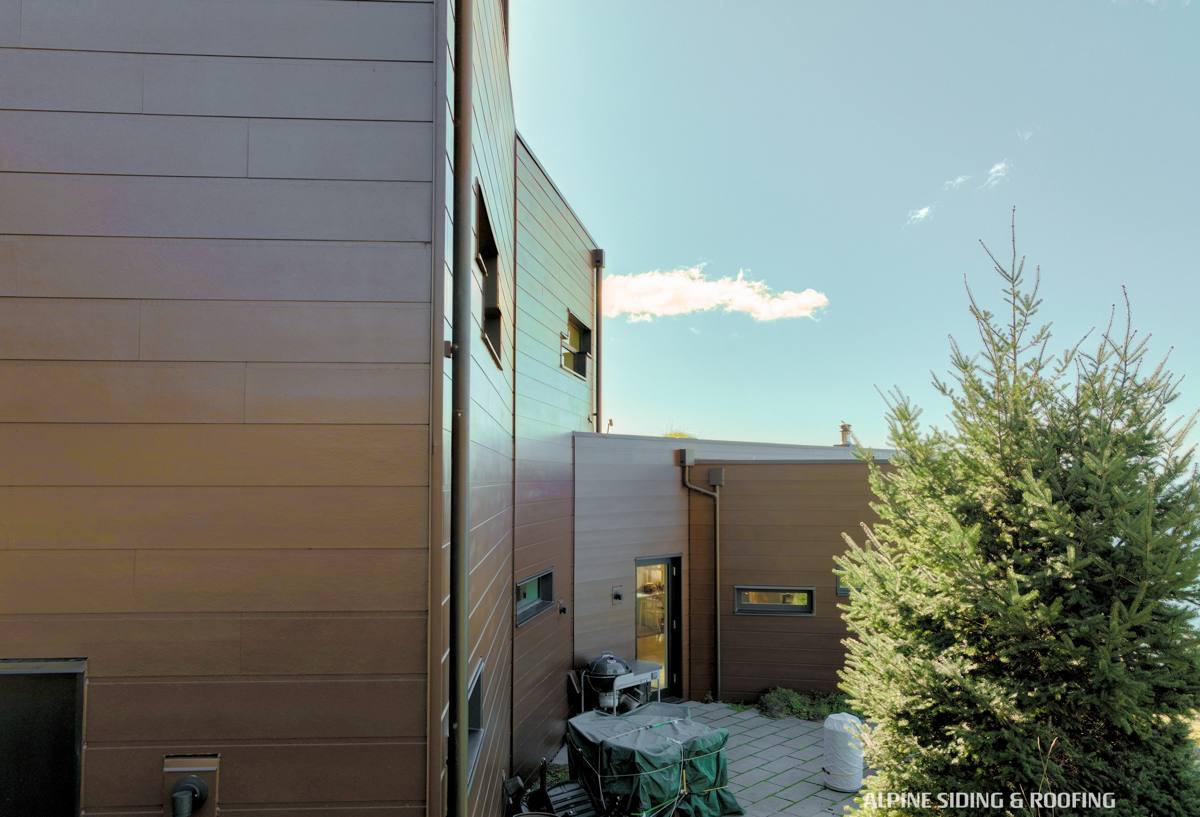
Siding on a waterfront lot has to manage two things at once: constant low-level salt exposure and moisture that lingers longer than it would a few miles inland. We pay close attention to a few things that matter more here than elsewhere in Skagit County:
- Rainscreen or drainage gap behind the siding so any moisture that gets past the surface has somewhere to go instead of sitting against the sheathing
- Corrosion-resistant fasteners throughout, not just on the visible face
- Proper caulking and sealant at trim, corners, and penetrations — these are the spots wind-driven rain exploits first
- Material choice matched to sun and shade exposure on that specific elevation, since a shaded, moisture-holding wall performs differently than one that dries out daily
We install fiber cement, engineered wood, and vinyl siding, and we'll be straightforward about the maintenance trade-offs of each in a salt-air setting — some hold paint and color longer near the water, some need more frequent caulk and seal checks, and that's worth knowing before you choose rather than after.
Roofing Through a Long, Wet, Moss-Prone Season
Anacortes doesn't get the punishing snow loads some parts of the state deal with, but the trade-off is a long wet season that gives moss and algae months to establish themselves, especially on shaded or north-facing slopes. A roof near the water also deals with salt residue and wind-driven rain testing every flashing detail around vents, chimneys, and valleys.
What Shortens Roof Life Here
- Moss growth that holds moisture against shingles and lifts edges over time
- Undersized or poorly lapped flashing that lets wind-driven rain behind the roofing material
- Clogged gutters and downspouts that back water up under the roof edge
- Ventilation gaps that trap humid air in the attic, which speeds up deterioration from the underside
Good roofing here comes down to flashing detail, ventilation, and material selection that accounts for shade and moss exposure on each slope — not a one-size approach across the whole roof.
Decks Facing Wind and Salt Spray
A deck on or near the water gets more direct exposure than almost anything else on the house — full sun when it's out, full wind when it isn't, and salt spray that settles on railings, boards, and hardware. Fasteners and structural connectors are usually the first thing to show wear, often before the decking material itself does.
We build and repair decks with corrosion-resistant hardware throughout, proper gapping between boards for drainage and airflow, and material choices — wood, composite, or a mix — matched to how much direct exposure that specific deck actually gets. A deck tucked under an overhang and one fully open to the bay have different needs even on the same house.
Why a Local Skagit County Crew Makes a Difference
Salt air, driving rain, and moss aren't abstract concepts to us — they're what we plan around on every job in Anacortes and the surrounding Skagit County coastline, including Flounder Bay. A crew that mostly works inland or in a different climate can install a technically correct window or roof that still underperforms here, because the details that matter on the water — drainage paths, fastener choice, flashing laps, ventilation — aren't the same priority list everywhere.
Being local also means we're not guessing at how a specific street, slope, or tree line affects sun and wind exposure on your particular house. That local knowledge shapes real decisions: which siding material to recommend on a shaded north wall, how aggressive the moss prevention needs to be on a given roof slope, or where wind-driven rain is most likely to find a weak spot.
Cost Factors for Flounder Bay Exterior Projects
Every house and project is different, but these are the main factors that move price up or down for waterfront and near-waterfront homes in this area:
| Factor | Why It Matters Here |
|---|---|
| Exposure level (open water vs. sheltered) | Determines how much salt/wind protection the materials and hardware need |
| Material and hardware grade | Marine-rated fasteners and finishes cost more but avoid early corrosion failures |
| Access and site conditions | Waterfront lots can have steeper grades, tighter access, or seasonal work windows |
| Existing moisture damage | Rot or trapped moisture found during tear-off adds repair scope before new material goes on |
| Scope (single project vs. combined) | Bundling siding, roofing, windows, or a deck in one visit typically reduces per-project overhead |
Because so much depends on exposure and existing condition, we give real numbers after walking the property — not a phone estimate based on square footage alone.
Simple Maintenance That Extends the Life of Waterfront Exteriors
A little regular attention goes a long way in this climate. Homeowners in Flounder Bay can cut down on premature wear with a few habits:
- Rinse salt residue off windows, siding, and railings a few times a year, especially after storms
- Clean gutters and downspouts before the fall rains ramp up
- Check and treat moss on shaded roof slopes before it spreads, rather than after it's established
- Inspect caulking around windows, trim, and deck connections annually and re-seal where it's cracked or pulled away
- Watch for corrosion on visible fasteners and hardware — it's often the first sign that a component needs attention
None of this replaces quality materials and correct installation, but it does buy years of extra life out of an exterior that's already built right.
Get a Free, No-Pressure Estimate
If you're dealing with a window that's fogging or sticking, siding that's showing its age, moss creeping across a roof slope, or a deck that's taken a beating from the wind and salt off Flounder Bay, we're happy to take a look. Fill out the form below and we'll set up a time to walk the property, talk through what we're seeing, and give you a straightforward estimate — no pressure, no obligation.