 Anacortes Window
 Windows Built for March Point's Marine Climate
March Point sits close to the water on Fidalgo Bay, which means homes there get a fuller dose of everything Skagit County's marine climate has to offer: salt-laden air, wind-driven rain off the bay, and long stretches of gray, damp weather that keep wood, trim, and window seals wet for days at a time. Windows are one of the first places that weather shows up. A house can have solid siding and a sound roof and still lose heat, fog up, or start rotting at the sill because the windows were never matched to this kind of exposure.
We install and repair windows throughout Anacortes and the surrounding Skagit County area, and March Point's waterfront position means we treat every job here with an eye toward moisture management first, aesthetics second. That order matters more here than it does a few miles inland.
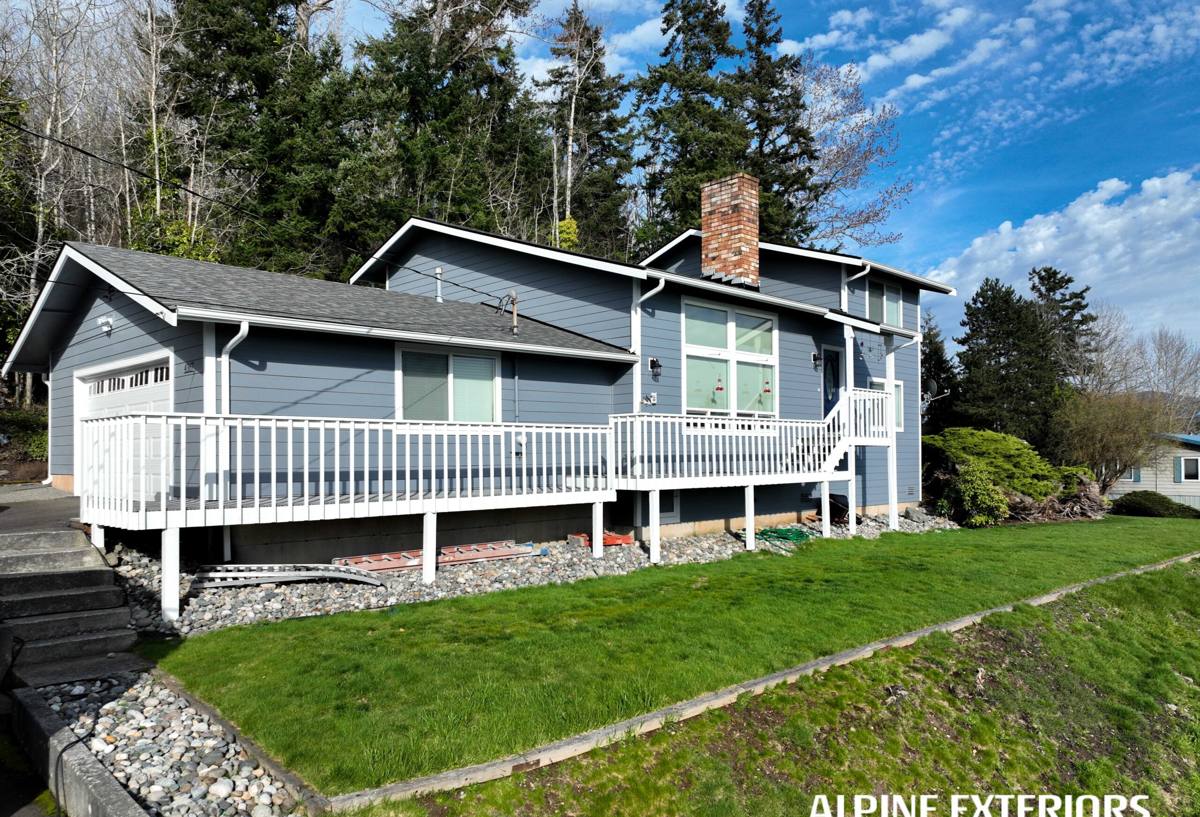
What Local Homes Tend to Face
Every house is different, but we see the same handful of issues repeat themselves on March Point properties, especially on the sides of a home that face open water or prevailing wind.
Salt Air and Metal Hardware
Salt in the air accelerates corrosion on window hardware — hinges, cranks, balances, and screws — faster than it would inland. Cheaper aluminum or unprotected steel components can start showing pitting and stiffness years before they should. It's a slow problem, which is exactly why it gets missed until a window won't latch or lock properly anymore.
Driving Rain and Water Intrusion
Wind off the bay doesn't just fall as rain, it drives sideways into siding and window openings. Flashing details and sealant around the window frame do a lot more work here than they would in a sheltered inland lot. When those details are done poorly, or the wrong sealant was used, water finds its way behind the trim and into the wall cavity long before it shows up as a visible stain inside.
Moss, Algae, and Prolonged Dampness
Anacortes' long moss season isn't just a roof problem. Moss and algae growth on window sills, trim, and the lower edges of frames holds moisture against the material, which speeds up wood rot and can degrade some vinyl and composite finishes over time. Homes with heavy tree cover or a north-facing exposure tend to see this the most.
Condensation and Older Glazing
Single-pane and early double-pane windows struggle to keep up with our humidity swings. Persistent condensation between panes usually means a failed seal, not a cleaning problem, and it's a sign the insulated glass unit has run its course.
Signs Your Windows Need Attention
Most window problems give warning signs well before they turn into a full replacement job. Worth checking for:
- Fogging or a milky haze between panes of double-pane glass
- Sills or lower frame corners that feel soft, spongy, or show paint bubbling
- Drafts you can feel near the frame even with the window fully closed
- Cranks, locks, or balances that stick, grind, or won't fully latch
- Visible gaps between the window frame and the surrounding trim or siding
- Rising heating bills without any other obvious cause
- Wood trim that's darkened, staining, or growing moss at the base
- Difficulty opening or closing a window that used to move freely
Catching these early is usually the difference between a repair and a full replacement, and between a small trim repair and a larger wall repair once water has been sitting behind the siding for a season or two.
Repair or Replace: How We Help You Decide
Not every window that's showing its age needs to come out. We look at the frame material, the condition of the surrounding wall, the age of the glazing, and how the window is performing before recommending anything. The table below is a general guide to how we think through that decision — every house still gets a real look before we commit to a plan.
| Situation | Usually Repair | Usually Replace |
|---|---|---|
| Fogged glass, sound frame | Yes — reglazing rarely restores a failed seal permanently | |
| Sticking hardware, solid wood/frame | Yes — hardware and hinge service | |
| Soft or rotted sill, otherwise sound wall | Yes — sill repair or partial rebuild | |
| Rot extending into the surrounding framing | Yes — repair alone won't address the structure | |
| Single-pane glass, older home | Case by case | Often — for comfort and efficiency gains |
| Minor draft, good overall condition | Yes — resealing or weatherstripping |
Materials and Styles That Hold Up Here
There's no single "best" window for every March Point home — it depends on the home's age, exposure, and budget. A few honest trade-offs we walk homeowners through:
Vinyl
Vinyl windows are a solid, budget-friendly choice for this climate because they don't rot and hold up well to moisture. The trade-off is that vinyl frames aren't repaired piece by piece the way wood can be — if the frame itself is damaged, replacement is usually the answer.
Fiberglass
Fiberglass frames handle temperature swings and moisture with less expansion and contraction than vinyl, and they tend to hold paint well if you want a specific trim color. They cost more upfront, which is the main trade-off.
Wood and Wood-Clad
Wood windows still have a place, especially on older or historic-style homes where matching the original look matters. In a marine climate they need more upkeep — regular paint or finish maintenance on any exposed wood — and we're honest with homeowners about that maintenance burden before they commit. Clad wood windows (wood interior, metal or vinyl exterior) split the difference: better weather protection outside, traditional look inside.
Aluminum
Aluminum frames are durable but conduct heat and cold efficiently, which isn't ideal for energy performance, and lower-grade hardware can be more prone to the salt-air corrosion mentioned earlier. We use it selectively, usually where a slim sightline or a specific architectural look is the priority.
Our Installation Process
Good window performance depends as much on the installation as the window itself. Our process on a typical replacement:
- On-site assessment of the existing window, frame, and surrounding wall condition
- Honest recommendation on repair vs. replacement, with reasoning explained plainly
- Careful removal that checks for hidden water damage before it's covered back up
- Proper flashing and sealant detailing suited to a wind-driven-rain exposure
- Correct shimming and fastening so the window operates smoothly for years, not just at install
- Interior and exterior trim finished to match the home
- Final walk-through so you understand how to operate and maintain the new windows
We treat flashing and sealant work as the most important step in the whole job, not an afterthought. A great window installed with poor flashing will still leak; a modest window installed correctly will outperform it.
Why a Local Crew Matters
A crew that works Anacortes and Skagit County regularly knows how different a north-facing, bay-exposed wall in March Point behaves compared to a sheltered lot a few miles inland. That local experience shapes real decisions — which sealants hold up to our humidity, how much moss and algae buildup to expect on a shaded elevation, and where water actually tends to intrude on homes built in different eras around this area. It also means we're not far away if a question comes up after the job is done.
Energy Efficiency and Comfort
Beyond keeping water out, modern insulated windows make a real difference in comfort and heating costs through our long, damp winters. Double- and triple-pane options with quality seals reduce drafts, cut down on interior condensation on cold mornings, and even help with sound — worth considering if the home is near a road or has a lot of glass facing the water and wind. We'll talk through glass and frame options that make sense for your budget rather than pushing the most expensive package by default.
Windows Alongside Your Other Exterior Work
Because we also handle siding, roofing, and decks, we often catch window-related issues while working on other parts of a home's exterior — a soft spot in siding near a sill, a roof valley draining water toward an upper window, or trim that's failing in the same weather-exposed spot the windows are struggling in. Looking at the whole exterior together, rather than one component at a time, tends to catch problems earlier and avoids fixing the same water path twice.
If your March Point home has windows that are drafty, fogged, sticking, or just showing their age, we're happy to take a look and give you a straightforward assessment. Use the form below to request a free, no-pressure estimate — there's no obligation, just an honest read on what your windows actually need.