 Anacortes Window
 Decks Built for Conway's Corner of the Skagit Valley
Conway is a small, low-lying community tucked into the Skagit River delta between Mount Vernon and Stanwood, and it has its own weather personality even by Skagit County standards. The valley floor sits close to the water table, the air carries salt off the nearby bay and tidal flats, and the tree cover — big firs, cedars, and cottonwoods along the river bottoms — keeps a lot of yards shaded and damp for much of the year. A deck built here has to deal with all of that at once: driving rain that comes in sideways during winter storms, salt-laden air that eats through cheap hardware, and a moss and algae season that can run from October clear through May.
We've built and repaired decks for homes throughout this stretch of the valley, and the pattern is consistent. Decks that were designed and installed with generic, one-size-fits-all methods start showing problems in three to five years — soft spots, rusted fasteners, slick green film on the boards, ledger rot where the deck meets the house. Decks built for the actual conditions out here hold up for decades. The difference isn't exotic materials or a bigger budget. It's knowing what this specific ground and this specific air do to a structure, and building accordingly.
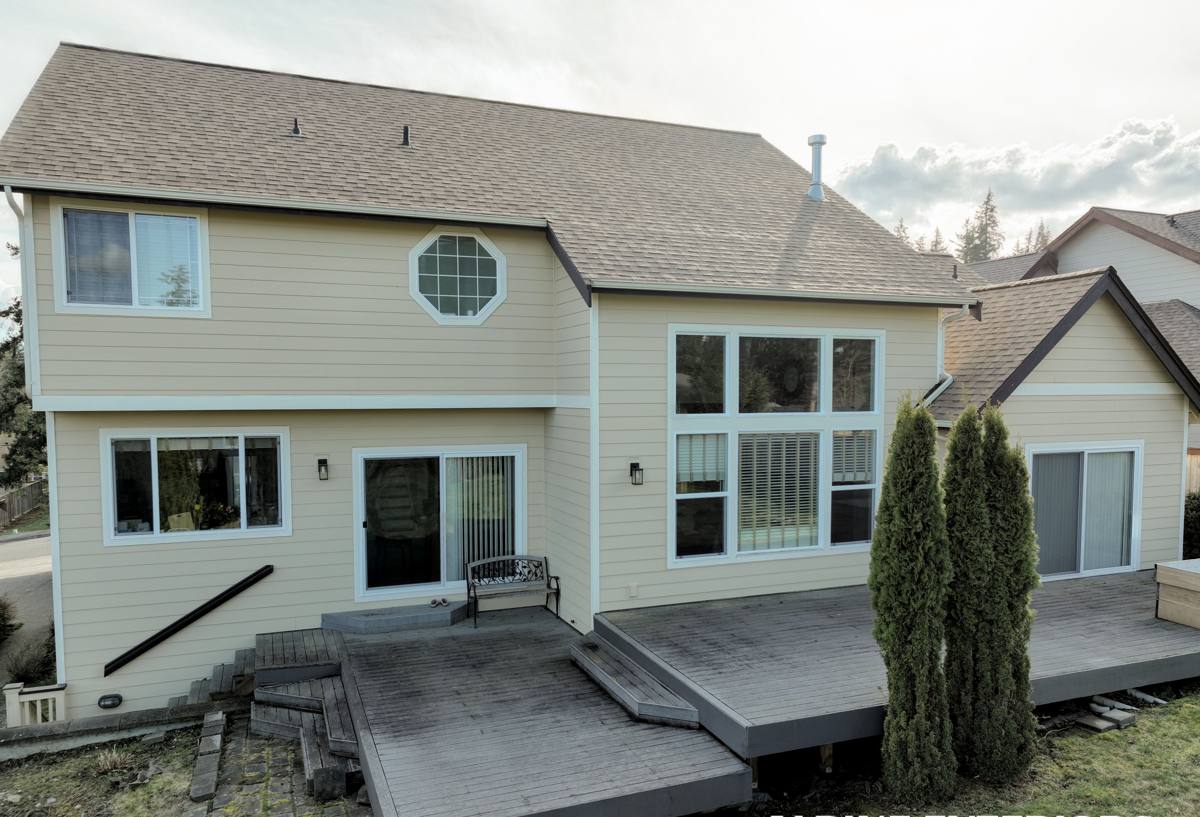
What Local Ground and Air Do to an Outdoor Deck
Salt Air and Corroding Hardware
Conway isn't oceanfront, but it's close enough to Skagit Bay and the Sound that salt-bearing air reaches it regularly, especially with the marine weather patterns that funnel through the valley. Standard zinc-coated or electro-galvanized screws and joist hangers that might be fine fifty miles inland will start rusting within a couple of seasons here. Once a fastener corrodes, it loses grip strength long before it looks obviously bad — which is how homeowners end up with a deck board that seems solid until it isn't.
Low, Wet Ground and Footings
Much of the land around Conway sits low and close to the water table, and soils near the river bottoms can stay saturated well into late spring. That matters for anything going into the ground — deck footings included. Footings poured too shallow, or set without accounting for how wet and how soft the ground gets seasonally, can shift over time. A deck that's slightly out of level after a few winters is almost always a footing problem, not a framing problem.
Shade, Moss, and Standing Moisture
Properties with mature conifers nearby — common throughout this part of the valley — get needle litter, filtered sunlight, and slower drying after every rain. That combination is exactly what moss and algae need. A deck surface that stays damp for days at a time isn't just slippery and unattractive; the moisture sits against the wood or composite surface and accelerates whatever decay process that material is prone to.
Choosing the Right Decking Material for This Climate
There's no universally "best" decking material — there's the material that fits your yard's sun exposure, your maintenance appetite, and your budget. Here's how the common options actually perform under Conway's specific conditions:
| Material | Moisture & Moss Behavior | Maintenance Needed | Typical Lifespan Here |
|---|---|---|---|
| Pressure-treated lumber | Handles wet cycling well when detailed correctly; end grain and cut edges need extra sealant | Annual cleaning and re-sealing recommended, especially in shaded areas | 15–20 years with upkeep |
| Cedar | Naturally rot- and insect-resistant, but softer surface holds moss in shaded, low-airflow spots | Periodic cleaning, oiling or staining every 1–3 years | 15–25 years with upkeep |
| Capped composite | Doesn't absorb water into the core; still needs regular cleaning where algae film builds up on the cap surface | Low — occasional washing, no staining or sealing | 25–30+ years, manufacturer-warrantied |
In heavily shaded, tree-covered lots — which describes a fair number of Conway properties — we lean toward capped composite or well-detailed cedar, because the moss problem is really a moisture-retention problem, and composite's non-porous surface simply gives moss less to hold onto. On open, sunnier lots, quality pressure-treated lumber is still a sound, budget-conscious choice. We'll walk your specific site with you and make an honest recommendation rather than pushing one product line regardless of fit.
Getting the Structure Right the First Time
The parts of a deck nobody sees are the parts that determine whether it lasts. This is where corners get cut on a rushed job, and it's where we spend the most attention.
Ledger Attachment and Flashing
The ledger board — where the deck attaches to the house — is the single most common failure point on decks in wet climates like this one. Without proper flashing that sheds water away from the house sheathing, rain works its way behind the ledger and rots the rim joist from the inside, often invisibly for years. We flash every ledger connection to shed water outward, never trap it against the wall.
Fasteners and Connectors
Given the salt air this area sees, we use stainless steel or heavy-duty coated fasteners and connectors rated for coastal exposure, not standard interior-grade hardware. It costs more up front and it's the difference between hardware that's still tight in fifteen years and hardware that's rusted and loosening in five.
Footings Sized for Actual Soil Conditions
We don't guess at footing depth and diameter — we size them to the soil conditions we find on site, factoring in how wet the ground gets seasonally. On soft or low-lying lots that can mean larger footings or adjusted spacing compared to a textbook installation on well-drained soil.
Design Choices That Matter Out Here
Beyond materials and structure, a handful of design decisions make a real difference in how a Conway deck performs season after season:
- Board spacing and gapping — slightly wider gaps between deck boards let water and debris drain through instead of pooling, which matters more here than in a drier climate.
- Airflow underneath — keeping the space under a deck open to airflow (rather than skirted tight to the ground) helps everything dry out between storms.
- Stair and rail hardware — the same corrosion-resistant standard we use for structural fasteners applies to visible hardware, since rust streaks on railings are one of the first things salt air will show you.
- Orientation relative to tree cover — where possible, we'll talk through deck placement and any trimming needed to reduce the amount of standing shade and needle debris landing on the finished surface.
- Drainage away from the house — grading and any under-deck drainage systems are planned so water moves away from the foundation, not toward it.
Our Process for a Conway Deck Project
- On-site assessment — we walk your property, check sun/shade exposure, soil conditions, and how your existing structure (if any) is holding up.
- Design and material selection — we talk through material options honestly, based on your specific lot, not a default package.
- Permitting — deck projects in unincorporated Skagit County generally require a building permit; we handle that process as part of the job.
- Construction — footings, framing, ledger flashing, decking, and rail installation, built to the standards above.
- Final walkthrough — we go over the finished deck with you, including basic care so it stays looking good.
Keeping a Conway Deck Performing for the Long Haul
A well-built deck still needs a little seasonal attention in this climate — it's minor work, but skipping it is how moss and rot get a foothold.
- Sweep needles and leaf litter off the surface regularly, especially in fall, so damp debris doesn't sit against the boards
- Rinse or lightly scrub visible moss and algae film before it builds up and gets slick
- Check railings and visible fasteners once a year for early rust spots
- Confirm gaps between boards haven't filled in with debris that traps moisture
- Inspect the ledger flashing area where the deck meets the house for any signs of staining or soft wood
- Re-seal or re-stain wood decking on the schedule appropriate to that material
Why a Crew That Already Works This Area Matters
A deck built by a crew that only occasionally works in Skagit County will often use the same fastener grades, footing specs, and material defaults they'd use anywhere else — and those defaults are usually calibrated for a drier, less corrosive climate. A crew that regularly works Conway and the surrounding valley already knows which lots sit low and wet, which yards need the moss-resistant approach, and what Skagit County's permitting process actually requires, so there are no surprises mid-project. That local familiarity shows up years later in the form of a deck that isn't rusting, sagging, or slick with algae.
If you're planning a new deck or replacing one that's showing its age, we're happy to come take a look and give you a straightforward assessment — no pressure, no upsell, just an honest read on what your property needs. Use the form below to request a free estimate.