 Anacortes Window
 Conway Decks Face a Different Kind of Wear
Conway sits in the low, flat Skagit River valley between Mount Vernon and Stanwood, close enough to Puget Sound that salt-laden air, long wet winters, and heavy shade from surrounding trees and fields all show up in how a deck ages here. A deck built the same way in a drier inland town simply doesn't take the same punishment. In Skagit County, moisture sits longer, moss grows earlier in the season and later into spring, and hardware corrodes faster than most homeowners expect. Repairing a deck the right way in this area means understanding those pressures, not just patching whatever looks bad on the surface.
Salt Air and Corrosion
Even well inland from the water, coastal air carries enough salt to accelerate rust on fasteners, joist hangers, and railing hardware. Once a nail or screw starts to corrode, it loses grip strength long before it looks obviously bad from a distance. On older Conway decks, we regularly find structural connections that appear fine at a glance but are compromised underneath.
Moss, Algae, and Trapped Moisture
Skagit County's long, wet season gives moss and algae plenty of time to establish themselves on horizontal surfaces, especially decks shaded by trees or facing north. Moss isn't just cosmetic — it holds moisture directly against wood fibers and fastener heads, which is exactly the condition that leads to rot and rust. A deck that gets cleaned but never actually repaired underneath the growth will keep failing in the same spots year after year.
Ground-Level Decks and Low-Lying Soil
Conway's flat, low-elevation terrain near the Skagit River means many properties deal with saturated ground for extended stretches of the year. Decks built close to grade, or with posts set directly in soil that stays damp, are more prone to post rot and settling than decks on higher, drier lots. This is one of the first things we check when we're called out for a repair — the problem is often below the decking boards, not on top of them.
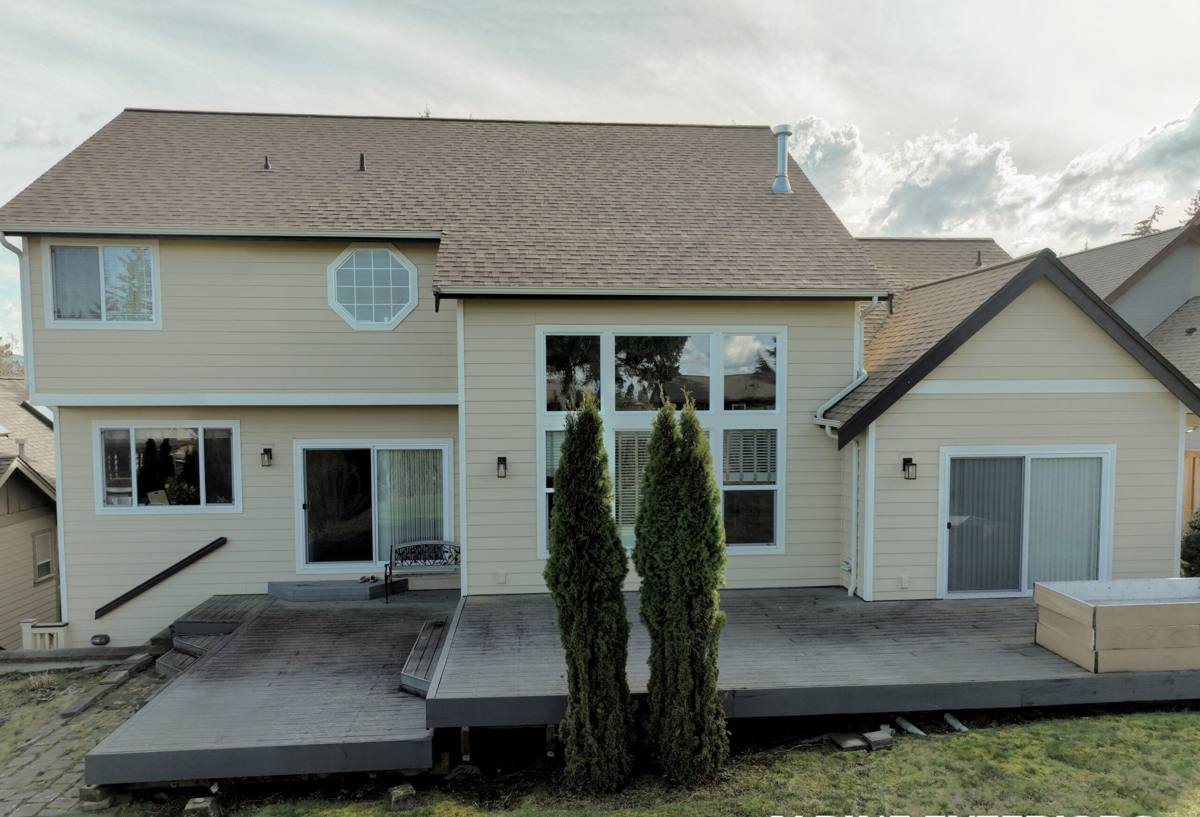
Signs a Conway Deck Needs Repair, Not Just a Cleaning
A pressure wash can make a tired deck look better without fixing anything underneath. Here's what actually signals a repair is needed:
- Soft, spongy, or springy spots when you walk across the decking
- Visible rust streaks below screw or nail heads
- Railings or guard posts that wiggle or flex under light pressure
- Gaps opening up between boards or at the ledger board where the deck meets the house
- Persistent moss or dark staining that returns quickly after cleaning
- Cracked, splintering, or delaminating boards, especially on stair treads
- Visible daylight or gaps at post-to-beam or beam-to-joist connections
- A musty smell coming from underneath the deck
Any one of these on its own might be minor. Several together usually mean moisture has been working on the structure for a while.
What a Correct Deck Repair Actually Involves
A repair that only replaces the boards you can see is a cosmetic fix, not a structural one. A correct repair works from the ground up.
Framing and Ledger Board
The ledger board — where the deck attaches to the house — is one of the most common failure points we find, because it's a horizontal surface tucked against siding where water can collect and sit unnoticed. We check ledger flashing, look for soft wood behind it, and confirm the connection is still properly fastened before doing any cosmetic work above it. Joists and beams get checked for soft spots, splitting, and proper bearing at every support point.
Fasteners and Hardware
Rusted nails, corroded joist hangers, and undersized screws get replaced with hardware rated for exterior, coastal-adjacent use. This is a small line item compared to decking material but it's often the actual reason a deck started failing in the first place.
Posts and Footings
Where posts sit in or near damp soil, we look for rot at the base and check whether the footing is still doing its job or has shifted. A deck can have brand-new boards on top and still be unsafe if a support post underneath has been quietly rotting for years.
Decking Boards and Surface
Individual boards get replaced where they're cracked, cupped, or soft — full board replacement isn't always needed if the framing underneath is sound. We match spacing and fastening pattern to the rest of the deck so repaired sections don't stand out or trap water differently than the surrounding boards.
Railings and Guard Systems
Loose or wobbly railings are a safety issue, not just an inconvenience. We re-secure or rebuild railing posts at proper structural connections rather than simply tightening whatever screws are already there, which is a common shortcut that doesn't hold up.
Repair vs. Replace: How We Make the Call
Not every deck problem in Conway means starting over, and not every deck is worth patching. We look at the extent of the damage, the age and condition of the framing, and the cost of repair versus rebuild before recommending either.
| Factor | Favors Repair | Favors Replacement |
|---|---|---|
| Framing condition | Solid, dry, only surface issues | Widespread soft or rotted joists/beams |
| Extent of damage | Localized to a few boards or one area | Spread across most of the deck |
| Post/footing condition | Stable, no rot at base | Settling, rotted posts, undersized footings |
| Age of original build | Newer deck, isolated wear | Older deck nearing end of service life |
| Code compliance | Meets current guard/railing standards | Undersized railings or spacing by today's code |
We'll always tell you honestly which category your deck falls into rather than defaulting to the bigger job.
Our Deck Repair Process in Conway
- On-site inspection — we walk the full deck, check underneath, and test framing, posts, and connections by hand, not just a visual look at the surface.
- Written scope and estimate — you get a clear breakdown of what's failing, what needs to be replaced, and what can be left alone.
- Permit check — for structural repairs, we confirm what Skagit County requires before work starts, so nothing has to be redone later.
- Repair work — framing and hardware first, then decking, then railings, in that order, so nothing is finished over a hidden problem.
- Final walkthrough — we check every repaired area with you before calling the job done.
Materials We Use — and Why
For repairs, matching the existing deck material usually makes the most sense both structurally and visually. Where a homeowner is open to it, we'll talk through the trade-offs honestly.
Pressure-Treated Lumber
Cost-effective and easy to match to an existing deck's framing and boards. It needs periodic sealing or staining to perform well through Skagit County's wet season, and we're upfront about that maintenance commitment rather than glossing over it.
Cedar
Naturally rot-resistant and a good look for older Conway homes, but it's a softer wood that shows wear from foot traffic and moss faster than treated lumber if it isn't maintained on a regular cycle.
Composite Decking
Composite holds up well against moss staining and doesn't need sealing, which appeals to a lot of homeowners dealing with our climate. We're honest that it costs more upfront, that board-for-board repair of an existing composite deck can be tricky if the original product line has changed, and that the framing underneath still needs to be real, treated wood regardless of what's on top.
Fasteners and Connectors
We use stainless steel or high-corrosion-rated coated fasteners and connectors on repairs in this area. Standard hardware corrodes faster here than it would inland, and using anything less is a false economy on a repair meant to last.
Keeping Moss and Moisture From Coming Back
A repair holds up longer with a bit of ongoing care. After we finish a repair, we typically recommend:
- Sweeping debris and standing water off the deck surface regularly through fall and winter
- Keeping nearby vegetation trimmed back so airflow can dry the deck between rains
- Rinsing off moss and algae early in the season before it establishes, rather than waiting until it's thick
- Re-sealing or staining wood decking on the schedule the product actually calls for, not just when it looks faded
- Checking underneath the deck once a year for early signs of rot or rust before they spread
Why a Crew That Already Works Conway Matters
Deck repair advice that works in a dry inland climate doesn't always hold up in the Skagit River lowlands. A crew that already works in Conway and around Anacortes knows which fasteners actually last through a coastal winter, which framing details tend to fail first in low-lying, shaded lots, and what Skagit County expects for permitting on structural repair work. That local familiarity means fewer surprises mid-job and a repair that's built for the conditions your deck actually faces, not a generic fix.
Get a Straight Answer About Your Deck
If your Conway-area deck has soft boards, wobbly railings, rust stains, or moss that keeps coming back no matter how often you clean it, it's worth having someone look underneath before the problem gets bigger or more expensive. We offer free, no-pressure estimates — use the form below to tell us a bit about your deck and we'll take it from there.