 Anacortes Window
 Skyline sits up on the bluff on the west side of Anacortes, catching wind and weather straight off the water. That exposure changes what a roof actually needs to hold up over time, and it's a big part of why metal roofing comes up so often when we talk to Skyline homeowners. A properly installed metal roof handles salt air, driving rain, and Skagit County's long moss season better than most alternatives, but "properly installed" is doing a lot of work in that sentence. This page covers what the climate here does to a roof, what a correct metal roofing job actually involves, and how we approach the work on a Skyline property specifically.
What Skyline's Climate Does to a Roof
Homes on the bluff catch more direct wind-driven rain than properties a few blocks inland or sheltered by terrain and tree cover. That wind pushes water into places a roof designed for calmer conditions was never meant to handle — under shingle tabs, into open seams, along valleys that see more volume than a standard rain event would produce. Salt-laden air off the water is the other half of the equation. It accelerates corrosion on fasteners, flashing, and any metal component that isn't rated for coastal exposure, which is a slower but just as real form of damage.
Add in the shade many Skyline lots get from mature evergreens and you get the third piece: moss and algae that never fully dry out between rain events. None of this is unique to this one neighborhood, but the combination and degree matter. A roof on an open, elevated lot facing the water is dealing with more of everything than a roof tucked into a sheltered part of town.
Signs a Roof Is Already Losing That Fight
- Moss or dark algae streaking on north- or shade-facing slopes that keeps coming back after cleaning
- Rust streaking below flashing, fasteners, or valley metal on an older roof
- Granule loss or curling shingle edges near ridge and hip lines that take the most wind
- Soft spots or staining on the underside of the roof deck, visible from the attic, near valleys and penetrations
- Fasteners backing out or flashing that's visibly lifted at a wall or chimney intersection
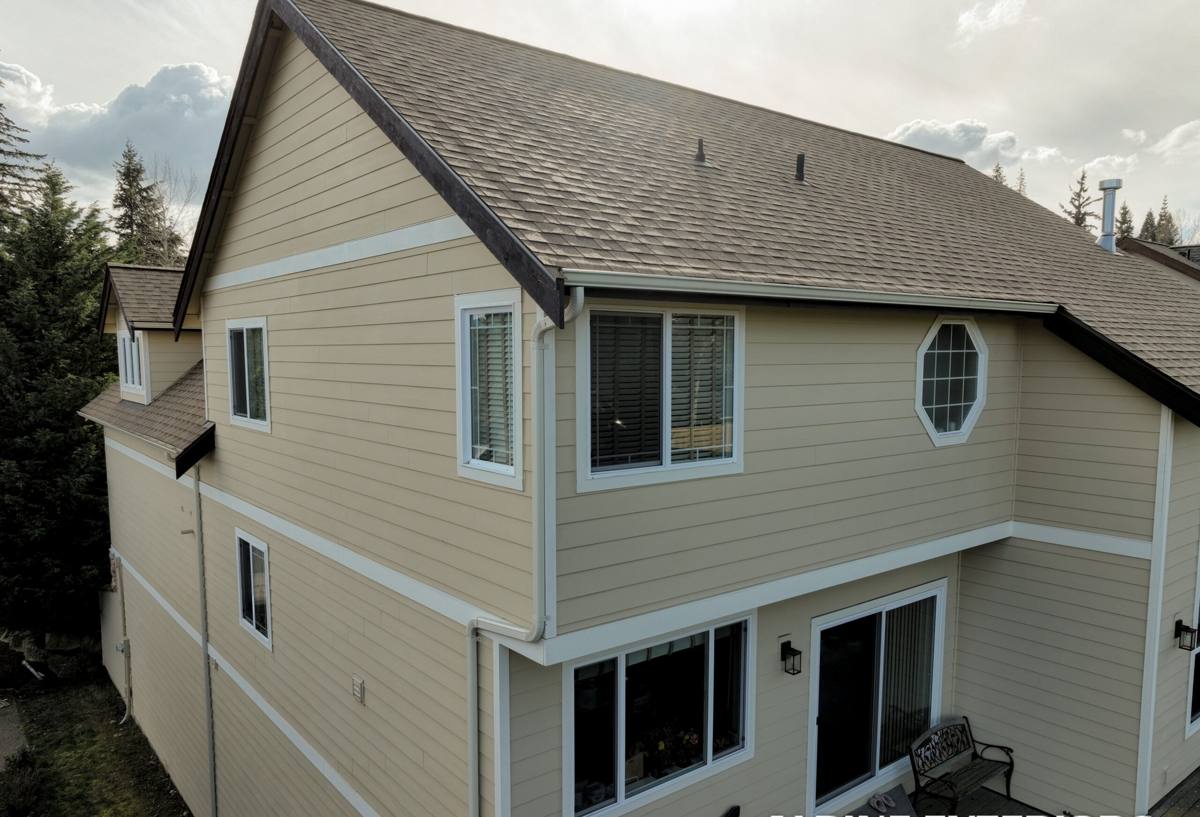
Why Metal Roofing Fits a Climate Like This
A metal roof doesn't have an absorbent mat that holds moisture the way asphalt shingles do, which matters directly for moss and algae growth — organic matter has a much harder time getting a foothold and staying wet long enough to spread. The panel surface also sheds wind-driven rain faster, and a correctly installed system has far fewer seams and edges for water to work its way under compared to a shingle roof. Factory-applied coatings on quality metal roofing are built to resist fading and chalking under sustained UV and salt exposure, which is the exact combination a bluff-facing Skyline roof deals with year-round.
None of that means metal roofing is maintenance-free or foolproof. It means the material gives you a better starting point in this climate — the installation details still determine whether that advantage actually shows up over the life of the roof.
Metal Roofing Systems We Install
| System | Fastening | Best For | Notes |
|---|---|---|---|
| Standing seam | Concealed clips, no exposed fasteners on the panel field | Bluff-facing and fully exposed roofs | Fewer penetration points for wind-driven rain to exploit; higher upfront cost |
| Exposed-fastener panel | Screws through the panel face into the deck | Sheltered slopes, outbuildings, budget-conscious projects | Lower cost, but gasketed fasteners need periodic inspection since they're a direct penetration point |
| Stone-coated steel | Concealed fastening similar to shingle profile | Homeowners who want a shingle look with metal's durability | Heavier than panel systems; check structural fit before choosing it |
What a Correct Installation Actually Involves
The panels themselves are only part of the job. Underlayment matters just as much on an exposed lot — we use a self-adhered, waterproof membrane at eaves, valleys, and around every penetration, since those are the spots where wind-driven rain is most likely to find a way in if the underlayment is thin or gapped. Fastening pattern and spacing also need to account for actual wind exposure rather than the bare code minimum; a roof that takes direct wind off the water needs tighter attachment than a sheltered one, and cutting that corner shows up as loosened panels or lifted seams years down the road, not on install day.
Ventilation is easy to overlook but shortens a roof's life when it's wrong. A deck that can't breathe holds moisture longer underneath the panels, which works against everything metal roofing is supposed to do for you in a wet climate. Every flashing detail — at valleys, wall intersections, chimneys, and vents — has to be built to shed water outward, not just meet a code minimum that assumes calmer weather than a bluff lot actually gets.
Coastal Details That Are Easy to Skip
Galvanic corrosion is a real issue in salt air: mixing incompatible metals — say, the wrong fastener alloy against a steel or aluminum panel — sets up a reaction that eats away at the contact point over time, and it's invisible until it isn't. We match fastener and flashing metal to the panel system for that reason. Sealant and butyl tape quality matters more here too, since cheaper sealants dry out and crack faster under UV and salt exposure than the panels around them. And panel end laps need to be oriented and sealed with the prevailing wind and rain direction in mind, not just laid in whatever order is fastest.
Moss, Debris, and Ongoing Care on a Metal Roof
Metal roofing resists moss far better than shingles, but it isn't immune, especially on shaded slopes under evergreen cover, which describes a fair number of Skyline lots. Needles and debris still collect in valleys and against any obstruction, and if that debris sits wet against the panel long enough, moss and staining can still take hold in those specific spots. The maintenance burden is lower than a shingle roof, but it isn't zero — an occasional check of valleys, gutters, and shaded areas keeps small buildup from becoming a recurring problem.
How We Approach a Skyline Metal Roofing Project
We start with a full inspection of the existing roof and, where accessible, the deck underneath — not just the surface. On a wet-climate roof, especially one that's been under tree cover, we want to know whether there's already moisture damage to the sheathing before we talk about what goes on top of it. In most cases we recommend a full tear-off rather than installing over an existing roof, since that's the only way to actually inspect and address deck condition rather than covering up a problem.
Site access is a real planning factor on bluff lots — tree cover and terrain affect how we stage material and set up scaffolding, and that's something we account for up front rather than discovering mid-project. We also plan installation timing around Skagit County's weather patterns where we can, since a metal roofing job goes smoother and seals better during drier stretches than in the middle of a sustained winter storm cycle.
Cost Factors on a Metal Roofing Project
| Factor | Why It Matters |
|---|---|
| Roof pitch and complexity | More valleys, dormers, and intersections mean more flashing work and labor time |
| Tear-off vs. existing condition | Deck repair or replacement adds cost but is often necessary on an older, moisture-exposed roof |
| System choice | Standing seam costs more upfront than exposed-fastener panel but needs less long-term attention |
| Site access | Tree cover, bluff terrain, and limited staging area can add time and equipment cost |
| Panel gauge and finish | Heavier gauge and higher-grade coatings cost more but hold up longer under salt and UV exposure |
Why a Crew That Already Works This Neighborhood Matters
Skagit County's coastal microclimates aren't uniform, and Skyline's particular mix of elevation, open water exposure, and tree shade is something you learn from working on homes here repeatedly, not from a spec sheet. We know which slopes are going to take the brunt of a winter storm, which shaded corners keep growing moss no matter what gets installed, and which flashing details actually matter on this kind of lot versus which ones are just code minimums. That shapes how we scope a Skyline roofing job before a single panel goes up.
It also means we're not guessing about permitting requirements or the practical realities of bluff-lot access, narrow driveways, or tree cover that affects how we bring materials in and stage equipment — all things that come up more often on a Skyline property than on a flat, open lot elsewhere in Anacortes.
What to Expect From a Metal Roofing Estimate
- A full walk-around and, where accessible, attic inspection to check current roof and deck condition
- An honest read on what's failing from age versus what's failing from exposure or a past installation shortcut
- A clear explanation of which metal roofing system fits your specific roof and exposure, and why
- A written scope and estimate with no pressure to sign on the spot
If you own a home in Skyline and you're dealing with a roof that's showing rust, chronic moss, or age, we're happy to take a look and give you a straight answer. Reach out for a free, no-pressure estimate — the form below gets you started.