 Anacortes Window
 West Anacortes homes sit closer to open water than most of Skagit County, and that changes what a siding installation actually needs to hold up to. Salt-laden air off the water, driving rain that comes in sideways during winter storms, and a moss season that can stretch across much of the year all put more demand on exterior cladding here than a typical inland install ever sees. We install siding throughout Anacortes and the rest of Skagit County, and West Anacortes is one of the areas where getting the details right — not just the material, but the installation itself — makes the biggest difference in how long a job actually lasts.
What West Anacortes Homes Are Up Against
Proximity to the water means West Anacortes properties catch more direct wind and moisture than homes tucked farther inland or sheltered by terrain. Wind-driven rain doesn't just fall on siding, it gets pushed into every gap, seam, and unsealed joint it can find, which is why the water-management details behind the surface matter as much as the surface itself. Salt in the air accelerates corrosion on fasteners and flashing, and it breaks down coatings and finishes faster than they'd wear in a drier climate. On top of that, shaded and north-facing walls in this part of town stay damp longer through the fall and winter, which is exactly what moss and algae need to get established.
None of this means West Anacortes homes are doomed to fail siding jobs — it means the margin for error is smaller. A siding system that's installed a little loose, flashed incorrectly, or fastened without accounting for panel movement will show problems here years sooner than the same shortcuts would on a sheltered inland lot.
What This Means for a Siding Project
- Water-resistive barrier and flashing details need to be done right the first time, since repairs behind finished siding are expensive and disruptive
- Fasteners, trim, and flashing should be rated for coastal exposure, not just the minimum the building code requires
- Shaded, damp-prone walls need siding and detailing that can handle sustained moisture without holding water against the wall assembly
- Color and finish should be able to take sustained UV and salt exposure without chalking or fading unevenly within a few years
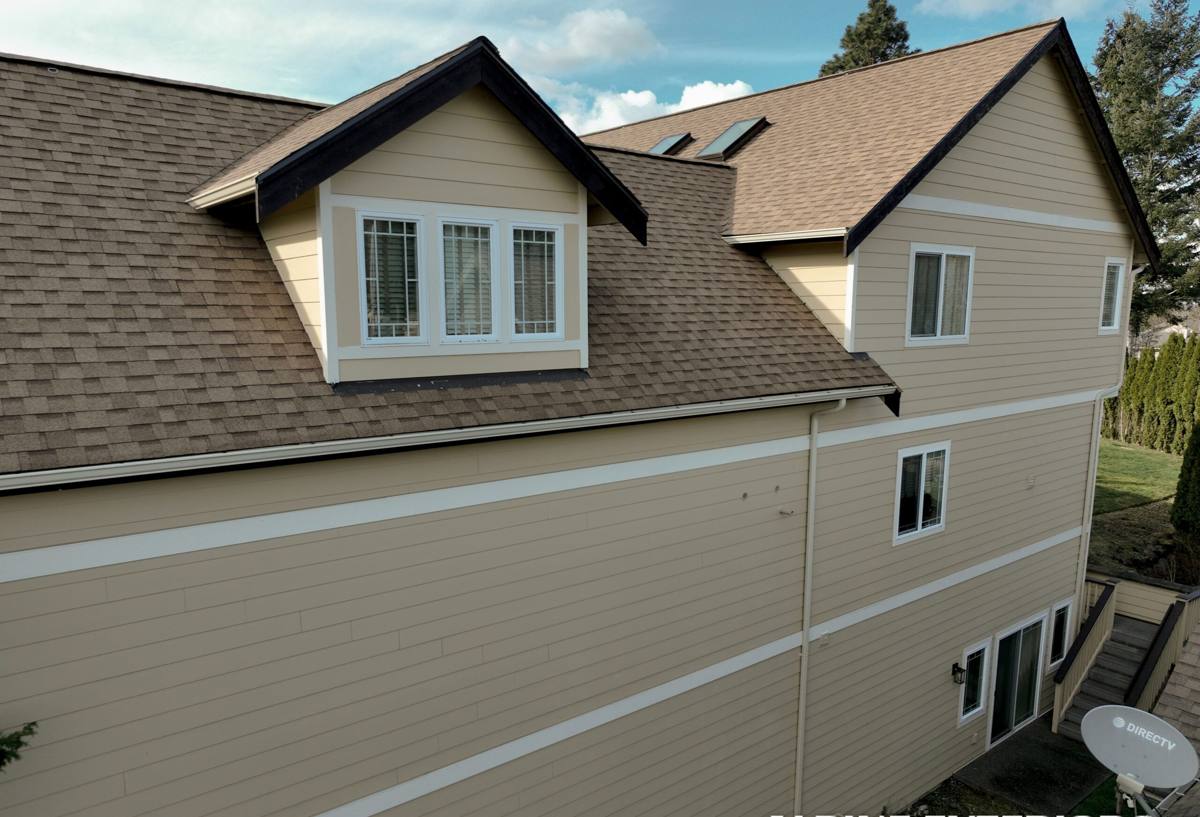
What a Correct Siding Installation Actually Involves
Siding is a system, not just a surface. The panels are the part homeowners see, but most of the long-term performance comes from what's underneath and how carefully it's put together.
Water-Resistive Barrier and Flashing Come First
Before any siding goes up, the wall needs a continuous water-resistive barrier, properly lapped and taped, with flashing integrated at every window, door, and penetration. This is the layer that actually keeps water out of the wall assembly — siding sheds most of the water, but it's not a waterproof membrane on its own, and in a climate with as much wind-driven rain as West Anacortes gets, any gap in this layer eventually becomes a problem. Getting this step right takes more time than most homeowners realize, and it's the step that's hardest to inspect once the siding is on.
Fastening, Clearance, and Panel Movement
Fiber cement siding needs to be fastened according to manufacturer spec — correct fastener type, spacing, and depth — and it needs proper clearance from grade, roof lines, decks, and other siding terminations. Too little clearance traps moisture against the bottom edge of the siding, which is one of the most common failure points we see on older installs in wet climates. Panels also need room to handle normal expansion and contraction; fastening too tight or caulking a joint that's supposed to float causes cracking and buckling over time.
Trim, Caulking, and Joint Details
Trim boards, corner details, and joint sealant are where a lot of installations cut corners, and they're also where water intrusion problems tend to start first. Joints need the right sealant, applied correctly, at every transition — not just where it's visible. On a West Anacortes home taking direct wind and rain, a poorly sealed trim joint or a caulk line that wasn't backed properly will open up within a few seasons and start letting water track behind the siding.
Why We Install Only James Hardie Fiber Cement Here
We install one siding product — James Hardie fiber cement — and we don't install vinyl, LP SmartSide, Cemplank, Allura, primed spruce, or cedar. That's a standard we've settled on, not a sales pitch: in a coastal Skagit County climate, fiber cement's non-combustible, dimensionally stable makeup handles sustained moisture and salt exposure better than materials that rely on loose-hung assemblies or need repeated repainting to hold up.
Hardie's ColorPlus finish is baked on at the factory and backed by its own warranty against fading and chalking, which matters on a west-facing wall that takes strong UV reflected off open water. Hardie also builds climate-engineered HZ product lines specifically formulated for wetter, harsher exposure zones like ours, rather than selling the same generic formulation everywhere in the country. Installed correctly, it's backed by a strong transferable warranty that carries real weight if the home changes hands down the road.
Hardie Product Lines We Install in West Anacortes
| Product Line | Best For | Notes |
|---|---|---|
| HardiePlank Lap Siding | Most West Anacortes homes, traditional and modern styles | Smooth or cedar-textured finish, wide ColorPlus color range |
| HardiePanel Vertical Siding | Accent walls, gable ends, modern designs | Clean vertical lines, often paired with lap siding |
| HardieTrim Boards | Window and door surrounds, corners, fascia | Won't rot the way wood trim does when exposed to sustained moisture |
| HZ10 Climate Engineered | Homes with direct water and wind exposure | Formulated for the wetter, harsher climate zones West Anacortes sits in |
Our Siding Installation Process
The process itself doesn't change much from house to house, but the attention paid to each step is what separates an installation that lasts thirty-plus years from one that starts showing problems in five.
- Inspection and assessment — we look at the existing siding, wall sheathing, and any signs of past moisture problems before quoting the job, since what's underneath affects the scope
- Tear-off and prep — old siding and any compromised sheathing or trim comes off, and we check for hidden rot or water damage before closing the wall back up
- Water-resistive barrier and flashing — a new, continuous barrier goes on with flashing properly integrated at every window, door, and penetration
- Siding installation — Hardie panels or lap siding go up to manufacturer spec, with correct fastening, clearance, and panel spacing throughout
- Trim, corners, and joint sealing — trim and corner details are installed and sealed, paying particular attention to transitions that will take direct wind-driven rain
- Final walkthrough and cleanup — we go over the finished job, point out anything homeowners should know for maintenance, and clean up the site
Common Problems We Find When Re-Siding Older West Anacortes Homes
Most of our siding installation work in this part of town is a replacement, not new construction, and the condition we find behind the old siding tells us a lot about how the original job was done.
- Rot in wall sheathing or trim where the water-resistive barrier or flashing wasn't properly integrated around windows and doors
- Moss and algae staining concentrated on shaded, north- or east-facing walls that stay damp longer through fall and winter
- Cracked or failed caulking at trim joints and corners, letting water track behind the siding for seasons before it's noticed
- Corroded fasteners or flashing on older installs that weren't rated for coastal, salt-air exposure
- Siding installed with insufficient clearance from grade, decks, or roof lines, trapping moisture at the bottom edge
Catching these issues during a re-side is one of the advantages of a full siding replacement over a patch repair — it's a chance to correct water-management problems that a like-for-like repair would just seal back up.
What Siding Installation Costs Depend On
We don't publish flat prices because every home is different, but the same handful of factors drive cost on nearly every siding job we quote in West Anacortes.
| Cost Factor | Why It Matters |
|---|---|
| Square footage and number of stories | More wall area and taller walls mean more material and more time, plus added staging and access considerations |
| Tear-off vs. install over existing siding | Full tear-off costs more up front but lets us inspect and correct the wall assembly underneath, which matters more here than in a sheltered climate |
| Trim and detail complexity | Homes with more corners, window trim, and architectural detail take more labor to flash and finish correctly |
| Extent of hidden damage | Rot or moisture damage found during tear-off adds repair scope that can't be known until the old siding is off |
| Site access | Tight lots, limited staging area, or difficult equipment access add time to a West Anacortes install |
Why a Crew That Already Works in West Anacortes Matters
Skagit County's coastal exposure isn't uniform from one neighborhood to the next, and West Anacortes' particular mix of open-water wind, salt air, and shaded lots is something a crew learns from working on homes here repeatedly. We know which walls are going to take the brunt of a winter storm, which spots are going to hold moss no matter what, and which flashing and clearance details are the ones that actually determine whether a siding job lasts. That's the kind of judgment that comes from doing this work in this specific area, not from a general spec sheet that treats every job the same.
It also means fewer surprises during the project itself — we're not guessing about how a coastal lot behaves in a storm, and we're not learning the hard way that a detail we skipped on a drier, more sheltered job doesn't hold up out here.
If your West Anacortes home needs new siding, or you're seeing moss, staining, cracked caulking, or soft spots on what you've got now, we're happy to take a look. Reach out for a free, no-pressure estimate — we'll give you a straight assessment of what your home needs and why.