 Anacortes Window
 Why Similk Beach Wears Out Siding Faster Than Most Places
Similk Beach sits close to the water south of Anacortes, and that proximity to Similk Bay changes what a house needs from its siding. Salt-laden air moves off the water and settles on exterior surfaces year-round, accelerating corrosion on anything metal and breaking down finishes that were never engineered to handle it. Add in the driving rain that comes with fall and winter storms off the Sound, and siding here takes on wind-driven moisture at angles that flatter, more sheltered installations rarely see. Many lots in the area also sit under mature evergreen cover, which keeps walls shaded and damp for long stretches — exactly the conditions that grow moss and mildew on siding, trim, and roof lines.
None of this is unique to one street or one lot. It's the general character of Skagit County's marine climate, and it's the reason we treat siding selection and installation differently for homes in this area than we would for a house twenty miles inland. The material has to resist moisture intrusion, the finish has to hold up to salt exposure without chalking or fading, and the installation has to manage water at every seam, corner, and penetration — because in Similk Beach, water finds every gap eventually.
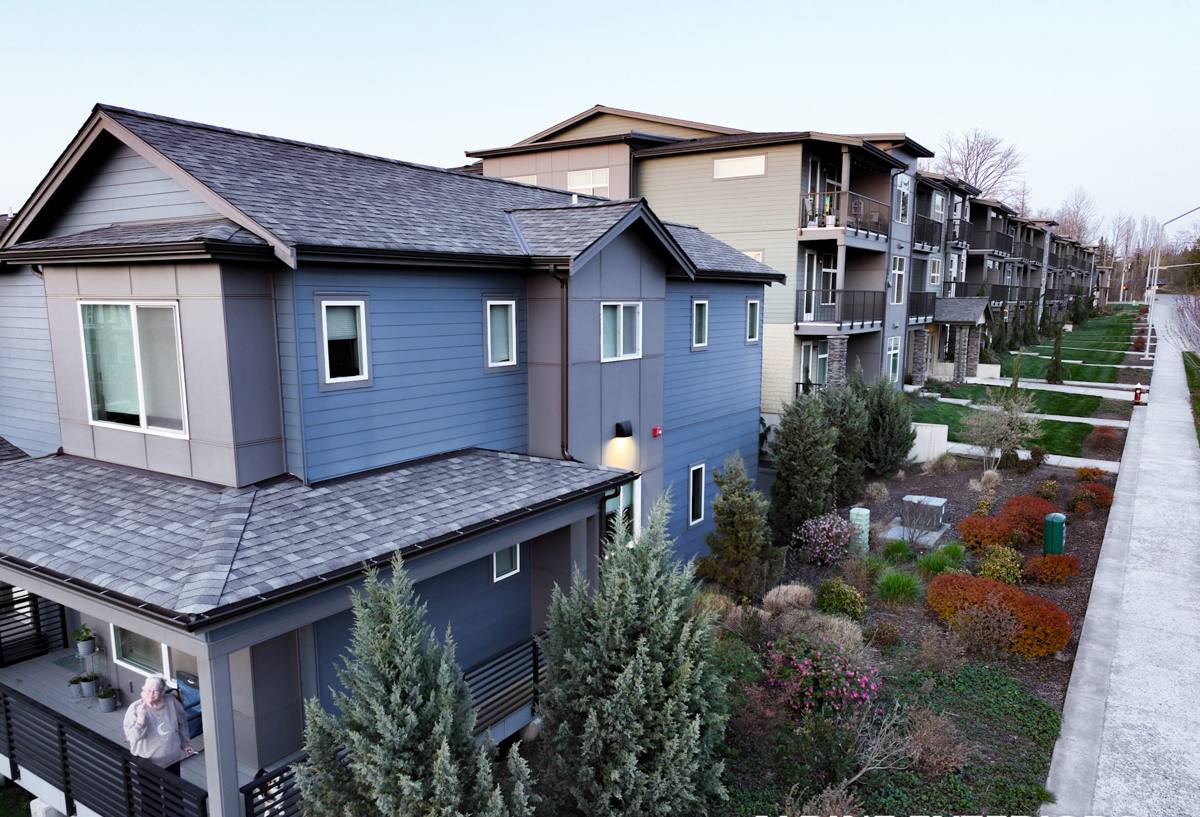
What James Hardie Fiber Cement Brings to This Climate
We install James Hardie fiber cement siding exclusively, and in a marine environment like this, the reasons go beyond preference. Fiber cement is dimensionally stable — it doesn't swell, cup, or rot the way wood-based products can when they take on repeated moisture. It's also non-combustible, which matters given how dry Pacific Northwest summers have trended in recent years even in a generally wet region like ours.
ColorPlus Factory Finish
The bigger advantage for a salt-air location is Hardie's ColorPlus finish. It's baked on at the factory in multiple coats under controlled conditions, rather than field-applied with a brush or sprayer on site. That matters here because a factory finish resists fading, chalking, and the kind of finish breakdown that salt exposure speeds up on site-painted products. It also means there's no seam where paint meets caulk that can crack open and let water behind the board — a common failure point on job-painted siding in wet climates.
Climate-Engineered Formulation
Hardie manufactures its siding in different formulations tuned to regional climate zones — engineered for freeze-thaw cycling, humidity, and moisture exposure specific to where the product ships. Western Washington falls into the zone Hardie engineers for our kind of wet, moderate-freeze climate, which is one more reason we don't substitute in a product built for a different part of the country.
The James Hardie Product Lines We Install
Not every Hardie product fits every house, and part of doing this correctly is matching the product line to the home's exposure and style. Here's how the main options compare for a property like the ones in Similk Beach:
| Product | Best Use | Why It Fits This Area |
|---|---|---|
| HardiePlank Lap Siding | Most home styles, primary field siding | Widest color and texture range; proven track record in wet, marine climates |
| HardiePanel Vertical Siding | Modern facades, accent walls, gable ends | Fewer horizontal laps means fewer joints for wind-driven rain to work against |
| HardieShingle | Cottage and craftsman-style homes | Classic shingle look without the moisture absorption of real cedar shingles |
| HardieTrim | Corners, window and door casing, fascia | Resists the swelling and rot that wood trim develops under constant shade and moisture |
| HardieSoffit | Eaves and overhangs | Pre-vented options help manage the damp, shaded conditions under tree cover |
What a Correct Installation Involves Here
Fiber cement is only as good as the installation behind it, and in a driving-rain climate, the details that get skipped are exactly the ones that cause problems five or ten years down the road. On every Similk Beach project, our installation addresses:
- A drainage plane behind the siding — either a rainscreen gap or a proven drainable house wrap system — so any moisture that gets past the cladding has somewhere to go besides the sheathing
- Correct flashing at every window, door, and roof-to-wall intersection, including kick-out flashing where roof lines meet siding, a spot that's easy to miss and expensive to ignore
- Stainless or coated corrosion-resistant fasteners, given how quickly standard hardware degrades this close to salt air
- Proper board clearance from grade, decks, and roof lines, per Hardie's published installation specs, so siding isn't sitting in standing water or splashback
- Correctly sized gaps and sealant at butt joints and penetrations, using sealants rated for the movement and moisture cycling our winters put them through
- Fastener spacing and nailing patterns that match Hardie's requirements for our wind exposure category, not just a generic pattern used everywhere
Skip any one of these and the siding itself can still fail early, even though the board material is rated for decades. This is the part of the job that doesn't show up in a photo but determines whether the installation holds up through twenty Skagit County winters or five.
Moss, Mildew, and Shaded Lots
A long moss season is part of life on Fidalgo Island, and siding in shaded, tree-covered yards takes the brunt of it. Moss and algae need sustained moisture and low sunlight to establish, and north-facing walls or anything tucked under evergreen canopy fit that description for much of the year. Fiber cement with a factory finish resists organic growth better than bare wood or absorbent trim, but "resists" doesn't mean "immune" — no exterior siding is.
What actually keeps moss from taking hold long-term is a combination of the material, the finish, and ongoing airflow: proper soffit venting, gutters that are kept clear so water isn't sheeting down the wall face, and vegetation kept back from direct wall contact. We factor tree cover and sun exposure into how we detail a given wall during installation, and we'll flag before the job starts if a homeowner's landscaping is going to keep working against the siding no matter what product goes up.
Our Process
Every Similk Beach project follows the same sequence, adjusted for the specific house:
- On-site assessment — we walk the exterior, check existing siding and sheathing condition, note wind exposure, shade patterns, and any moisture damage already present
- Product and color selection — matching HardiePlank, HardiePanel, or HardieShingle to the home's style, with ColorPlus finish options reviewed on-site
- Tear-off and sheathing check — old siding comes off and we inspect the sheathing underneath for rot or water damage before anything new goes up
- Weather barrier and drainage plane installation — the part of the job that determines long-term performance, done to Hardie's published specifications
- Siding, trim, and flashing installation — installed to manufacturer spec with corrosion-resistant fasteners throughout
- Final walkthrough — we review the finished work with the homeowner and cover basic care going forward
What It Costs — and What Drives the Price
Every home is different, so we won't quote a number without seeing the house, but these are the factors that actually move the price up or down on a project in this area:
| Factor | Effect on Cost |
|---|---|
| Extent of existing sheathing damage | Rot repair found during tear-off adds cost but is far cheaper to fix now than to side over |
| Home size and wall complexity | More corners, gables, and dormers mean more trim and cutting time |
| Product line selection | HardieShingle and custom ColorPlus colors run higher than standard HardiePlank |
| Site access | Waterfront or steeply sloped lots can add staging and material-handling time |
| Trim and soffit scope | Full trim package replacement adds cost but ensures consistent moisture protection |
Why Hire a Crew That Already Works This Area
Wind exposure, salt air, and shade cover aren't uniform across Skagit County — they vary lot by lot, and a crew that's worked Similk Beach and the surrounding Anacortes shoreline has already seen how these conditions play out on real houses. That experience shows up in small decisions during installation: where to add extra flashing attention, which walls need closer nailing pattern review for wind exposure, and which fastener grade is worth the upgrade given how close a given lot sits to the water. A generic installation crew working from a single national spec sheet will meet code, but a crew with local marine-climate experience builds in margin against the specific ways this environment tests siding over time.
We also only install one product system, which means our crews aren't splitting their attention across vinyl, LP SmartSide, and fiber cement installation methods that each require different techniques. Every job we run uses the same James Hardie installation standards, refined specifically for wet, salt-exposed, marine climates like this one.
Is It Time to Replace Your Siding?
Not every home needs full replacement right away. Signs worth having looked at include soft or bubbling spots, persistent moss or mildew that keeps returning after cleaning, visible gaps at trim and corners, or siding that's original to a home built more than 20-25 years ago. If you're seeing any of that on a Similk Beach property, it's worth an inspection before the next storm season adds to the damage.
If you'd like a straightforward look at your home's siding and an honest read on whether repair or replacement makes sense, we're glad to come take a look. Use the form below to request a free, no-pressure estimate.