 Anacortes Window
 Why West Anacortes Roofs Wear Differently
West Anacortes sits closer to the water than most of Skagit County, and that changes how a roof ages. Homes here take on a steady mix of salt-laden marine air, wind-driven rain that gets pushed sideways under normal flashing details, and a moss season that runs long because the shade and moisture never fully let up. None of that is dramatic on its own. It's cumulative. A roof that would coast for twenty-five years a few miles inland can show real wear on this side of town in fifteen if it wasn't built for the exposure it's actually getting.
That doesn't mean West Anacortes needs exotic materials or a different playbook. It means the ordinary parts of a roof replacement — fastener choice, underlayment coverage, flashing laps, ventilation balance — have to be done correctly, not just adequately. On a drier, more sheltered lot, a shortcut might not show up for a decade. Here, it shows up faster.
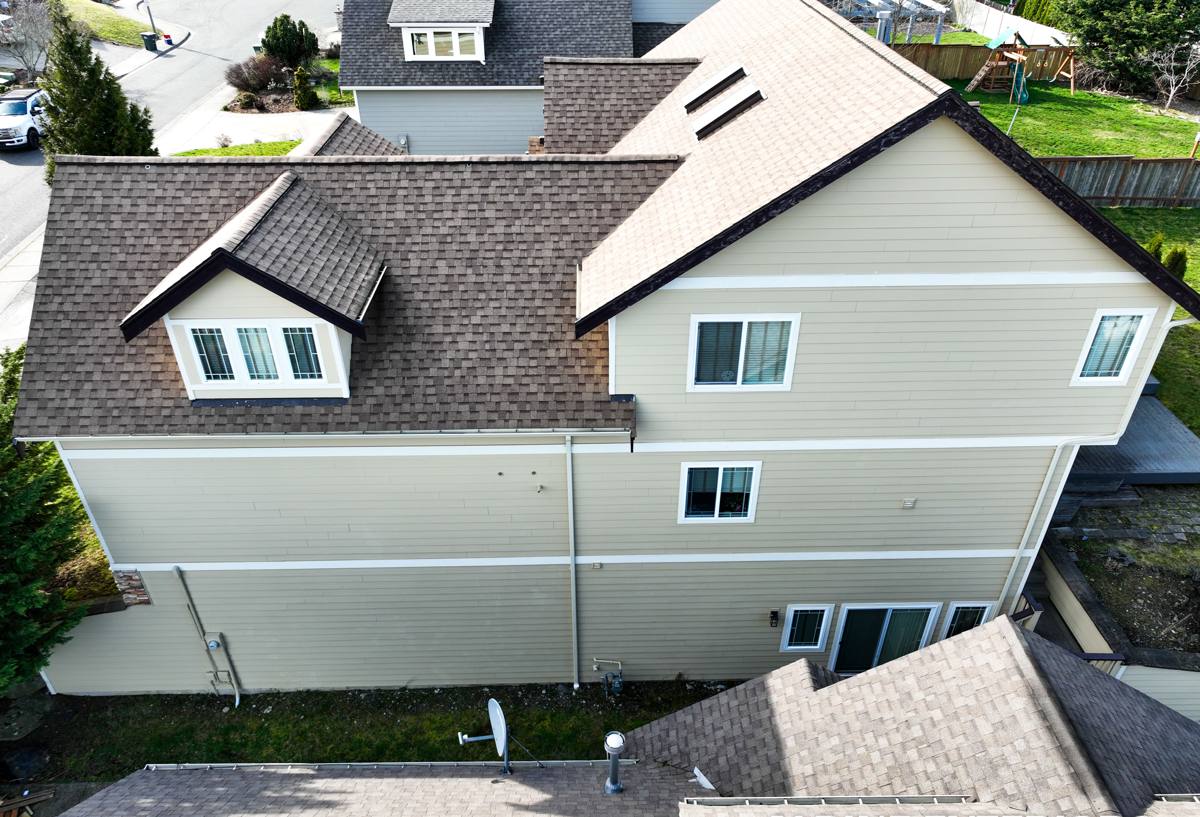
Signs Your West Anacortes Roof Needs Replacing
Roofs rarely fail all at once. They give warnings first, and in this climate those warnings tend to show up as moisture problems before they show up as obvious damage. Walk your attic and exterior periodically and watch for these:
- Granules collecting in gutters or at downspout outlets, a sign the shingle surface is wearing thin
- Moss or dark algae streaking that keeps returning within a season or two of cleaning
- Shingles that are cupping, curling at the edges, or cracking when you look closely from the ground
- Soft or spongy spots underfoot if you're up there for another reason, which usually means the decking beneath has taken on moisture
- Daylight visible through the roof deck from inside the attic, or water stains on attic framing and insulation
- Flashing around chimneys, skylights, or roof-to-wall transitions that looks lifted, rusted, or caulked over repeatedly instead of properly re-flashed
- A roof that's approaching or past the manufacturer's rated lifespan, especially if it was installed with minimal ventilation
Any one of these can often be addressed with a repair. Several at once, or moisture damage that's reached the decking, usually means replacement is the more honest recommendation — patching a roof that's structurally compromised just delays a bigger bill.
Choosing the Right Roofing System for the Climate
There's no single "best" roofing material for every West Anacortes home — it depends on your roof's slope, shade cover, budget, and how long you plan to stay in the house. What matters is picking a system with your actual exposure in mind, not a generic recommendation. Here's how the common options compare against the conditions that matter most here: moss and algae growth, salt-air corrosion, and driving rain.
| Material | Moss & Algae Resistance | Salt-Air Performance | Typical Lifespan | Relative Cost |
|---|---|---|---|---|
| Architectural asphalt shingle (standard) | Moderate — needs periodic cleaning in shaded areas | Good with corrosion-resistant fasteners and flashing | 20–30 years | Lowest |
| Algae-resistant (AR) asphalt shingle | Better — copper/zinc granules slow regrowth | Good with corrosion-resistant fasteners and flashing | 25–30 years | Low–Moderate |
| Standing-seam metal | Very good — smooth surface sheds moss and moisture fast | Depends on coating; look for marine-rated coastal finishes | 40–60 years | High |
| Synthetic/composite shingle | Good — dense material resists organic growth | Good, non-corroding material body | 30–50 years | Moderate–High |
Whatever material you land on, the fasteners, flashing, and drip edge matter as much as the field material. We use corrosion-resistant hardware throughout on West Anacortes jobs regardless of which roofing system a homeowner chooses, because standard-grade fasteners are one of the first things salt air attacks — and a rusted fastener fails long before the shingle around it does.
A Note on Metal Roofing Near the Water
Standing-seam metal performs well in this climate, but only when the coating is actually rated for coastal or marine exposure. Not every metal roofing product carries that rating, and installing an inland-grade panel on a home with regular salt-air exposure can shorten its life significantly. We'll tell you plainly if a product you're considering isn't the right match for your specific lot — that's a maintenance and warranty conversation worth having before, not after, installation.
What a Correct Roof Replacement Actually Involves
A roof replacement is more than swapping old shingles for new ones. Done right, it's a full system rebuild from the deck up:
Tear-Off and Deck Inspection
We remove the existing roofing down to the deck rather than layering over it. That's the only way to actually see what's underneath — soft spots, rot, or delamination that a re-roof over old material would simply hide. Any damaged decking gets replaced before anything new goes down; installing new roofing over a compromised deck defeats the purpose of the replacement.
Underlayment and Water-Resistant Barrier
Given how much wind-driven rain West Anacortes homes see, underlayment coverage isn't a place to cut corners. We use a synthetic underlayment across the full field and self-adhering ice-and-water membrane at the eaves, valleys, and any roof penetrations — the spots where wind-driven rain is most likely to find a way in.
Flashing at Every Transition
Chimneys, skylights, sidewalls, and valleys are where roofs actually leak — the open field of shingles rarely is. Flashing gets replaced, not caulked over and reused, and it's installed to shed water by design (properly lapped and stepped) rather than relying on sealant to do the job flashing should be doing.
Fastening and Wind Exposure
Homes closer to the shoreline see more direct wind. We follow manufacturer fastening patterns for the exposure category your home actually sits in, not a generic minimum — under-fastened shingles are one of the more common causes of early wind damage we see on homes in this part of town.
Ventilation and Moisture: The Part Homeowners Don't See
A roof replacement that skips ventilation is an incomplete job, even if it looks great from the curb. Balanced intake and exhaust ventilation does two things that matter a lot in this climate: it lets summer heat escape so shingles don't cook from underneath, and it keeps warm, moist indoor air from condensing on the underside of the roof deck during our wetter months. Poor ventilation is a major contributor to premature deck rot and to the kind of hidden moisture damage that only shows up once you're already looking at a full replacement.
We check existing intake (soffit) and exhaust (ridge or box vent) balance as part of every estimate, and we'll flag it if your current setup isn't adequate — it's a relatively small cost to correct during a replacement and a much bigger one to fix afterward.
Moss: Prevention Built Into the Install, Not an Afterthought
Moss is less about the material you choose and more about how much moisture and shade a given roof plane holds onto. Shaded, low-slope, or north-facing sections of a roof will always be more moss-prone in this climate, regardless of material. What we do during installation to reduce the long-term burden:
- Install zinc or copper strips near the ridge on moss-prone planes, which release trace metal ions that inhibit regrowth over time
- Confirm gutters and downspouts are clear and pitched correctly so water doesn't sit and encourage growth at the eaves
- Recommend algae-resistant shingle products for shaded sections when the material choice allows it
- Point out any overhanging branches or heavy shade that's worth trimming back to cut down on moisture retention
None of this eliminates the need for occasional roof cleaning — nothing does, in a climate like this — but it meaningfully extends the time between cleanings and reduces how aggressively you'll need to treat the surface.
Our Roof Replacement Process
- Inspection and estimate. We get on the roof, check the deck condition where accessible, look at ventilation and flashing, and give you a straightforward assessment of what your roof actually needs.
- Material selection. We walk through the tradeoffs for your specific roof — slope, shade, exposure, budget — instead of pushing one product.
- Permitting. Roof replacements typically require a permit through the City of Anacortes; we handle that paperwork so you don't have to track it down yourself.
- Property protection. Landscaping, siding, and windows get covered before tear-off begins, and we stage a debris containment plan for the driveway or yard.
- Tear-off and deck repair. Full removal down to the deck, with any damaged sheathing replaced before new roofing goes down.
- Installation. Underlayment, flashing, ventilation, and the finish material installed to manufacturer spec and matched to your home's actual exposure.
- Cleanup and magnetic sweep. Full site cleanup, including a nail sweep of the yard and driveway.
- Final walkthrough. We go over the finished roof with you before calling the job done, and explain what maintenance, if any, is worth doing going forward.
Cost Factors Worth Understanding
Every estimate is specific to the roof in front of us, but the factors that move the price are consistent from job to job:
| Factor | Why It Matters |
|---|---|
| Roof size and number of planes | More square footage and more valleys/hips mean more material and labor time |
| Deck condition | Rotted or delaminated sheathing found during tear-off adds material and labor to replace it properly |
| Material choice | Standard asphalt, algae-resistant asphalt, synthetic, and metal all carry different material and labor costs |
| Roof pitch and access | Steep or hard-to-access roofs take longer and require more safety setup |
| Ventilation upgrades | Adding or correcting intake/exhaust balance is a modest add during a full replacement |
| Flashing scope | Homes with multiple chimneys, skylights, or wall intersections need more custom flashing work |
We'll walk through exactly which of these apply to your roof during the estimate, so the number you get isn't a rough guess — it reflects what we actually see once we're up there.
Why a Local West Anacortes Crew Matters
Roofing crews that work all over Skagit County and beyond aren't wrong for the job, but a crew that regularly works this specific side of Anacortes has already seen how the wind comes off the water on certain lots, which roof planes tend to hold moss the longest, and which older homes in the area were built with ventilation that doesn't meet current standards. That kind of familiarity shows up in small decisions during the job — where to add extra fastening, which flashing details to double-check, which planes are worth an algae-resistant upgrade even if the rest of the roof doesn't need it.
It also means we're a short drive away if a question comes up after the job is done, not a crew that has to be scheduled back in from somewhere else. For a roof — the one system on your house that has to handle everything the weather sends it, year-round — that kind of local accountability is worth something.
If your roof is showing its age, or you just want a straight answer about whether repair or replacement makes sense for your home, we're happy to take a look. Reach out for a free, no-pressure estimate using the form below — we'll give you an honest read on your roof and what it actually needs, not a sales pitch.