 Anacortes Window
 Roofs in Old Town Anacortes Work Harder Than Most
Old Town Anacortes sits close enough to the water that its homes deal with a version of "normal wear" that inland Skagit County houses simply don't see. Salt-laden air off the bay accelerates corrosion on anything metal — nails, flashing, vent boots, gutter hardware. Wind-driven rain off Rosario Strait and the Guemes Channel doesn't just fall straight down; it gets pushed sideways under shingle edges and around flashing laps that would hold up fine in a drier, calmer climate. And then there's moss season, which in this part of Washington isn't really a season at all — it's most of the year.
None of that means these roofs are doomed. It means repair work here has to account for conditions a generic roofing crew from outside the area might not think twice about. A patch that's technically correct on paper can still fail in two winters if it wasn't built for salt exposure and sustained moisture.
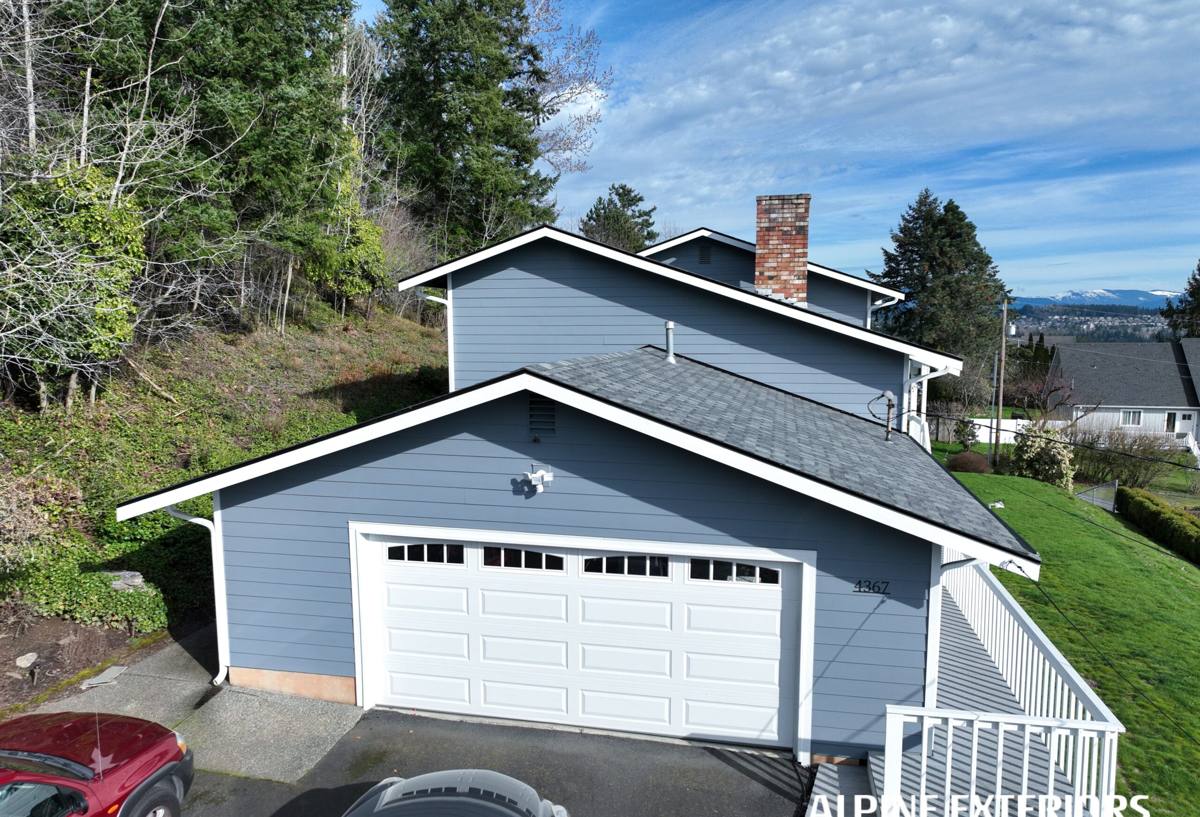
What Actually Damages Roofs in This Neighborhood
Salt Air and Corrosion
Fasteners, flashing, and metal vent caps corrode faster near the water. A galvanized nail that would last decades inland can start weeping rust stains and losing grip within a much shorter window here. Once a fastener corrodes, the shingle or panel it's holding down loses its seal, and that's usually where a leak starts — not in the middle of a shingle, but at the edges and penetrations.
Driving Rain and Wind-Lift
Storms off the water tend to come in sideways. That matters because most roofing systems are designed to shed water moving downward, not water being pushed uphill under a shingle tab or through a poorly lapped flashing joint. Homes on more exposed lots or with lower-pitch roof sections see this problem more often, especially at valleys, chimney saddles, and dormer walls.
Moss, Algae, and Trapped Moisture
Anacortes' mild, damp climate is close to ideal for moss growth on north-facing and shaded roof slopes — which describes a lot of Old Town's tree-covered lots. Moss isn't just cosmetic. It holds moisture directly against roofing material, works its way under shingle edges as it grows, and can lift tabs enough to let wind-driven rain in behind them. Left unchecked long enough, moss growth also starts to hold organic debris that clogs valleys and gutters, backing water up under the roofline.
Age and Layered Roofing
A meaningful share of homes in this part of Anacortes are older, and older roofs are more likely to have been re-covered at least once rather than fully torn off. That's not automatically a problem, but it does mean a repair crew needs to know what's actually underneath before cutting into anything — a second or third layer changes how flashing, nailing, and water paths behave.
What a Correct Roof Repair Actually Involves
A roof repair done right starts with figuring out where water is actually getting in — which is often not where the stain shows up inside. Water can travel several feet along rafters or sheathing before it drips somewhere visible. Skipping that diagnosis step is the single most common reason a "repaired" roof leaks again the next winter.
- Trace the leak to its actual entry point, not just the visible interior damage
- Check the roof deck underneath for soft spots, rot, or delamination before replacing surface material
- Match the repair material to the existing roof as closely as possible in type, weight, and profile
- Rebuild flashing at valleys, chimneys, skylights, and wall intersections rather than just caulking over old flashing
- Confirm the repair ties back into the surrounding roofing correctly, with proper laps and fastening — not surface-sealed with roofing cement
- Clear moss, debris, and standing organic matter from the repair area and surrounding slopes before closing it up
Roofing cement and caulk have their place, but they're a short-term seal, not a repair. When a patch relies mainly on sealant to keep water out, it's usually a sign the underlying flashing or shingle work wasn't rebuilt correctly — and that kind of fix tends to fail again within a season or two, especially with the wind-driven rain this area gets.
Repair or Replace? How We Actually Decide
Not every leak or damaged section means a homeowner needs a new roof, and not every roof problem can be permanently fixed with a patch. The honest answer depends on the roof's age, how widespread the damage is, and what's happening underneath the surface layer.
| Factor | Leans Toward Repair | Leans Toward Replacement |
|---|---|---|
| Roof age | Well within expected lifespan for the material | At or past the material's typical service life |
| Extent of damage | Isolated to one section, flashing point, or penetration | Spread across multiple slopes or recurring in different spots |
| Decking condition | Solid, dry sheathing under the damaged area | Soft, rotted, or delaminated decking found during inspection |
| Moss/algae history | Recent growth, roof surface still intact underneath | Long-term moss damage with granule loss or lifted shingles throughout |
| Material availability | Matching shingle or panel still obtainable | Discontinued material, poor color/profile match likely |
We'll tell you plainly which category a roof falls into. If a repair will genuinely hold, that's what we recommend — there's no benefit to either of us in replacing a roof that doesn't need it. If the underlying structure is compromised or the roof is near the end of its service life, we'll say that too, along with why a repair in that situation would just be a short-term expense.
Materials We Work With for Repairs
Old Town Anacortes has a mix of roofing types, largely a reflection of the neighborhood's age and the different eras homes were built or re-roofed in. Matching a repair to what's already on the roof matters both for appearance and for how the roof performs as a system.
| Material | Repair Considerations |
|---|---|
| Asphalt composition shingle | Most common; matching exact color and granule blend can be difficult on older, sun-faded roofs |
| Wood shake/shingle | Common on older homes in the area; individual shakes can often be replaced without disturbing the whole slope if decking is sound |
| Metal panel or standing seam | Repairs focus heavily on fastener condition and seam integrity given salt-air corrosion risk |
| Flat or low-slope sections | Common on additions, porches, and dormers; these need membrane or built-up repairs, not shingle patches |
We source materials that match as closely as the market allows and are upfront when an exact match isn't realistic — sun fading and discontinued product lines make perfect matches uncommon on any roof more than a few years old.
Our Process, Start to Finish
1. On-Site Inspection
We get on the roof (or use a camera pole where pitch or access makes that unsafe) and physically trace the problem, not just eyeball it from the ground. We also check the attic or crawlspace where accessible, since interior moisture staining and insulation condition tell us a lot about how long a leak has been active.
2. Straight Answer and Written Scope
You get a clear explanation of what's actually wrong, what caused it, and what fixing it involves — in plain language, not a sales pitch. The quote spells out the specific work, not just a lump sum.
3. The Repair Itself
We rebuild the affected area properly: correct flashing, correct fastening for coastal conditions, matched materials, and moss/debris cleared from the work area and its surrounding slopes so water has a clear path off the roof.
4. Cleanup and Walkthrough
We clear debris, check gutters and downspouts near the repair for blockages that could undercut the fix, and walk you through what was done before we consider the job finished.
Signs an Old Town Anacortes Roof Needs Attention
- Interior ceiling or wall stains, especially ones that appear or worsen after wind-driven storms
- Visible moss on north-facing or shaded slopes, particularly if it's thick or has been growing for more than a season
- Shingles that look lifted, curled, or are missing granules in patches
- Rust staining below metal flashing, vents, or fasteners
- Sagging or soft-feeling areas visible from a ladder or upstairs window
- Debris buildup in valleys or at the base of chimneys and dormers
- Daylight visible through the roof deck from inside an accessible attic
Any one of these on its own doesn't necessarily mean a major problem, but they're worth having looked at before the next round of storms — small roof issues in this climate tend to get worse quickly once wind-driven rain finds a weak spot.
Why Local Experience on This Type of Roof Matters
A crew that regularly works roofs in Old Town Anacortes has already seen how the neighborhood's older homes, tree cover, and proximity to the water combine to affect roofing decisions — which slopes hold moss longest, which flashing details tend to fail first under wind-driven rain, and which older materials are still repairable versus not worth chasing further. That's the kind of judgment that comes from doing this work in Skagit County specifically, not from a generic roofing checklist.
It also matters for access and safety. Many homes in this area have mature trees, tight lot lines, or roof pitches that call for specific staging and fall-protection setups. Knowing the neighborhood ahead of time means less guesswork and less disruption to your property during the repair.
Get an Honest Look at Your Roof
If you're dealing with a leak, moss buildup, or storm damage on a roof in Old Town Anacortes, we're happy to come take a straightforward look and tell you what's actually going on — no pressure, no upsell. Fill out the form below to schedule a free estimate.