 Anacortes Window
 Windows Built for Oak Harbor's Island Climate
Oak Harbor sits on Whidbey Island, exposed to Puget Sound and Saratoga Passage on multiple sides, which means homes here take a different kind of weather beating than houses further inland in Skagit County. Salt-laden air off the water works its way into window hardware and frame seams. Wind-driven rain hits window walls at an angle instead of falling straight down, which pushes water into gaps that a calmer climate would never find. And the long gray stretch from fall through spring keeps moisture sitting against siding and window trim for months at a time, which is exactly the environment where moss, mildew, and slow rot get started.
Old aluminum-frame windows and worn-out single-pane or early double-pane units struggle with all of this at once. They leak air around the sash, they fog up or go cloudy when the seal fails, and the frames themselves start to corrode or swell. An energy-efficient window replacement done right addresses the comfort and utility-bill side of things, but out here it also has to hold up physically to salt, wind, and standing moisture year after year.
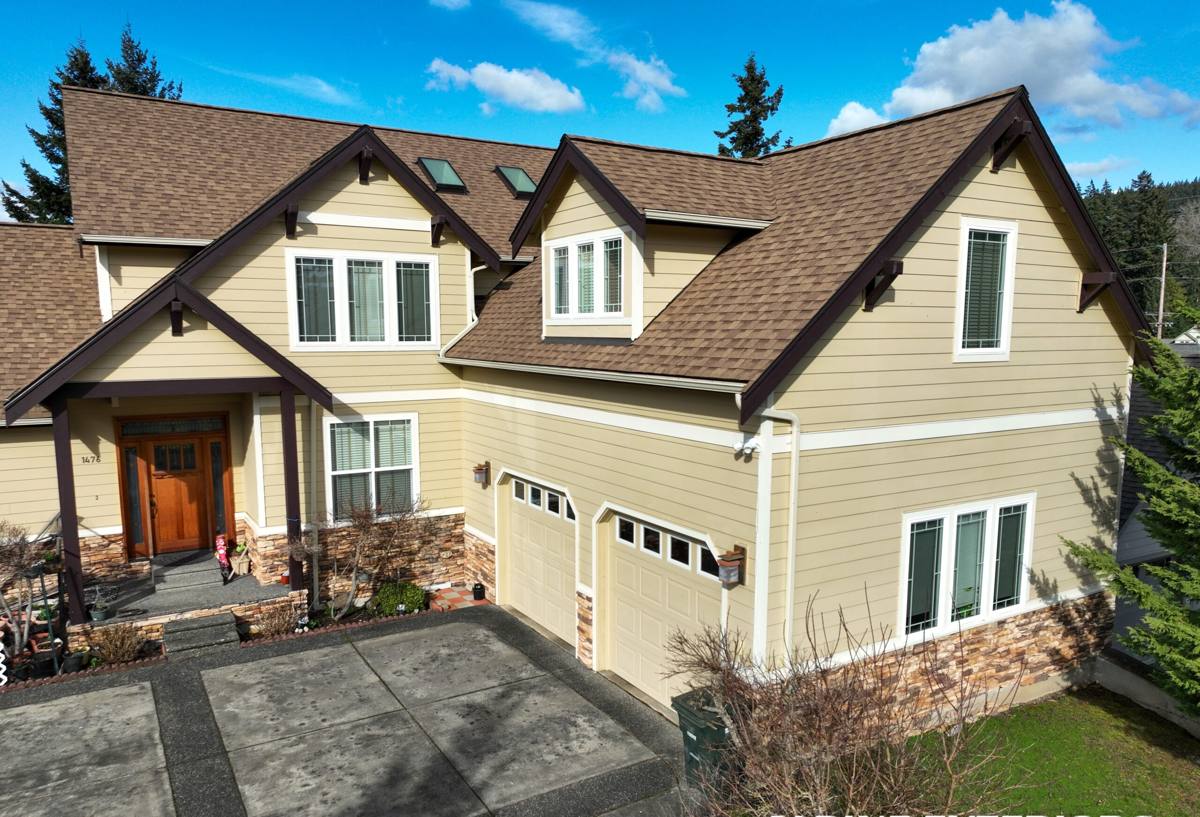
What "Energy-Efficient" Actually Means for a Coastal Home
Energy-efficient windows aren't just about a sticker on the glass. For a house near the water, the rating has to reflect real conditions, not a lab average from a milder climate.
The Glass Package
Most modern replacement windows use dual-pane insulated glass with a low-E coating and an argon gas fill between the panes. The low-E coating reflects radiant heat while still letting visible light through, which helps keep heat inside during our cold, wet winters and reduces solar gain on the rare hot summer days we do get. For homes with more direct west or south exposure, a slightly different low-E coating can be chosen to cut down on glare and fading without sacrificing warmth in winter.
The Frame Material
Frame choice matters more here than in a lot of places, because it's the frame — not the glass — that takes the brunt of salt exposure and moisture cycling. Vinyl frames are a common, budget-friendly choice and hold up well against corrosion, though quality varies a lot between manufacturers. Fiberglass frames cost more but are dimensionally stable and very resistant to the expansion and contraction that comes with our seasonal swings. We generally steer homeowners away from bare aluminum frames on directly exposed elevations, not because aluminum is a bad material everywhere, but because uncoated or poorly finished aluminum is prone to pitting and corrosion in salt air, and once that starts it's a maintenance headache for the life of the window.
The Seal and Weatherstripping
This is where a lot of window failures actually happen, and it's easy to overlook. Compression seals and weatherstripping degrade faster under constant damp-dry cycling than they do in a drier climate. A properly detailed window uses weatherstripping rated for long-term moisture exposure and a sash design that sheds water outward instead of trapping it in the frame track.
Common Window Problems We See on Oak Harbor Homes
- Cloudy or fogged glass from failed seals letting moisture between the panes
- Sticking or hard-to-operate sashes from swollen wood or corroded aluminum tracks
- Soft or discolored trim and sill boards from long-term water intrusion around the frame
- Drafts and cold spots near windows on the wind-exposed side of the house
- Moss or dark streaking building up on horizontal trim ledges and window sills
- Noticeably higher heating bills in homes that still have original single-pane windows
None of these are unusual for a house of a certain age in this area — they're the predictable result of decades of coastal weather working on the same seals and frames. The question isn't whether it'll happen, it's when, and whether the window that goes in next is built to slow the process down.
How a Proper Installation Works
The window itself only performs as well as the installation around it. A high-efficiency window set into a sloppy or poorly flashed opening will still leak air and water, and on a wind-exposed home that shows up fast.
1. Assessment and Measurement
We look at each opening individually — its exposure to prevailing wind and rain, the condition of the existing framing and sill, and any signs of past water intrusion. Exact measurements are taken for a proper fit, since gaps that are too large or too small both cause problems down the road.
2. Removing the Old Window and Checking the Opening
Once the old unit is out, we check the rough opening for rot, soft wood, or existing moisture damage. This is often the first real look anyone gets at what's been happening behind the trim, and it's the right time to deal with any damage before it's sealed back up behind a new window.
3. Flashing and Water Management
This step matters everywhere, but it matters more on a wind-driven-rain site. Proper flashing tape and a correctly lapped weather-resistive barrier direct any water that gets past the window back out, rather than letting it collect at the sill or migrate into the wall cavity. This is the detail that separates a window that lasts decades from one that causes a rot problem five years later.
4. Setting, Shimming, and Sealing
The window is set level and plumb, shimmed correctly so it isn't stressed or bowed, and sealed with an appropriate sealant on the exterior and low-expansion foam or backer rod on the interior for insulation without distorting the frame.
5. Trim and Final Check
Exterior and interior trim is reinstalled or replaced, and every window gets operated and checked before we consider the job finished.
Vinyl, Fiberglass, or Wood-Clad: Weighing the Options
| Frame Type | Salt Air / Moisture Behavior | Maintenance | Typical Cost Range |
|---|---|---|---|
| Vinyl | Good corrosion resistance; quality depends heavily on manufacturer | Low — no painting, occasional cleaning | Lower to mid |
| Fiberglass | Excellent — very stable through moisture and temperature cycling | Low | Mid to higher |
| Wood-clad (exterior vinyl/aluminum-clad, wood interior) | Good exterior protection if cladding is intact; interior wood needs a dry, conditioned space | Moderate — interior finish upkeep | Higher |
| Bare aluminum | Prone to pitting and corrosion in direct salt exposure over time | Higher — refinishing or replacement of corroded parts | Varies |
There's no single right answer for every house — a detached garage window and a primary bedroom window on the windward side of the house don't necessarily need the same spec. We'll walk through the trade-offs for your specific openings rather than pushing one product line for the whole house.
What to Ask Before You Sign a Window Contract
- What frame material and glass package is actually being quoted, in writing?
- Is flashing and sill pan work included, or just window swap-and-seal?
- What's the manufacturer's warranty, and what's the installer's separate labor warranty?
- Who's doing the actual install — the company you hired, or a subcontracted crew?
- How is the old window and trim debris disposed of?
Why Local Installation Experience Matters Here
A crew that's replaced windows across Skagit County and on Whidbey Island knows which elevations on a given lot type take the worst of the wind and rain, and details those openings accordingly. That's not something you get from a general handyman crew that mostly works drier inland conditions and treats every house the same. We've seen how fast a poorly flashed window shows problems out here, and we build every install around avoiding that outcome rather than fixing it later.
We also know this isn't a market where you cut corners on sealant or flashing tape to save a few dollars per window — the payback on doing it right the first time is short, because redoing water damage behind a wall is far more expensive than the extra care up front.
Signs It's Time to Replace, Not Repair
Not every window problem means full replacement. A single failed seal on an otherwise sound frame can sometimes be addressed on its own. But there are signs that point toward replacement being the more honest recommendation:
- Multiple windows in the same wall are fogging or failing around the same time (a sign of age-related seal failure across the batch)
- Frame material is visibly corroded, cracked, or no longer holds hardware securely
- You can feel airflow at the frame edge even with the window fully latched
- Sills or surrounding trim show soft spots or consistent moisture staining
- Heating costs are noticeably out of line with the size and age of the home
If we come out and find that a repair genuinely makes more sense than replacement for your situation, we'll tell you that directly — an honest assessment is worth more to both of us than an unnecessary sale.
Getting Started
If you're dealing with drafty, foggy, or sticking windows in Oak Harbor, we're happy to take a look and give you a straightforward read on what's going on and what your options are — no pressure, no hard sell. Fill out the form below for a free estimate, and we'll walk your home's windows with you and explain exactly what we'd recommend and why.