 Anacortes Window
 Building New in Mount Vernon: Why Window Choice Starts Before the Walls Are Closed In
When a home is framed rather than retrofitted, the windows aren't an afterthought — they're part of the structure's weather defense from day one. New-construction windows use a nailing flange that ties directly into the house wrap and flashing system, which means the install has to be right the first time. There's no siding to remove and redo later if a corner was cut. For builders and homeowners working on new homes in Mount Vernon and the surrounding Anacortes area, getting this stage right is what determines whether the windows perform for the next 20-plus years or start showing problems in year three.
We work new-construction jobs specifically for this region, which means we're already thinking about the conditions these windows will face long before the first one goes into an opening.
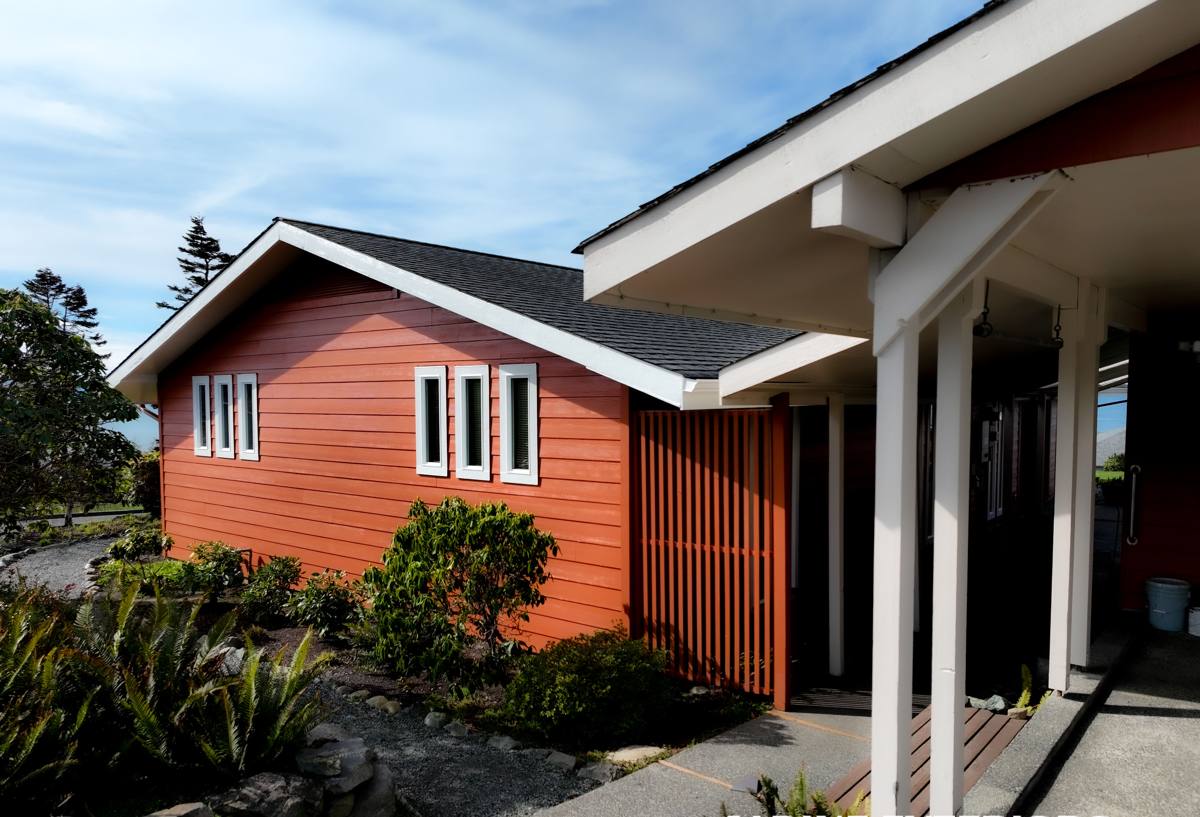
What Skagit County's Climate Actually Demands From a Window
Salt air and coastal exposure
Homes closer to the water deal with airborne salt that accelerates corrosion on hardware, fasteners, and lower-grade metal components. It doesn't ruin a window overnight, but over years it can pit cheap cladding and seize up locks and hinges that weren't spec'd for coastal exposure.
Driving rain and wind-driven moisture
Skagit County gets weather that doesn't just fall straight down — wind pushes rain sideways into wall assemblies, especially on exposed elevations. A new-construction window's flashing and sill pan details matter more here than the window itself, because that's what stops wind-driven rain from finding a path behind the siding.
A long moss and damp season
The extended stretch of gray, damp weather every year means anything with a wood component or a poorly sealed frame stays wet longer than it would in a drier climate. Moss and mildew don't just grow on roofs — they'll take hold in window sills and corners that don't shed water properly or that trap condensation.
None of this is exotic engineering. It's just a matter of respecting what the regional climate actually does to a building over time, instead of installing to a generic national spec and hoping it holds up.
New-Construction vs. Retrofit: Why the Distinction Changes the Whole Job
"New-construction" isn't a marketing term — it's a specific window type and installation method, and it's not interchangeable with a replacement or pocket window. Using the wrong approach on a new build (or vice versa on a remodel) creates real problems.
| Factor | New-Construction Window | Replacement/Pocket Window |
|---|---|---|
| Flange | Nailing flange fastens directly to sheathing | No flange; fits inside existing frame |
| Flashing integration | Ties into house wrap and flashing tape during framing | Relies on the existing opening's condition |
| Best used for | New builds, additions, full wall openings | Existing homes keeping the original frame |
| Trim/exterior finish | Installed before siding and trim go on | Trim usually stays as-is |
| Moisture management | Built into the wall assembly from scratch | Depends heavily on prior installation quality |
On a new build in Mount Vernon, there's no excuse for using the wrong method — the wall is open, the sequencing is in our control, and it should be done as a new-construction install with proper flashing, not shortcut as if it were a retrofit.
What a Correct New-Construction Install Actually Involves
A window that's simply "nailed in and caulked" is the most common way water problems start in coastal Washington construction. The sequence matters more than the window brand.
- Rough opening checked for square, level, and correct dimension before the window ever arrives
- Sill pan flashing installed to direct any water that gets past the window back outside the wall
- Self-adhered flashing tape integrated with the house wrap in the correct shingle-lap order (bottom, sides, then top)
- Backer rod and appropriate exterior sealant at the perimeter — not just a bead of caulk over a gap
- Proper shimming so the frame isn't racked or under stress, which affects how well it seals and operates for years
- Interior air sealing with low-expansion foam or backer rod, not just insulation stuffed in the gap
- Final check for square operation of sashes before trim and siding close up access to the opening
Every one of these steps is easy to skip and hard to inspect once the siding is on. That's exactly why the crew doing this work needs to treat it as a sequence, not a single task.
Choosing the Right Frame Material and Glass for This Climate
Frame material and glass package decisions should be made with the region in mind, not just budget. Vinyl frames are the standard choice for most new builds here — they don't corrode from salt air and hold up well to the damp season, provided the vinyl itself is a quality grade with UV-stable formulation. Fiberglass costs more but offers extra dimensional stability, which matters on larger openings or homes with more temperature swing. Wood-clad windows can look great, but the wood core means any breach in the cladding or seal gives moisture a place to sit and do damage over a long wet season — that's a maintenance trade-off we're upfront about, not a reason to avoid them outright, just a reason to be honest about the upkeep involved.
For glass, a Low-E coating paired with argon gas fill is the baseline we recommend for new builds in this area — it manages both heat loss in winter and glare/heat gain on the clearer summer days, and it doesn't add meaningfully to cost on a new-construction order.
A quick way to think about the trade-offs
| Frame Type | Strength | Trade-off |
|---|---|---|
| Vinyl | Cost-effective, no corrosion, low maintenance | Less rigid on very large spans |
| Fiberglass | Very stable, holds paint/finish well | Higher upfront cost |
| Wood-clad | Interior wood look, strong aesthetics | Cladding seal integrity is critical to protect the wood core |
How Our Process Works on New-Construction Projects
On a new build, we're usually coordinating with a general contractor or builder rather than working solo in an occupied home, so timing and communication matter as much as the install itself.
- Plan review: we confirm rough opening sizes against the actual window order before anything is manufactured, catching mismatches before they become a framing problem.
- Scheduling around the build sequence: windows go in after the house wrap is on and before siding starts, and we work with the builder's timeline rather than forcing our own.
- Installation to the sequence above: flashing, sill pans, sealant, and shimming done in order, not improvised on site.
- Walkthrough before siding closes it up: every opening gets checked for square operation, proper seal, and clean flashing lap before it's covered.
- Final inspection at project close: operation, hardware, and weatherstripping checked once the home is closed in and finished.
Because we work regularly with builders and homeowners around Mount Vernon and Anacortes, we already know what local inspectors look for and how to sequence around common framing schedules in this area — that familiarity saves callbacks and rework.
What Drives Cost on a New-Construction Window Package
New-construction window pricing is driven by more than the sticker price of the units themselves. For an honest ballpark, most homeowners in this area should expect new-construction window packages to fall in a broad mid-range per opening once install is included, with total project cost scaling from there based on the factors below — exact numbers depend on the specific home and order.
| Cost Factor | Why It Matters |
|---|---|
| Frame material | Vinyl is typically the most budget-friendly; fiberglass and wood-clad cost more |
| Number and size of openings | Larger and more numerous windows increase both material and labor |
| Glass package | Low-E, argon fill, and tempered glass (required in certain locations by code) add cost |
| Special shapes or sizes | Custom or oversized units cost more than standard stock sizes |
| Site access and timing | Coordinating tightly with a builder's schedule can affect labor efficiency |
Why Hiring a Crew That Already Works Mount Vernon and Anacortes Matters
New-construction window installation is unforgiving of guesswork, and the consequences of a bad flashing job don't show up until the siding's been on for a year or two — by then it's a much bigger repair. A crew that already works regularly in this part of Skagit County has seen how local wall assemblies, siding types, and inspection expectations tend to line up, and isn't learning the region's climate demands on your project. That familiarity shows up in fewer surprises during the build and a lower chance of a callback once the home is finished and occupied.
We'd rather walk a builder or homeowner through the reasoning behind a frame or glass choice than just hand over a quote — a window package that's right for a coastal-exposed lot may not be the same one that's right for a more sheltered inland site, even within the same neighborhood.
Get a Straight Answer on Your New-Construction Windows
If you're framing a new home or addition in Mount Vernon or anywhere around Anacortes, we're happy to look at your plans and give you a clear, no-pressure estimate before you commit to a window order. Use the form below to get in touch and we'll follow up to talk through the details.