 Anacortes Window
 Flounder Bay Sits Right at the Edge of the Weather
Flounder Bay is shoreline property, and shoreline property in Skagit County takes a different kind of beating than a roof three miles inland. The same marine air that makes the view worth having also carries salt onto every exposed surface on your house, day after day, year-round. Add in the driving rain that comes off Rosario Strait during winter storms and the long, damp moss season that runs from fall through spring, and you've got three separate stressors working on a roof at the same time — corrosion, water intrusion, and organic growth. A roofing material that holds up fine in a drier, inland neighborhood can fail years early out here if it wasn't specified and installed with that combination in mind.
Metal roofing, done right, is one of the better answers to that combination. It doesn't absorb water the way wood shakes or aging composition shingles do, it sheds moss more easily than a rough-textured surface, and modern coatings are built to resist salt-air corrosion. But "metal roofing" isn't one product — the panel type, the metal, the coating, and the fastening details all matter, and getting any of them wrong in a bay-front environment shows up faster here than almost anywhere else in Anacortes.
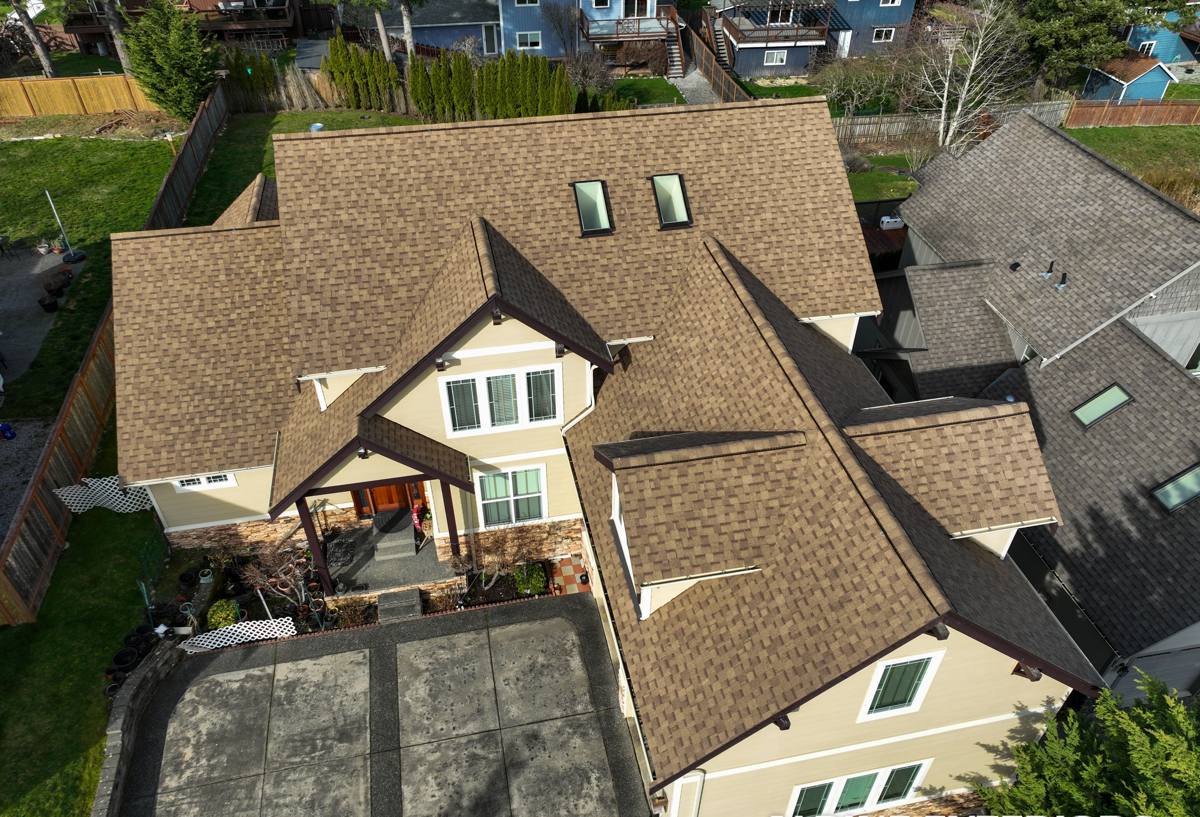
What Salt Air, Rain, and Moss Actually Do to a Roof
Salt Air and Corrosion
Airborne salt is conductive and mildly corrosive. On a metal roof, it accelerates rust at any point where the protective coating is thin, scratched, or missing — cut edges, fastener heads, and areas where two dissimilar metals touch and start a slow electrolytic reaction. Homes closer to open water see this show up first at penetrations and edges, which is exactly where a rushed installation tends to cut corners.
Driving Rain
Wind-driven rain doesn't just fall on a roof — it gets pushed sideways and upward under laps, around vents, and along valleys. On a bay-exposed lot, that means flashing details and underlayment matter more than on a sheltered inland roof, because water is being forced into gaps that would stay dry in calmer weather.
Moss Season
Western Washington's long wet season gives moss and algae months to establish themselves on any roof that stays shaded or damp. Moss holds moisture against the roof surface, works its way under laps and fasteners over time, and — on the wrong material — can hold enough water to accelerate both rot and corrosion. A steep-enough pitch and a smooth, properly lapped metal surface make it much harder for moss to get a foothold in the first place.
What a Correct Metal Roof Looks Like Out Here
A metal roof that's going to hold up on a bay-front Anacortes property needs a few things to be right, none of which are visible once the job is finished — which is exactly why they get skipped by crews in a hurry.
- Fasteners and flashing rated for marine/coastal exposure, not general-purpose hardware
- Panel laps and seams detailed to shed wind-driven rain, not just standing water
- Compatible metals throughout — no untreated contact points between dissimilar metals
- A ventilated underlayment system so any moisture that does get past the panels can dry out
- Properly flashed penetrations at every vent, pipe, and chimney, sealed to the coastal exposure level
- Edge and eave details built to handle sideways rain, not just vertical runoff
Skip any one of these and the roof can still look fine for a few years — the failures in a salt-air environment tend to be slow and hidden until they aren't.
Panel Types and Coatings: What's Actually Different
There's more than one way to build a metal roof, and the differences matter more on a bay-exposed home than they would three streets back from the water.
| Option | How It Handles Salt Air & Rain | Trade-Offs |
|---|---|---|
| Standing seam (concealed fasteners) | Fasteners are hidden under the seam, so they're not directly exposed to salt spray and rain — generally the strongest choice for bay-front exposure | Higher material and labor cost; installation is less forgiving of shortcuts |
| Exposed-fastener panels | Can perform well, but every screw head is a potential entry point for water and a corrosion starting point over time | Lower upfront cost; requires periodic fastener inspection and occasional resealing |
| Steel with a quality coating system | Strong and cost-effective; coating quality is what determines how it holds up to salt exposure | Cut edges need proper treatment or they become the first place rust starts |
| Aluminum | Naturally corrosion-resistant even in direct salt air, since it doesn't rust the way steel does | Costs more; softer metal, so panel gauge and fastening details matter for wind and impact resistance |
None of these is automatically "the right answer" — it depends on your budget, how close to the water you are, your roof's pitch and exposure, and how long you plan to own the house. What matters is that the choice gets made deliberately, based on your specific lot, not defaulted to whatever's cheapest to stock.
Repair, Recoat, or Replace?
Not every issue on a bay-front roof means a full tear-off. The right call depends on how far along the problem is and whether the underlying deck and structure are still sound.
| Situation | What's Usually Needed |
|---|---|
| Isolated rust at a few fasteners or a flashing point | Spot repair — replace hardware, reseal, recoat locally |
| Moss buildup with no visible panel damage yet | Careful cleaning and a look at underlying fasteners and laps |
| Coating breakdown across large panel areas | Recoat or panel-section replacement, depending on how far it's progressed |
| Widespread corrosion, repeated leaks, or deck damage found underneath | Full roof replacement — patching a roof in this condition rarely holds up long-term |
We'll always tell you honestly which category your roof falls into. A recoat or repair that actually solves the problem is a better outcome for you than an unnecessary full replacement — and a roof that genuinely needs replacing shouldn't be patched just to delay the bigger job.
How We Handle a Flounder Bay Metal Roofing Job
- On-site assessment. We look at your roof's exposure to prevailing wind and rain direction, current condition, ventilation, and any existing moss or corrosion, not just square footage.
- Material recommendation matched to your lot. We'll walk you through panel type, metal, and coating options based on how exposed your specific roof is — not a one-size-fits-all pitch.
- Written scope and honest pricing. You'll know what's included — underlayment, flashing details, fastener spec — before work starts, not after.
- Installation built for the coastal exposure. Flashing, laps, and penetrations are detailed for wind-driven rain and salt air, not just standard installation minimums.
- Final walkthrough. We show you the completed work and go over any maintenance that will actually extend the roof's life out here.
Maintenance in a Marine Climate
Even a well-installed metal roof benefits from periodic attention in a bay-front setting. The goal isn't constant upkeep — it's catching small things before the salt air and rain turn them into bigger ones.
- Keep gutters and valleys clear of needles and debris so water isn't sitting against panel edges
- Have moss growth removed gently before it establishes under laps or around fasteners
- Check exposed-fastener roofs periodically for early rust at screw heads
- Have flashing around vents and chimneys inspected after major storms, not just on a fixed schedule
- Address any coating scratches or bare spots before they become active rust
Why It Matters to Hire a Crew That Already Works This Area
Metal roofing installation isn't uniform across Skagit County. A crew that mostly works drier, inland neighborhoods can do a perfectly competent job on a standard roof and still under-spec the details that matter on a bay-front property — because they haven't had to deal with that level of salt exposure and wind-driven rain often enough for it to change their default habits. A crew that regularly works Flounder Bay and similar Anacortes shoreline areas already knows which fastener grades hold up, which flashing details actually stop sideways rain, and where moss tends to take hold first on local roof lines. That familiarity doesn't show up as a line item on a quote, but it's the difference between a roof that looks right at installation and one that's still performing correctly in twelve years of salt air.
Getting an Honest Estimate
If you're dealing with an aging roof, visible moss, or you're just planning ahead for a home that sits close to the water, it's worth having someone look at it who understands what Flounder Bay's climate actually does to a roof over time. We'll give you a straight assessment of where your roof stands and what your real options are — no pressure, no inflated urgency. Fill out the form below for a free estimate.