 Anacortes Window
 Why a Guemes Island Deck Is a Different Build
A deck on Guemes Island sits in a tougher environment than a deck built ten miles inland. The island is surrounded by saltwater, which means airborne salt is a constant presence on every exposed surface. Add the driving rain that comes through this part of Skagit County most of the year, plus a long moss season that starts early and doesn't let up, and you have a structure that's being tested from the day it's finished. A deck built to a generic spec — the kind that would hold up fine in a drier, more sheltered part of the state — tends to show its age here faster than the homeowner expects.
That doesn't mean a Guemes Island deck has to be a maintenance headache or a short-lived investment. It means the material choices, the fasteners, the framing details, and the finishing steps all need to be selected with this specific exposure in mind, not adjusted after the fact once corrosion or rot shows up.
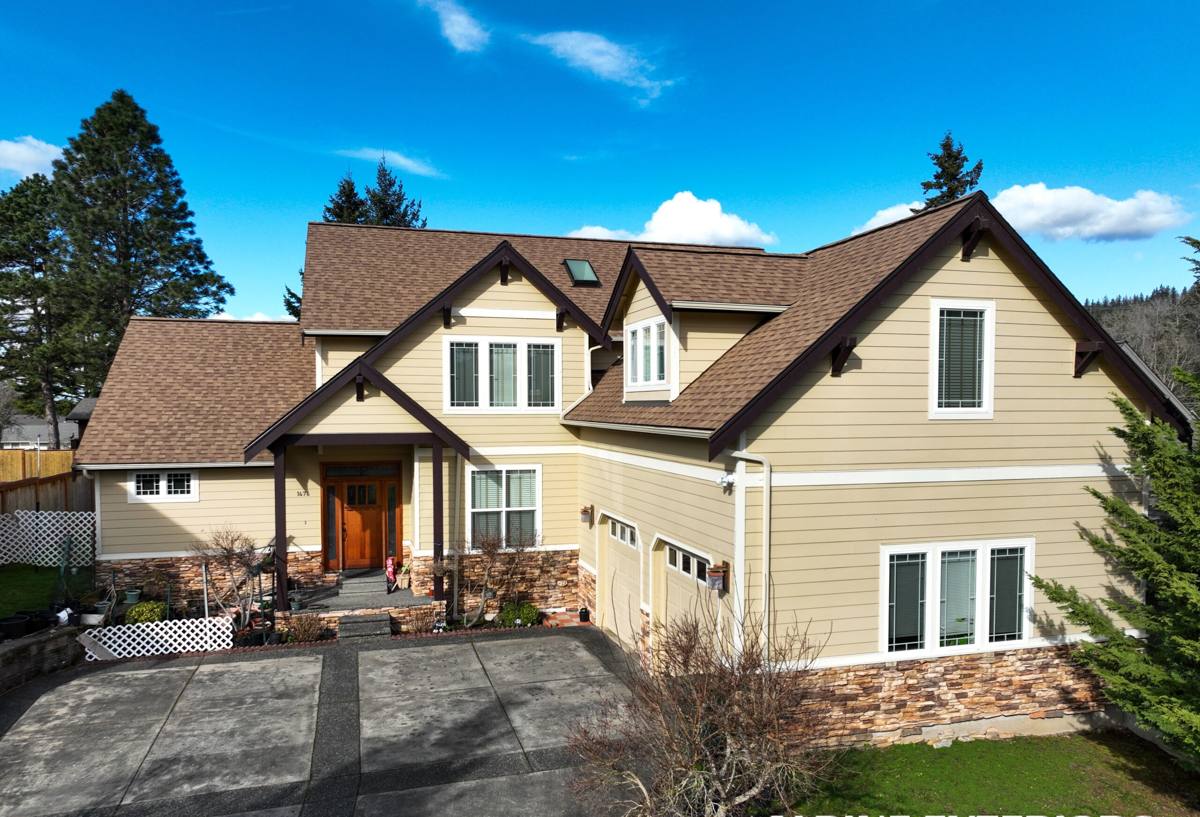
What Salt Air, Rain, and Moss Actually Do to a Deck
Salt Air and Metal
Airborne salt accelerates corrosion on anything metal — fasteners, joist hangers, railing hardware, post bases. Standard galvanized coatings that are perfectly adequate elsewhere can start breaking down faster near open water, especially where the deck faces prevailing wind and spray. Once corrosion starts on a structural fastener, it's not cosmetic — it's a slow loss of holding power in the connections that keep the deck attached to the house and to itself.
Driving Rain and Moisture Intrusion
Rain that comes in sideways doesn't just fall on the deck surface — it gets pushed into gaps, under railing posts, behind ledger boards, and into end grain that isn't sealed. Wood that can't dry out between storms stays wet longer, which is exactly the condition rot and fungal growth need to take hold. The problem isn't rainfall totals so much as how much of the year the wood stays damp.
Moss and Surface Buildup
A long moss season means organic growth gets a head start on shaded, north-facing, or low-airflow sections of decking before a homeowner even notices. Moss holds moisture against the deck surface, which speeds up the exact wood decay or surface degradation that a well-drained, well-ventilated deck is designed to avoid. Left alone, it also turns a deck surface slick and unsafe underfoot.
Choosing Decking Material for Island Exposure
There's no single "best" decking material — there's a best material for this site, this budget, and this level of tolerance for upkeep. Here's how the common options actually perform under salt air, rain, and moss:
| Material | Salt Air Resistance | Rain/Moisture Behavior | Moss & Maintenance |
|---|---|---|---|
| Capped composite | Very good — cap layer resists corrosion staining and doesn't absorb salt | Doesn't swell or rot; water sheds off the surface | Still needs periodic washing; moss can grow on the surface film if shaded |
| Cedar | Good natural rot resistance, but exposed fasteners and hardware still corrode normally | Needs regular sealing to keep repelling driving rain | Absorbs moisture more than composite, so moss and mildew take hold faster without upkeep |
| Pressure-treated pine | Fair — the treatment resists rot, not corrosion of surface hardware | Prone to cupping and checking if it dries and wets repeatedly | Higher maintenance; moss and algae show up quickest of the three |
| PVC/vinyl decking | Excellent — no organic material for salt or moisture to attack | Fully waterproof surface; no swelling | Very low maintenance but can look and feel less like traditional wood decking |
Composite and PVC decking generally make the most sense for direct marine exposure because they don't absorb moisture the way wood does. Cedar is a reasonable choice for homeowners who want a natural look and are willing to keep up with sealing on a real schedule. Pressure-treated pine is the least suited to this environment unless it's protected from direct weather.
Framing and Structure: The Part You Don't See
The decking surface gets all the attention, but the framing underneath is what actually determines how long a deck lasts in this climate. A few details matter more here than they would in a drier inland yard:
- Ledger board flashing — where the deck attaches to the house needs proper flashing and a moisture barrier, since this connection point sees repeated wetting from wind-driven rain.
- Joist tape or capping — sealing the tops of wood joists keeps rain from soaking into end grain and cut edges, which is where rot typically starts first.
- Corrosion-resistant hardware — joist hangers, structural screws, and post bases rated for coastal or high-corrosion environments, not standard interior-grade galvanized parts.
- Footings set below frost and grade — proper footing depth and drainage around posts prevents the freeze-thaw and saturation cycles that loosen a deck's foundation over time.
- Airflow underneath — enough clearance and ventilation below the deck so moisture and moss-friendly dampness don't just sit trapped against the framing.
Railings, Fasteners, and Hardware in a Marine Environment
Railings and fasteners take direct salt exposure because they're rarely covered by anything. This is one area where cutting corners shows up fast — a railing post base or a bracket that starts rusting within a couple of seasons is usually a sign standard-grade hardware was used where marine-grade or stainless hardware should have been.
Our standard for a Guemes Island deck is stainless steel or coated fasteners rated for coastal exposure at every structural connection, and railing hardware chosen the same way. It costs more upfront than standard fasteners, but replacing corroded structural connections later — often after they've already let moisture in around the fastener holes — costs a great deal more than getting it right the first time.
How We Approach a Guemes Island Deck Build
Every deck starts with an honest look at the site: sun and wind exposure, how much direct spray or salt-laden wind it gets, drainage around the footprint, and what's realistic for the homeowner's maintenance appetite. From there, our process looks like this:
- On-site assessment of exposure, existing structure (for rebuilds or extensions), and drainage.
- Material and hardware selection matched to that specific exposure — not a default spec applied everywhere.
- Permitting and setback confirmation, since Guemes Island sits under unincorporated Skagit County jurisdiction and its own rules apply to the property.
- Framing with flashing, joist protection, and corrosion-resistant hardware installed correctly the first time.
- Decking and railing installation with attention to drainage gaps, fastener placement, and airflow underneath.
- Final walkthrough covering what maintenance the specific materials chosen will actually need.
A deck that's done right the first time in this climate isn't more complicated to build — it just requires not skipping the steps that don't show up until year two or three.
What a Guemes Island Deck Actually Needs to Stay Sound
No deck in this environment is maintenance-free, including composite and PVC. The difference between a deck that lasts and one that needs early repairs usually comes down to a short list of habits:
- Sweep or rinse off surface debris and salt residue a few times a year, especially after storms.
- Clean moss off shaded or low-airflow sections before it spreads, rather than after it's established.
- Check railing posts, hardware, and any exposed fasteners annually for early rust or corrosion.
- Reseal wood decking (cedar or treated lumber) on the schedule the product actually calls for, not "when it starts looking gray."
- Keep gutters and downspouts near the deck clear so runoff isn't dumping extra water onto or under the structure.
- Confirm underneath ventilation hasn't been blocked by storage, plantings, or added skirting.
What Affects the Cost of a Guemes Island Deck
Pricing depends on the specifics of the property, but a few factors consistently move the number more than others in this area:
| Factor | Why It Matters Here |
|---|---|
| Decking material | Composite and PVC cost more upfront than wood but need less upkeep in salt air and rain |
| Fastener and hardware grade | Marine-grade or stainless hardware costs more per piece than standard galvanized |
| Site access and logistics | Material and equipment deliveries to the island go through the ferry, which affects scheduling and, on larger jobs, delivery logistics |
| Height and structure | Elevated decks or those requiring engineered footings cost more than ground-level builds |
| Existing deck condition | Rebuilds that require removing rotted framing or corroded hardware add demolition and disposal time |
Rather than quote a broad range that doesn't mean much without seeing the site, we prefer to walk the property, understand exposure and access, and put a real number to it.
Why It Matters to Hire a Crew That Already Works on Guemes Island
Building on an island changes the logistics of a project — materials, equipment, and crews all move on the ferry schedule, and that affects how a job gets sequenced and staged. A contractor who's already familiar with that rhythm plans around it instead of losing days to it. Just as important, a crew that regularly works properties on Guemes Island and elsewhere around Anacortes has already seen what standard-grade materials and fasteners do after a season or two of direct salt exposure, and builds accordingly from the start rather than learning it the hard way on someone else's deck.
If you're planning a new deck, a replacement, or an addition to an existing one on Guemes Island, we're happy to come take a look and talk through what actually makes sense for your site. There's no cost and no pressure to get an estimate — just a straight assessment of what your deck needs to hold up here.