 Anacortes Window
 Flounder Bay Roofs Work Harder Than Most
Flounder Bay sits close enough to the water that every roof out here deals with something inland homes never see: a steady drift of salt-laden air off the marina and bay, wind-driven rain that comes in sideways instead of straight down, and long stretches of gray, damp weather that give moss and moisture months at a time to work into a roof system. None of that is unusual for Anacortes or the rest of Skagit County, but Flounder Bay's proximity to open water pushes the salt exposure and wind-driven rain a notch higher than a roof three or four miles inland would face.
A roof that's built and installed correctly handles all of this without drama for decades. A roof that's installed with shortcuts — wrong fastener spacing, missing ice-and-water barrier at the eaves, poor ventilation, flashing that's caulked instead of properly integrated — will show problems early, usually right where the weather is hardest on it: valleys, eaves, and anywhere the roof meets a wall or chimney.
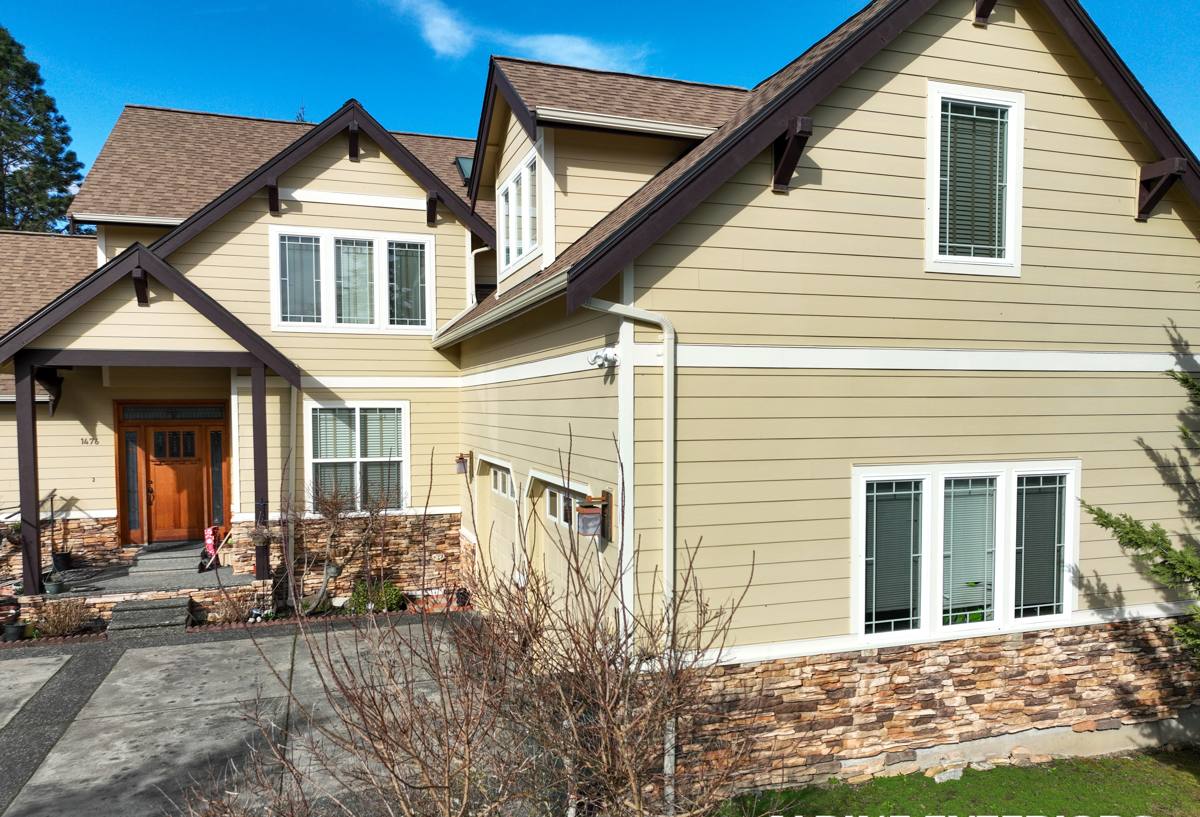
Signs a Flounder Bay Home Is Ready for a New Roof
Roofs rarely fail all at once. They tell you first. Homeowners in this area should watch for:
- Granules collecting in gutters or at downspout outlets — a sign the shingle surface is wearing thin
- Shingles that are cupping, curling at the edges, or look brittle
- Moss or dark algae streaking that keeps coming back within a season or two of cleaning
- Soft spots or sagging when walked on, or visible sagging from the ground
- Daylight visible through the roof deck from inside the attic
- Interior water stains on ceilings, especially near valleys, skylights, or chimneys
- A roof that's 20+ years old on standard asphalt shingles, even if it "looks fine" from the street
Any one of these is worth a look. Several at once usually means it's time to plan a replacement rather than keep patching.
What a Correct New Roof Installation Actually Involves
A new roof is more than shingles nailed to plywood. In a climate like ours, the parts you don't see matter as much as the parts you do.
Tear-Off and Deck Inspection
We remove the old roofing down to the deck rather than laying new material over old — that's the only way to actually see the condition of the sheathing underneath. Anacortes' rain patterns mean deck rot at eaves, valleys, and around old flashing is common by the time a roof is due for replacement. Any soft or damaged sheathing gets replaced before anything new goes down; roofing over a compromised deck just hides a problem that will resurface.
Underlayment and Ice-and-Water Barrier
Underlayment is the roof's backup layer if wind or water gets past the shingles — and with driving rain off the bay, it earns its keep. We use self-adhered ice-and-water barrier at eaves, valleys, and around penetrations (chimneys, skylights, vent stacks), with synthetic underlayment across the rest of the field. This combination is standard practice for coastal Pacific Northwest roofs, not an upsell.
Flashing
Most roof leaks trace back to flashing, not the field shingles. Step flashing at walls, counterflashing at chimneys, and properly formed valley metal all need to be installed correctly and integrated with the underlayment — not just caulked over old flashing left in place. Caulk is a maintenance item, not a waterproofing method.
Ventilation
A roof needs balanced intake and exhaust airflow to manage moisture from inside the house and keep the deck at a consistent temperature. Poor ventilation shortens shingle life, encourages moisture buildup in the attic, and — in our climate especially — feeds the conditions moss and moss-related decay need to take hold.
Fastening and Shingle Installation
Manufacturer nailing patterns exist for a reason, especially for wind resistance. We follow them, including tighter patterns in higher-exposure areas of the roof, which matters more for a bayside property than one tucked inland.
Choosing Materials for Salt Air, Rain, and Moss
There's no single "best" roofing material for every home — it depends on budget, roof style, and how much maintenance a homeowner wants to do. Here's how the common options compare for a Flounder Bay setting:
| Material | Moss Resistance | Typical Lifespan | Maintenance |
|---|---|---|---|
| Standard asphalt composition shingle | Moderate — benefits from algae-resistant granules | 20–30 years | Periodic moss/debris removal, especially on north-facing slopes |
| Algae-resistant (AR) composition shingle | Better — copper-infused granules slow algae/moss growth | 25–30 years | Lower than standard shingle, still needs occasional cleaning |
| Standing seam metal | High — smooth surface sheds debris, little for moss to grip | 40–50+ years | Low; occasional debris clearing from valleys |
| Synthetic composite (shake/slate look) | Good to high, varies by product | 30–50 years depending on product | Low to moderate |
We'll walk through the trade-offs honestly during an estimate — including upfront cost, how the roof pitch and tree cover on your specific lot affect moss risk, and how each option holds up to the salt air specifically. For homes with heavy tree cover or a lot of shade near the water, moss resistance often matters more than it would on a more exposed, sun-facing lot.
Our New Roof Installation Process
The process is straightforward, but we don't skip steps to save time:
- On-site inspection and estimate — we look at the existing roof, attic ventilation, and any problem areas before quoting anything
- Material selection — we go over options and trade-offs for your specific roof and budget, no pressure toward the most expensive option
- Scheduling around weather — in Skagit County, timing a tear-off matters; we plan around forecasted rain to keep the deck protected
- Tear-off and deck repair — old roofing removed, deck inspected, any damaged sheathing replaced
- Underlayment, flashing, and ventilation installed — the parts that determine whether the roof performs for its full lifespan
- Shingle or material installation — installed to manufacturer spec, including fastening pattern and exposure
- Cleanup and final walkthrough — magnetic sweep for nails, gutters checked, and a walkthrough so you know what was done
Before your project starts, a few things help it go smoothly:
- Move vehicles away from the driveway and areas directly below the roofline
- Clear patio furniture, grills, or planters from the perimeter of the house
- Let us know about any interior ceiling cracks or fragile items that vibration from tear-off could affect
- Plan for pets to be inside or elsewhere during the loudest work — tear-off day is not a quiet day
Ventilation and Moss Prevention Aren't Optional Extras
In a lot of the country, ventilation and moss control are treated as afterthoughts. On the water in Anacortes, they're part of the core job. Poor attic ventilation traps moisture, which shortens shingle life and can lead to deck rot from the inside — a problem you won't see until it's already serious. Moss, left unaddressed, works its roots-like structures under shingle edges and holds moisture against the roof surface long after a storm has passed, which is exactly the kind of standing moisture our climate makes hard to avoid without the right materials and airflow. A correct installation — right ventilation, right underlayment, and a material suited to the site — reduces how often you need to think about either issue.
What Affects the Cost of a New Roof
Every roof is priced based on the specifics of the home, but the main variables are consistent:
| Factor | Why It Matters |
|---|---|
| Roof size and number of stories | More square footage and steeper access mean more material and labor time |
| Roof pitch and complexity | Multiple valleys, dormers, and roof planes take longer to flash correctly than a simple gable |
| Deck condition | Rotted sheathing found during tear-off adds material and labor to replace it |
| Material choice | Standard shingle, algae-resistant shingle, metal, and composite materials all price differently |
| Layers of existing roofing | Multiple old layers add disposal cost and tear-off time |
| Access and site conditions | Steep lots, limited driveway access, or proximity to the water can affect staging and disposal logistics |
We don't quote a roof without seeing it in person — anything given sight unseen is a guess, and guesses lead to change orders. An in-person estimate is the only way to give you a number you can actually rely on.
Why Local Experience in Flounder Bay Matters
A crew that's worked roofs around Flounder Bay and the rest of Anacortes already knows what the salt air does to fasteners and flashing over time, which slopes on this side of Skagit County tend to hold moss the longest, and how the wind off the bay behaves during a fall or winter storm. That's not something you learn from a general roofing manual — it's learned from doing the work here, on homes exposed to the same conditions as yours. It also means we're a known, reachable local business if a question comes up five or ten years after the install, not a crew that worked the area once and moved on.
If your roof is showing its age or you're planning ahead rather than waiting for a leak, we're happy to take a look and give you a straightforward, no-pressure estimate. Use the form below to get started.