 Anacortes Window
 Building a Deck That Actually Holds Up on Fidalgo Island
Fidalgo Island sits right where the marine air off Rosario Strait and the Guemes Channel meets the wet, mossy, tree-shaded lots that make this part of Skagit County so appealing. It's a beautiful place to build outdoor living space, but it's a demanding one too. A deck design that works fine inland in Mount Vernon or Burlington can fail early out here if it wasn't built with the island's specific conditions in mind. That's the difference between a deck that looks good in photos for one summer and one that's still tight, dry, and safe a decade later.
This page is about custom decks specifically for Fidalgo Island properties — what the salt air, driving rain, and long moss season actually do to a deck over time, and what it takes to build one correctly the first time.
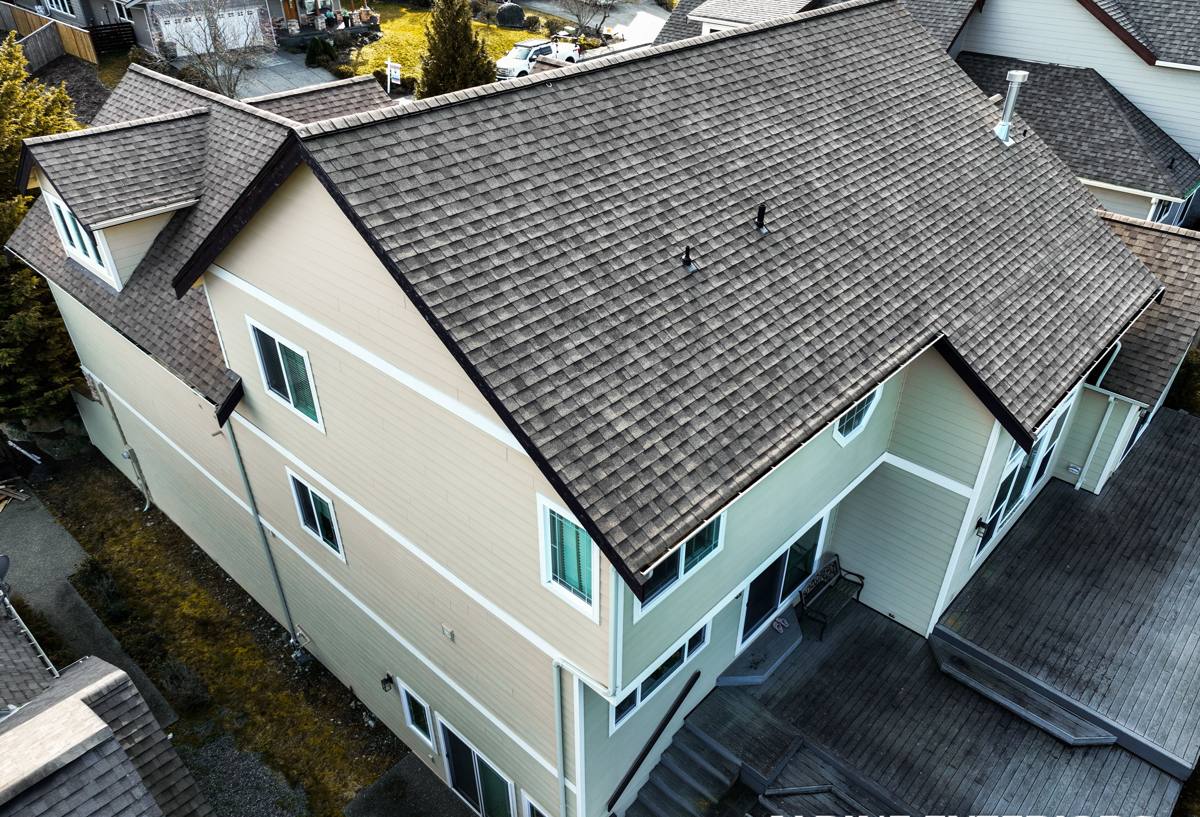
What the Local Climate Does to a Deck
Three things drive almost every deck problem we see on the island:
Salt Air
Homes closer to the water deal with airborne salt that accelerates corrosion on anything metal — fasteners, brackets, railing hardware, hinges. A fastener rated for general outdoor use inland can start staining, weeping, or losing grip years earlier here. This is one of the most overlooked reasons decks develop loose boards, streaking, and rust bleed near the coast.
Driving Rain
Storms off the Strait don't just fall straight down — wind-driven rain gets pushed sideways into ledger connections, under railings, and into any gap that wasn't properly flashed or sealed. Water that would run off a flat roof in calm rain gets forced into joints here, which is why ledger board flashing and proper end-grain sealing matter more on this island than in a lot of inland Washington towns.
Moss and Shade
Between tree cover and a long damp season, moss and algae get a real foothold on any deck surface that doesn't drain and dry out between rains. Moss holds moisture against the decking material, and on wood that means slow rot; on composite it means staining and a slick, unsafe walking surface if it's not addressed.
None of this means a deck can't be built to last on Fidalgo Island — it means the design decisions (materials, fasteners, spacing, drainage) have to account for these three things from the start, not get patched later.
What a Correctly Built Deck Involves Here
A deck that's built right for this environment isn't just about picking a nice board. It comes down to a handful of decisions that most homeowners never see once the project is finished:
- Ledger flashing that directs water away from the house band board instead of letting it pool at the attachment point
- Corrosion-resistant fasteners and structural hardware rated for coastal or wet-climate exposure, not just standard exterior-grade
- Joist protection (tape or membrane over framing lumber) so the substructure isn't absorbing standing water at every screw hole
- Consistent board gapping that allows airflow and drainage rather than trapping moisture and debris
- Proper slope away from the house — usually a small, deliberate pitch so water sheds instead of sitting
- Railing and post connections built to hold up under wind loads that are higher near open water or exposed lots
Skip any one of these and the deck may look fine on installation day but start showing problems — soft spots, rust streaks, persistent moss, sagging boards — within a few wet seasons instead of a decade or more.
Choosing the Right Decking Material
There's no single "best" decking material for every Fidalgo Island property — it depends on sun exposure, tree cover, budget, and how much upkeep the homeowner actually wants to do. Here's how the common options compare specifically for this climate:
| Material | How It Handles Moss & Moisture | Maintenance | Rough Cost Range |
|---|---|---|---|
| Pressure-treated wood | Prone to moss/algae in shaded areas if not cleaned; needs sealing to resist moisture | Annual cleaning, periodic staining/sealing | Lowest upfront cost |
| Cedar | Naturally more rot-resistant but still needs finish maintenance in wet shade | Regular oiling/sealing to keep weather resistance | Moderate |
| Composite decking | Resists rot well; can still stain or get slick with moss film if never cleaned | Occasional washing, no staining or sealing | Higher upfront, lower long-term upkeep |
| PVC/capped composite | Best moisture resistance of the group; least absorbent surface | Lowest — periodic washing | Highest upfront cost |
For heavily shaded, tree-covered lots common on parts of the island, we generally steer homeowners away from raw untreated wood left unsealed — it's the combination that struggles most with moss in this climate. For sunnier, more open lots near the water, a well-maintained wood deck can still perform well as long as the fastener and framing choices underneath it account for the salt air.
A Note on Product Choices
We install what fits the site and the budget, but we're upfront when a product isn't a good match for a specific lot. A low-maintenance composite marketed as "install anywhere" still needs proper spacing and drainage detailing to avoid moisture problems in a shaded, damp spot — the material doesn't override bad substructure decisions. We'd rather tell a homeowner that up front than let a deck underperform because of a mismatch between product and site.
Substructure and Fasteners: The Part Nobody Sees
Most deck failures on the island start below the decking boards, not on top of them. Framing lumber that isn't protected from standing moisture, fasteners that weren't rated for coastal exposure, and hardware connections that trap water instead of shedding it are the real cause behind decks that "just fell apart faster than expected." We build the substructure — joists, beams, posts, footings, and every connector between them — to the same coastal-durability standard as the visible decking, because that's the part that actually determines how long the deck lasts.
Drainage and Moss Prevention by Design
You can't fully stop moss from wanting to grow on a shaded, damp island lot — but you can design a deck so moss doesn't get the standing moisture it needs to take hold:
- Deliberate slope so water sheds off the surface instead of pooling
- Board spacing that lets air move underneath and dries the structure between storms
- Keeping decking clear of overhanging vegetation where realistic, so less organic debris collects in the gaps
- Under-deck drainage systems where the space below is used as covered storage or living area, so water doesn't just drip through onto whatever's underneath
These are design decisions made before the first board goes down — not something you can fully fix after the fact with cleaning products.
Our Process for Fidalgo Island Deck Projects
Every property on the island is a little different — proximity to water, tree cover, sun exposure, and existing structure all change the right approach. Our process is built around that:
- On-site assessment — we look at sun/shade patterns, existing drainage, structural condition if it's a rebuild, and how exposed the site is to wind and salt air
- Design and material selection — matched to the site conditions and your budget, not a one-size-fits-all package
- Permitting — decks typically require a permit through the City of Anacortes (or Skagit County if outside city limits); we handle that process as part of the job
- Build — framing and fastener choices rated for this climate from the ground up, not upgraded only where it's visible
- Final walkthrough — going over the finished deck and basic care so you know what to expect season to season
Permits and Local Code Considerations
Deck projects on Fidalgo Island generally fall under either City of Anacortes or Skagit County building permitting depending on the address, and requirements can touch on guardrail height, footing depth, setback from property lines, and attachment to the home. We handle the permitting process as part of the build so homeowners aren't left tracking down requirements on their own — but it's worth knowing upfront that a properly permitted deck protects you at resale and with insurance, which is one more reason to avoid shortcuts on a project like this.
Maintaining a Deck in This Climate
Even a well-built deck needs some seasonal attention out here. A short annual routine goes a long way toward preventing the moss and moisture problems that shorten a deck's life:
- Sweep leaves, needles, and debris out of board gaps regularly, especially in fall
- Rinse or lightly wash the surface once or twice a year to knock back early moss/algae growth
- Check railing and stair connections annually for looseness, especially after winter storms
- Inspect fasteners near the water-facing side of the home for early rust staining
- Keep gutters and downspouts near the deck clear so runoff isn't dumping directly onto or under it
- Re-seal or re-stain wood decking on the manufacturer's recommended schedule — don't wait until it's already graying and absorbing water
Why a Crew That Already Works Fidalgo Island Matters
A lot of the decisions that determine whether a deck lasts on this island — fastener grade, flashing detail, slope, material choice for a shaded lot versus an open one — aren't things a homeowner should have to research and specify themselves. They're things a contractor who already builds here regularly should already know to apply, without being asked. Working Anacortes and the surrounding Skagit County area means we're not guessing at what the salt air, the rain patterns, or the moss season will do to a deck over the next ten years — we've seen it, and we build accordingly from the first framing decision.
If you're planning a new deck or replacing one that's showing its age, we're happy to take a look at your property and put together a free, no-pressure estimate — just fill out the form below.