 Anacortes Window
 Why Fiber Cement Is the Right Call for Sedro-Woolley
Sedro-Woolley sits where the flat Skagit Valley farmland meets the foothills of the North Cascades, and that position gives the town a climate that's harder on siding than most homeowners expect. Salt-tinged air carries in off Puget Sound and works its way up the valley, driving rain gets funneled and intensified between the hills, and the valley's mild, filtered light and lingering humidity add up to a moss season that runs most of the year. None of that is dramatic weather in the way a hurricane or a hard freeze is dramatic, but it's steady, and steady is what wears out the wrong siding material years ahead of schedule.
Fiber cement siding, specifically James Hardie's fiber cement, is built to handle exactly that kind of sustained exposure. This page is about installing it correctly on a Sedro-Woolley home: what the material needs to do here, what a correct installation actually involves, and how our process works from first walk-through to final inspection.
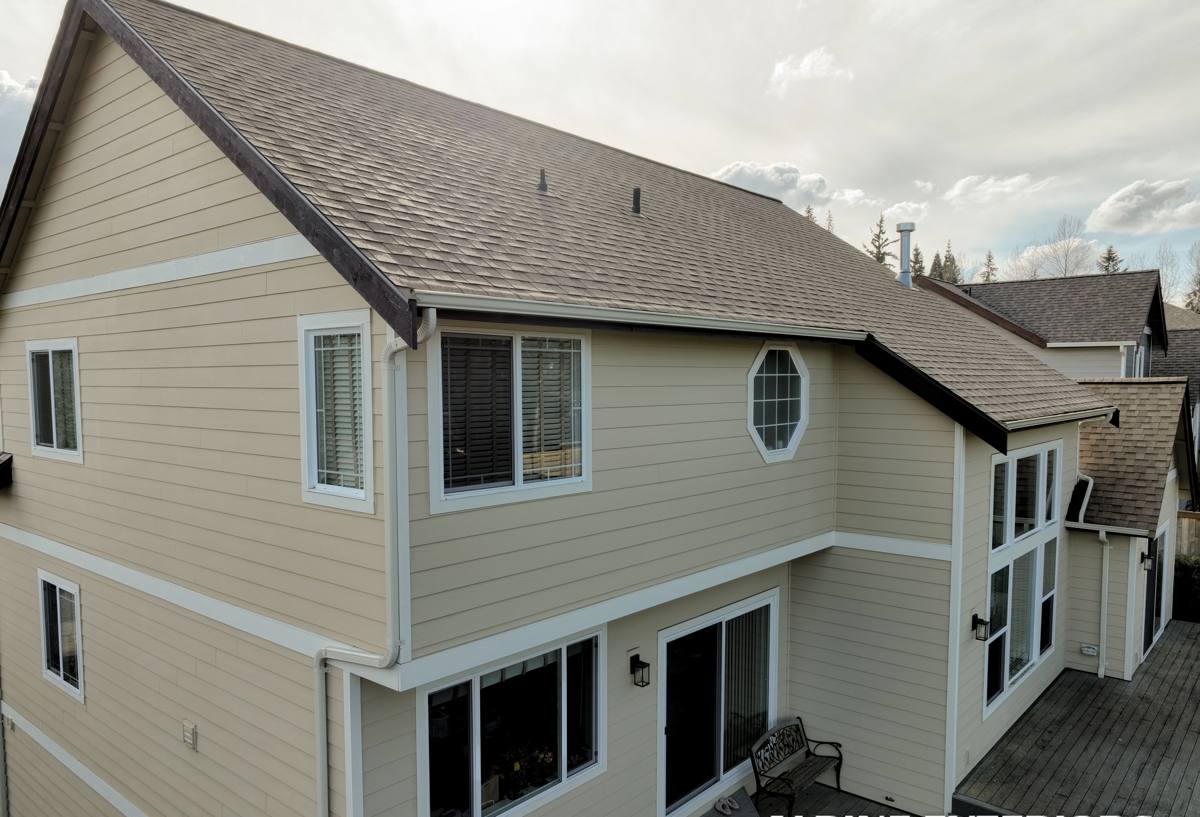
What Sedro-Woolley's Climate Demands From Siding
Driving Rain and Valley Moisture
Weather moving in off the Sound tends to get compressed and pushed harder as it travels up the Skagit Valley, and Sedro-Woolley catches a fair share of that driving rain. Wind-driven rain doesn't fall straight down onto a wall, it gets forced sideways into laps, seams, and trim joints, which is exactly where a siding system either sheds water the way it's supposed to or starts letting it in. The valley also tends to hold humidity a little longer after a storm passes than more open, breezier parts of Skagit County, so siding here often doesn't get a full dry-out window between weather events, especially from fall through spring.
A Long Moss and Mildew Season
Mild temperatures, shade from surrounding trees, and near-constant moisture combine into a moss and algae season that can run nearly year-round on the shaded and north-facing sides of a home. Any siding material with surface porosity gives moss a foothold, and once it takes hold, it holds moisture against the wall behind it, which accelerates whatever damage was already underway. Fiber cement's dense, factory-finished surface gives moss and mildew far less to grip onto than porous or untreated materials, but the finish and the installation both have to be right for that advantage to hold up over time.
Salt Air's Slow Wear
Sedro-Woolley isn't a waterfront town, but salt-carrying air still reaches this far up the valley, and it accelerates the breakdown of paint films, metal fasteners, and lower-quality finishes over years of exposure. It's a slower process than direct coastal exposure, which is part of why it catches homeowners off guard — the siding looks fine for a decade, then starts failing faster than expected once the finish layer is compromised.
Why James Hardie Fiber Cement Specifically
We install James Hardie fiber cement exclusively. We don't install vinyl, LP SmartSide, Cemplank, Allura, primed spruce, or cedar, and that's a standard we settled on after years of tearing off failed siding on service calls and seeing the same moisture patterns repeat on products that weren't matched to this climate.
- The cement core is inorganic — it doesn't have wood fiber that swells, cups, or warps from repeated wet-season moisture cycling.
- It's non-combustible, which matters for household safety and can matter for insurance conversations as well.
- Hardie's HZ5 product line is engineered specifically for regions with heavy moisture exposure, a fit for the Skagit Valley's rain and humidity pattern.
- The factory-applied ColorPlus finish is baked on under controlled conditions, which resists fading and moisture intrusion at the coating level far longer than a field-applied paint job.
- Hardie backs the product with a strong, transferable warranty, provided the installation follows their specified details.
That last point matters as much as the material choice. Fiber cement is a genuinely good product, but its long-term performance depends heavily on correct installation. A rushed or generic install can undercut even the best material.
What a Correct Fiber Cement Installation Actually Involves
Substrate and Moisture Barrier First
Before a single piece of siding goes up, the wall assembly underneath has to be right. That means checking for existing rot or moisture damage from the old siding, repairing or replacing any compromised sheathing, and installing a weather-resistant barrier that's lapped and sealed correctly. Skipping this step to save time is one of the most common ways a siding job fails years later, regardless of what material goes on top.
Flashing at Every Penetration
Windows, doors, hose bibs, light fixtures, and any other wall penetration need proper flashing that directs water back out rather than letting it track behind the siding. In a climate with as much wind-driven rain as Sedro-Woolley sees, flashing details are often the difference between a wall that stays dry and one that develops hidden rot over a few wet seasons.
Clearance and Gapping
Hardie's installation specifications call for specific clearances from grade, roof lines, decks, and other siding penetrations, along with gapping at butt joints and trim to allow for material movement and drainage. These aren't arbitrary numbers — they're what keeps water from pooling against the material or getting trapped where it can't dry out.
Fastening to Spec
Fiber cement needs to be fastened with the correct fastener type, spacing, and depth. Overdriven or underdriven fasteners, or the wrong fastener material, are a common source of long-term problems, including cracking at fastener points and voided warranty coverage.
Field Cuts and Caulking
Every field cut exposes raw material that needs to be sealed according to manufacturer specification, and every joint that requires caulking needs the right product applied correctly. This is detail work that's easy to shortcut on a fast-moving job and hard to fix once the siding is up.
Our Process for a Sedro-Woolley Project
| Step | What Happens |
|---|---|
| Walk-through | We inspect the current siding, trim, and wall assembly in person, looking for existing moisture damage or areas of concern specific to your home's exposure. |
| Estimate | You get a straightforward estimate based on what we actually found, not a generic per-square-foot number that ignores your home's condition. |
| Tear-off and substrate check | Old siding comes off and we assess the sheathing underneath, repairing anything compromised before moving forward. |
| Weather barrier and flashing | A properly lapped weather-resistant barrier goes on, along with correct flashing at every window, door, and penetration. |
| Hardie installation | Fiber cement siding is installed to Hardie's specified clearances, fastening pattern, and joint detailing. |
| Caulking and finish details | Field cuts are sealed, joints are caulked per spec, and trim details are finished cleanly. |
| Final walkthrough | We walk the completed job with you before considering it finished. |
Cost Factors for a Sedro-Woolley Fiber Cement Project
Every home is different, and we don't quote off a generic price sheet, but a few factors consistently move the number for local projects:
| Factor | Why It Affects Cost |
|---|---|
| Existing substrate condition | Rot or moisture damage found during tear-off means repair work before new siding can go on. |
| Home size and wall complexity | More corners, dormers, and trim details mean more labor and material cuts. |
| Siding profile and color | Lap width, texture, and ColorPlus color selection affect material cost within Hardie's product line. |
| Access and site conditions | Tree cover, tight lot lines, and staging space affect how efficiently a crew can work. |
| Trim and accessory scope | Window trim, corner boards, and fascia work done alongside the siding add to the total scope. |
Signs Your Current Siding May Already Be Failing
- Soft or spongy spots when you press on the siding, especially near the bottom edges or around windows.
- Paint that's peeling, bubbling, or chalking well ahead of its expected repaint schedule.
- Persistent green or black streaking that comes back shortly after cleaning.
- Visible gaps, cracks, or warping at seams and trim joints.
- A musty smell or visible staining on interior walls that back up to exterior siding.
- Siding that feels notably lighter or more brittle than it should, a sign of internal deterioration.
Why Hiring a Crew That Already Works This Area Matters
A crew that regularly works Sedro-Woolley and the surrounding Skagit Valley has already seen how this specific climate behaves on real homes — which walls take the worst of the driving rain, where moss tends to establish first, and which older siding products in the area are showing their age. That local pattern recognition doesn't replace following Hardie's installation specification, but it does mean fewer surprises during tear-off and a better sense of where extra attention actually pays off on your specific property.
It also means accountability. A contractor who works this area consistently has a reputation to maintain here, not just a one-time job to finish and move on from.
Get a Free, No-Pressure Estimate
If you're considering fiber cement siding for a Sedro-Woolley home, we're glad to walk the property, look at what your walls are actually dealing with, and give you a straight answer about scope and cost. Reach out using the form below to schedule a free estimate, no pressure and no upsell script.