 Anacortes Window
 Roof Repair in Bow: What Local Homes Face
Bow sits in a stretch of Skagit County where marine air off the water meets farmland wind with almost nothing to slow it down. Roofs here don't fail the way they do in drier inland climates. The damage is usually slow — a lifted shingle tab, a cracked pipe boot, a patch of moss holding moisture against the decking for months at a time — and by the time it shows up as a stain on a ceiling, the underlying problem has often been building for a season or more. Repairing a roof correctly in this area means understanding that pattern, not just patching the spot that's leaking today.
We work on homes throughout the Anacortes area, and Bow's roofs get a specific combination of stress: salt-laden air that accelerates corrosion on fasteners and flashing, near-constant humidity that keeps moss and moisture-loving growth active almost year-round, and driving rain that comes in at an angle during winter storms and finds every gap a dry-climate roof could get away with ignoring.
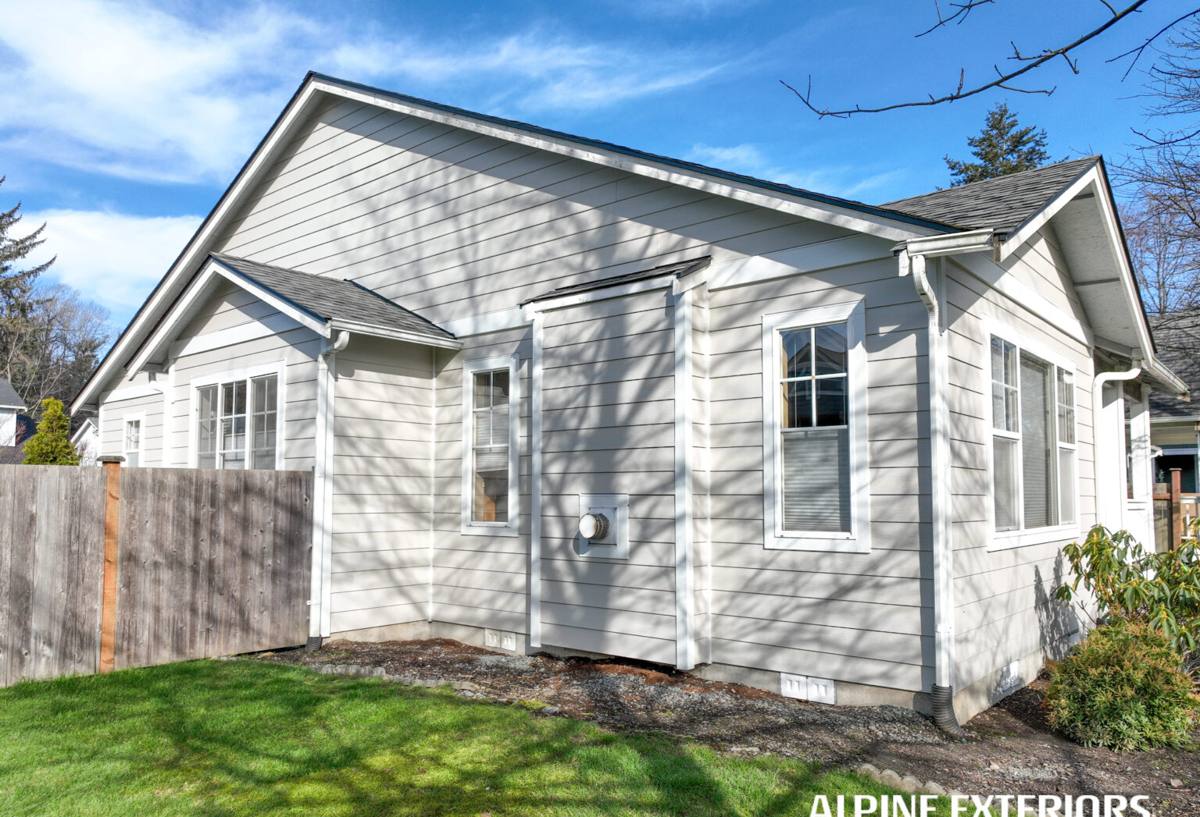
Signs Your Roof Needs Attention
Most roof repairs get more expensive the longer they wait, because water damage spreads sideways under roofing material long before it shows up as an obvious leak inside the house. Here's what we tell Bow homeowners to watch for between professional inspections:
- Granules collecting in gutters or at downspout outlets — a sign shingles are wearing thin
- Dark streaks or green-black patches on north-facing or shaded roof slopes
- Moss or lichen growth, especially where two roof planes meet or under overhanging trees
- Curling, cracking, or lifted shingle edges, particularly on the side that takes the worst weather
- Rust staining around vent pipes, chimney flashing, or metal roof fasteners
- Soft or spongy spots when walking the roof (best left to a professional to check)
- Daylight visible through the attic roof deck, or damp insulation below it
- Ceiling stains, especially ones that only appear after a heavy or wind-driven rain
Any one of these on its own might not mean an emergency, but two or three together usually mean it's time for a real look, not a guess.
What a Correct Repair Actually Involves
Diagnosis Before Patching
A repair that only addresses the visible symptom tends to come back. Before we patch anything, we trace the water's actual path — which, on a sloped roof, is rarely a straight line down from where the stain shows up. Wind-driven rain in particular can push water uphill under a shingle edge or sideways along flashing, so the leak's true source is often several feet from where it appears inside the house.
Matching Materials, Not Guessing
Repairing a roof section with the wrong material or the wrong fastener is one of the more common shortcuts we see. Mismatched shingle types weather differently, mismatched metal flashing can set up galvanic corrosion next to salt-air moisture, and the wrong sealant can crack out within a season in this climate's temperature swings. A repair should be invisible in function even if it's not perfectly invisible in appearance.
Sealing the Right Way, Not Just the Fast Way
Flashing, pipe boots, and valleys are where the vast majority of leaks originate — far more often than open field shingle. A correct repair re-seats or replaces the flashing itself rather than just running a bead of sealant over a failing joint. Sealant is a supplement to good flashing work, not a substitute for it.
Moss, Salt Air, and Driving Rain: The Skagit County Combination
Every coastal Washington roof deals with moisture. What makes the Anacortes and Bow area distinct is how many moisture problems show up at once. Salt air corrodes exposed metal fasteners and flashing faster than inland areas see, which means small metal components can fail years before the shingle field around them wears out. Long, wet, mild winters give moss and moss-adjacent growth a season that barely pauses, and moss doesn't just sit on top of a roof — its root structure lifts shingle edges and holds a film of water against the surface underneath, which is exactly the condition that breaks down asphalt shingles and rots wood decking. Add driving rain that comes in sideways during winter wind events, and you get leaks that a roof in a calmer climate would never develop in the same spot.
None of this means Bow roofs fail faster across the board — many hold up for their full expected lifespan with the right maintenance. It means repairs have to account for all three factors together, or a fix that looks solid in July can fail in the first real February storm.
Our Repair Process
- Roof walk and interior check. We inspect the affected area from both the roof surface and, where accessible, the attic or interior side, so we're diagnosing the actual leak path rather than just the visible symptom.
- Honest assessment. We tell you plainly whether this is a repair, a partial section replacement, or something bigger — and why. If a repair is a reasonable fix, we say so; if the roof is past the point where repair makes financial sense, we say that too.
- Written scope before work starts. You know what's being done, with what materials, before anyone gets on the roof.
- The repair itself. This typically means removing and replacing damaged shingles or roofing material, re-flashing the affected area, replacing failed pipe boots or vent flashing, and addressing any moss or debris that contributed to the problem.
- Cleanup and a final check. Debris and old material removed, and a walk-through so you can see what was done.
Repair vs. Replacement: How to Think About the Decision
| Factor | Leans toward repair | Leans toward replacement |
|---|---|---|
| Age of roof | Under 12-15 years | Nearing or past manufacturer's expected lifespan |
| Extent of damage | Localized — one slope, one flashing detail, one section | Spread across multiple slopes or recurring in different spots |
| Underlying decking | Solid, dry, no soft spots | Soft, delaminated, or water-stained in multiple areas |
| Moss/growth history | First occurrence, easily cleared | Chronic, returning yearly despite cleaning |
| Number of past repairs | This is the first or second in several years | Repeated patch jobs in the same general area |
We won't push a full replacement when a repair genuinely solves the problem, and we won't recommend a patch we don't think will hold. The table above is a general guide — the actual answer depends on what we find during the inspection.
Roofing Materials We Work With
| Material | How it handles this climate | Repair considerations |
|---|---|---|
| Asphalt composition shingle | Common, cost-effective; moss and moisture exposure shortens lifespan if not maintained | Easiest to source matching material for spot repairs |
| Metal roofing | Sheds moss and water well; salt air makes fastener and seam quality critical | Repairs require matching profile and correct fastener type to avoid corrosion issues |
| Wood shake/shingle | Traditional look; needs more active moisture and moss management in this climate | Repairs should match grain and exposure of existing material |
| Flat/low-slope membrane | Used on additions, porches, and some outbuildings; standing water and debris are the main risks | Seam and drainage integrity matter more than the membrane material itself |
Where a homeowner is choosing a material for a repair patch or a re-roof of one section, we walk through the honest trade-offs — maintenance burden, moisture behavior in this specific climate, and how the material has performed on similar homes in the area — rather than pushing whatever is easiest for us to install.
Why a Crew That Already Works Bow Matters
Roofing crews that mostly work drier or more sheltered inland markets sometimes underestimate how aggressively coastal moisture and salt air work against a roof here. A crew that's already familiar with Anacortes-area and Skagit County conditions isn't guessing about how a repair will hold up through a wet winter — they've seen how similar repairs perform locally over multiple seasons. That local pattern recognition is the difference between a repair that's cosmetically fine on the day it's finished and one that's actually built for what this specific stretch of coastline throws at it.
It also means practical things: knowing which roof orientations in Bow tend to hold moss longest, understanding how prevailing wind direction affects where driving rain actually gets pushed under roofing material, and having a realistic sense of typical repair timelines around the wetter months so work isn't scheduled into a stretch of weather that undermines it.
Maintenance Between Repairs
A repair holds up longer when it's not fighting years of neglected moss and debris buildup around it. A few habits go a long way in this climate:
- Keep gutters and downspouts clear so water isn't backing up under roof edges
- Have moss and debris cleared from the roof surface before it builds up thick enough to hold moisture
- Trim back overhanging branches that keep shaded roof sections damp longer than the rest of the roof
- Get an inspection after any major windstorm, even if nothing looks obviously wrong from the ground
- Address small issues — a lifted shingle, a small gap in flashing — before the next wet season rather than after
None of this replaces a professional inspection, but it reduces how much work that inspection finds.
If you're dealing with a leak, visible moss, or just want a second opinion on a roof's condition, we offer a free, no-pressure estimate for homes in Bow and the surrounding Anacortes area — use the form below to get started.