 Anacortes Window
 Board & Batten Siding in Bow: A Style That Has to Earn Its Keep
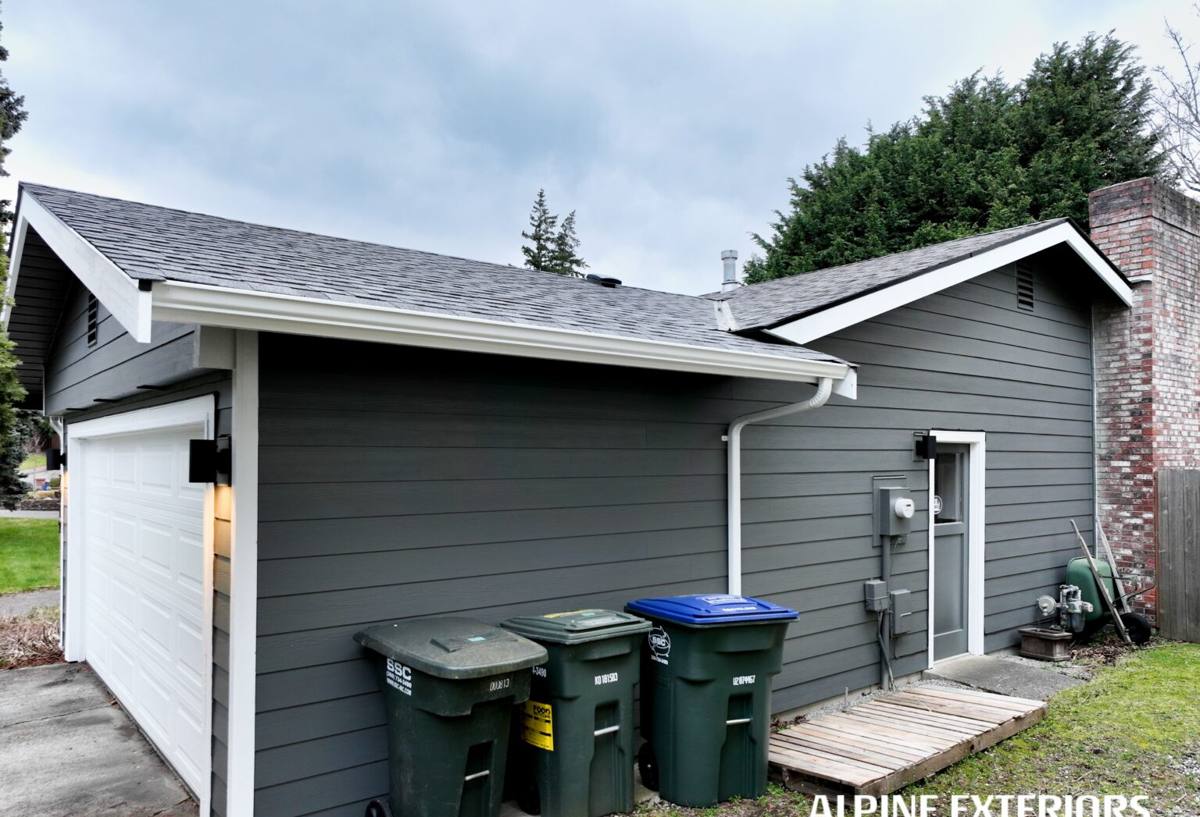
Board and batten has a long history in the farmhouses and outbuildings scattered across Skagit County, and it's easy to see why the look still gets requested on new builds and remodels around Bow. The vertical lines read as clean, modern, and a little agricultural all at once — it pairs well with the mix of pasture views, tree-lined lots, and water-adjacent properties that define this part of the county. But board and batten isn't just a look. It's a siding system with its own set of joints, seams, and water pathways, and in a spot like Bow — close enough to Samish Bay and Padilla Bay to catch salt-laden wind, and wet enough in the fall and winter to grow moss on a north wall in a single season — those details decide whether the siding lasts twenty years or needs re-caulking every other spring.
This page is specifically about board and batten siding for homes in the Bow area. If you're comparing siding styles or materials in general, that's a broader conversation — here we're focused on what this particular look needs to hold up on this particular ground.
What Bow's Climate Actually Does to Vertical Siding
Board and batten siding has more vertical seams per square foot than lap siding, and every one of those seams is a place water can find its way behind the cladding if it's not built correctly. Three things in Bow's environment make that a real concern rather than a theoretical one:
Salt Air
Properties near the bay and the open water get a steady dose of salt-carrying wind. Salt accelerates corrosion on exposed metal fasteners and flashing, and it's tougher on paint and finish coatings than dry inland air. Materials and fasteners that aren't rated for a marine-influenced environment age faster here than the same product would forty miles inland.
Driving Rain
Storms coming off the water don't just fall straight down — wind-driven rain pushes moisture sideways and upward, right into the vertical battens and board edges. A board and batten wall with a weak drainage plane or under-lapped flashing details will take on water at exactly the seams that give the style its look.
A Long Moss Season
Shaded, low-sun elevations around Bow stay damp for months at a stretch, and moss and algae take hold on any surface that can't shed water and dry out between storms. On the wrong material, that constant dampness against the siding face degrades the substrate over time, not just the appearance.
Why We Install This Style Only in James Hardie Fiber Cement
Board and batten can be built out of real wood, engineered wood, vinyl panels styled to look like board and batten, or fiber cement. We install it exclusively in James Hardie fiber cement, and the reasoning is specific to what this climate does to each alternative:
- Solid wood board and batten looks great new but is the most climate-sensitive option — it swells, cups, and checks with repeated wet-dry cycling, and the battens and boards need repainting or restaining on a cycle that gets shorter, not longer, near salt air.
- Engineered wood (OSB-core) siding depends entirely on an intact factory coating to keep moisture out of the wood-based core. Any gap in that coating — a cut edge, a fastener hole, a scuff — becomes a point where the core can absorb water and swell.
- Vinyl board and batten panels don't rot, but they're a plastic product: they expand and contract more than fiber cement with temperature swings, they can crack in a hard impact, and the seams and panel style rarely hold up to close inspection the way a true board and batten profile does.
- James Hardie fiber cement is non-combustible, dimensionally stable across wet and dry cycles, and finished with a factory-applied ColorPlus coating engineered to resist the fading and cracking that field-applied paint suffers first. It's also manufactured in climate-specific HZ formulations, so the product specified for the Pacific Northwest is engineered for exactly the wet, temperate conditions Bow sits in.
We don't install LP SmartSide, vinyl, Cemplank, Allura, primed spruce, or cedar. That's a standard we hold across every job, not a special condition for board and batten — but it matters more on this particular style, because the vertical seams give a lesser material more opportunities to fail.
What a Correct Board & Batten Installation Actually Involves
The finished look of board and batten is simple: wide boards with a narrow batten covering each seam. What's underneath that look is where the job is won or lost.
The Drainage Plane Comes First
Before any siding goes up, the wall needs a continuous water-resistive barrier and, in most cases on a home in this climate, a rainscreen gap — a small air space between the barrier and the siding that lets any moisture that does get past the cladding drain and dry out instead of sitting against the wall sheathing.
Fastening Pattern Matters More Here Than on Lap Siding
Board and batten panels and boards need to be fastened to a schedule that accounts for the wider exposure of vertical panels and the battens that cover the seams. Fasteners driven into the wrong substrate, spaced too far apart, or placed too close to an edge are the most common source of long-term callbacks on this style.
Flashing at Every Horizontal Transition
Window heads, roof-to-wall intersections, deck ledgers, and the base of the wall all need flashing detailed to shed water outward, not into the wall assembly. On a board and batten wall these transitions interrupt the vertical lines, so they need to be planned before installation starts, not improvised around it.
Batten Spacing and Board Width
Consistent batten spacing is what makes board and batten look intentional instead of patched-together. It also needs to line up with window and door openings and corner details in a way that doesn't leave an odd sliver of board at the end of a wall run.
Board & Batten Material Comparison
| Material | Behavior in Salt Air / Driving Rain | Maintenance Over 10 Years | Typical Lifespan Locally |
|---|---|---|---|
| Solid wood | Swells, checks, and weathers faster near the bay | Repaint or restain every 3-5 years | 10-20 years before major repair |
| Engineered wood (OSB-core) | Vulnerable at any coating breach or cut edge | Coating touch-up; core damage isn't repairable, only replaceable | Varies widely by moisture exposure |
| Vinyl board and batten panel | Doesn't rot, but can crack in impact and distort in heat | Occasional cleaning; panels can't be spot-repainted | 20-30 years, appearance fades |
| James Hardie fiber cement | Non-combustible, dimensionally stable, HZ formulation for this region | Periodic cleaning; ColorPlus finish holds color far longer than field paint | Decades, with strong transferable warranty |
Our Process for a Board & Batten Project in Bow
Every job starts with a walk-around of the specific home, not a generic estimate.
- On-site assessment: We look at existing siding condition, wall orientation relative to prevailing wind and rain, and any areas already showing moss growth or moisture staining.
- Design and layout: Board width, batten spacing, and how the pattern resolves at corners and openings get planned before material orders go in.
- Water management prep: Housewrap, flashing, and rainscreen furring are installed and inspected before a single board goes up.
- Installation to Hardie's fastening and clearance specifications: Correct nailing pattern, ground clearance, and sealant only where Hardie's install guide calls for it — not as a substitute for proper flashing.
- Final walkthrough: We check seams, corners, and trim details with the homeowner before calling the job finished.
Living With Board & Batten in a Marine, Mossy Climate
A correctly installed James Hardie board and batten wall doesn't need much from a homeowner, but a little seasonal attention keeps it looking its best in Bow's conditions:
- Rinse pollen, salt residue, and road film off the siding once or twice a year with a garden hose and soft brush — avoid high-pressure washing directly into seams.
- Keep gutters clear so overflow doesn't run down the wall face and feed moss growth at the top of the siding.
- Trim back vegetation and tree limbs that keep a wall section shaded and damp longer than the rest of the house.
- Watch for any caulking or sealant that's cracked or pulled away at trim boards and have it addressed before winter rains set in.
- Have flashing at window heads and roof intersections checked periodically — these are the first places a small failure shows up.
Why Hiring a Crew That Already Works Bow Matters
Bow isn't a big place, and it doesn't need to be treated like a generic Skagit County address. A crew that's already worked in the area knows which wall orientations catch the worst of the wind off the water, which lots tend to hold shade and moisture longer into the day, and how Skagit County's permitting and inspection process runs in practice — not just on paper. That local familiarity shows up in small decisions during installation: where to be extra careful with flashing, which side of the house needs a wider rainscreen gap, and what's realistic to expect from the siding once winter sets in. It's the difference between a crew executing a generic install and a crew building for the specific conditions your home actually faces.
Get a Straight Answer for Your Home
If you're considering board and batten siding for a home in Bow, we're happy to take a look, walk you through what correct installation involves for your specific walls and orientation, and give you a straightforward, no-pressure estimate. There's no obligation — just a clear picture of what the job actually requires.