 Anacortes Window
 Cap Sante Roofs Work Harder Than Most
Cap Sante sits close enough to the water that its homes deal with a combination most inland Skagit County houses never see: salty marine air, driving rain that comes in sideways off Fidalgo Bay and the Guemes Channel, and a long, damp shoulder season that gives moss and algae months to get established on a roof. None of that is dramatic on its own. But stacked together, year after year, it wears down asphalt shingle roofs faster than a generic install plan can handle.
An asphalt shingle roof done right for this neighborhood isn't a different product than what goes on a roof twenty miles inland — it's the same shingle installed with more attention paid to the details that actually fail here: fastener corrosion, wind-driven water intrusion at edges and valleys, and moss getting a foothold in shaded, north-facing slopes.
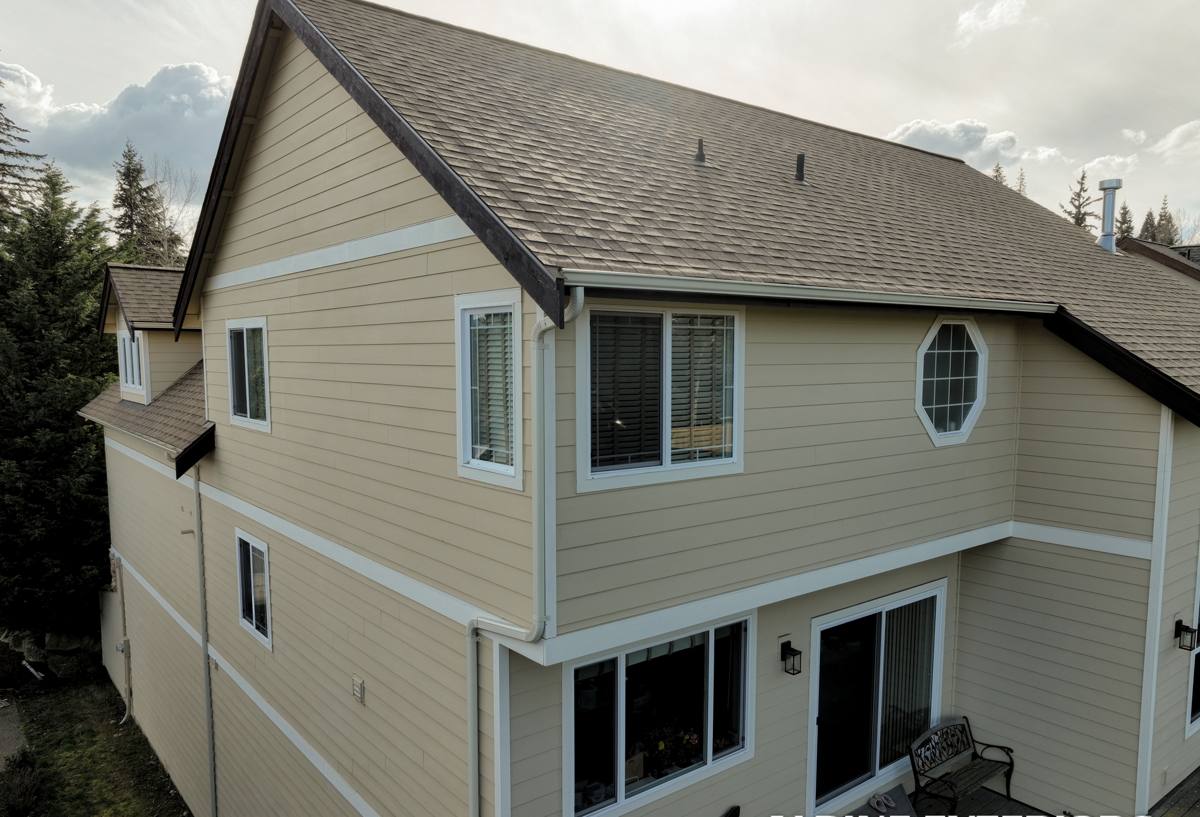
What the Marine Climate Actually Does to a Shingle Roof
Salt Air and Metal Fatigue
Salt in the air accelerates corrosion on anything metal — nail heads, flashing, drip edge, vent boots with metal collars. On most roofs this is a slow process measured in decades. Close to the water, it moves faster, and it shows up first at the fasteners and flashing seams, not the shingles themselves. A roof can look fine from the ground while the metal holding it together is quietly degrading.
Wind-Driven Rain
Anacortes gets plenty of rain that falls straight down, which almost any roof can shed. The rain that causes problems is the kind that comes in at an angle during a winter blow, pushed by wind off the water. That kind of rain can work its way up under a shingle tab or through an under-sealed valley if the underlayment and flashing weren't installed with wind-driven conditions in mind.
Moss, Algae, and Shade
Cap Sante's tree cover and marine humidity create long stretches where roofs stay damp, especially on north-facing slopes that don't get much direct sun. That's exactly the environment moss needs to take hold. Left alone, moss holds moisture against the shingle surface, lifts tabs as it grows, and shortens the life of the roofing underneath it. Dark streaking from algae is mostly cosmetic, but moss is a mechanical problem — it physically pries shingles apart over time.
Choosing a Shingle That's Built for This
Not every asphalt shingle handles a marine climate the same way. The differences that matter here aren't about color or brand — they're about wind rating, algae-resistant granules, and how the shingle is designed to seal.
| Shingle Type | Typical Wind Rating | Algae Resistance | Best Fit for Cap Sante |
|---|---|---|---|
| Standard 3-tab | Lower (60-70 mph class) | Usually none unless specified | Budget option; needs closer attention to detail at edges and valleys |
| Architectural / laminate | Higher (110-130 mph class common) | Often available with algae-resistant granules | Better match for wind-driven rain and long-term moss/algae resistance |
| Impact-rated architectural | High, plus impact resistance | Typically included | Worth considering on exposed rooflines with heavy tree cover overhead |
We don't push one manufacturer over another as a matter of policy — we spec the shingle class and features that match the roof's exposure. A heavily shaded, north-facing roof gets algae-resistant granules as a baseline recommendation. A roof with more open exposure to weather off the water gets a closer look at wind rating and sealant strip performance.
Underlayment Matters as Much as the Shingle
In a climate with sustained wind-driven rain, the underlayment underneath the shingles is doing more of the actual waterproofing work than most homeowners realize. We use synthetic underlayment as a standard base layer for its tear resistance and water resistance, and we install self-adhered ice-and-water membrane at the eaves, valleys, and any roof-to-wall transitions — the places wind-driven water actually finds its way in.
What a Correct Installation Involves
Tear-Off and Deck Inspection
We don't install new shingles over old ones, and we don't skip inspecting the deck once it's exposed. Salt air and long-term moisture exposure can cause soft spots or rot in the sheathing that aren't visible until the old roofing is off. Any damaged decking gets replaced before anything new goes down — installing a new roof over a compromised deck just hides the problem for a future owner to find.
Flashing and Edge Detail
Flashing at chimneys, sidewalls, valleys, and roof penetrations is where wind-driven rain problems usually start. We install new flashing rather than reusing old pieces where practical, with metal specified to hold up to the corrosion pace of a marine environment, and we pay particular attention to valley construction since that's the highest-water-volume path on the entire roof.
Fastening
Proper nailing pattern and fastener placement matter more in high-wind, salt-air conditions than in a mild inland climate. Under-driven or over-driven nails, or nails placed outside the manufacturer's nailing zone, are a common cause of shingle blow-off in coastal wind events. We follow manufacturer nailing specifications exactly, not a shortcut pattern, because it's the difference between a roof that holds through a winter storm and one that doesn't.
Ventilation
A roof that isn't ventilated correctly traps moisture in the attic, which works against the shingles from underneath while salt air and rain work on them from above. We check existing ventilation as part of every reroof and correct intake or exhaust balance where it's inadequate — this is a detail that's easy to skip and expensive to ignore.
Our Process, Start to Finish
- On-site evaluation. We look at the whole roof system, not just shingle condition — decking, ventilation, flashing, moss coverage, and exposure to wind and shade.
- Written estimate. A clear scope of work and price, including what shingle class and underlayment system we're recommending and why.
- Scheduling around weather. Roofing work needs a dry window. We plan installs around the forecast rather than rushing a job into a storm system.
- Tear-off and deck check. Old roofing comes off, the deck gets inspected, and any repairs are done before new materials go down.
- Underlayment, flashing, and shingle installation. Installed to manufacturer spec, with ice-and-water membrane at vulnerable points and attention to proper fastening.
- Cleanup and final walkthrough. Site cleared of debris and old materials, magnetic sweep for stray nails, and a walkthrough so you know what was done and why.
Living With a Shingle Roof in a Moss-Prone Climate
A correctly installed roof still needs some basic upkeep in this environment — that's the nature of a long, damp moss season, not a sign anything was done wrong. A little regular attention goes a long way toward getting the full service life out of the roof.
- Have moss removed gently (not scraped or pressure-washed, which damages granules) as soon as it's noticeable, rather than waiting until it's established
- Keep gutters clear so water isn't backing up under the eave line during heavy rain
- Trim back overhanging branches on shaded slopes to cut down on moisture retention and moss growth
- Have flashing and valleys checked periodically, especially after a hard winter storm season
- Watch for granule buildup in gutters, which can signal a shingle surface starting to wear
- Address any moss or algae streaking early — it's far easier to manage than to reverse
Cost Factors on a Cap Sante Reroof
Every roof is different, and we won't quote a number without seeing the actual job, but a few factors consistently move the price on projects in this area.
| Factor | Why It Matters Here |
|---|---|
| Roof pitch and access | Steeper roofs and tighter lot access near the water take more time and safety setup |
| Deck condition | Salt-air moisture exposure sometimes means more sheathing repair than an inland roof |
| Shingle class chosen | Architectural and impact-rated shingles cost more upfront but resist wind and algae longer |
| Existing moss/algae coverage | Heavier buildup means more prep work before tear-off can even begin |
| Flashing and ventilation scope | Older roofs often need more flashing replacement and ventilation correction than a straight shingle swap |
Why It Matters That We Already Work in Cap Sante
A crew that's replaced roofs throughout Anacortes and elsewhere in Skagit County knows what a shingle roof looks like after five winters of wind-driven rain off the water versus five winters somewhere more sheltered. That's not something you can fully account for from a spec sheet — it comes from seeing which details hold up locally and which don't. We bring that same standard to every Cap Sante roof: the right shingle class for the exposure, underlayment and flashing sized for wind-driven rain, and a ventilation and moisture plan built for a long moss season, not a generic checklist.
If you're weighing a repair against a full reroof, or just want a straight answer on what condition your roof is actually in, we're glad to take a look. Reach out for a free, no-pressure estimate — someone from our crew will walk the roof, explain what we find, and give you a clear scope and price before any work begins.