 Anacortes Window
 Window Installation Built for Skyline's Waterfront Exposure
Skyline sits on the west side of Fidalgo Island, close enough to the water that homes here take a different kind of weather than houses further inland in Anacortes. Salt-laden air off the Sound, wind-driven rain that comes in sideways during winter storms, and a moss season that can stretch for most of the year all put extra stress on window frames, seals, and hardware. A window that performs fine in a sheltered neighborhood can fail years early in a spot like this if it wasn't installed with that exposure in mind.
We install windows throughout Skagit County, but homes in Skyline get a specific approach because of where they sit. This page covers what that approach looks like: what the climate demands, what a correct installation actually involves, and how to tell a job that's done right from one that will cause problems down the road.
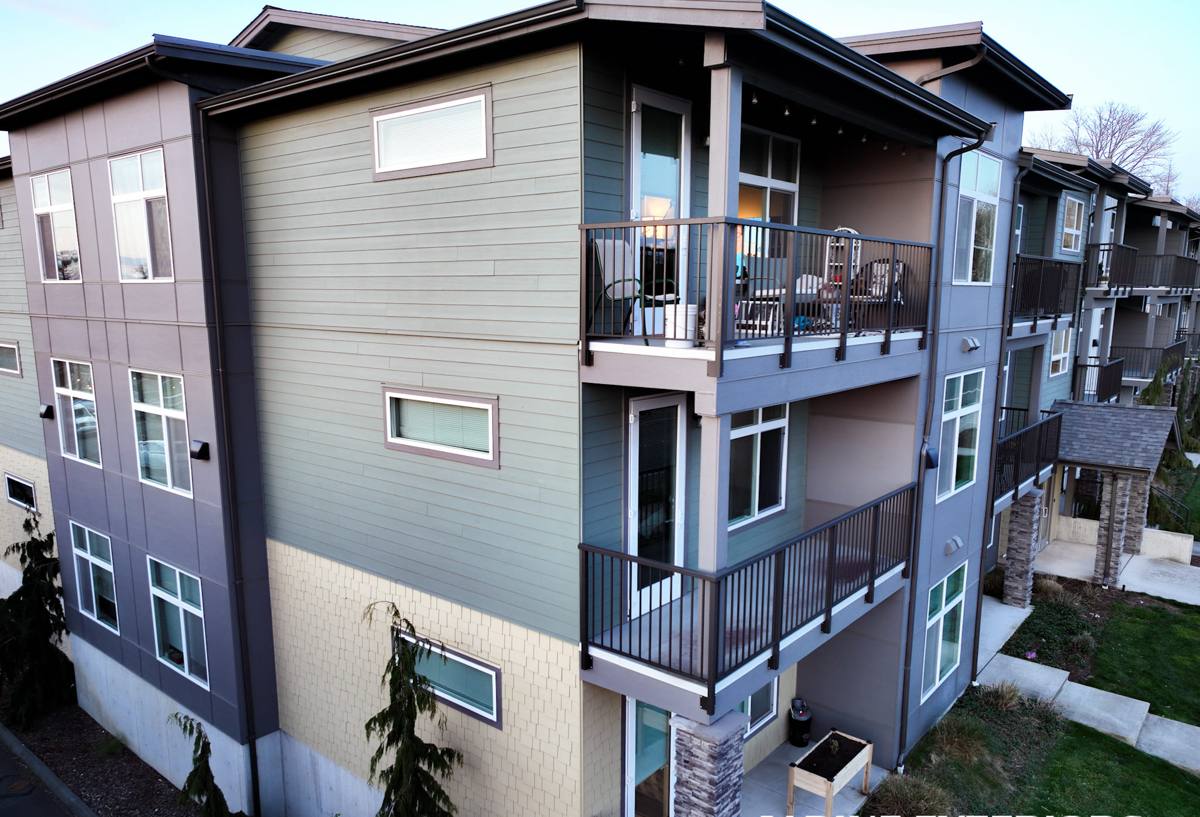
What Skyline Homes Need From Their Windows
Three things define window performance in this part of Anacortes: corrosion resistance, water management, and glass sized for the view without sacrificing structural performance.
Salt Air and Corrosion
Homes with water views tend to carry more airborne salt, and that salt works on anything metal — screws, hinges, balance systems, and cladding fasteners. Standard hardware can start corroding within a few years in a heavier-exposure spot. The fix isn't a special "coastal window," it's using stainless or corrosion-rated fasteners and hardware on every installation, and choosing frame materials that don't rely on paint or coatings that chalk and fail under UV and salt over time.
Wind-Driven Rain
Anacortes gets plenty of ordinary rain, but wind-driven rain is a different problem — it gets pushed sideways and upward into gaps that would never see water in a calm rainstorm. This is a flashing and sealant issue more than a window issue. Even a premium window will leak if the flashing detail underneath it doesn't shed water correctly.
Moss and Sill Buildup
Skagit County's mild, wet climate keeps moss and algae active for much of the year. On windows, that shows up as buildup on sills, tracks, and exterior trim, which holds moisture against the frame longer than it should. Correct sill pitch and drainage details matter more here than in a drier climate.
What a Correct Window Installation Actually Involves
Most window problems we get called out to fix in this area aren't the window's fault — they're an installation shortcut that let water behind the frame. A correct job follows the same sequence every time, adjusted for the specific wall assembly.
Flashing and Moisture Barriers
Before a new window goes in, the rough opening gets flashed so water is directed out and away from the wall assembly, not into it. That includes sill pan flashing, properly lapped side and head flashing, and integration with the house's existing weather-resistive barrier. Skipping or shortcutting this step is the single most common cause of hidden rot behind window openings, and it's invisible from outside once the trim goes back on.
Air Sealing and Insulation
The gap between the window frame and the rough opening needs to be sealed and insulated correctly — not just stuffed with fiberglass or foamed solid, either of which can cause its own problems. Low-expansion foam or backer rod and sealant, applied correctly, keeps the window from becoming a draft and condensation point in winter.
Fasteners and Hardware
Given the salt exposure described above, we treat corrosion-resistant fasteners and hardware as standard practice on Skyline installations, not as an upgrade. It's a small line-item cost that prevents an expensive callback in five to seven years.
Choosing the Right Window for a Skyline Home
There's no single "best" window material — each has trade-offs, and the right call depends on the home's exposure, style, and budget.
| Frame Material | Coastal Performance | Maintenance | Typical Use |
|---|---|---|---|
| Vinyl | Good — won't corrode or rot; some UV fading over decades | Low | Most residential replacements |
| Fiberglass | Very good — dimensionally stable, resists salt and moisture well | Low | Larger view openings, higher-exposure walls |
| Wood-clad | Fair — depends on cladding and seals staying intact to protect the wood core | Higher | Homes prioritizing an interior wood look |
| Aluminum | Fair — conducts cold and can corrode without proper finish | Moderate | Larger, commercial-style openings |
For water-facing walls in Skyline, we lean toward vinyl or fiberglass for most homeowners because they hold up to salt air and repeated wet-dry cycles with the least ongoing maintenance. Wood-clad windows can still be the right choice for homeowners who want that interior finish, but we're upfront that they carry a higher maintenance burden in this climate — the cladding and seals have to be inspected and kept intact to keep water off the wood core underneath.
Glass matters as much as frame material. For view-oriented homes, we typically recommend dual-pane units with a Low-E coating tuned to control heat gain and glare off the water without darkening the view more than necessary. Impact-rated or laminated glass is worth discussing for openings that take direct wind exposure during winter storms.
Full-Frame vs. Insert Replacement
Most window replacement jobs fall into one of two categories, and the right one depends on the condition of the existing frame — not just preference.
Insert (Pocket) Replacement
A new window is installed inside the existing frame, which stays in place. This is faster and less invasive, and it works well when the existing frame is square, dry, and structurally sound. It's a poor choice if there's already hidden water damage, because it seals that damage inside the wall instead of fixing it.
Full-Frame Replacement
The old window and its frame are removed down to the rough opening, which gets inspected, repaired if needed, and reflashed before the new window goes in. This costs more and takes longer, but it's the only way to address existing moisture damage or corrosion, and it's usually the right call for older homes or openings that have shown any sign of past leaks.
We inspect before recommending either approach — we don't default to the faster, cheaper option if it means covering up a problem instead of solving it.
Our Installation Process
- On-site assessment of existing windows, framing condition, and exposure for each opening
- Product recommendation based on the wall's exposure, the home's style, and your budget
- Careful removal of old windows and inspection of the rough opening for hidden damage
- Flashing, moisture barrier integration, and any needed framing repair
- Window installation, shimming, air sealing, and insulation
- Interior and exterior trim, caulking, and cleanup
- Final walk-through and warranty paperwork
We don't skip the inspection step even on jobs that look straightforward from the outside. Catching a small area of hidden rot during a window job is a lot cheaper than finding it later as a bigger repair.
What Drives the Cost of a Window Installation Project
Every home is different, but the same handful of factors determine cost on most Skyline projects:
| Factor | Why It Matters |
|---|---|
| Insert vs. full-frame replacement | Full-frame costs more due to added labor, flashing, and any framing repair |
| Window size and count | Larger view windows and multi-window openings add materials and labor time |
| Frame material | Vinyl is typically the most economical; fiberglass and wood-clad cost more |
| Access and floor level | Upper-floor or hard-to-reach windows add labor and equipment time |
| Hidden damage | Rot or water damage found during removal adds repair cost before the new window goes in |
We give a written estimate after the on-site assessment, not a phone-quote guess, so there aren't surprises once the job starts.
Signs Your Current Windows Are Failing
A few warning signs come up often on homes in this area, and catching them early keeps a window problem from becoming a wall problem:
- Fogging or condensation between the panes of a dual-pane window (a failed seal)
- Soft or discolored trim or drywall around the window frame
- Windows that are hard to open, close, or lock, or that don't sit square in the frame
- Visible corrosion or rust streaking on hardware or fasteners
- Persistent moss or algae buildup on the sill that doesn't clean off easily
- A noticeable draft or cold spot near the window in winter
- Peeling paint or bubbling finish on the interior or exterior frame
Why a Crew That Already Works in Skyline Matters
Anacortes and the surrounding Skagit County coastline aren't a single climate — a window opening facing open water takes a different beating than one tucked on a sheltered side of the same house. A crew that's worked this specific area knows which walls need the extra flashing detail, which fastener spec to default to, and how the moss and moisture pattern here differs from a drier, inland job. That kind of local pattern-recognition is hard to replace with a generic install crew working off a standard checklist.
If your neighborhood has architectural guidelines or design review requirements, we can work within those too — it's worth checking with your HOA or the relevant association before ordering windows if your home falls under one.
If you're weighing a window project for a Skyline home — whether it's one failing window or a full-house replacement — we're happy to take a look and give you a straight, no-pressure estimate. Use the form below to get in touch.