 Anacortes Window
 Mount Vernon's Climate Is Harder on Windows Than It Looks
Mount Vernon sits down in the Skagit Valley, close enough to the Sound that marine air moves up the river corridor all year long. That means long stretches of damp weather, driving rain that comes in sideways during winter storms, and enough shade and moisture on the north and west sides of most homes to keep moss and algae going strong for months at a time. None of that is dramatic on its own, but window by window, year by year, it's exactly the kind of steady exposure that finds every weak point in an installation.
Old or poorly installed windows in this climate don't usually fail with a dramatic leak. They fail quietly — a soft spot in the sill, a slow fog building between panes, a draft that shows up every winter and gets a little worse each year. By the time it's obvious, moisture has often been getting into the wall framing for a while. Getting the installation right the first time, with the right materials and the right sequence, is what keeps that from happening.
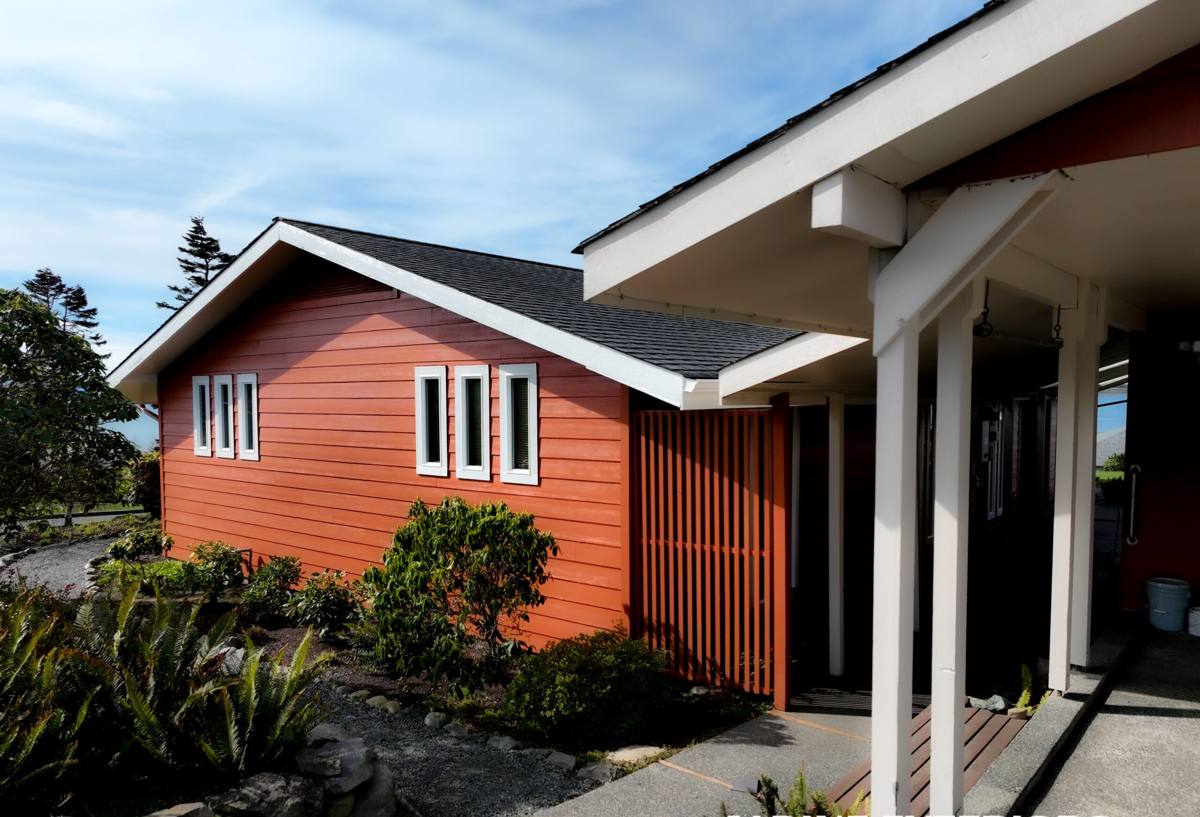
How to Tell When It's Time to Replace, Not Repair
Not every tired window needs full replacement, but in a climate like this, certain signs mean the window and its opening need real attention rather than a bead of caulk.
- Condensation or fogging between the panes of a double-pane window — the seal has failed and it won't clear up
- Soft, spongy, or discolored wood at the sill or lower corners of the frame
- Visible daylight or a steady draft around the sash even when it's latched
- Paint that keeps bubbling or peeling at the same spots season after season
- Windows that are difficult to open, close, or lock, especially older aluminum or wood units
- Moss or dark staining building up on the trim or siding directly around the window opening
Any one of these can be a small fix. Several of them together, especially on windows original to an older Mount Vernon home, usually mean the window and its flashing have been letting moisture in for a while.
What a Correct Installation Actually Involves
It's Not Just the Window — It's the Opening
The window unit itself is often the easy part. What actually determines whether a window performs for the next twenty or thirty years is how the rough opening is prepared and sealed before the new window ever goes in. In a wet climate like Skagit County's, that prep work matters more than the brand of window chosen.
- Sill pan flashing — a sloped, waterproof pan at the bottom of the opening that directs any water that does get past the window back outside, instead of into the wall framing
- Proper flashing sequence — house wrap and flashing tape layered shingle-style (top piece over the one below it) so water always sheds downward and outward
- Correct sealant placement — sealed where it needs to keep water out, and left open where the assembly needs to drain and breathe; sealing everything solid is a common mistake that traps moisture instead of shedding it
- Square, plumb, and properly shimmed installation — a window that's out of square binds, wears its hardware early, and stresses the seals around the glass
- Insulation in the gap — low-expansion foam or backer rod and sealant around the frame, not stuffed fiberglass that leaves gaps
Skip any one of these steps and the window can look fine from the curb while quietly failing behind the trim. This is the part of the job that separates a lasting installation from one that needs attention again in five years.
Reading What the Old Window Tells Us
Before we install anything new, we open up the existing opening and look at the sheathing, framing, and any existing flashing. A home in Mount Vernon that's dealt with a few decades of Skagit Valley winters can have hidden moisture damage even if the siding looks fine. If we find soft or damaged framing, we address it before the new window goes in — a new window installed over a damaged opening just repeats the same problem with a nicer frame.
Choosing Window Materials for a Skagit Valley Home
There's no single "best" window material for every house — it depends on the home's age, exposure, and how much upkeep the owner wants to do. Here's how the common options actually perform in this climate:
| Frame Material | Moisture Performance Here | Upkeep | Best Fit |
|---|---|---|---|
| Vinyl | Doesn't absorb water or rot; handles driving rain and humidity well | Low — occasional cleaning | Most Mount Vernon homes, budget-conscious replacements |
| Fiberglass | Very stable in temperature and moisture swings; strong seal retention over time | Low | Larger openings, homes wanting a longer-term investment |
| Wood (clad exterior) | Good if the exterior cladding is intact; exposed wood is vulnerable to our wet winters | Higher — exterior cladding and interior finish need attention | Historic homes, interior wood-look requirements |
| Aluminum | Conducts cold and can condense/sweat in our damp winters; prone to corrosion near moisture | Moderate | Rarely our recommendation for full-house replacement here |
We install several of these materials and don't push one product line on every job. What we won't do is install a window in a way that ignores how it actually behaves in this climate — for example, a wood-clad window with damaged exterior cladding, or an aluminum frame in a spot that already has condensation problems. Those aren't defects in the product; they're a mismatch between the product and the opening, and it's our job to flag that before installation, not after.
Our Installation Process
- On-site assessment — we measure every opening, check the condition of the existing framing and siding, and note any signs of past moisture intrusion
- Product selection — we go over frame material, glass package, and style options based on the home's exposure and your budget, without pushing a single brand
- Careful removal — old windows come out with attention to the surrounding siding and trim so we don't create new damage getting the old unit out
- Opening inspection and repair — any soft framing, missing flashing, or damaged sheathing gets addressed before the new window goes in
- Flashing and sill pan installation — built and layered correctly for our rain patterns, every time, not just on the jobs where it's convenient
- Window setting — shimmed square and plumb, fastened per manufacturer spec so the warranty stays valid
- Sealing and insulation — sealed where water needs to be kept out, left to drain where it needs to breathe
- Interior and exterior trim finish — trim reset or replaced so the finished opening looks right and sheds water correctly
- Final walkthrough — we operate every window with you, check the seals, and answer questions before we consider the job done
Mistakes We See in Older Installations
A lot of what we're called out to fix in Mount Vernon isn't a bad window — it's a window that was installed without accounting for how much water this area actually sees over a winter. The most common issues we find on older or lower-quality installs:
- No sill pan flashing, or flashing installed in the wrong order so water gets directed into the wall instead of away from it
- Caulk used as the only line of defense, with no flashing behind it — caulk fails eventually, and when it does there's nothing backing it up
- Openings that were never checked for existing rot before the new window went in
- Windows set out of square, leading to early hardware wear and seal failure around the glass
These aren't brand problems — they're installation problems, and they're avoidable with the right sequence and enough attention to the details that don't show once the trim goes back on.
What Affects the Cost of a Window Installation
Every home and every opening is different, so we don't quote a job without seeing it, but these are the main factors that move the price up or down:
| Factor | Why It Matters |
|---|---|
| Frame material and glass package | Vinyl runs lower than fiberglass or wood-clad; double vs. triple-pane and low-E coatings add cost |
| Condition of the existing opening | Rot or moisture damage found during removal adds repair time before the new window can go in |
| Window size and configuration | Large picture windows, bays, or custom shapes take more time and specialized flashing |
| Number of windows and access | Whole-house jobs cost less per window than one-off replacements; second-story or hard-to-access openings add labor |
| Trim and siding work | Matching existing trim or repairing surrounding siding adds finish time |
As a broad range, homeowners in this area typically see individual window replacements land anywhere from a few hundred dollars to well over a thousand per opening depending on size, material, and site conditions — full-house jobs get priced as a package once we've walked the site. We'll always give you the real number in writing before any work starts.
Caring for New Windows After Installation
A correctly installed window in Skagit County still needs a little seasonal attention to get its full lifespan out of it:
- Rinse frames and tracks periodically to keep moss spores and algae from taking hold, especially on shaded north- and west-facing windows
- Check that weep holes on vinyl and fiberglass frames stay clear of debris so water can drain out as designed
- Inspect exterior caulking once a year, particularly after a hard winter, and let us know if you see cracking or gaps
- Keep gutters and downspouts clear so overflow isn't running down onto window heads and trim
- Operate every window a few times through the year, even ones you don't use often, so hardware and seals don't seize up
Why Local Installation Experience Matters
Anyone can install a window on a dry day in August. What separates a lasting job in Mount Vernon is knowing how this specific valley behaves — the humidity that sits in low spots near the river, the moss that builds up on shaded elevations, the way winter storms drive rain sideways into west-facing walls. That knowledge shapes real decisions on the job: where extra flashing is worth the time, which openings need a closer look at the framing before anything goes in, and which products hold up versus which ones fight the climate. A crew that works this area regularly has already seen what goes wrong when those details get skipped, and builds every installation to avoid repeating it.
If you're dealing with drafty, foggy, or aging windows anywhere in Mount Vernon, we're happy to take a look and give you an honest read on what's going on — no pressure, no obligation. Use the form below to request a free estimate and we'll go from there.