 Anacortes Window
 West Anacortes sits close enough to the water that salt air, wind-driven rain, and a moss season that can run half the year are just part of owning a home here. A new roof installed for this part of Skagit County has to account for all three, not just look good going on. If you're weighing a full roof replacement on a West Anacortes home, here's what actually matters — from what the climate does to roofing materials, to how a correct installation is sequenced, to what questions are worth asking before you hire anyone.
What West Anacortes Roofs Are Actually Up Against
Anacortes sits on Fidalgo Island, and homes on the west side catch marine air directly off Rosario Strait and the surrounding waterways. That proximity brings a few specific stresses that inland Skagit County roofs deal with less often.
Salt Air and Corrosion
Airborne salt accelerates corrosion on exposed metal — fasteners, flashing, vents, and gutter hardware. A roofing system that isn't specified with corrosion-resistant materials in mind will show rust streaking and metal fatigue years before it should, even if the shingles themselves are still fine.
Driving Rain
Storms coming off the water often bring rain sideways, not straight down. That matters for roofing because wind-driven rain can work its way under standard laps and up under ridge caps if the underlayment, flashing details, and fastening pattern aren't built for it. A roof that would perform fine in a calmer inland climate can leak here if it's installed to a generic standard instead of a coastal one.
Moss and Moisture Retention
Mature tree cover, marine humidity, and a long wet season give moss a long runway to establish itself on north-facing and shaded slopes. Moss holds moisture against the roofing surface, which shortens material life, promotes granule loss on asphalt shingles, and can lift shingle edges over time. Roof design choices — slope, ventilation, material texture — all affect how much of a foothold moss gets.
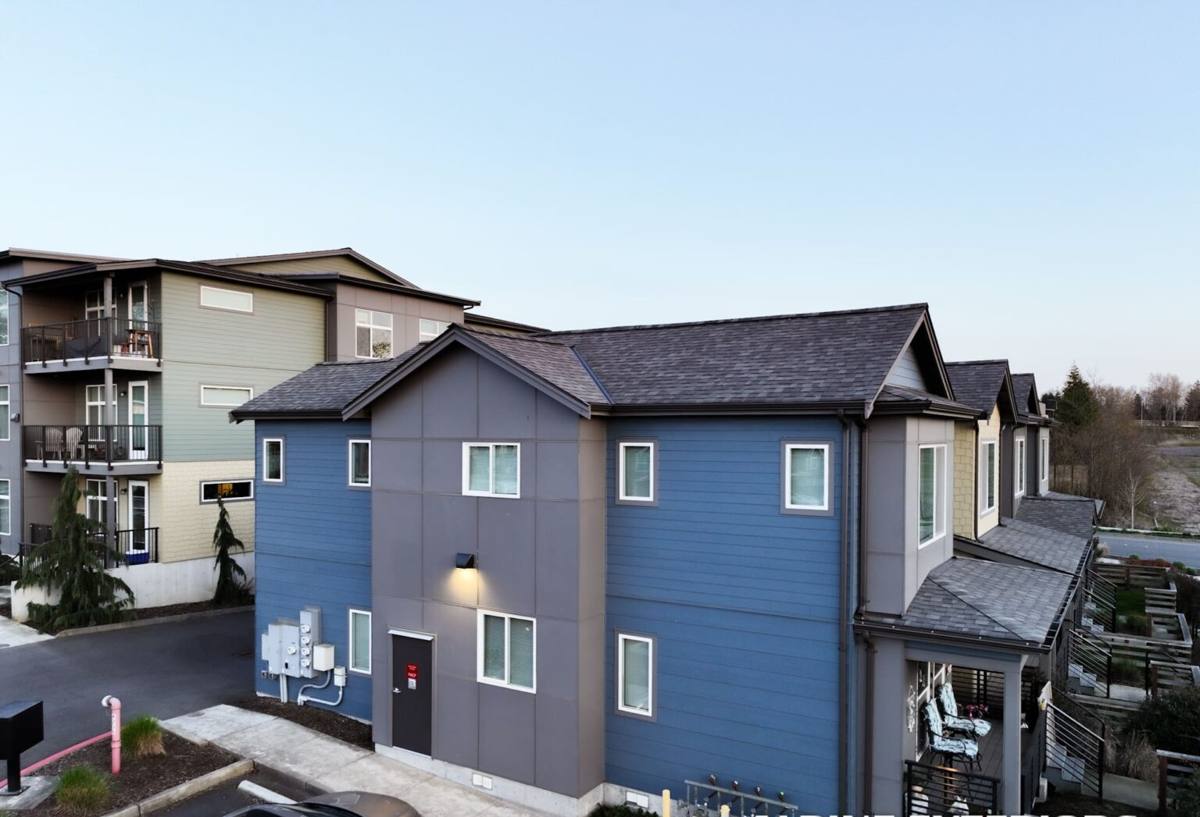
What a Correct New Roof Installation Involves
A roof replacement is really a system, not a single product. Getting a new roof right in this climate means every layer works together, not just the shingles or panels on top.
Tear-Off and Deck Inspection
A full tear-off gives us the only real look at the roof deck. In this climate, moisture-damaged sheathing is common wherever a roof has been leaking slowly for a while, especially around old flashing or valleys. Any soft, delaminated, or rotted decking gets replaced before anything new goes down — installing a new roof over a compromised deck just hides the problem.
Underlayment Built for Wind-Driven Rain
Given how often rain comes in at an angle here, we treat underlayment as a real second layer of defense, not a formality. That means full ice-and-water membrane or high-quality synthetic underlayment at eaves, valleys, and penetrations — the areas most exposed to wind-driven moisture intrusion.
Flashing Details
Flashing is where most roof leaks actually start, not in the field of the roof. Chimneys, skylights, sidewalls, and valleys all need step flashing, counter-flashing, or valley metal sized and lapped correctly for the pitch and exposure. On a west-facing or water-facing slope, we pay extra attention here because that's the side catching the worst of the weather.
Ventilation and Moisture Management
A roof deck that can't breathe traps moisture, which shortens shingle life and feeds moss and mildew from underneath. Balanced intake and exhaust ventilation keeps the attic space and roof deck drier year-round, which matters more in a marine climate than in a dry one.
Corrosion-Resistant Fasteners and Metal
Given the salt air, we use fasteners, flashing, and hardware rated for coastal exposure rather than the cheapest available option. It costs a little more up front and saves you from premature rust staining and failed fasteners down the line.
Material Choices for a West Anacortes Roof
There's no single "best" roofing material for every house — the right choice depends on your roof's slope, sun and shade exposure, budget, and how much maintenance you want to take on. Here's an honest look at the common options for this area.
| Material | How It Handles This Climate | Maintenance Consideration |
|---|---|---|
| Architectural asphalt shingles | Solid performance when installed with coastal-grade underlayment and flashing; widely available warranty support | Moderate — benefits from periodic moss and debris removal on shaded slopes |
| Metal roofing (standing seam) | Sheds wind-driven rain well and resists moss better than textured surfaces; needs coastal-rated fasteners and coatings | Low — occasional inspection of seams and fastener points |
| Composite/synthetic shingles | Good moisture resistance and can mimic shake or slate appearance without the same moisture retention issues | Low to moderate depending on product |
| Cedar shake | Traditional look, but higher moisture retention makes it more vulnerable to moss and rot in a marine climate without diligent upkeep | High — regular treatment and moss management needed |
We'll walk through these trade-offs with you based on your roof's actual exposure — a heavily shaded north slope calls for different thinking than a sun-exposed south slope, even on the same house.
How Our Process Works
We keep the process straightforward and try not to leave you guessing at any stage.
- On-site assessment. We look at your current roof's condition, ventilation, flashing points, and any signs of moisture damage or moss buildup, and take measurements.
- Written estimate. You get a clear scope of work and pricing before anything is scheduled — no vague allowances.
- Material selection. We go over the trade-offs for your specific roof and budget, not a one-size-fits-all recommendation.
- Scheduling around weather. Roofing in a wet climate means watching forecasts closely; we sequence tear-off and dry-in to minimize the roof's exposure to open weather.
- Tear-off, deck repair, and installation. Old roofing comes off, the deck is inspected and repaired as needed, then underlayment, flashing, and roofing material go on in that order.
- Final walkthrough. We review the completed roof with you, including ventilation and any warranty paperwork.
What to Ask Before You Hire Anyone for a Re-Roof
- Are you licensed and insured to work in Washington, and can you provide proof?
- Will you do a full tear-off, or are you proposing to layer over the existing roof?
- What underlayment and flashing materials do you use, and are they rated for coastal exposure?
- Who inspects the deck once the old roofing is off, and what happens if there's damage?
- What does the workmanship warranty cover, separate from the manufacturer's material warranty?
- How do you handle scheduling around rain, and what's the plan if weather interrupts the job mid-tear-off?
Why Local Experience Matters for This Job
Roofing standards written for a generic climate don't always account for what a house two miles from Rosario Strait actually experiences. A crew that regularly works West Anacortes and the surrounding Fidalgo Island neighborhoods has already seen which flashing details fail under local wind-driven rain, which slopes hold moss the longest, and which fasteners hold up against salt air over years rather than months. That familiarity shows up in the small decisions — where to add extra underlayment, how tight to lap a valley, which vents perform better in wet marine air — that a generic installation checklist won't cover on its own.
It also means faster, more realistic scheduling. We already understand how Skagit County's wet season affects roofing timelines and plan tear-offs accordingly, rather than learning that lesson on your roof.
Signs Your West Anacortes Roof May Need Replacing
Not every roof problem means a full replacement, but these signs are worth a professional look:
- Granule loss showing up in gutters or at downspouts
- Curling, cracked, or missing shingles, especially on sun- or wind-exposed slopes
- Persistent moss growth that keeps returning after cleaning
- Soft spots or sagging in the roof deck
- Daylight visible through the roof deck from inside the attic
- Water stains on interior ceilings, particularly near chimneys, skylights, or valleys
- A roof approaching or past the expected lifespan of its material
If you're seeing more than one of these, it's usually more cost-effective to plan a full replacement than to keep patching individual problem areas.
Cost Factors Worth Understanding
Every roof is different, so a real number only comes from an on-site look, but a few factors consistently drive cost up or down on West Anacortes homes:
| Factor | Why It Affects Cost |
|---|---|
| Roof size and complexity | More valleys, dormers, and penetrations mean more flashing work and labor time |
| Existing deck condition | Rotted or delaminated sheathing found during tear-off adds material and labor to replace |
| Material choice | Asphalt, metal, and composite options carry different material and installation costs |
| Roof pitch and access | Steeper or harder-to-access roofs require more safety equipment and time |
| Ventilation upgrades | Adding or correcting intake/exhaust ventilation is often worth doing during a re-roof |
We'd rather walk you through these factors on your actual roof than throw out a broad price range that may not apply to your house.
If your West Anacortes roof is showing its age or you're planning ahead of a problem, we're glad to take a look and give you a straightforward, no-pressure estimate. Use the form below to get started.