 Anacortes Window
 Building a Deck That Can Actually Handle Guemes Island
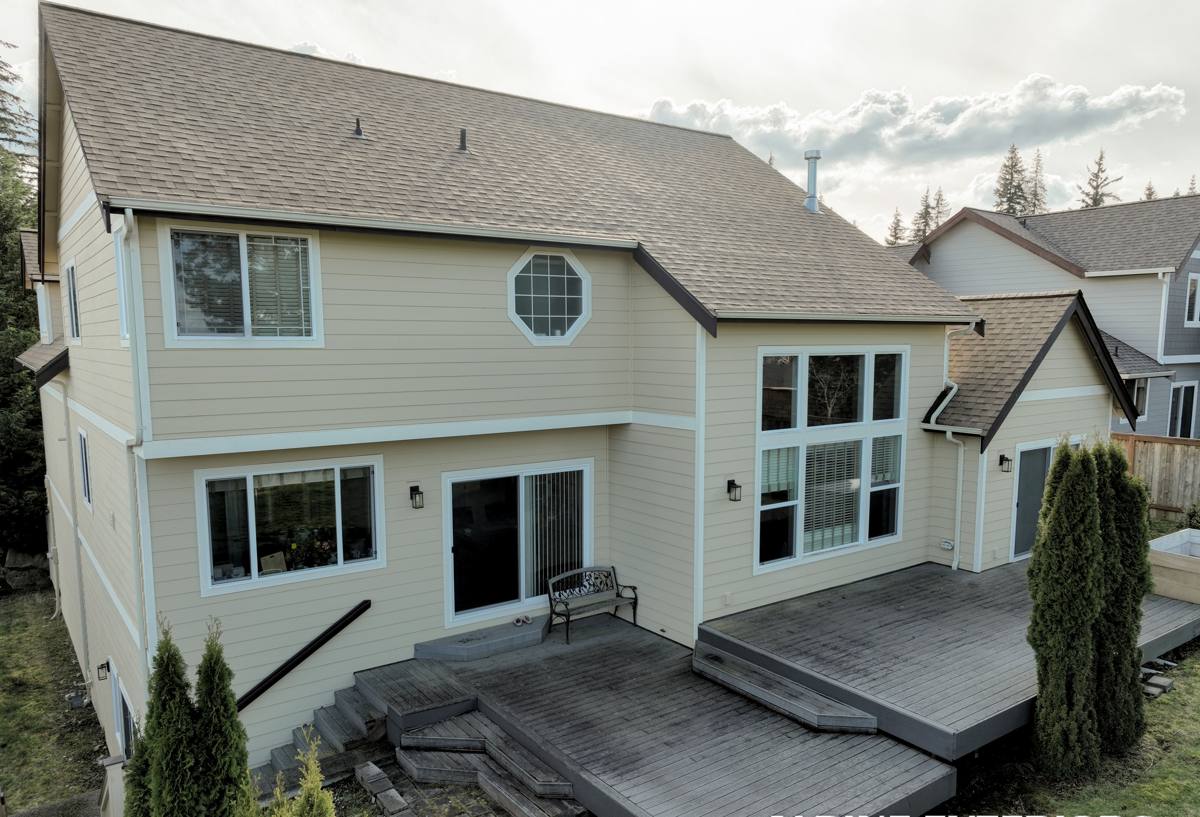
Guemes Island sits right in the path of Rosario Strait weather, and that changes what a deck needs to survive here compared to a deck built twenty minutes inland. Homes on the island get a steady diet of salt-laden air, wind-driven rain that finds its way under poorly flashed ledger boards, and a long, damp shoulder season where moss and algae get a real foothold on any horizontal wood surface. A deck that would be perfectly fine in a drier part of Skagit County can start showing fastener corrosion, soft decking, or slick green growth within a couple of seasons if it wasn't built with this specific environment in mind.
This page is about one thing: building and replacing custom decks for homes on Guemes Island, and what separates a deck that lasts from one that turns into a maintenance headache by year five.
What the Local Climate Does to an Ordinary Deck
Salt Air and Metal Fatigue
Airborne salt from the surrounding water accelerates corrosion on any exposed metal — nails, screws, joist hangers, post bases, and railing hardware. Standard electro-galvanized fasteners that might hold up fine in a drier, inland yard can start rusting and staining the decking within a year or two on the island. Once a fastener starts corroding, it loses holding strength long before it looks obviously bad, which is part of why deck failures out here tend to be more about hardware than about the boards themselves.
Driving Rain and Hidden Water Paths
Storms coming off the strait don't just fall straight down — wind pushes rain sideways, into ledger connections, around post wraps, and under poorly lapped flashing. A deck built without real attention to water management can look fine on the surface for years while rot quietly develops at the house connection or around post bases, which are the two places a deck failure is most likely to start.
Moss, Algae, and a Long Damp Season
Guemes Island's combination of shade, moisture, and mild temperatures gives moss and algae a long growing window. On horizontal wood or composite surfaces, that growth isn't just cosmetic — it holds moisture against the decking and creates a genuinely slick, dangerous walking surface, especially on stairs and near shaded rail posts.
What a Correctly Built Deck for This Area Involves
Framing and Fasteners
For island builds, we frame with fasteners and structural connectors rated for coastal exposure — typically hot-dip galvanized or stainless steel hardware rather than standard-grade fasteners, particularly at joist hangers, ledger bolts, and post bases where a failure isn't just cosmetic. The extra cost on hardware is small relative to the cost of tearing into a deck a few years later to replace corroded connectors.
Ledger Flashing and Water Management
Where the deck attaches to the house, proper step flashing and a drainage gap between the ledger and the siding matter more here than almost anywhere else in the county, because wind-driven rain actively tests that connection. We also grade and detail the deck surface itself so water sheds away from the house rather than pooling against it.
Decking Material Selection
There's no single right answer here — it depends on budget, sun exposure, and how much upkeep the homeowner actually wants to do. The table below is how we walk clients through the trade-offs for an island property.
| Material | How It Handles Salt Air & Moisture | Moss/Algae Resistance | Typical Upkeep |
|---|---|---|---|
| Pressure-treated lumber | Good if properly sealed and refreshed; entry points at fastener holes and cut ends need attention | Low — needs regular cleaning and treatment | Annual cleaning, periodic sealing/staining |
| Cedar | Naturally decay-resistant but still needs sealing in this climate to look and perform its best | Moderate — still grows moss if shaded and damp | Regular cleaning, periodic oil or sealer |
| Composite decking | Excellent — doesn't absorb moisture or salt the way wood does | Low-moderate — surface texture matters; some grip patterns hold moss more than others | Periodic washing, no staining or sealing |
| PVC decking | Excellent — fully synthetic, unaffected by salt or moisture absorption | Low — smooth, dense surface sheds growth more easily | Occasional washing |
We generally steer island clients away from bare, unsealed softwood left to the elements — not because the wood itself is bad, but because the maintenance commitment needed to keep it safe and good-looking in this climate is more than most homeowners want to sign up for. If a client wants a wood look with less upkeep, that's a real conversation about composite or PVC options with wood-grain finishes.
Railings and Hardware
Railing posts and connectors are another spot where cutting corners shows up fast in this climate. We spec coastal-rated hardware for structural rail connections, and we pay close attention to any point where two dissimilar metals touch, since that combination corrodes faster than either metal alone.
Getting a Deck Project to Guemes Island
Guemes Island is reached by a short ferry crossing from Anacortes, which is a real scheduling factor for any construction project — materials, equipment, and crew all have to move on ferry time. We build that into how we plan island jobs from the start: staging deliveries efficiently, batching crew trips, and setting realistic timelines that account for the crossing rather than promising a schedule that only works for a mainland job. Homeowners who've had contractors quote them a mainland timeline for an island project usually end up frustrated — we'd rather set the right expectation up front.
Our Process for Guemes Island Deck Projects
- On-site assessment. We look at sun and wind exposure, existing structure (for replacements), drainage patterns, and how the deck ties into the house.
- Material and design conversation. We walk through decking, railing, and hardware options against your budget and how much maintenance you actually want to do.
- Permitting. Deck projects on Guemes Island fall under Skagit County jurisdiction, and depending on size, height, and attachment to the house, a permit may be required. We help identify what applies to your project.
- Ferry-aware scheduling. We plan material deliveries and crew logistics around the crossing so the project timeline is realistic, not optimistic.
- Build, with coastal-grade detailing. Framing, flashing, fastener selection, and drainage are all handled with island exposure in mind, not treated as an afterthought.
- Final walkthrough. We go over the finished deck with you, including what maintenance (if any) the material you chose actually needs.
Common Problems We Find on Existing Guemes Island Decks
- Rusted or failing fasteners at joist hangers and post bases, often before the decking itself shows real wear
- Soft or rotting framing at the ledger board where flashing was missing or improperly lapped
- Persistent moss and algae buildup on shaded sections, especially stairs and north-facing surfaces
- Railings that have loosened at the post connections due to corroded structural hardware
- Standing water on the deck surface from inadequate slope or clogged drainage gaps
If any of these sound familiar, it's often more cost-effective to address them properly now than to keep patching a deck that was never detailed for this environment in the first place.
Cost Factors for an Island Deck Project
Every project is different, but these are the factors that most affect the final number for a Guemes Island deck, whether it's a new build or a replacement.
| Factor | Why It Matters Here |
|---|---|
| Decking material | Composite and PVC cost more upfront than treated lumber but need far less long-term upkeep in this climate |
| Hardware grade | Coastal-rated fasteners and connectors cost more than standard-grade but protect against salt-air corrosion |
| Deck size and height | Larger and elevated decks need more structural framing and railing, and may trigger different permit requirements |
| Site access and ferry logistics | Material delivery and crew scheduling around the ferry crossing factor into overall project planning |
| Existing structure condition | Replacement projects can cost more if hidden rot or corrosion is found once the old decking comes off |
We give straightforward, itemized estimates rather than vague ballpark numbers, so you know exactly what you're paying for and why.
Deck Maintenance Checklist for Guemes Island Homes
- Rinse or sweep the deck surface regularly to keep organic debris from feeding moss and algae growth
- Check railing posts and stair connections annually for looseness, which can signal hardware corrosion
- Inspect the ledger-to-house connection periodically for signs of water staining or soft wood
- Keep gutters and downspouts near the deck clear so runoff isn't adding to the moisture load
- Reseal or restain wood decking on the schedule appropriate to the product — don't wait until it's visibly weathered
- Address any rust staining on fasteners early rather than waiting for a full hardware failure
Why It Matters That We Already Work on Guemes Island
A crew that mostly builds decks in drier, inland conditions can still do quality carpentry — but they may not default to coastal-rated hardware, they may underestimate how much flashing detail this exposure needs, and they almost certainly haven't built ferry logistics into their project planning. Working Guemes Island regularly means we know what actually fails out here, we plan for the crossing as a normal part of scheduling, and we spec materials and hardware for the exposure the deck will actually see — not for a generic Pacific Northwest climate that doesn't quite match conditions on the water.
If you're planning a new deck or need to replace one that's showing its age, we're happy to come take a look and put together a straightforward, no-pressure estimate. Use the form below to get started.