 Anacortes Window
 Guemes Island Asks More of Your Siding Than the Mainland Does
Guemes Island sits right in the Salish Sea, and that location cuts both ways. It's part of what makes the island special, and it's also what puts extra stress on the exterior of every home out there. Homes on Guemes catch wind and salt spray off the water from multiple directions, take on driving rain through the fall and winter, and then sit under a long, damp moss season that mainland Anacortes homes get a lighter version of. Siding that would hold up fine a few miles inland can start showing problems years earlier once it's facing open water.
We install siding across Skagit County, and Guemes Island projects get planned differently from day one — not because the workmanship changes, but because the exposure does. A siding job on the island needs to account for wind-driven moisture finding every gap, salt air accelerating corrosion on fasteners and trim, and organic growth that never fully dries out between rains. Get the details right and a home is set for decades. Skip them, and a homeowner ends up fighting the same problems again in half the time.
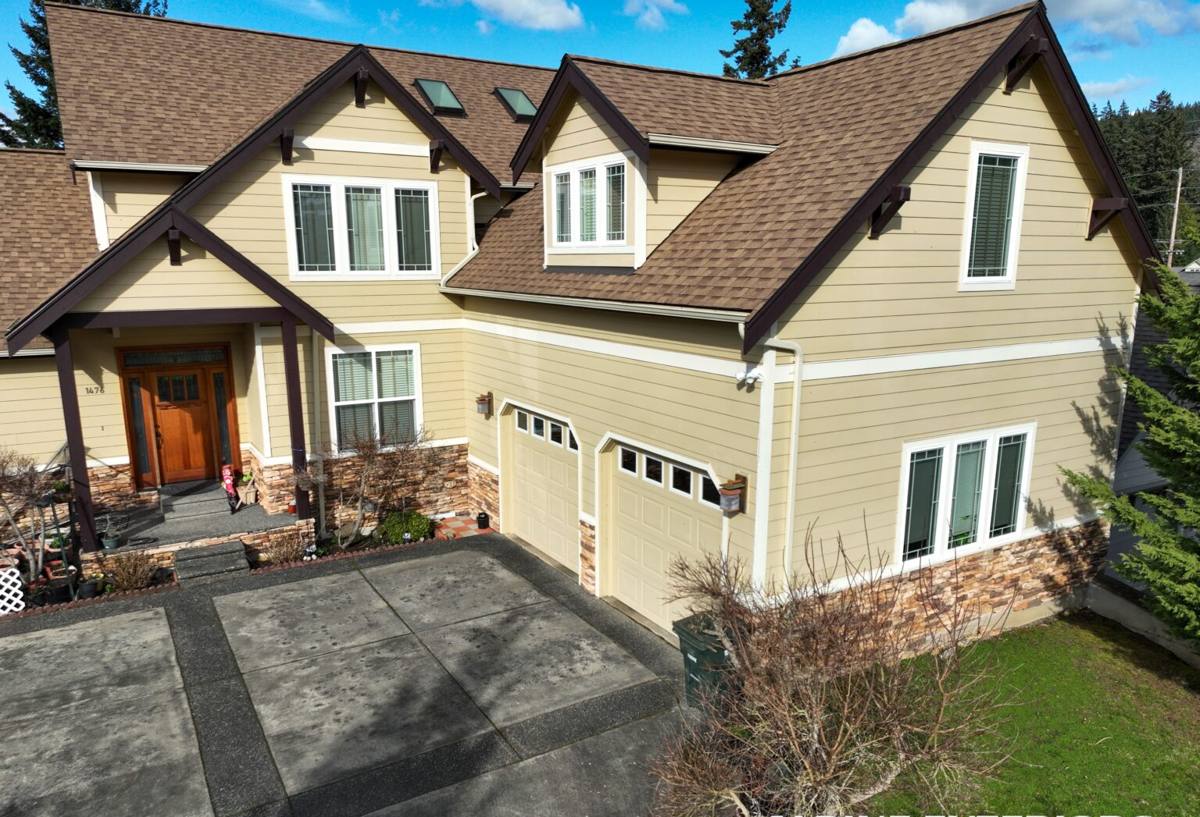
What Salt Air, Driving Rain, and Moss Actually Do to Siding
Salt Air
Airborne salt is corrosive to metal and abrasive to finishes. Over years, it can pit unprotected or poorly coated fasteners, degrade caulking faster than inland conditions would, and dull paint finishes that aren't formulated to resist it. On an island property, every metal component of the siding system — nails, flashing, trim fasteners — is working against a harsher clock than the same materials would face in town.
Driving Rain
Rain that comes in sideways off open water doesn't behave like rain falling straight down. It gets pushed up under laps, into seams, and behind trim that isn't properly flashed. A siding system built for calmer conditions can look fine for a season or two and still be letting moisture in behind the surface, where it does the real damage to sheathing and framing.
Moss and Organic Growth
The Pacific Northwest's long wet season already favors moss and algae on north-facing and shaded walls. Add an island's higher ambient humidity and tree cover common on Guemes lots, and siding stays damp longer between dry spells. Materials that absorb moisture or that need routine sealing to stay watertight are the ones that suffer most — trapped moisture behind a damp surface is what leads to rot, delamination, and paint failure.
Why We Install Only James Hardie Fiber Cement
We made a standing decision as a company: we install James Hardie fiber cement siding, and we don't install vinyl, LP SmartSide, Cemplank, Allura, or bare wood siding like primed spruce or cedar. That's not a marketing line — it's a professional standard we hold ourselves to on every job, including on Guemes Island where the exposure makes the wrong choice cost a homeowner more, sooner.
Vinyl can warp and fade under sustained UV and salt exposure, and it relies on gaps and overlaps that aren't sealed the way fiber cement joints are, which matters more when wind is driving rain sideways. Engineered wood products like LP SmartSide use wood strand cores that are more moisture-sensitive than fiber cement at cut edges and butt joints — a real risk in a location where every wall sees repeated wetting. Bare wood siding needs a maintenance schedule (stripping, sealing, repainting) that most homeowners underestimate, and a missed cycle in a wet, salty environment shows up fast as cracking, cupping, or rot. Other fiber cement brands exist, and some are reasonable products, but we've standardized on Hardie because of its factory-applied ColorPlus finish, its climate-engineered HZ5 product line built for exactly this kind of Pacific Northwest exposure, and a warranty structure that transfers with the home and holds up when installation is done to Hardie's own specifications.
None of this means other products are junk. It means that for an island environment with salt air, driving rain, and a long moss season, we're not willing to put our name on a lower-margin-of-error material when a better-suited one exists.
What a Correct Installation Actually Involves
Fiber cement siding is only as good as the assembly behind it. On Guemes Island projects, the details that get extra attention include:
- A continuous weather-resistive barrier with properly lapped and taped seams, since wind-driven rain finds any shortcut in the house wrap
- Correct flashing at every window, door, and penetration — the number one source of hidden moisture intrusion on coastal homes
- Rainscreen or furring strategy where the wall assembly and budget support it, to let the wall dry from behind rather than trapping moisture against the sheathing
- Stainless or coated corrosion-resistant fasteners appropriate for salt-air exposure, not standard interior-grade hardware
- Manufacturer-specified nailing patterns and clearances — Hardie's warranty depends on installation matching its published fastening and clearance requirements, not shortcuts
- Proper gaps at the foundation, roofline, and trim so siding never sits in standing water or constant shade-dampness
- Caulking and sealant only where Hardie's details call for it — over-caulking traps moisture just as badly as under-caulking
Every one of these steps matters more on an exposed island lot than on a sheltered in-town property. Skipping any of them doesn't usually cause an obvious problem in year one — it shows up two, five, or ten years later as rot behind the wall, streaking, or a section that needs premature replacement.
Our Process for Guemes Island Projects
Working on an island adds a logistics layer that mainland jobs don't have, and a crew that hasn't planned for it can turn a straightforward project into a frustrating one for the homeowner.
Assessment and Material Planning
We start with a walk-around of the home's exposure — which walls take the worst of the wind and rain, where existing moss or moisture staining shows up, and what's happening behind the current siding at any accessible points. Material takeoff and ordering happen with enough lead time that a ferry delay or weather window doesn't stall the job mid-installation.
Ferry-Aware Scheduling
Getting a crew, tools, and full material loads on and off the island runs on the ferry's schedule, not a job's ideal timeline. We plan Guemes Island projects around that reality — batching trips, staging materials on-site early, and building schedules that don't leave a home half-sided when a crew has to head back for the last boat.
Installation to Spec
Every install follows Hardie's published installation guidelines for clearances, fastening, and flashing — the same standard regardless of whether the home is on the island or in town, because that standard is what keeps the warranty valid and the wall assembly dry.
Final Walkthrough
We walk the finished job with the homeowner, covering what maintenance actually looks like going forward (which, with Hardie, is minimal) and flagging anything worth keeping an eye on given the specific exposure of that lot.
How Hardie Compares to Other Siding Choices in This Climate
| Material | Salt Air / Moisture Behavior | Maintenance | Typical Lifespan Factor |
|---|---|---|---|
| James Hardie Fiber Cement (HZ5) | Non-combustible, engineered for Pacific Northwest moisture exposure, factory finish resists fading | Occasional wash; no repainting cycle with ColorPlus finish | Long service life when installed to spec, backed by transferable warranty |
| Vinyl | Can warp under heat/UV, joints and laps not sealed the way fiber cement is | Low, but limited repair options if damaged or discolored | Shorter in high-exposure coastal conditions |
| LP SmartSide (engineered wood) | Wood-strand core sensitive to sustained moisture at cut edges and joints | Requires attentive caulk/paint upkeep to stay protected | Dependent on moisture management and upkeep |
| Bare Wood (cedar, primed spruce) | Absorbs moisture, prone to cupping and rot without a strict maintenance cycle | High — regular sealing, staining, or painting required | Shortest without diligent, ongoing maintenance |
What Drives the Cost of a Siding Project on Guemes Island
| Factor | Why It Matters |
|---|---|
| Home size and wall complexity | More corners, dormers, and trim detail mean more cutting, flashing, and labor time |
| Condition of the existing wall assembly | Hidden rot or a failed weather barrier found during tear-off adds repair scope before new siding goes on |
| Ferry and staging logistics | Material delivery and crew transport to the island are planned into the schedule and add coordination time versus a mainland job |
| Product selection within the Hardie line | Panel vs. lap siding, trim details, and color (factory ColorPlus vs. field-painted) affect material cost |
| Site access | Driveway grade, tree clearance, and staging space on the lot affect how efficiently a crew can work |
We walk every one of these factors with the homeowner before providing a number, so there are no surprises once work starts.
A Simple Maintenance Checklist for Island Homes
Even with a low-maintenance material like Hardie, an island property benefits from a light annual check:
- Rinse salt residue and debris off siding once or twice a year, especially on wind-exposed walls
- Check caulk lines at trim, windows, and doors for cracking or separation
- Look at north-facing and shaded sections for early moss or algae growth and address it before it spreads
- Confirm gutters and downspouts are directing water away from the foundation and lower siding courses
- Watch for any soft spots, staining, or discoloration that could point to trapped moisture behind the wall
Why a Crew That Already Works Guemes Island Matters
Anyone can quote a siding job from a photo. Getting it right on Guemes Island means understanding how a specific lot's wind exposure, tree cover, and sun angle line up with the general risks every island home faces, and building the ferry logistics into the schedule rather than treating them as an afterthought. A crew that's done this before knows not to over-promise a start date around a ferry backup, knows which details of flashing and clearance actually matter for this exposure, and shows up prepared rather than improvising once they're already on the island.
We're an Anacortes-based crew serving Skagit County, and Guemes Island is part of our regular service area — not a special trip we make occasionally. That familiarity shows up in fewer surprises, tighter scheduling, and an installation built specifically for what this island's climate does to a home over time.
If you're planning a siding project on Guemes Island, we're glad to walk the property, look at what your current siding is telling us, and put together a straightforward, no-pressure estimate using the form below.