 Anacortes Window
 Storm Damage Roof Repair for Bow Homes
Bow sits in an exposed stretch of Skagit County, close enough to the water that homes here take a different kind of beating than roofs further inland. When a windstorm rolls through off the Sound, or a heavy winter system dumps rain sideways for two days straight, the damage isn't always obvious from the ground. That's the problem with storm damage on a roof: the stuff you can see is rarely the whole story, and the stuff you can't see is what turns into a ceiling stain three months later.
We do storm damage roof repair work in Bow on a regular basis, not as an occasional add-on to a siding or window job. That matters because storm repair is really two skills at once — knowing how to diagnose what a specific storm actually did to a specific roof, and knowing how to put it back together so the next storm doesn't find the same weak point.
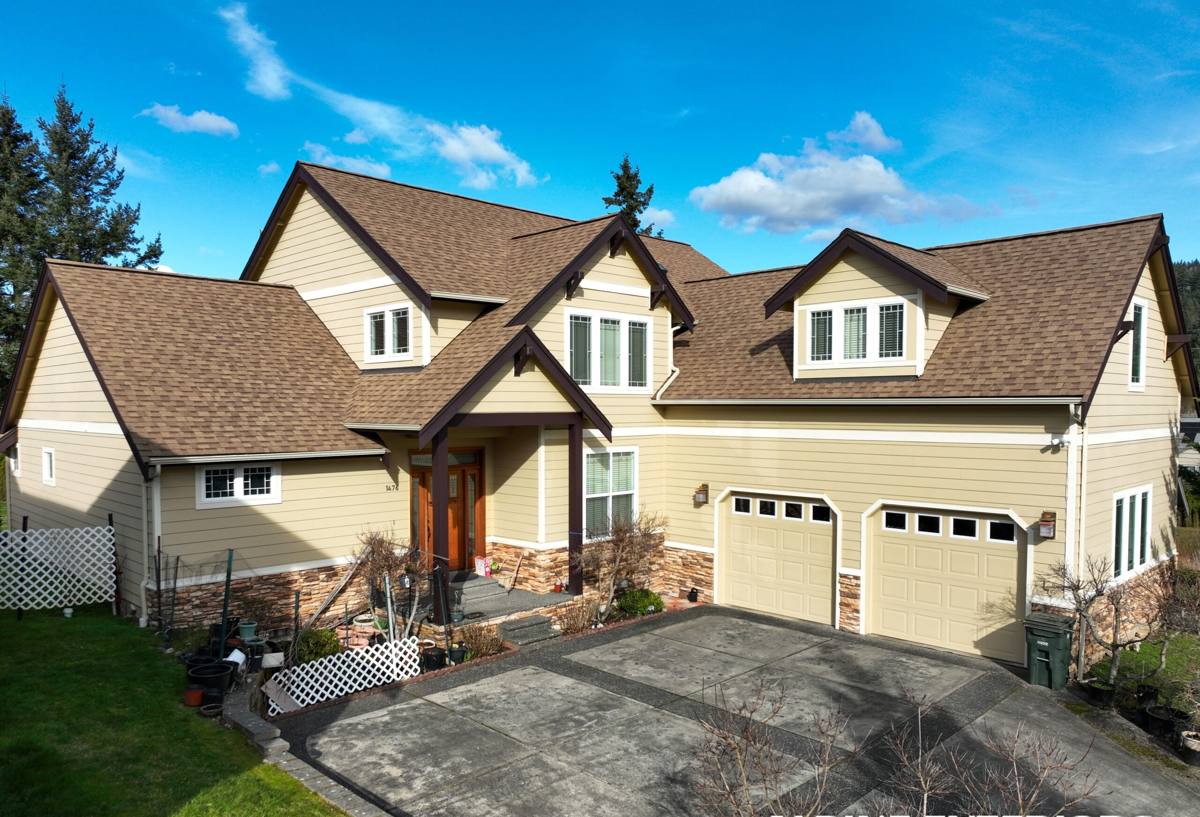
Why Bow Roofs Take Storm Damage Differently
Anacortes and the surrounding Skagit County area get a mix of conditions that's harder on roofing than people expect from the Pacific Northwest's reputation for "just rain." A few things stack up specifically in Bow:
Salt Air
Being close to the water means metal flashing, fasteners, and vent components corrode faster here than they would on a roof thirty miles inland. Corroded flashing is one of the most common hidden causes of storm-related leaks — the metal looks fine from the ground but has already lost its seal at the edges.
Driving Rain and Wind
Storms here rarely come straight down. Wind-driven rain gets pushed sideways and upward under shingle edges, ridge caps, and flashing laps that were never designed to shed water moving in that direction. A roof can be watertight in a normal rain and still leak badly in a wind-driven storm.
A Long Moss Season
Skagit County's damp, mild winters give moss a long growing window. Moss holds moisture against the roof surface, lifts shingle edges over time, and clogs the gutters and valleys that are supposed to move storm water off the roof fast. A roof with an existing moss problem is much more likely to take real damage in the next big storm, because the moss has already been working against the shingles for months.
What Storm Damage Actually Looks Like
Homeowners often expect storm damage to be dramatic — a missing shingle, a hole, a tree limb through the roof. Sometimes it is. More often it's subtle, and it's the subtle damage that causes the most expensive problems later because nobody catches it until there's water inside the house.
- Shingles that are lifted, curled, or cracked at the tab but still technically "in place"
- Flashing around chimneys, vents, and skylights that's been bent, loosened, or pulled away from its seal
- Granule loss on shingles, which shows up as bald patches and means the shingle's protective layer is compromised
- Gutters pulled loose or overflowing during the storm, which lets water run down behind the fascia instead of off the roof
- Debris impact damage — bruising or punctures from branches, gravel, or wind-blown debris
- Ridge cap shingles that have separated from wind uplift, even if they haven't blown off entirely
Any one of these can look minor and still be the start of a leak. Storm damage doesn't need to be visible from the driveway to be real damage.
Our Inspection Process
We start every storm damage call with a full roof inspection, not just a look at whatever the homeowner noticed. A storm that damages one section of roof has usually stressed the whole thing, so we check the areas that are easy to miss along with the obvious ones.
- Ground-level assessment — checking gutters, downspouts, and the ground around the house for granules, shingle fragments, or debris that tells us what happened up top
- Full roof walk — inspecting every slope, not just the side that faced the storm, since wind can pull damage from multiple directions
- Flashing and penetration check — chimneys, vents, skylights, and any wall-to-roof transitions get specific attention, since these are the most common leak points after a storm
- Attic check when accessible — looking for water staining, damp insulation, or daylight coming through that points to a leak already in progress
- Documentation — clear notes and photos of what we find, useful whether you're paying out of pocket or working with an insurance adjuster
We tell you honestly what we find. If a roof only needs a targeted repair, that's what we recommend. We don't pad a small repair into a full re-roof to increase the job size.
Repair vs. Replacement — How We Make That Call
| Factor | Points Toward Repair | Points Toward Replacement |
|---|---|---|
| Age of roof | Under 10–12 years, shingles still flexible | Near or past expected lifespan, brittle shingles |
| Extent of damage | Isolated to one section or a few spots | Damage spread across multiple slopes |
| Underlying deck condition | Solid, dry sheathing under the damaged area | Soft spots or rot found once shingles are pulled back |
| Moss and granule condition | Minor moss, granules mostly intact | Heavy moss coverage and significant granule loss overall |
| Flashing condition | Localized corrosion or displacement | Widespread flashing failure at multiple penetrations |
Most storm calls in Bow end up being repairs, not replacements — but the only honest way to know is to actually get on the roof and check the deck, not just eyeball it from the ground.
How We Handle the Repair
Once we know the scope, the repair itself follows a straightforward sequence:
- Remove and replace damaged shingles, matching as closely as possible to the existing roof
- Replace or re-seal flashing at any penetration that showed displacement or corrosion, using materials suited to the salt air exposure common near Anacortes
- Check and repair the underlying decking if there's any soft or water-damaged sheathing before new shingles go down
- Re-secure or replace damaged gutters and downspouts so storm water has a clear path off the roof
- Clear moss and debris from valleys and gutters as part of the repair, not as a separate upsell
- Final water test on repaired sections where leaks were suspected, so you're not guessing whether it worked
We use materials and fastening methods suited to wind-driven rain conditions, not just a generic patch job. A repair that isn't built for the way storms actually behave in this part of Skagit County is a repair that fails again in the next one.
Why a Local Bow Crew Matters
Storm damage repair isn't the kind of job you want handled by whoever answers the phone fastest after a big storm rolls through — and after a bad weather event, a lot of out-of-area crews show up chasing volume. A crew that already works in and around Bow and Anacortes has a real advantage here:
- We know what a typical Bow roof looks like and what its common weak points are before we ever climb up
- We're not guessing at material behavior in salt air and coastal wind — we deal with it regularly
- We're available for the follow-up check or warranty question after the job, not gone once the storm season is over
- We're not incentivized to oversell a replacement when a repair is the honest answer
Storm damage repair done right the first time is cheaper than a rushed patch that needs redoing after the next system moves through.
What to Do Right After a Storm
If you suspect storm damage, there are a few things worth doing before a crew ever gets there:
- Check your attic (if safely accessible) for any new staining, dampness, or light coming through the roof deck
- Look at your gutters and the ground around your house for shingle granules, fragments, or debris
- Take photos of any obvious exterior damage from the ground — don't get on the roof yourself
- Note the date and general conditions of the storm, which helps if you're filing an insurance claim
- Call for an inspection sooner rather than later — a small leak left unaddressed through another storm cycle gets expensive fast
Get an Honest Look Before the Next Storm
If your Bow home took a hit in the last storm — or you just want a roof checked before the next one comes through — we're glad to come out and give you a straight answer about what's actually going on up there. No pressure, no inflated scope, just an honest inspection and a clear explanation of what it would take to fix it. Use the form below to request a free estimate.