 Anacortes Window
 Roofing in Skyline: A Different Set of Conditions
Skyline sits on the west side of Fidalgo Island, close to the water and wrapped in mature Douglas fir and cedar. That combination is part of what makes the neighborhood beautiful, and it's also exactly what wears a roof out faster than it would a few miles inland. Homes here deal with salt-laden air off the water, wind-driven rain that comes in sideways instead of straight down, and long stretches of shade and dampness under the tree canopy that keep roof surfaces wet for days after everyone else's roof has dried out.
None of that means a roof in Skyline needs to fail early. It means the replacement needs to be specified and installed with those specific stresses in mind, not treated the same as a roof going on a wide-open, sun-exposed lot on the east side of Anacortes. That's the distinction this page is about.
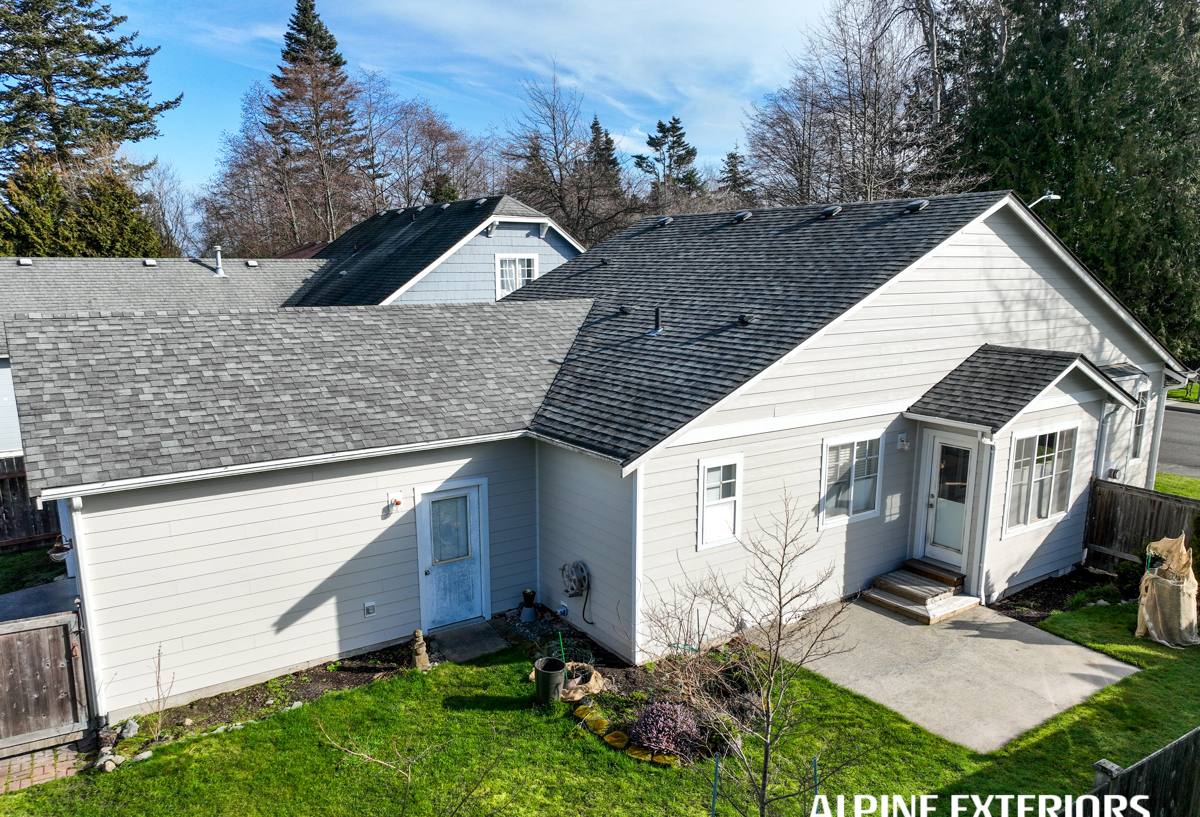
What Skagit County's Coastal Climate Does to a Roof
Salt Air and Corrosion
Airborne salt from Rosario Strait and the surrounding waterways doesn't just affect homes right on the shoreline — it travels on the wind and settles on roofs throughout Skyline. Over years, salt exposure accelerates corrosion on exposed metal: nail heads, flashing, gutter hangers, and any fasteners that aren't rated for a marine-adjacent environment. A roof that looks fine from the ground can have flashing and fastener corrosion happening well before the shingles themselves are due for replacement.
Driving Rain and Wind
Storms coming off the water tend to push rain at an angle rather than straight down, which puts more pressure on every horizontal seam, valley, and flashing detail than a calm, vertical rain would. Roofs that were installed to a bare-minimum standard — proper on paper, but with shortcuts in the underlayment lap, valley treatment, or fastening pattern — are the ones that develop leaks first when a real westerly blow rolls through.
Moss, Shade, and Moisture Retention
The tree cover that makes Skyline lots so appealing also means many roofs stay shaded and damp far longer after a rain than roofs in open, sun-exposed areas. That extended moisture window is exactly what moss and algae need to take hold. Moss isn't just cosmetic — as it grows, it lifts shingle edges, holds water against the roof deck, and works its way under the shingle mat over time. A long moss season, repeated year after year, is one of the more common reasons we find deck damage and premature granule loss when we tear off a Skyline roof that's otherwise "not that old."
Signs a Skyline Roof Is Due for Replacement
- Moss buildup that returns within months of cleaning, especially on north-facing or shaded slopes
- Granules collecting in gutters and downspouts in noticeably larger amounts than in past years
- Curling, cupping, or cracked shingles, particularly on slopes that catch the most wind
- Rusting or streaking around flashing, vent boots, and metal valleys
- Soft spots or slight sagging felt when walking the roof, which can indicate deck moisture damage
- Daylight visible through the roof deck from inside the attic, or damp insulation near the eaves
- Interior ceiling stains that appear after wind-driven storms specifically, not just heavy rain
- A roof that's 20+ years old and has never had flashing or underlayment upgraded
Any one of these on its own might just mean a repair. Several together, especially on a roof that's already into its second or third decade, usually mean it's time to talk about full replacement rather than another round of patching.
What a Correct Roof Replacement Involves Here
Tear-Off and Deck Inspection
We remove the existing roofing down to the deck rather than layering over old material. That's the only way to actually see what the climate has done underneath — soft or delaminated plywood, rusted nails backing out, or hidden moisture staining that a quick visual from the ground would never reveal. Any damaged decking gets replaced before anything new goes down.
Underlayment Built for Wind-Driven Rain
Given how often rain hits Skyline roofs at an angle, we treat underlayment as a real second line of defense, not a formality. That means full synthetic underlayment coverage and extra attention — self-adhered membrane — in valleys, around penetrations, and along eaves where wind-driven water is most likely to find a way in.
Flashing and Fasteners Rated for Coastal Exposure
Given the salt-air corrosion issue, we don't treat flashing and fastener selection as an afterthought. Corrosion-resistant metal and fasteners cost a little more up front and hold up far longer in this environment, which matters more here than it would on a roof twenty miles inland.
Ventilation and Moisture Management
A shaded, damp lot needs a roof that can actually dry out between rain events. Balanced intake and exhaust ventilation helps the deck and attic space shed moisture instead of holding it, which directly affects how fast moss and algae can re-establish and how long the decking itself lasts.
Moss-Resistant Considerations
No roofing material is moss-proof under a full tree canopy, but material choice, algae-resistant shingle options, and details like keeping valleys and low-slope transitions clean and well-flashed all make a real difference in how often moss becomes a maintenance problem again.
Comparing Roofing Options for a Shaded, Coastal Lot
| Material | How It Handles Salt Air | How It Handles Moss/Shade | Typical Lifespan Here |
|---|---|---|---|
| Architectural asphalt shingle (algae-resistant) | Good with corrosion-resistant flashing/fasteners | Algae-resistant granules slow regrowth; still needs periodic cleaning under heavy shade | 20-30 years |
| Standard 3-tab asphalt shingle | Fair; more prone to early granule loss near salt air | No algae resistance; moss and streaking return faster | 15-20 years |
| Standing seam metal | Excellent with marine-grade coatings and fasteners | Smooth surface sheds moss more easily than shingles | 40-50+ years |
| Wood shake | Poor without diligent maintenance; retains moisture | High moss/rot risk under tree cover; needs regular treatment | 15-25 years with upkeep |
There's no single "right" answer for every Skyline home — budget, roof pitch, HOA or design guidelines, and how much shade a particular lot gets all factor in. What matters is choosing with these local conditions in mind rather than defaulting to whatever's cheapest without weighing how it'll actually perform under trees, thirty feet from the water.
Our Process for Skyline Homeowners
- On-site inspection. We walk the roof and attic, check for the specific wear patterns common in this area — moss, flashing corrosion, deck moisture — and take photos to review with you.
- Honest scope and written estimate. You get a clear breakdown of what needs replacing versus what's still sound, with material options and pricing explained in plain terms, not upsold.
- Scheduling around the weather. Given how much rain this area gets, we plan tear-off and dry-in carefully so your home isn't sitting exposed longer than necessary.
- Tear-off, deck repair, and installation. Full removal, deck inspection and repair, underlayment, flashing, and final roofing material installed to manufacturer specification.
- Final walkthrough. We go over the finished roof with you, confirm ventilation and cleanup, and explain any maintenance that will help it hold up against moss and salt air going forward.
Why a Crew That Already Works Skyline Matters
A roofing crew that mostly works drier, more open parts of the county can still do competent work, but they're not necessarily thinking about salt-air fastener corrosion or moss-driven deck rot as a default consideration — because it isn't one where they usually work. A crew that's already replaced roofs throughout Anacortes and along the Skagit County coastline treats those factors as standard practice, not an afterthought raised only if a homeowner brings it up.
That familiarity also shows up in smaller ways: knowing which slopes on a shaded, tree-covered lot tend to hold moss longest, understanding how HOA or neighborhood expectations around exterior appearance typically run, and being realistic with homeowners about maintenance instead of overselling a "maintenance-free" roof that doesn't really exist in this climate.
Maintaining a New Roof in Skyline's Conditions
- Have gutters and downspouts cleared at least twice a year — more often if you're under heavy tree cover
- Keep overhanging branches trimmed back to reduce shade, debris, and moss-friendly conditions
- Schedule a gentle moss treatment or soft wash before it becomes visible buildup, not after
- Have flashing and fasteners inspected periodically, especially after major windstorms
- Address small leaks or soft spots right away — coastal moisture works fast once it gets under a shingle
Get a Straight Answer About Your Roof
If you're not sure whether your Skyline home needs a full roof replacement or just some targeted repair and maintenance, we're glad to take a look and give you a straightforward answer either way. Reach out for a free, no-pressure estimate using the form below.