 Anacortes Window
 Why Skyline Homes Need Siding Built for This Climate
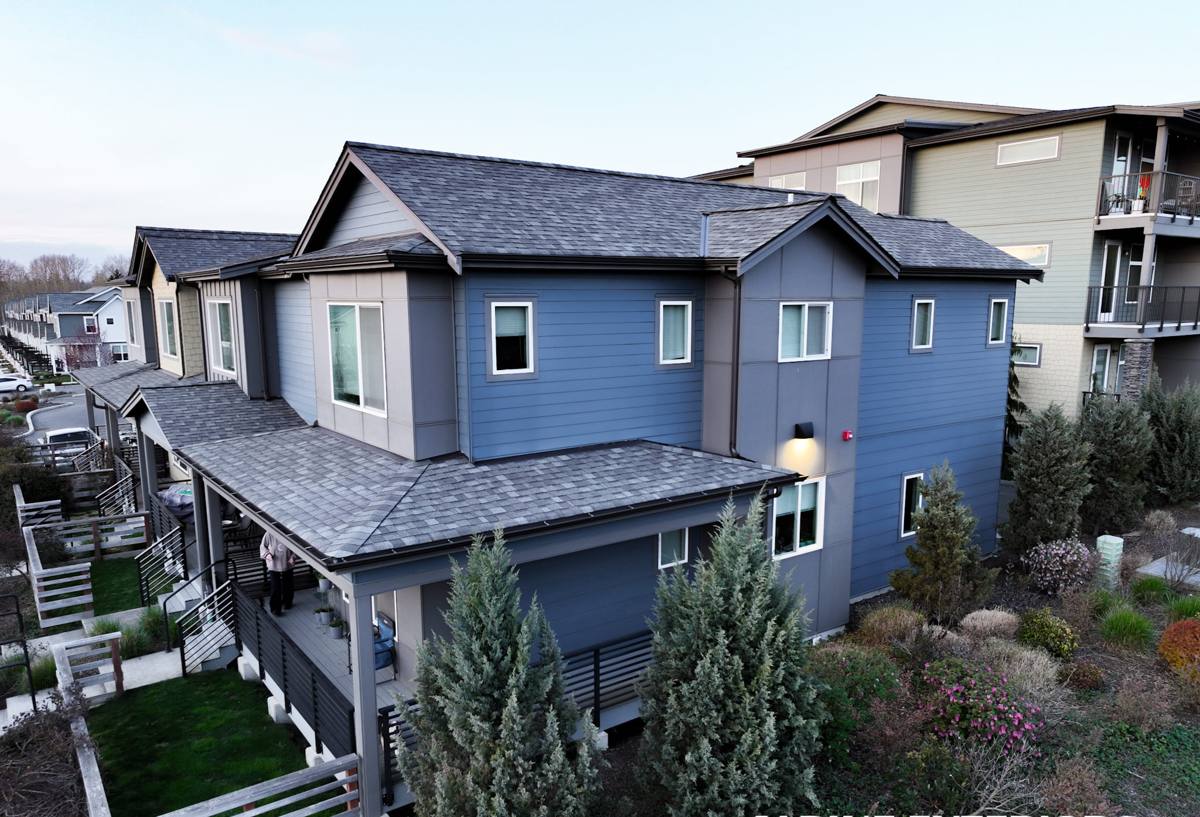
Skyline sits close enough to the water that salt-laden air is a daily fact of life, not an occasional nuisance. Add Anacortes' long wet season, driving rain that comes in sideways off the Sound, and a moss season that can stretch from fall through spring, and you have one of the more demanding siding environments in Skagit County. Materials that hold up fine in a dry inland climate often fail early here — not dramatically, but steadily, in ways homeowners don't notice until paint is peeling, boards are soft at the bottom edge, or moss has taken hold in the shaded north-facing walls.
Siding on a Skyline home isn't just a cosmetic layer. It's the primary barrier between a wood-framed structure and a climate that combines constant moisture with salt exposure and, in fire season, wildfire smoke and ember risk that's become a bigger concern across the Pacific Northwest. The right siding product and the right installation matter more here than they would in most parts of the country.
What Salt Air, Rain, and Moss Actually Do to Siding
Salt Air
Airborne salt accelerates the breakdown of paint films, corrodes exposed fasteners, and speeds up deterioration in materials that aren't engineered to resist it. Over years, homes closer to the water tend to show fading, chalking, and fastener staining well ahead of homes further inland — even when the siding was installed correctly.
Driving Rain
Wind-driven rain doesn't just wet a wall's surface — it gets pushed sideways and upward, testing every seam, lap, and penetration in the siding system. Poor flashing details or the wrong caulking approach can let water behind the cladding, where it does the real damage: sheathing rot, framing decay, and mold growth that isn't visible until it's advanced.
Moss Season
Shaded, north-facing, and tree-adjacent walls in Skyline stay damp for extended stretches, which is exactly what moss and algae need to establish. Once organic growth gets a foothold on a porous or textured surface, it holds moisture against the siding longer, which compounds the moisture problem instead of just being a cleaning nuisance.
Why We Install James Hardie and Nothing Else
We standardized on James Hardie fiber cement siding for every job we do, including here in Skyline. It's not the only siding product on the market, but it's the one we've found performs consistently in exactly the conditions described above:
- Non-combustible core — fiber cement doesn't burn, which matters given regional wildfire smoke and ember exposure in recent fire seasons.
- Engineered for wet climates — Hardie's HZ10 product line is specifically formulated for regions like ours, with moisture and freeze-thaw performance in mind.
- ColorPlus factory finish — a baked-on finish applied in a controlled factory environment holds color and resists fading and chalking far longer than field-applied paint, which matters directly for salt-air exposure.
- Dimensionally stable — fiber cement doesn't expand and contract with moisture the way wood-based products do, so seams and caulk joints stay tighter over time.
- Strong transferable warranty — a real warranty backing the product, not just the labor.
We won't install vinyl, LP SmartSide, primed wood, or other fiber cement alternatives on a Skyline home. That's not a knock on every use case those products have — it's that we've drawn a line on what we're willing to put our name behind in this specific climate, and Hardie is on the right side of that line consistently.
Signs Your Current Siding Is Losing the Battle
Homeowners in Skyline often call us after noticing one or more of these signs. None of them are emergencies on day one, but they all get more expensive the longer they're ignored:
- Paint that's peeling, bubbling, or chalking faster than it used to
- Soft or spongy spots near the bottom of siding boards, especially near grade or under windows
- Persistent moss or dark streaking on shaded walls that comes back soon after cleaning
- Visible gaps, warping, or cupping in horizontal lap siding
- Rusted or popped fastener heads showing through the surface
- A musty smell near exterior walls, which can indicate moisture behind the cladding
What a Correct Hardie Installation Actually Involves
The siding material only performs as well as the installation behind it. On a re-side, we start by removing the old cladding down to the sheathing so we can actually see what's there — this is often the first real look a homeowner gets at their wall assembly in decades.
Steps We Don't Skip
- Sheathing inspection and repair — any rot or damage found gets addressed before anything new goes on. Covering up a problem is worse than not siding at all.
- Weather-resistant barrier — a properly lapped and sealed house wrap or building paper, installed to shed water downward and outward.
- Flashing at every penetration — windows, doors, hose bibs, vents, and any other wall penetration get flashed correctly, since these are the most common failure points for water intrusion.
- Proper fastening — following Hardie's fastening specifications for our exposure zone, using corrosion-resistant fasteners suited to a salt-air environment.
- Correct clearances — maintaining the manufacturer-specified gap between siding and grade, roofing, decks, and other transitions so water has somewhere to go.
- Caulking and sealant done right — the right amount in the right places; over-caulking traps moisture just as badly as under-caulking lets it in.
Common Installation Mistakes We See
| Mistake | Why It Matters in This Climate |
|---|---|
| Siding installed tight to grade or a deck surface | Traps moisture against the bottom edge, the first place rot starts in driving rain |
| Skipped or improper flashing at windows | Wind-driven rain finds these gaps first, leading to hidden sheathing damage |
| Standard fasteners instead of corrosion-resistant ones | Salt air accelerates corrosion, leading to staining and eventual fastener failure |
| Caulking every seam instead of only where specified | Blocks the siding's designed drainage path, holding water in rather than out |
| House wrap installed shingle-style incorrectly (upside down laps) | Directs water inward instead of downward and out |
Our Process for a Skyline Siding Project
We keep the process straightforward and communicate at each stage so there are no surprises:
- On-site assessment — we look at your current siding, wall assembly where visible, drainage patterns around the home, and sun/shade exposure that affects moss risk.
- Detailed estimate — a clear scope covering removal, sheathing repair allowances, product selection, and installation.
- Product and color selection — walking through Hardie's plank, shingle, and panel options and ColorPlus color choices suited to the home and neighborhood.
- Tear-off and sheathing inspection — the step that reveals what's actually happening behind the old siding.
- Installation to manufacturer spec — weather barrier, flashing, fastening, and clearances done in the correct order, not rushed.
- Final walkthrough — reviewing the completed work with you before we consider the job done.
What Drives Cost on a Skyline Siding Job
| Factor | How It Affects the Job |
|---|---|
| Sheathing condition | Hidden rot or water damage found during tear-off adds repair scope before new siding goes on |
| Home size and wall complexity | More corners, gables, and trim detail means more labor and cut waste |
| Product line and profile | HZ10 planks, shingle-style panels, and trim packages vary in material cost |
| Access and site conditions | Slopes, tight setbacks, or limited staging space common on some Skyline lots affect labor time |
| Existing siding removal | Multiple layers of old material or asbestos-era siding require extra handling |
We give straightforward, itemized estimates rather than a single vague number, so you can see what you're actually paying for.
Why Hiring a Crew That Already Works Skyline Matters
A siding crew that's worked this specific area understands things a general contractor might not think to check: which wall orientations in this part of Anacortes take the worst of the driving rain, how much moss pressure to expect on shaded sides, and how salt exposure here compares to homes further from the water. That local pattern recognition shows up in small decisions — extra attention to a north wall's flashing, fastener choice, or where drainage needs reinforcing — that add years to a siding system's service life.
It also matters for practical reasons: familiarity with local permitting requirements, realistic scheduling around Skagit County's wet months, and a track record homeowners nearby can actually ask about.
Caring for Hardie Siding in a Skyline Climate
Fiber cement siding is low-maintenance compared to wood, but "low-maintenance" isn't "no-maintenance," especially with this much rain and salt air:
- Rinse siding annually with a garden hose to clear salt residue and organic buildup, especially on shaded walls
- Keep gutters clean and downspouts directed away from the foundation to reduce splash-back onto lower siding courses
- Trim back vegetation and tree branches that keep walls shaded and damp, which encourages moss
- Inspect caulking at trim and penetrations every couple of years and have gaps resealed before they become entry points
- Address any soft spots, staining, or paint failure promptly rather than waiting for it to spread
If your Skyline home's siding is showing its age, or you're planning ahead for a project, we're happy to take a look and walk you through what correct, climate-appropriate James Hardie installation looks like for your home. Reach out for a free, no-pressure estimate using the form below.