 Anacortes Window
 Skyline's Waterfront Exposure Changes What Siding Has to Do
Skyline sits close to the water on Fidalgo Island, and that location comes with a set of exposure conditions most inland Skagit County neighborhoods don't deal with in the same combination. Homes here take wind off the water, salt-laden air, driving rain that comes in sideways during winter storms, and long stretches of shade and dampness that keep moss and algae active for much of the year. Siding on a Skyline home isn't decorative trim — it's the first line of defense against all of that, every day, in every season.
A lot of siding failures we get called out to inspect aren't failures of the material itself so much as failures of a material that was never suited to this kind of exposure in the first place, installed in a way that didn't account for it. That's the starting point for how we think about siding replacement in this neighborhood.
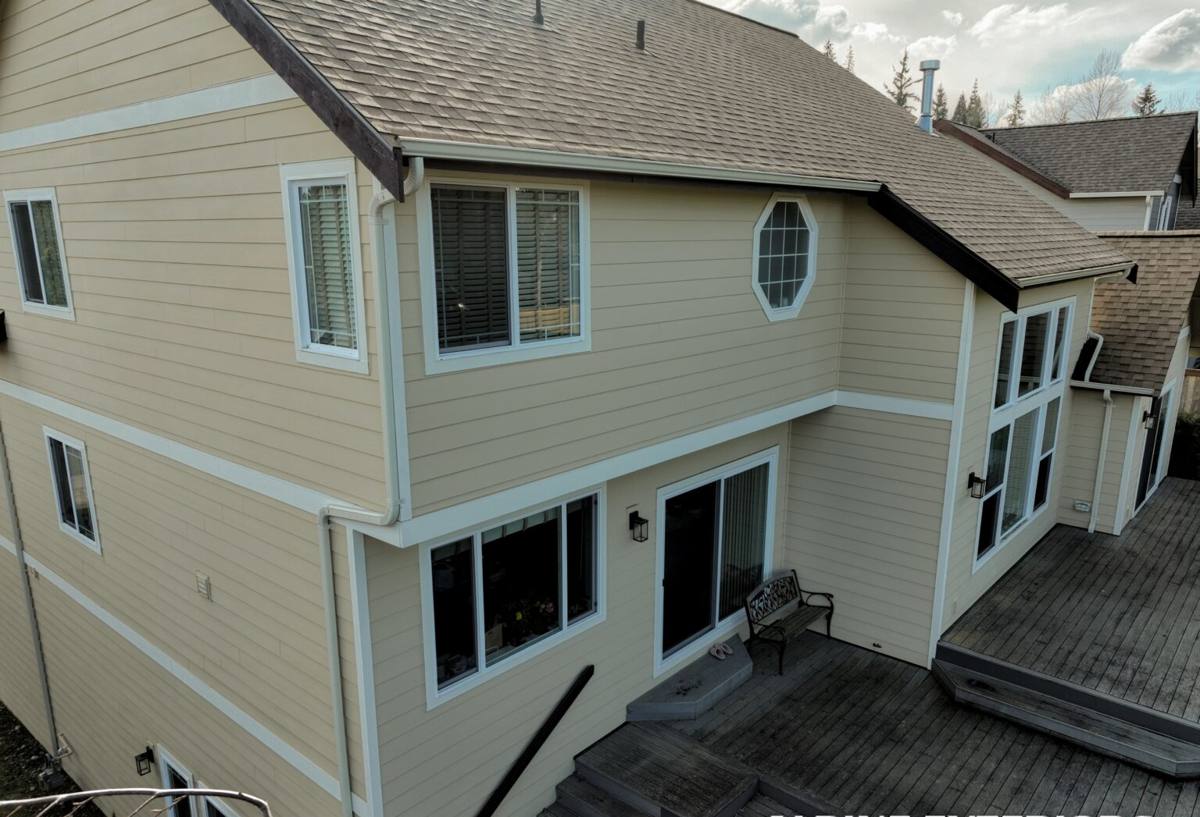
What Salt Air, Rain, and Moss Season Actually Do to Siding
Each of these factors works on siding in a different way, and understanding the mechanism matters because it tells you what a correct replacement needs to solve for.
Salt Air
Airborne salt is corrosive to metal fasteners, flashing, and trim hardware, and it accelerates the breakdown of paint films and cheaper factory finishes. On a home this close to the water, a finish that's rated for average conditions inland will chalk, fade, and lose adhesion faster than the same product would twenty miles east.
Driving Rain
Wind-driven rain doesn't just run down a wall — it gets pushed sideways and upward into laps, seams, and any gap around windows, doors, and trim. Siding that isn't installed with correct overlaps, clearances, and flashing details will let that water behind the cladding, where it can sit against sheathing and framing far longer than anyone notices from the outside.
Moss Season
Shaded, north-facing, and tree-adjacent walls on Fidalgo Island can stay damp for weeks at a stretch during the wetter months. Moss and algae growth on siding isn't just cosmetic — it holds moisture directly against the surface, extending the wet-dry cycle that drives rot in wood-based products and accelerates finish breakdown on lower-grade materials.
Put those three together over ten or fifteen years and you get exactly the kind of siding problems — soft spots, delaminating panels, peeling paint, swollen edges — that bring Skyline homeowners to the point of needing a full replacement rather than a repair.
Why We Install Only James Hardie Fiber Cement on Skyline Homes
We made a decision as a company to install James Hardie fiber cement siding exclusively — not vinyl, not LP SmartSide or other engineered wood products, not primed spruce or cedar, not other fiber cement brands. That's not a marketing angle; it's a standard we hold to because of what we see happen to other products in exactly this kind of coastal, high-moisture climate.
Fiber cement is non-combustible, which matters given Skagit County's dry summer wildfire risk alongside its wet winters. James Hardie's ColorPlus factory finish is baked on under controlled conditions and holds color and adhesion significantly better in salt air and UV exposure than field-applied paint. Their HZ5 product line is specifically engineered for the kind of moisture and humidity swings the Pacific Northwest coast produces. And because it's cement-based rather than wood-based, it doesn't provide the organic material that rot and moss ultimately need to take hold.
None of this means other products are junk — vinyl is inexpensive and low-maintenance in the right setting, and engineered wood siding has real strengths when installed and maintained correctly. But in a waterfront-adjacent, moss-prone climate like Skyline's, we've made a professional judgment that the trade-offs of those products — seam and moisture sensitivity for engineered wood, expansion and impact limitations for vinyl — aren't worth the risk on a home exposed to this much salt air and driving rain. Hardie is what we're willing to warranty our workmanship on.
What a Correct Siding Replacement Actually Involves
Replacing siding is not a cosmetic swap. Done right, it's an opportunity to fix everything underneath the old cladding that you can't see or fix once new siding is up. On a Skyline home, skipping these steps is exactly what leads to another premature replacement in ten years instead of thirty.
- Full tear-off of old siding and trim, not installation over existing material
- Inspection of the sheathing underneath for rot, soft spots, or water staining, with repair or replacement of any compromised sections
- Installation of a proper water-resistive barrier, lapped correctly from the bottom up
- Correct flashing at every window, door, deck ledger, and roof-to-wall intersection — the single most common source of hidden water intrusion
- Fastening and clearances installed to James Hardie's published specifications, including gaps at grade, roofline, and dissimilar materials
- Caulking only where the manufacturer's spec calls for it — over-caulking traps moisture instead of shedding it
Any one of these steps done wrong can undermine even the best siding material. This is why we treat installation quality as equal in importance to the product choice itself.
Our Siding Replacement Process for Skyline Homes
- On-site assessment. We look at existing siding condition, sheathing risk areas, and specific exposure factors for your lot — sun, shade, wind direction, and proximity to water.
- Tear-off and sheathing evaluation. Old siding and trim come off, and we inspect and repair the wall assembly before anything new goes up.
- Weather barrier and flashing. We install and detail the water-resistive barrier and flashing at every penetration before siding begins.
- Hardie installation to spec. Panels or planks go up following James Hardie's fastening, clearance, and joint requirements exactly.
- Trim, caulk, and finish work. Trim is installed, caulked only where appropriate, and touch-up work completed.
- Final walkthrough. We review the completed work with you before calling the project done.
Comparing Siding Materials for Skyline's Climate
| Material | Salt Air & Moisture Performance | Maintenance | Longevity / Warranty |
|---|---|---|---|
| James Hardie Fiber Cement | Engineered for coastal humidity; non-combustible; factory finish resists fading and chalking | Low — periodic washing, no repainting for years | Long service life; strong transferable warranty |
| Vinyl Siding | Doesn't rot, but can warp or fade with UV and temperature swings; seams can allow water behind panels | Low, but color is baked in and can't be refreshed | Moderate; limited impact resistance |
| Engineered Wood (e.g. LP SmartSide) | Wood-based core is sensitive to sustained moisture and moss contact at seams and edges | Moderate to high — finish and seam maintenance matters | Depends heavily on correct installation and upkeep |
| Primed Spruce or Cedar | Natural wood; most vulnerable to rot, moss, and salt air without diligent upkeep | High — repainting and inspection needed regularly | Shortest service life in this climate without heavy maintenance |
Cost Factors for a Skyline Siding Replacement
Every siding replacement is different, and we'd rather walk your property and give you real numbers than throw out a figure that doesn't apply to your home. That said, a few factors consistently drive cost on Skyline projects:
| Factor | Why It Matters |
|---|---|
| Home size and number of stories | More square footage and taller walls mean more material and more scaffolding or lift access |
| Existing sheathing condition | Hidden rot from long-term water intrusion often isn't visible until tear-off, and repair adds time and material |
| Trim and architectural detail | Homes with more windows, dormers, or trim profiles take more labor to flash and finish correctly |
| Siding profile chosen | Lap width, panel style, and accent details affect both material cost and install time |
| Site access | Waterfront lots, slopes, and tight setbacks common in Skyline can affect staging and equipment access |
Signs Your Skyline Home May Need Siding Replacement
- Visible moss or algae staining that keeps returning after cleaning
- Soft or spongy spots when you press on the siding, especially near the bottom courses
- Paint that's peeling, bubbling, or chalking heavily rather than just fading evenly
- Warped, cupped, or separating boards or panels
- Visible gaps at seams, corners, or around window and door trim
- Rising energy bills that suggest the wall assembly isn't performing the way it should
- Interior signs like musty smells or staining on walls that share an exterior line
If you're seeing more than one of these, it's worth having the siding looked at before the underlying sheathing takes more damage.
Why Hiring a Crew That Already Works Skyline Matters
A siding crew that's already worked homes in this neighborhood understands the wind exposure, the shade patterns that drive moss growth, and the practical realities of working waterfront-adjacent lots — access, staging, and scheduling around the wetter months when tear-off work is harder to manage cleanly. That local familiarity translates into fewer surprises during the project and a finished install that's actually built for the conditions your home faces, not a generic spec pulled from a drier part of the county.
We also stay current on Anacortes and Skagit County permitting requirements, so there's no guesswork or delay on that end of the project either.
If your Skyline home's siding is showing its age or you're planning ahead for a replacement, we're happy to take a look and talk through what your home actually needs. Request a free, no-pressure estimate using the form below and we'll go from there.