 Anacortes Window
 Why Skyline Homes Need a Different Approach to Window Replacement
Skyline sits up on the higher ground of Anacortes, close enough to the water that salt-laden air is a constant, and exposed enough that wind-driven rain hits window assemblies from angles that inland Skagit County homes rarely deal with. Add in the long gray stretch from fall through spring when moss and algae find a foothold on anything that stays damp, and you've got a location where a window's weatherproofing detail matters as much as its glass package. We've replaced enough windows in this part of Anacortes to know that the failures we get called out for almost never start with bad glass — they start with a flashing detail, a sealant joint, or a frame material that wasn't suited to the exposure.
An energy-efficient window in Skyline has to do two jobs at once: keep conditioned air in and keep the outside weather out, including the slow, patient kind of moisture intrusion that doesn't show up as a leak until there's already damage behind the wall. That's the lens we bring to every job here.
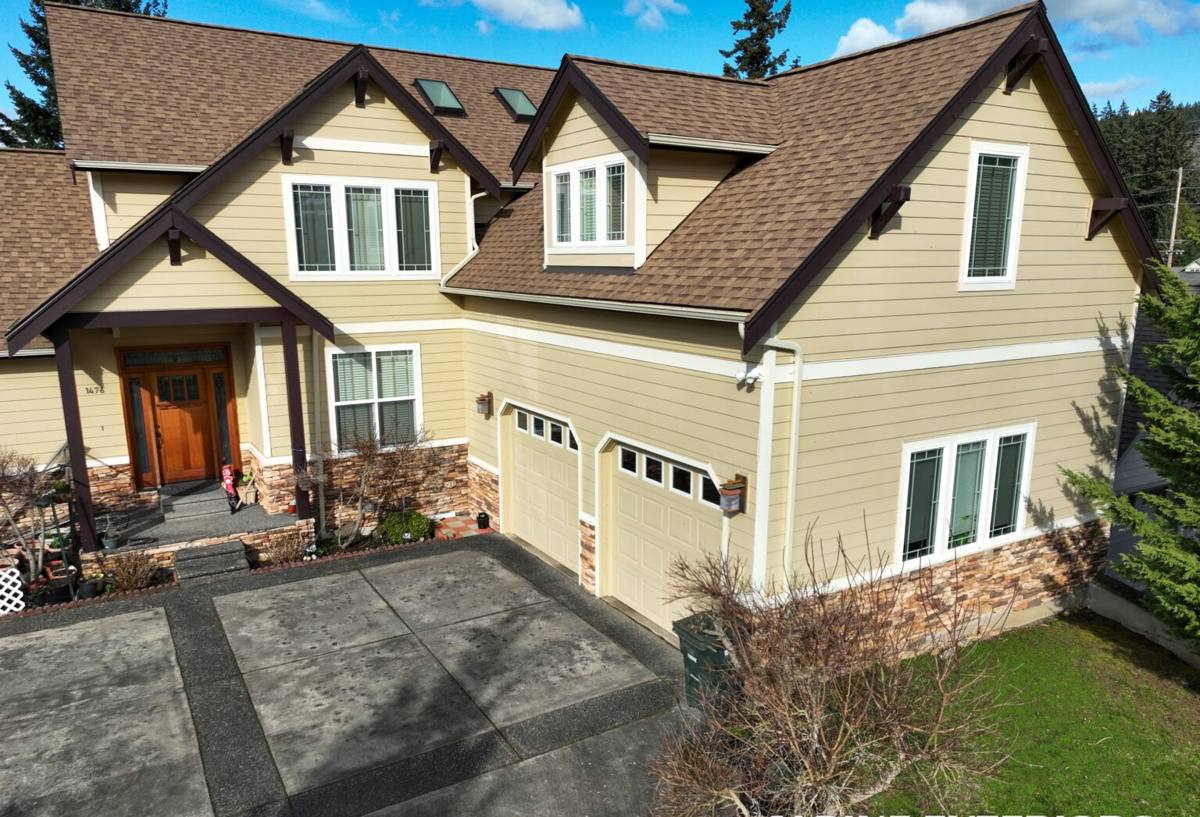
What "Energy-Efficient" Actually Means for This Neighborhood
Energy efficiency in a window comes down to a handful of measurable properties, and homeowners are often sold on the wrong one. In the Pacific Northwest, U-factor (how well the window resists heat transfer) matters more day-to-day than solar heat gain, since Anacortes doesn't deal with the extreme summer sun loads that make solar heat gain coefficient the priority in hotter climates. What we look for on a Skyline job:
- U-factor at or below 0.30 for a solid all-season performer in this climate zone
- Dual or triple glazing with argon fill — triple glazing earns its keep on north- and west-facing walls that catch the worst of the weather
- Low-E coatings tuned for heat retention rather than heat rejection
- Warm-edge spacer systems instead of aluminum spacers, which conduct cold and speed up seal failure in a marine climate
- A whole-window air infiltration rating, not just a glass rating — this is where cheaper window lines cut corners
None of that matters if the install lets water behind the frame. We treat the flashing and sealant work as equal in importance to the glass spec, because in a location like Skyline, a poorly installed high-performance window will fail before a well-installed mid-grade one does.
What the Salt Air, Rain, and Moss Actually Do to Windows
Salt Air
Airborne salt accelerates corrosion on hardware, screws, and any exposed metal components. It also degrades certain sealants and finishes faster than the manufacturer's inland warranty testing accounts for. This is one reason we lean toward vinyl and fiberglass frames with corrosion-resistant hardware over bare aluminum in this location — aluminum conducts cold into the home and is more exposed to salt-driven pitting over time.
Driving Rain
Wind-driven rain doesn't just hit a window head-on — on an exposed lot it can be pushed sideways and upward under sills and around trim. A window with a good performance rating on paper can still leak if the sill pan, flashing tape, and drainage path aren't detailed correctly for that exposure. This is almost entirely an installation issue, not a product issue.
Moss and Algae Season
Anacortes' long wet season, roughly October through April, keeps shaded and north-facing surfaces damp for extended stretches. Moss and algae growth on sills, trim, and frame components isn't just cosmetic — sustained moisture against wood trim or poorly sealed joints is what eventually causes rot and hidden water damage. Frame materials and finishes that shed water cleanly, plus trim details that don't trap moisture, cut down on this problem significantly.
Frame Materials: What We Recommend and Why
| Material | Performance in Skyline's Climate | Maintenance | Typical Fit |
|---|---|---|---|
| Vinyl | Good insulator, resists salt corrosion, no repainting needed | Low — occasional cleaning | Most retrofit and replacement jobs |
| Fiberglass | Excellent dimensional stability, holds up well to temperature swings and moisture | Low | Larger openings, higher-exposure walls |
| Wood (clad exterior) | Good insulator, but exterior cladding must be intact — any breach exposes wood to rot in this climate | Moderate to high — cladding seams need periodic inspection | Homes prioritizing interior wood aesthetics |
| Bare aluminum | Poor thermal performance, more prone to salt-related corrosion and condensation | Higher — finish and hardware wear faster | We generally steer homeowners away from this for full replacements here |
We're not against wood-clad or aluminum windows as a category — they have legitimate uses — but for a straightforward energy-efficient replacement on an exposed Skyline lot, vinyl or fiberglass gives the best combination of thermal performance and low ongoing maintenance without the moisture-management risk that comes with more exposed materials.
What a Correct Installation Actually Involves
The window unit itself is maybe half the job. The other half is the installation sequence, and it's the part that determines whether the "energy-efficient" rating on the label actually shows up on your heating bill and stays leak-free for the long haul.
- Remove the old unit carefully and inspect the rough opening for hidden rot or water damage before anything new goes in — this is common enough on older Skyline homes that we always budget time for it.
- Repair or rebuild the opening if damage is found, rather than installing a new window over a compromised frame.
- Install a sloped sill pan so any water that gets past the exterior seal drains back out instead of pooling.
- Flash in the correct order — sill, jambs, then head — so each layer overlaps the one below it, shedding water down and out the way shingles do on a roof.
- Set the window level, plumb, and square and shim correctly so the sash operates smoothly and seals evenly for the life of the unit.
- Insulate the gap between frame and rough opening with a low-expansion foam or backer rod, avoiding gaps that create air leaks or over-filled cavities that can bow the frame.
- Seal and trim the exterior with a sealant rated for marine/coastal exposure, not a generic caulk that hardens and cracks within a couple of seasons.
Skip or rush any one of those steps and you can end up with a premium window that still lets in drafts or, worse, hides a slow leak behind the trim.
Signs a Skyline Home Is Ready for Window Replacement
- Visible condensation or fogging between panes — the seal has failed and the insulating gas is gone
- Cold drafts near the frame even when the sash is fully latched
- Soft or discolored trim and sill wood, or persistent moss growth right at the frame edge
- Difficulty opening, closing, or locking — a sign the frame has shifted or swollen
- Noticeably higher heating costs compared to similar-sized homes nearby
- Single-pane or original-to-the-house windows on a home more than 20-25 years old
Any one of these on its own might not mean full replacement is urgent, but two or more together — especially condensation combined with drafts — usually means the window has reached the end of its useful service life.
Cost Factors for Skyline Window Projects
We won't quote a number without seeing the job, but the honest range for a quality vinyl or fiberglass energy-efficient window, installed correctly, generally runs from the low thousands per window down to a more modest figure for smaller or simpler openings, with total project cost depending heavily on the factors below.
| Factor | Why It Moves the Price |
|---|---|
| Number and size of windows | Larger openings and full-home replacements have per-unit efficiencies but higher total cost |
| Frame material | Fiberglass generally costs more than vinyl; wood-clad more still |
| Hidden rot or rough-opening repair | Older Skyline homes sometimes need frame repair before the new window goes in — this is discovered on-site, not from a photo estimate |
| Glazing package | Triple glazing and specialty Low-E coatings add cost but pay back on exposed walls |
| Trim and exterior finish work | Matching existing trim profiles or repainting adjacent siding adds labor |
| Access and site conditions | Second-story or hard-to-reach windows take more time and equipment |
Why a Crew That Already Works Skyline Makes a Difference
Window replacement isn't a one-size-fits-all trade. A crew that's worked other homes in this specific part of Anacortes already knows which wall orientations take the worst of the driving rain, which older Skyline homes tend to have moisture issues hiding behind original trim, and how to detail flashing so it holds up to a marine climate rather than the milder weather assumptions baked into a lot of generic installation guides. That local pattern recognition is what keeps a job from turning into a callback six months later when the first real storm rolls through.
It also means straight answers. If your home doesn't need triple glazing on every wall, we'll tell you that. If a rough opening needs repair before a new window goes in, we'll show you what we found rather than just caulking over it. Anacortes and the rest of Skagit County get enough weather that cutting corners on a window install shows up fast — we'd rather do it right the first time.
Ready for an Estimate?
If you're weighing window replacement for a Skyline home, we're happy to take a look, walk you through what your specific exposure and existing frames need, and give you a straightforward estimate — no pressure, no upsell script. Fill out the form below to get started.