 Anacortes Window
 Roofing Built for Bow's Coastal Climate
Bow sits in an unusual spot for a roof to survive: close enough to Samish Bay and the open water of Skagit County to take on salt-laden air, low enough in elevation to catch heavy driving rain off the Sound, and shaded and damp enough for large parts of the year that moss finds every roof an easy target. A roof in Bow isn't fighting one condition — it's fighting all three at once, season after season. That combination is why roofs here age differently than roofs 20 miles inland, and why a replacement done without that context in mind tends to underperform.
Salt air corrodes exposed metal faster than fresh air does — fasteners, flashing, and vent components take the brunt of it. Driving rain, especially when it comes sideways off a storm system, finds every weak seam, undersized flashing detail, and gap in underlayment that a calmer climate would never expose. And moss doesn't just sit on a roof looking ugly — its root structure lifts shingle edges, holds moisture against the roof deck, and shortens the life of whatever material is underneath it. A roof replacement in Bow needs to be built with all three of these working against it from day one.
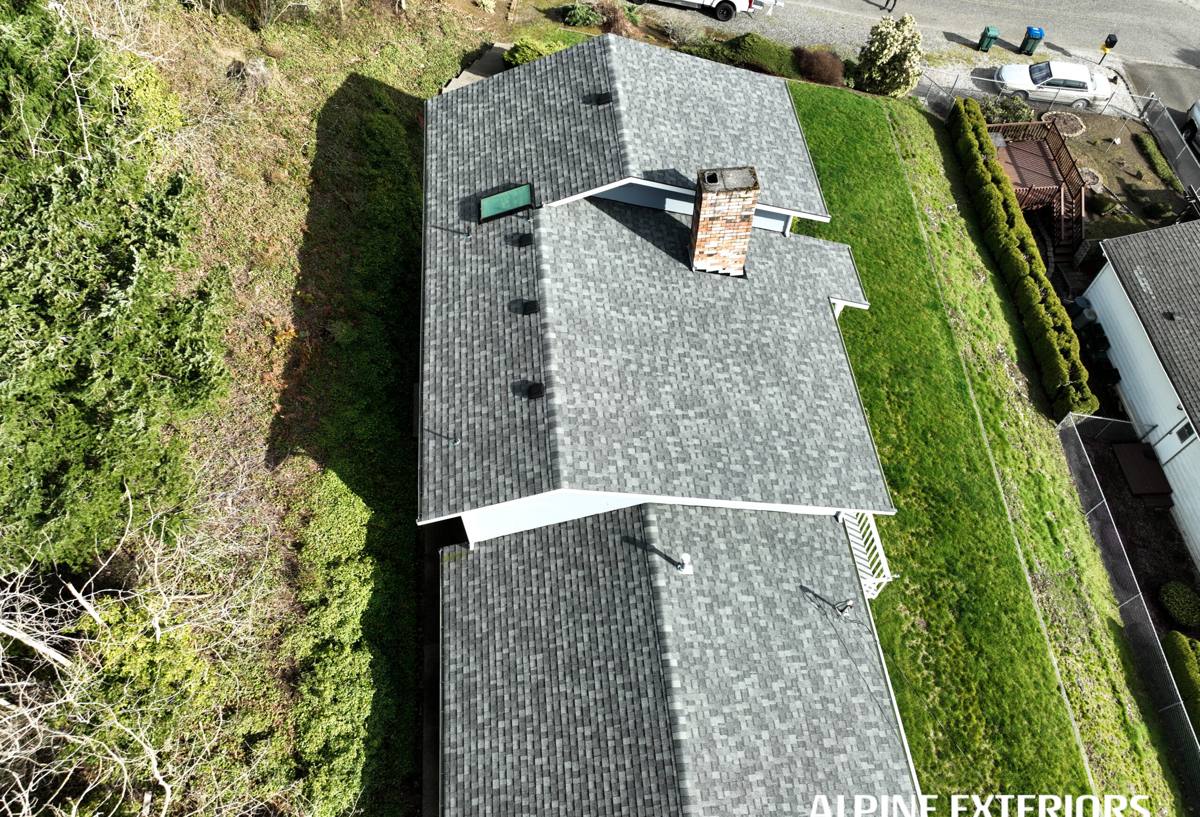
Signs a Bow Roof Is Due for Replacement
Most roofs don't fail all at once — they show warning signs for a year or two before a leak actually shows up inside the house. In our experience working Skagit County roofs, the following are the most common indicators that repair is no longer the right answer:
- Granule loss visible in gutters or downspouts, leaving shingles looking patchy or bare in spots
- Moss growth that keeps returning within months of cleaning, especially on north-facing slopes
- Curling, cupping, or cracked shingles, particularly on the slopes that catch the most weather
- Soft spots or sagging when walked on, which usually points to deck damage underneath
- Rusted or lifting flashing around chimneys, skylights, and roof-to-wall transitions
- Daylight visible through the roof deck from inside the attic
- A roof that's simply reached the end of its material's realistic lifespan, even if it looks okay from the ground
Any one of these on its own might still be a repair. Two or three together, especially on an older roof, usually means repair is just delaying the inevitable and spending money that would be better put toward a full replacement.
What a Correct Roof Replacement Actually Involves
A roof replacement is more than stripping old shingles and nailing down new ones. Done right, it's a full system rebuild, and every layer matters more in a climate like Bow's than it would somewhere drier.
Full Tear-Off, Not an Overlay
We remove the existing roofing down to the deck rather than layering new material over old. Overlays trap moisture, hide deck damage, and void most manufacturer warranties. In an area with this much moisture cycling through the roof system, hidden problems under an overlay only get worse.
Deck Inspection and Repair
Once the old roofing is off, we inspect the plywood or OSB decking for soft spots, delamination, or rot — common wherever moss has been holding moisture against the roof for years. Any damaged sections get replaced before anything new goes down. Skipping this step is the single most common shortcut that leads to a roof failing early.
Underlayment Suited to Heavy Rain
We use underlayment products rated for the wind-driven rain this area regularly sees, with particular attention to eaves, valleys, and low-slope transitions where water pressure is highest during a real storm.
Flashing Done Right
Flashing failures are the leading cause of roof leaks — not worn-out shingles. Every chimney, skylight, vent pipe, and wall intersection gets new flashing, correctly lapped and sealed, not just caulked over the old metal.
Ventilation That Matches the Climate
Proper intake and exhaust ventilation keeps the attic temperature and moisture level in balance. In a damp climate, poor ventilation traps humidity against the underside of the deck, which accelerates rot and gives mold and moss more reason to take hold.
Material Options for Bow Homes
There's no single "best" roofing material — the right choice depends on budget, roof pitch, and how much moss and moisture exposure the specific property gets. Here's how the common options compare for a home in this climate:
| Material | Typical Lifespan | Moss Resistance | Salt Air Durability | Notes for Bow |
|---|---|---|---|---|
| Architectural asphalt shingles | 25–30 years | Moderate (better with algae-resistant granules) | Good with proper flashing | Most common choice; good balance of cost and performance |
| Standing seam metal | 40–50+ years | High — moss struggles to grip smooth metal | Good with coated, corrosion-resistant fasteners | Higher upfront cost, very low maintenance long-term |
| Wood shake | 20–30 years with upkeep | Low — needs regular treatment and cleaning | Fair | Requires the most ongoing maintenance in this climate |
| Synthetic/composite shingles | 30–50 years | Moderate to high depending on product | Good | Worth considering where moss and rain both run heavy |
We'll walk through which of these makes sense for your roof's pitch, sun exposure, and budget as part of the estimate — there's rarely a single right answer, just trade-offs worth understanding before you commit.
Our Roof Replacement Process
- On-site inspection. We walk the roof, check the attic where accessible, and assess deck condition, ventilation, and flashing details before quoting anything.
- Written estimate. You get a clear scope of work and price — no vague allowances or surprise add-ons buried in fine print.
- Material selection. We help you weigh cost against long-term performance for your specific roof, not a one-size-fits-all recommendation.
- Scheduling around the weather. Roofing in Skagit County means working around rain windows. We plan tear-off days for stretches of dry forecast whenever possible and protect an open roof deck if weather turns mid-project.
- Tear-off and deck repair. Old material comes off, decking gets inspected and repaired as needed.
- Underlayment, flashing, and material installation. Installed in the sequence and overlap pattern the manufacturer specifies — not shortcut for speed.
- Ventilation check. Intake and exhaust venting is verified or upgraded as part of the job, not treated as optional.
- Final walkthrough and cleanup. We review the finished roof with you and make sure the site is clear of debris and nails before we consider the job done.
Moss and Moisture Management Specific to This Area
A new roof in Bow will face moss pressure again eventually — that's a reality of the climate, not a defect in the install. What a correct replacement does is give the roof the best possible defense against it: proper slope drainage, flashing that doesn't trap standing water, ventilation that keeps the deck dry from underneath, and, where appropriate, zinc or copper strips near the ridge that discourage moss regrowth as rain washes trace metal down the slope over time. None of that eliminates the need for periodic roof cleaning, but it dramatically slows how fast moss becomes a problem again.
Salt air is the other long-term factor. Over years, airborne salt accelerates corrosion on unprotected metal fasteners and flashing. We use corrosion-resistant hardware and flashing materials suited to coastal exposure rather than standard-grade components, which matters more here than it would on a roof further from the water.
Cost Factors for a Bow Roof Replacement
Every roof is different, and we won't quote a number without seeing the roof, but the factors that most affect price are consistent:
| Factor | Why It Matters |
|---|---|
| Roof size and pitch | More square footage and steeper pitches mean more material and labor time |
| Number of layers being removed | Tear-off of multiple old roof layers adds disposal and labor cost |
| Deck condition | Rotted or delaminated decking found during tear-off adds repair cost |
| Material chosen | Asphalt, metal, and synthetic products carry very different price points |
| Roof complexity | Valleys, dormers, skylights, and multiple chimneys all add flashing detail and time |
| Access | Difficult site access or long material carries can affect labor time |
Broadly, a straightforward asphalt shingle replacement on a typical single-family home runs in the low-to-mid five figures, with metal roofing and more complex rooflines running higher. Your estimate will break down exactly what's driving the number for your specific roof.
What to Confirm Before You Hire a Roofing Contractor
- Are they licensed and insured to work in Washington State, and will they provide proof?
- Do they inspect and repair the roof deck as part of the job, or just quote over whatever's underneath?
- Is the estimate written and itemized, or a verbal ballpark?
- Do they specify underlayment and flashing materials by name, or leave it vague?
- Will they check attic ventilation as part of the scope?
- Do they have experience with roofs in coastal, high-moss climates specifically — not just roofing in general?
- What warranty do they offer on labor, separate from the manufacturer's material warranty?
Why a Crew That Already Works Bow Matters
Roofing knowledge that works in a dry inland climate doesn't automatically transfer to a property sitting in salt air with heavy annual rainfall and persistent moss pressure. A crew that regularly works roofs in Bow and the surrounding Skagit County area already knows which details tend to fail here — which flashing points take the worst of the driving rain, which slopes hold moss longest, which fastener grades hold up against salt exposure over the long run. That's knowledge you don't get from a general roofing checklist; it comes from doing the work in this specific climate, repeatedly, and paying attention to what actually holds up over time versus what looks fine for the first year or two.
It also means someone who understands the practical realities of scheduling around Pacific Northwest weather, who won't rush a tear-off into a forecast that isn't safe for an open roof deck, and who's still around locally if a question comes up after the job is finished.
Get a Free, No-Pressure Estimate
If your roof in Bow is showing its age — or you'd just like an honest read on how much life it has left — we're happy to take a look. The estimate is free, there's no pressure to commit on the spot, and you'll get a clear, written explanation of what we find and what it would take to fix it. Use the form below to get started.