 Anacortes Window
 Roof Repair Built for West Anacortes Conditions
West Anacortes sits close enough to the water that roofs here take a different kind of beating than roofs twenty miles inland. Salt-laden air moves through the neighborhood on a regular basis, driving rain comes in sideways off Rosario Strait and Guemes Channel during winter storms, and the shaded, damp lots that make this part of town attractive to live in are exactly the conditions moss and moisture love. A roof repair here isn't just patching a leak — it's addressing why the leak happened in the first place, and that "why" is almost always tied to this specific stretch of Skagit County climate.
We work on roofs throughout Anacortes, but West Anacortes homes tend to show a recognizable pattern of wear: metal fasteners and flashing corroding faster than they would inland, moss colonies building up in shaded valleys and north-facing slopes, and gutters that overflow during heavy rain events because they were sized or pitched for a drier climate than we actually have. Understanding that pattern is what separates a repair that lasts from one that reopens in eighteen months.
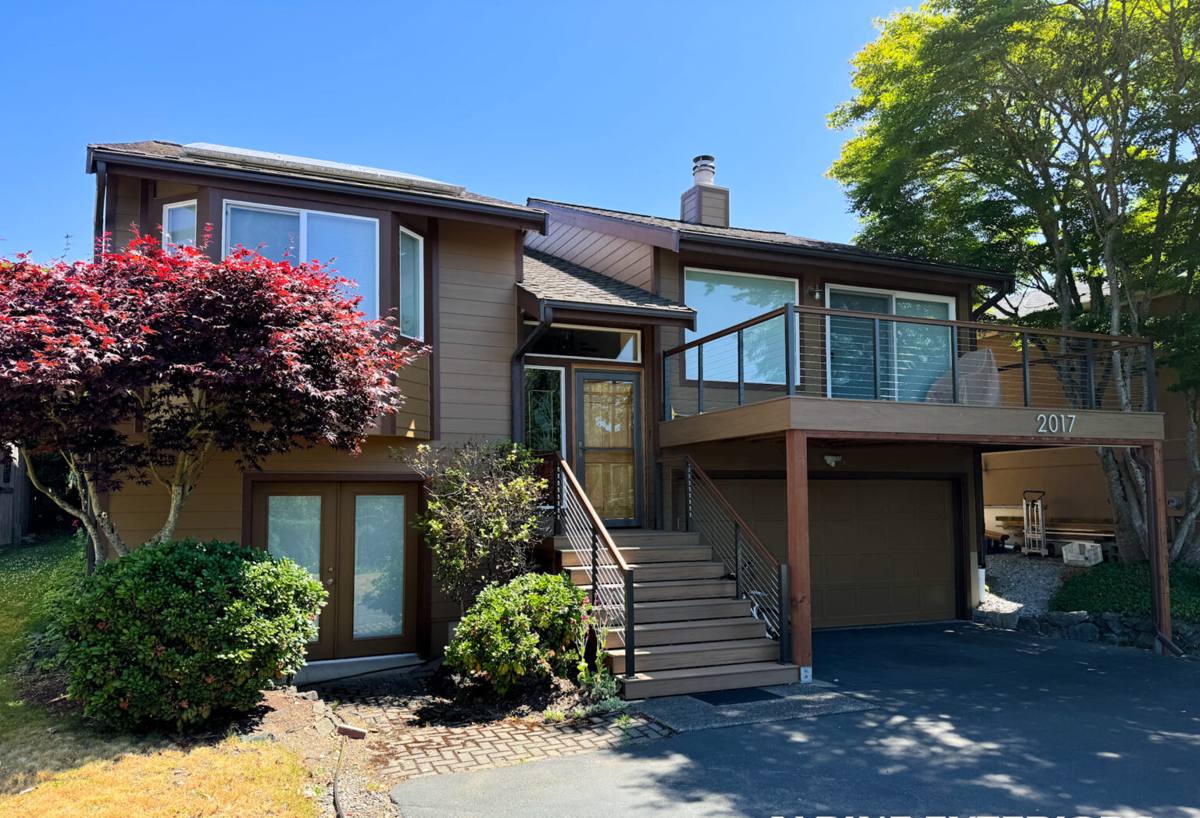
Why This Climate Is Harder on Roofs Than It Looks
Salt Air and Corrosion
Salt air doesn't just affect homes right on the waterfront. Prevailing winds carry fine salt particulate well into West Anacortes neighborhoods, where it settles on exposed metal — nails, flashing, vent caps, gutter hangers — and accelerates rust and corrosion over time. A fastener that would hold for 25 years in a dry inland climate can start failing in half that time here if it isn't rated for coastal exposure. Corroded fasteners are one of the most common root causes we find behind roof leaks that homeowners assumed were just "old roof" problems.
Driving Rain and Wind-Driven Water
Anacortes gets plenty of straightforward vertical rain, but it's the wind-driven rain off the water that causes the most repair calls. When rain comes in at an angle, it can work up under shingles, around flashing laps, and into seams that were never designed to shed water sideways. This is why so many "mystery leaks" trace back to flashing details — around chimneys, skylights, dormers, and roof-to-wall transitions — rather than to the field of the roofing material itself.
Moss, Shade, and Trapped Moisture
West Anacortes has more tree cover and shaded lots than some of the newer, more open subdivisions around town. Shade keeps roof surfaces damp longer after rain, and that moisture is what lets moss and moss-adjacent growth take hold. Moss isn't just cosmetic — as it grows, it lifts shingle edges, holds water against the roofing material, and channels runoff in directions the roof wasn't designed to handle. Left long enough, moss growth can turn a roof that still has useful life left into one that's failing from underneath.
What a Correct Roof Repair Actually Involves
A repair that's done right starts with figuring out the actual source of the problem, not just where water is showing up inside the house. Water can travel a surprising distance along rafters or sheathing before it drips somewhere visible, so the ceiling stain and the roof defect are often not in the same spot. Our process on a repair call generally includes:
- A full roof-surface inspection, not just a look at the reported leak area — moss, flashing, fasteners, and penetrations all get checked
- Tracing the water path from the interior symptom back to the actual entry point on the roof
- Checking flashing at chimneys, skylights, vents, and wall transitions, since these are the most common failure points in this climate
- Assessing fastener and metal condition for salt-related corrosion, not just visible rust
- Evaluating moss coverage and whether removal, treatment, or a maintenance plan is needed alongside the repair
- Checking gutters and downspouts, since overflow from undersized or clogged gutters can mimic a roof leak
Once we know the actual cause, the repair itself might be as simple as resealing and refastening a flashing detail, or as involved as replacing a section of decking that's absorbed moisture over time. We'll walk you through what we found and what it takes to fix it correctly before any work starts — no guessing, and no starting work based on a phone description alone.
Common Repair Scenarios We See in West Anacortes
| Issue | Typical Cause Here | What the Repair Involves |
|---|---|---|
| Ceiling stain near a chimney or skylight | Failed or corroded flashing allowing wind-driven rain in | Remove and replace flashing, reseal transitions, check surrounding decking for moisture damage |
| Moss buildup on north-facing slopes | Shade and persistent dampness from tree cover | Moss removal, treatment, and review of shingle condition underneath |
| Rusting nail heads or streaking metal | Salt air corrosion on exposed fasteners | Replace with corrosion-resistant fasteners rated for coastal exposure |
| Gutter overflow staining fascia or siding | Undersized or clogged gutters relative to storm intensity | Clean, re-pitch, or upsize gutters; not always a roofing repair, but often mistaken for one |
| Granule loss or bald patches on shingles | Wind and driving rain wearing exposed slopes | Spot shingle replacement or, if widespread, a broader roof condition assessment |
Repair vs. Replacement: An Honest Read
Not every roof problem calls for a full replacement, and we're not going to tell you it does just because a repair job is smaller and less profitable. The honest questions we ask before recommending either path:
- Is the damage isolated to one area (flashing, one slope, one penetration) or spread across the whole roof?
- Is the underlying decking still sound, or has trapped moisture from moss or a long-standing leak compromised it?
- How much useful life is left in the existing roofing material versus the cost of repeated repairs?
- Is this a maintenance issue (moss, gutters, minor flashing wear) that a repair plus a maintenance routine will resolve for years?
If a repair is the right call, we'll say so plainly. If the roof is past the point where repairs make financial sense, we'll explain why, in plain terms, with the specific evidence we found — not a generic "your roof is old" line.
Our Process, Start to Finish
1. Inspection and Diagnosis
We start on the roof, not on the phone. A visual estimate without an actual look at the flashing, fasteners, and moss condition is a guess, and guesses lead to repairs that miss the real problem.
2. A Straight Explanation
You'll get a clear rundown of what's actually wrong, what caused it, and what the repair involves — including whether it's a one-time fix or something that'll need to be watched or maintained going forward.
3. The Repair Itself
We use materials and fasteners suited to this coastal climate, not whatever's standard for a drier region. That matters more here than most homeowners realize, since it's often the difference between a repair that holds and one that corrodes out again in a few years.
4. Cleanup and Follow-Up
The work area gets cleaned up, debris and old material removed, and if moss or gutter issues contributed to the problem, we'll flag what ongoing maintenance would help prevent a repeat visit.
Maintenance That Actually Prevents Repeat Repairs
A lot of roof repair calls in this part of Anacortes are preventable with basic seasonal upkeep. A short checklist worth keeping on hand:
- Clear moss and debris from shaded roof sections at least once a year, more often under heavy tree cover
- Clean gutters before the fall storm season so wind-driven rain has somewhere to actually go
- Have flashing checked periodically, especially around chimneys and skylights, since these are the first spots to fail
- Trim back overhanging branches that keep sections of roof shaded and damp longer than they need to be
- Address small leaks quickly — a minor flashing gap left over a wet winter can turn into decking damage by spring
Why a Crew That Knows West Anacortes Matters
Roof repair isn't a one-size-fits-all trade. A crew used to working in a dry inland climate might not think twice about standard fasteners or a quick flashing patch — and that work can fail fast in a neighborhood exposed to the kind of salt air and driving rain West Anacortes gets. Working this area regularly means we already know which details tend to fail first, which slopes hold moss longest, and which fastener and flashing choices actually hold up against Skagit County's coastal weather rather than just meeting a generic code minimum. That local pattern recognition is what keeps a repair from becoming a recurring expense.
Get a Straight Answer on Your Roof
If you're dealing with a leak, a stained ceiling, or a roof that's carrying more moss than it should, we're glad to take a look and give you an honest read on what's going on and what it'll take to fix it — no pressure, no upsell. Use the form below to request a free estimate, and we'll get back to you to schedule a time to come out and inspect it in person.