 Anacortes Window
 Building Decks for Skyline's Particular Climate
Skyline sits up on the bluff with some of the best water views in Anacortes, and that same exposure that makes the views worth having is exactly what wears out a poorly built deck. Homes here take a steady dose of salt-laden air off Rosario Strait, wind-driven rain that gets pushed sideways under eaves and railings, and a long, damp moss season that can run from October well into May. A deck built the way you'd build one in a drier inland town simply doesn't hold up the same way in Skyline. We've worked on enough decks in this neighborhood to know which details matter and which corners get cut on jobs that don't last.
This page is about one thing: building or replacing a deck for a Skyline home, done right for this specific spot in Skagit County. Not a generic overview of deck options — the actual considerations that come up when your deck faces salt spray, sits under fir trees dropping moss spores, and takes on more standing moisture than a deck three miles inland.
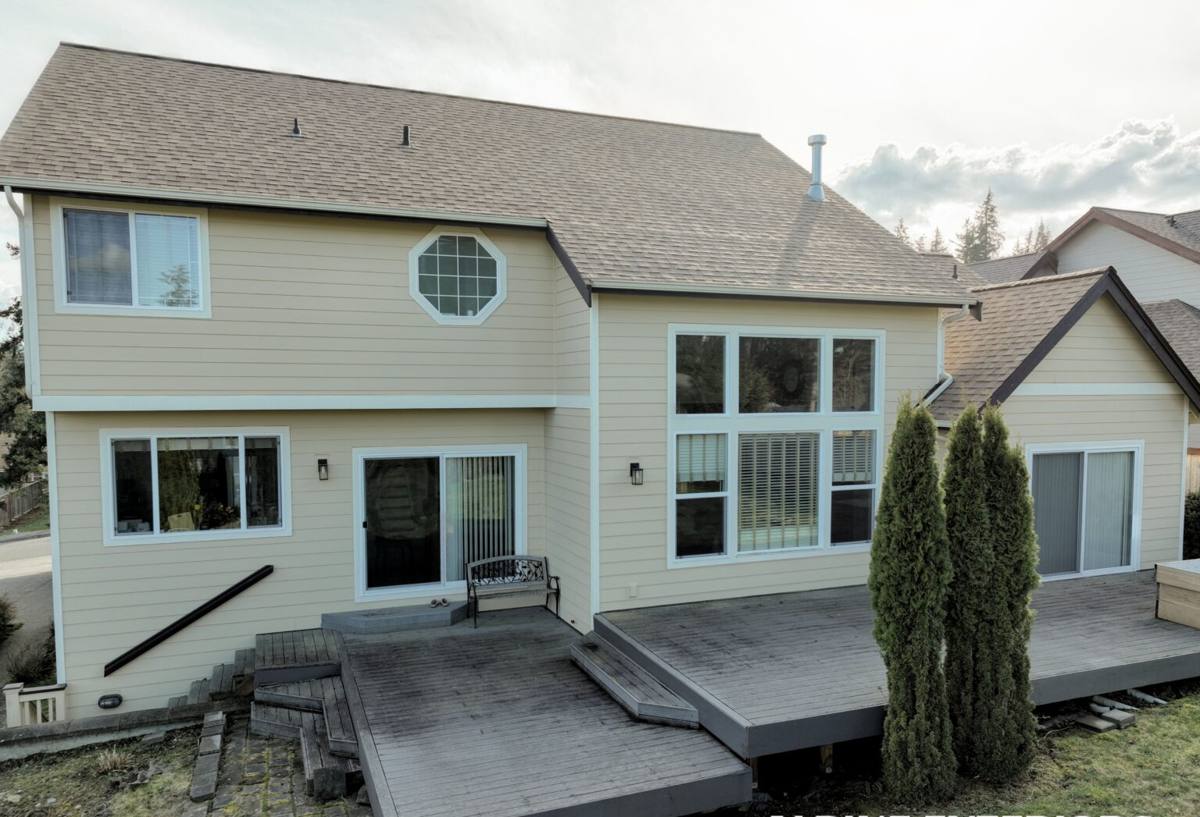
What Skyline's Exposure Actually Does to a Deck
Three environmental factors drive almost every deck failure or headache we see in this part of Anacortes:
Salt Air
Airborne salt from the strait accelerates corrosion on anything metal — screws, joist hangers, railing hardware, post bases. It also dulls and chalks certain finishes faster than they'd wear in a non-coastal location. Fasteners rated for general exterior use often aren't rated for direct coastal salt exposure, and the difference shows up as rust streaks and loosening connections within a few years, not decades.
Driving Rain
Wind off the water doesn't just fall on a deck, it drives into ledger connections, under rail caps, and into any seam where two boards or two materials meet. Water that would simply run off a flat surface elsewhere gets pushed sideways here, which means flashing details and gap spacing that would be optional in a calmer climate are not optional in Skyline.
Moss and Standing Moisture
Long damp seasons plus shade from mature trees create ideal conditions for moss and algae to establish on deck surfaces, especially on the north and west sides of a house. Moss holds moisture against the decking material, which accelerates rot in wood and can stain or degrade some composite surfaces if it's left to build up over a season or two.
What a Correctly Built Deck Needs in This Location
A deck that's going to hold up on Skyline needs to be built with these conditions assumed from the start, not addressed after the fact. That means:
- Stainless steel or coated coastal-rated fasteners and hardware, not standard exterior-grade fasteners
- Proper ledger flashing where the deck attaches to the house, sealed against wind-driven rain
- Deck board spacing and airflow underneath sized to let the structure dry out between rain events
- Post bases and structural connections set up off grade contact, with drainage so water doesn't pool at the base
- A decking material choice that matches how much moss and moisture exposure the specific site actually gets
- Railing and stair details that shed water rather than trap it in horizontal surfaces or joints
Skip any one of these and the deck will likely still look fine for the first couple of seasons. The problems that show up in year three or four — soft spots near the ledger, rusted-through hardware, slick moss buildup that never fully clears — usually trace back to one of these details being skipped or done to a minimum-code standard instead of a coastal standard.
Decking Material Options for a Skyline Property
There's no single "correct" material for every Skyline deck — it depends on how much shade and moisture exposure your specific site gets, and how much upkeep you want to take on.
| Material | How it handles moss/moisture | Maintenance | Typical lifespan here |
|---|---|---|---|
| Pressure-treated wood | Needs regular cleaning and sealing to resist moss staining and rot | Annual cleaning, re-sealing every 2-3 years | 15-20 years with upkeep |
| Cedar | Naturally moderate rot resistance, still needs cleaning in shaded/damp spots | Cleaning and oiling every 1-2 years | 15-25 years with upkeep |
| Composite decking | Resists rot, but moss and algae can still grow on the surface film if not cleaned | Periodic washing, no sealing needed | 25-30+ years |
| PVC/capped composite | Best moisture resistance of the group; surface cleaning still recommended | Occasional washing | 25-30+ years |
For shaded, north-facing, or heavily treed Skyline lots, we generally steer homeowners toward composite or capped composite decking, simply because the maintenance burden of keeping wood clean and sealed in a shady, damp spot is real and easy to fall behind on. For sunnier, more exposed lots, wood remains a perfectly good option as long as you're willing to keep up with cleaning and sealing on schedule.
Framing and Structure: Where Most Long-Term Problems Start
The decking surface is what you see, but the framing underneath is what determines how long the deck actually lasts. In a coastal, high-moisture environment, we pay particular attention to:
The Ledger Board Connection
This is where the deck attaches to the house, and it's the single most common failure point on decks in wet coastal climates. Proper flashing — installed correctly, in the right sequence relative to the house's existing water-resistive barrier — is what keeps water from working its way behind the siding and into the rim joist over time. This is not a place to use minimum-code shortcuts.
Joist and Beam Protection
We use hardware and fasteners rated for the coastal, high-moisture exposure Skyline actually sees, not just what meets baseline code for the county. Joist tape or comparable flashing on the top of each joist keeps water from sitting on cut wood surfaces and driving rot from the inside out.
Post Footings and Drainage
Standing water at a post base is one of the fastest ways to compromise a deck's structural integrity. We set footings with drainage in mind so water moves away from the post rather than pooling against it through the wet months.
Railings, Stairs, and Surface Details
Railings and stairs take the same weather beating as the deck surface, often worse, since they're more exposed and have more horizontal surfaces and joints where water and moss can collect. A few things we build in as standard practice on Skyline projects:
- Rail caps with a slight pitch so water sheds instead of pooling
- Stair treads sized and spaced for grip even when damp or lightly mossed
- Hardware at every railing post connection matched to the same coastal-rated standard as the rest of the structure
- Gaps and connection points designed to be easy to clean, not tight seams that trap moss and debris
Our Process for a Skyline Deck Project
We keep the process straightforward and give you real information at each step, not a sales pitch.
- Site visit and assessment. We look at your specific lot's sun and shade pattern, existing drainage, and how exposed the deck location is to wind and rain off the water. This tells us which material and detailing choices actually make sense for your site, rather than applying a one-size-fits-all recommendation.
- Design and material selection. We walk through the material comparison above based on your maintenance appetite and budget, and finalize a layout that works with your home and how you actually use outdoor space.
- Permitting. Deck projects in Anacortes typically require a building permit, especially for anything attached to the house or built above a certain height. We handle that process as part of the job.
- Construction. Framing first, with all the ledger flashing, hardware, and drainage details built in from the start — not fixed later. Decking, railings, and stairs go on once the structure is sound.
- Final walkthrough. We go over the finished deck with you, including what maintenance schedule makes sense for the material you chose and the specific exposure your site gets.
Why a Crew That Already Works in Skyline Matters
A lot of deck problems we get called to look at weren't built badly out of carelessness — they were built to a standard that works fine somewhere with less rain and no salt air, and just doesn't hold up here. A contractor who mostly works inland or in drier parts of Washington may not default to coastal-rated hardware, may not flash a ledger for wind-driven rain, and may not think about moss-prone shade patterns when recommending a material. None of that is obvious unless you're regularly building in this specific kind of exposure.
Working regularly in Anacortes and around Skagit County means we've seen how decks built to different standards actually perform here over five, ten, fifteen years — not just how they look the day they're finished. That's the difference between a deck that needs real attention in year three and one that's still solid at year twenty.
Keeping a Skyline Deck in Good Shape Once It's Built
Even a well-built deck needs some seasonal attention in this climate. A short, honest maintenance routine goes a long way:
- Sweep leaves and debris off the surface regularly through fall, especially in shaded areas where moss gets a foothold fastest
- Wash the deck surface at least once a year, more often on north-facing or heavily shaded sections
- Check railing hardware annually for early signs of corrosion, especially on the ocean-facing side of the house
- Re-seal wood decking on the schedule appropriate to the product, not just when it starts to look worn
- Keep gutters and downspouts near the deck clear so runoff isn't dumping extra water onto or near the structure
A deck built with the right details up front needs far less of this kind of intervention than one that was built to a generic standard and is now trying to catch up.
Get a Free Estimate for Your Skyline Deck
If you're planning a new deck or need to replace one that's showing its age, we're happy to come take a look and talk through what makes sense for your specific spot on Skyline. There's no pressure and no obligation — just a straightforward assessment and honest answers about materials, timeline, and cost. Use the form below to request your free estimate.