 Anacortes Window
 Decking Built for Skyline's Waterfront Climate
Skyline sits close to the water on Fidalgo Island, and that proximity is exactly what makes decking decisions here different from decking decisions inland. Homes in this part of Anacortes catch salt-laden air off the surrounding water, driving rain that comes in sideways during winter storms, and long stretches of low sun and shade that keep surfaces damp for days at a time. A deck built without that in mind will show it fast — usually as moss in the board grooves, soft spots at fastener points, or a railing system that starts corroding from the inside out.
Composite decking has become the go-to material for this stretch of Skagit County precisely because it doesn't feed the problems this climate creates. It won't rot, it doesn't need to be stained or sealed every year or two, and modern capped boards resist the moss and algae growth that plagues wood decks left in shade near the water. But composite is not maintenance-free or install-proof, and the difference between a deck that looks good for 20 years and one that warps, mildews, or fades unevenly almost always comes down to how it was specified and installed, not just what brand of board went down.
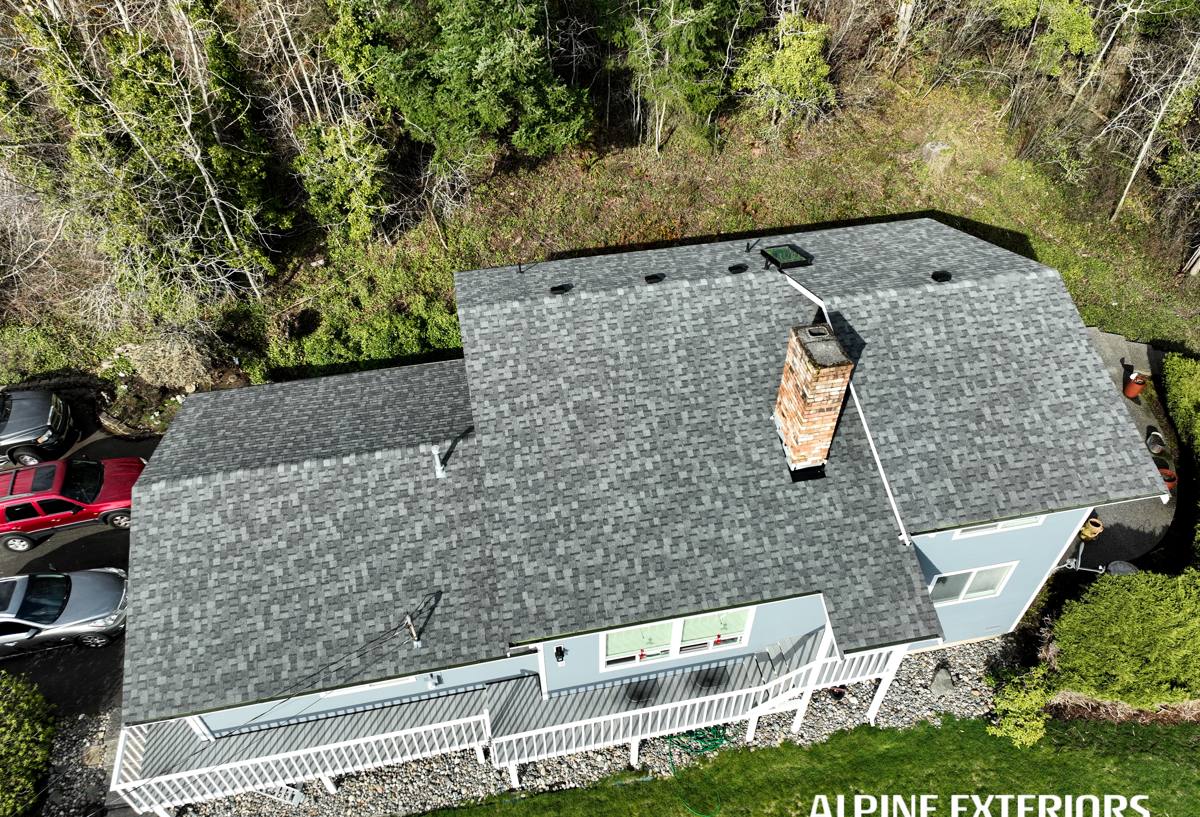
What Skyline's Microclimate Actually Does to a Deck
Salt Air and Metal Fatigue
Salt air accelerates corrosion on anything metal — screws, joist hangers, railing brackets, post bases. On a standard wood deck, this often shows up first at the fasteners, well before the boards themselves fail. Composite decking doesn't solve this on its own; the substructure and hardware underneath still need to be rated for coastal exposure, or you've just put a nice deck on top of a frame that's quietly corroding.
Driving Rain and Trapped Moisture
Wind-driven rain off the water pushes moisture into places a calm-weather install wouldn't anticipate — under rail posts, into ledger connections, behind fascia boards. Water that gets in and can't get back out is what causes rot in the framing even when the decking surface above is composite and holding up fine.
Moss Season
Anacortes gets a long moss and algae season, often stretching from fall through spring, especially on decks that sit in shade from trees or the house itself. Moss holds moisture against the deck surface and turns boards slick and slippery underfoot — a real safety issue on stairs and landings, not just a cosmetic one.
Getting the Substructure Right — Before Any Composite Board Goes Down
The framing underneath a composite deck matters more in a marine climate than almost anywhere else, because it's the part of the deck you won't see again for years. Our standard approach for Skyline builds includes:
- Pressure-treated or corrosion-resistant framing lumber rated for ground contact and coastal exposure
- Stainless steel or heavily coated fasteners and joist hangers — standard galvanized hardware corrodes faster this close to salt water
- Proper ledger flashing and a positive drainage slope so water sheds away from the house rather than pooling against it
- Joist tape on top of framing members to keep moisture out of the wood where the composite board sits directly on it
- Adequate ventilation underneath the deck so trapped moisture has somewhere to go
Skipping any of these to save a little time or money is where "the deck failed early" stories usually start — and it's almost never the composite board itself that's at fault.
Choosing the Right Composite Board for a Water-Adjacent Property
Not all composite decking behaves the same in a wet, shaded, salt-air environment. The boards we recommend for Skyline properties are capped composite — meaning the core is wrapped in a protective polymer shell rather than left exposed like older uncapped composite products. That cap is what actually resists moss growth, staining, and moisture absorption at the board's surface.
| Board Type | Moisture Behavior | Moss/Algae Resistance | Maintenance |
|---|---|---|---|
| Uncapped composite (older style) | Can absorb moisture at cut ends and edges | Lower — porous surface holds grime | Occasional cleaning still needed |
| Capped composite | Sheds water at the surface, sealed core | High — smooth cap resists growth | Periodic rinse, minimal upkeep |
| Natural wood (cedar/pressure-treated) | Absorbs and releases moisture constantly | Low without regular treatment | Annual stain/seal, moss removal |
We also pay attention to board color and pattern in shaded, damp settings. Very dark solid colors can hide early moss growth until it's established, while boards with variegated, multi-tonal streaking tend to mask the early stages of moss and pollen buildup better between cleanings — worth a conversation depending on how shaded your particular section of yard is.
Fasteners, Railings, and Hardware — The Details That Actually Fail First
On most decking problems we get called out to fix, the composite board itself isn't the issue — it's the hardware. Hidden fastener clips, screws, post anchors, and railing brackets take the brunt of salt exposure because metal corrodes faster than polymer. For Skyline installs we spec stainless steel or marine-grade coated hardware throughout, and we pay particular attention to:
- Railing post bases, which sit exposed to the weather on all sides
- Stair stringer connections, which see the most foot traffic and structural load
- Picture-frame border fasteners, which are often overlooked but are the first thing you notice if they streak or stain
Our Installation Process
1. Site Assessment
We start by looking at sun exposure, drainage patterns, wind direction off the water, and how much shade the deck area gets through the seasons. This tells us how aggressive the moss/moisture protection needs to be and whether extra ventilation or drainage work is warranted before we touch the decking itself.
2. Framing and Substructure Work
Any existing framing gets inspected for rot, corrosion, or inadequate drainage. On new builds or full tear-offs, we frame to the coastal-exposure standard described above rather than a generic inland spec.
3. Board Selection and Layout
We walk through board options with an eye toward your home's shade pattern and sun exposure, not just color preference. Layout is planned to minimize seams in high-traffic areas and to keep drainage running the right direction.
4. Installation
Boards are installed with manufacturer-specified gapping to allow for expansion and contraction — composite moves with temperature more than most homeowners expect, and gapping mistakes are a common cause of buckling.
5. Final Walkthrough
We go over basic care with you directly: what cleaning schedule makes sense given your specific shade and moss exposure, and what to watch for in year one.
Keeping a Composite Deck Clean in a Moss-Prone Yard
Composite decking cuts maintenance dramatically compared to wood, but "low-maintenance" isn't "no-maintenance" in a climate like this. A simple seasonal routine keeps a Skyline deck looking right:
- Rinse the deck surface periodically through fall and winter to keep organic debris from settling into board grooves
- Sweep leaves and needles off promptly — trapped organic matter is what feeds moss growth
- Use a soft-bristle brush and a composite-safe cleaner for any established moss or algae — avoid pressure washers on high settings, which can damage the board's protective cap
- Check railing and post hardware annually for early signs of corrosion staining
- Keep gutters and downspouts above the deck clear so runoff isn't dumping directly onto the deck surface
Why It Matters That We Already Work in Skyline
A crew that installs decks all over the region, without much specific time in Skyline, will often default to a generic install spec — the kind that holds up fine in a drier, more sheltered part of Skagit County but underperforms here. Knowing this particular stretch of Anacortes means knowing which yards hold moisture longest through the winter, which orientations catch the worst of the wind-driven rain, and which hardware upgrades are worth the extra cost versus which ones aren't necessary for a given site. That local judgment is what keeps a deck performing for its full expected lifespan instead of needing early repairs.
Signs an Existing Deck Needs Attention
If you already have a deck in Skyline — composite or wood — a few warning signs are worth acting on before they become bigger repairs:
| What You Notice | Likely Cause | Urgency |
|---|---|---|
| Persistent moss in board grooves | Shade, trapped moisture, infrequent cleaning | Low — clean and monitor |
| Slippery surface on stairs/landings | Algae buildup from shade and moisture | Medium — safety concern |
| Rust streaking near fasteners | Standard hardware corroding in salt air | Medium — hardware replacement |
| Soft or spongy spots underfoot | Framing rot beneath the surface | High — structural inspection needed |
| Boards visibly cupping or gapping unevenly | Improper original installation or fastening | Medium to high — depends on extent |
If you're planning a new deck in Skyline or want a straight assessment of one you already have, we're glad to take a look and give you an honest read on what it needs. Reach out for a free, no-pressure estimate using the form below.