 Anacortes Window
 Building a Deck That Actually Holds Up Near Similk Beach
Similk Beach sits close to the water on Fidalgo Island, and that location is exactly why a deck built here needs different thinking than one built a few miles inland. Wind off the water carries salt, moisture sits longer in shaded corners, and the moss season in this part of Skagit County runs long. A deck that would be fine in a drier, more sheltered yard can start showing problems within a few seasons here if it wasn't built with those conditions in mind from the start.
This page is about one job, in one place: custom deck construction for homes in and around Similk Beach. Not a general overview of decks everywhere — the specific conditions of this stretch of Anacortes and what it actually takes to build something that lasts in it.
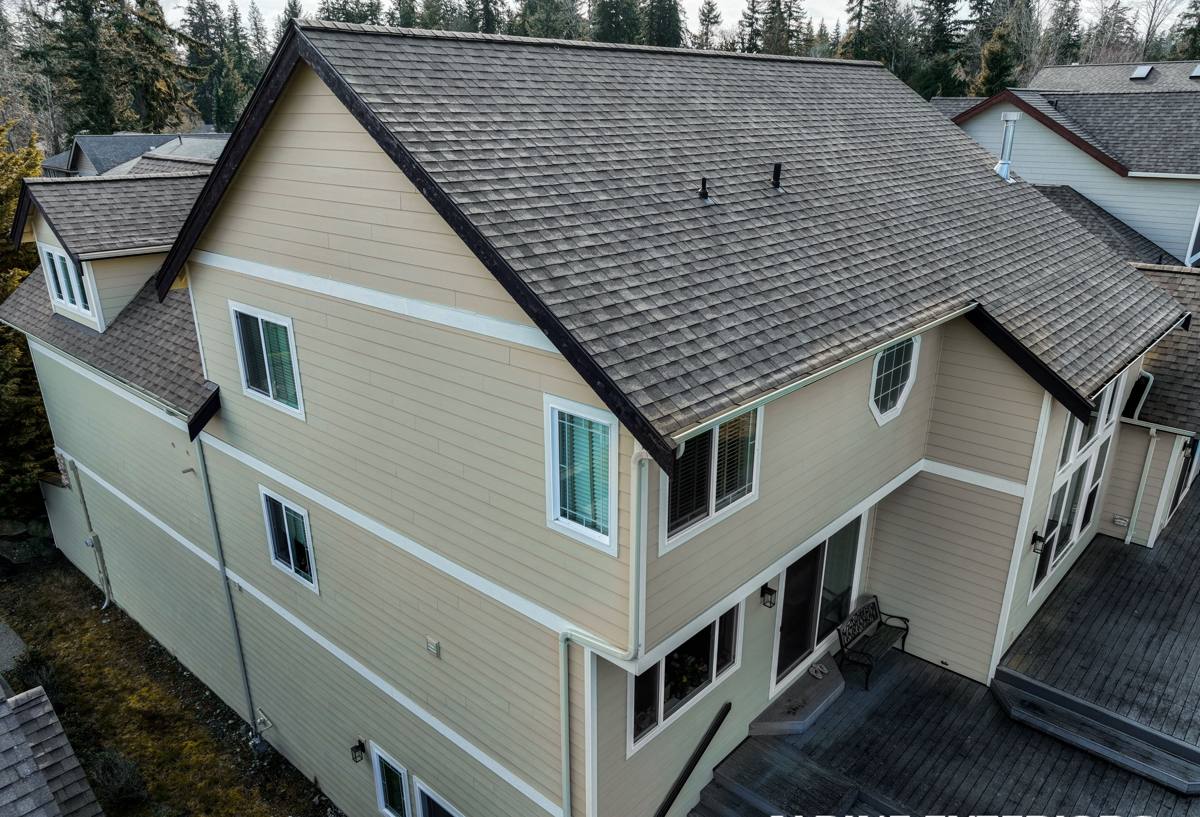
What Salt Air, Rain, and Moss Do to an Anacortes Deck Over Time
Three things drive almost every deck failure or premature repair we see near the water on Fidalgo Island:
- Salt air accelerates corrosion on fasteners, connectors, and any exposed metal hardware — even hardware rated for exterior use wears faster here than it would inland.
- Driving rain, often pushed sideways by wind, gets into joints and end grain that a calmer climate would leave alone. Water that would normally run off a flat surface gets forced into seams.
- Extended moss and moisture season means more months of the year where wood surfaces stay damp, which is when rot, fungal staining, and slick, hazardous walking surfaces take hold.
None of this means a deck near Similk Beach can't last decades. It means the details that don't matter much in a dry climate — fastener grade, drainage gaps, end-grain sealing, airflow underneath — matter a great deal here.
Framing and Fasteners: The Part You Don't See Is the Part That Fails First
Most deck problems in this area don't start on the surface — they start underneath, in the framing, ledger connection, and hardware that homeowners rarely inspect. In a salt-air environment, standard hot-dip galvanized fasteners can start showing rust and pitting well before the decking above shows any wear. We build with stainless steel or heavy-coated fasteners and structural connectors rated for coastal exposure, and we pay close attention to the ledger board connection to the house — that joint is the single most common source of moisture intrusion and, in the worst cases, structural failure.
Correct framing for this climate also means:
- Flashing at every ledger and post connection, not just the ones building code specifically calls out
- Joist tape or an equivalent moisture barrier on top of framing members, so standing water doesn't sit directly on cut wood
- Post bases that hold posts up off the concrete or ground, rather than letting end grain sit in standing water
- Adequate airflow underneath the deck so the framing can dry out between rain events instead of staying damp for weeks at a time
Ledger Attachment Deserves Extra Attention
Where the deck attaches to the house is the point most likely to let water behind siding if it's flashed incorrectly. Given how much rain this area gets, we treat that connection as a waterproofing detail first and a structural detail second — it has to be both, but a lot of deck failures near the coast trace back to a ledger that was bolted on correctly but never properly sealed.
Choosing Decking Material for a Waterfront-Adjacent Anacortes Home
There's no single "right" decking material for every home — it depends on budget, how much upkeep you want to do, and how close you are to direct salt spray versus just general marine air. Here's how the common options compare for a Similk Beach setting:
| Material | Salt Air Behavior | Moss/Moisture Resistance | Maintenance | Typical Lifespan |
|---|---|---|---|---|
| Pressure-treated wood | Fasteners and hardware corrode faster; wood itself is fine if sealed | Needs regular cleaning and re-sealing to resist moss and staining | Annual cleaning, re-stain/seal every 2-3 years | 15-20 years with upkeep |
| Cedar | Naturally rot-resistant; still benefits from sealing near salt exposure | Good natural resistance, but greys and can stain without maintenance | Cleaning and oiling every 1-2 years to hold appearance | 15-25 years |
| Composite decking | Handles salt air well; check hardware and hidden fasteners still stainless | Very good — resists moisture absorption, but surface moss can still grow if not cleaned | Periodic washing, no staining or sealing required | 25-30+ years |
| PVC/capped polymer | Excellent — essentially immune to salt-driven corrosion | Excellent moisture resistance | Lowest — occasional washing | 30+ years |
Composite and capped polymer decking have become popular near the water for good reason: less upkeep, and they don't absorb moisture the way wood does. That said, wood and cedar are still solid choices for homeowners who want that look and are willing to keep up with sealing on a schedule — the trade-off is honest maintenance time, not a flaw in the material. We'll walk through the real cost and upkeep differences for your specific project rather than push one product across the board.
Railings, Stairs, and Code Requirements
Any deck built to code in Skagit County has requirements around railing height, baluster spacing, guard strength, and stair geometry, and those don't change based on neighborhood. What does matter locally is making sure a permit is pulled where required and that the inspection process is handled correctly the first time — redoing railing or stair work after a failed inspection costs more in time than doing it right initially. We handle the permitting conversation as part of the project, not as an afterthought.
Beyond the code minimums, a few things matter more near the water:
- Railing hardware should match the corrosion resistance of your framing hardware — mismatched metals can cause galvanic corrosion where they touch
- Stair treads and landing surfaces should have real slip resistance built in, since moss and algae growth on a shaded, damp deck is a genuine fall hazard for months of the year
- Cable or metal railing systems look great but need a hardware grade suited to salt air, or they'll show corrosion at the connectors long before the rest of the structure ages
Our Process for Similk Beach Deck Projects
We keep the process straightforward because homeowners deserve to know what's happening at each stage:
- Site visit and assessment — we look at sun and wind exposure, existing structure if it's a rebuild, drainage around the foundation, and how the deck will actually be used.
- Design and material selection — sizing, layout, railing style, and decking material chosen with your budget and maintenance preferences in mind, not a one-size answer.
- Permitting — we handle the paperwork and inspection scheduling so it doesn't fall on you.
- Framing and structural work — the part that matters most for longevity, done with corrosion-rated hardware and proper flashing throughout.
- Decking, railing, and finish work — installed to manufacturer spec, with attention to fastening patterns that account for wood movement and drainage.
- Final walkthrough — we go over the finished deck with you, including what maintenance it will actually need going forward.
Keeping a Deck Ahead of Moss Season
A well-built deck still needs some seasonal attention in this climate. Homeowners near Similk Beach who stay ahead of a short list of maintenance tasks get significantly more life out of their deck:
- Sweep debris and standing organic material off the deck surface regularly, especially in fall when it builds up fastest
- Clean surface moss and algae before it has a chance to establish — a stiff brush and a deck-safe cleaner is usually enough if caught early
- Check that gaps between boards stay clear so water can drain instead of pooling
- Inspect fasteners and hardware once a year for early signs of rust or loosening
- Reseal or re-stain wood decking on the schedule appropriate to the product — don't wait until it visibly fails
- Confirm underdeck airflow paths (skirting vents, gaps) aren't blocked by stored items or overgrown landscaping
Why a Crew That Already Works Similk Beach Matters
Anyone can frame a deck. Building one that's still solid in fifteen years near the water takes knowing, in advance, which details are optional elsewhere and non-negotiable here. A crew that regularly works this stretch of Anacortes already knows which fastener grades hold up, which flashing details actually stop water intrusion in driving rain, and how local permitting and inspection works for waterfront-adjacent properties. That's not something you can fully substitute with a general contractor pulling from a standard, one-climate spec sheet.
It also means fewer surprises during the project — we're not learning the site conditions for the first time on your job.
If you're planning a new deck or replacing one that's showing its age near Similk Beach, we're glad to take a look and give you an honest, no-pressure estimate. Use the form below to get started.