 Anacortes Window
 Siding Replacement for Mount Vernon Homes
Mount Vernon sits in the Skagit Valley, close enough to the Sound and the surrounding wetlands that homes here deal with the same damp, marine-influenced weather that defines this whole corner of Washington. Long wet winters, heavy morning dew through spring and fall, driving rain that comes in sideways off a storm front, and a moss season that seems to run nine or ten months out of twelve — all of it works on a house's siding year after year. Add in the valley's flat, low-lying terrain, which holds humidity close to the ground longer than a hillside lot would, and it's easy to see why siding here ages differently than it does in drier parts of the state.
We work on homes throughout Skagit County, and Mount Vernon has its own particular mix of housing stock — older farmhouses, mid-century ranches, and newer developments — each with siding that fails in slightly different ways depending on age, orientation, and what it was clad in originally. Replacing siding correctly here isn't just about swapping old boards for new ones. It's about choosing a product and installation method that actually holds up to this specific climate, not a generic approach borrowed from a drier region.
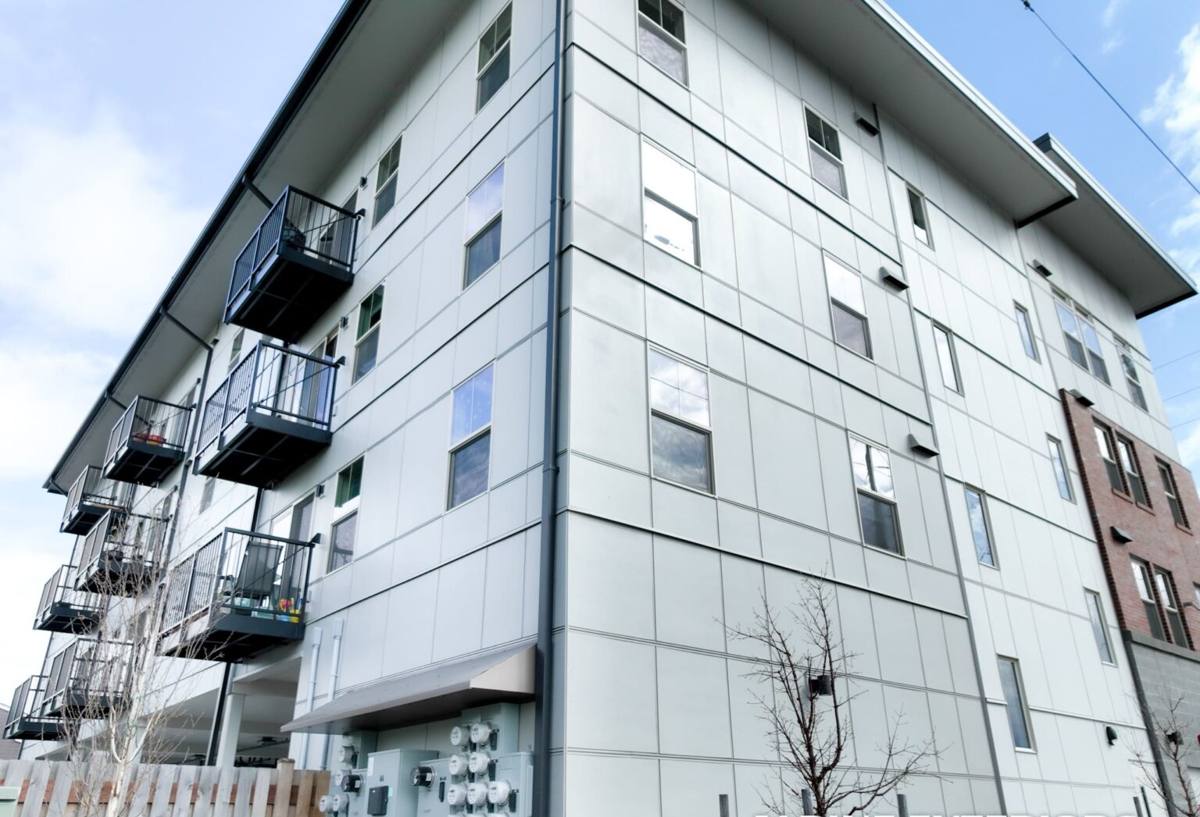
Why Siding Fails Faster in This Climate
Most siding failure we see in this area traces back to moisture that had somewhere to sit and nowhere to go. A few patterns show up again and again:
- Moss and algae growth on north-facing walls and shaded sides of the house, which trap moisture against the siding surface and accelerate rot underneath.
- Paint and finish failure from repeated wet-dry cycling — siding that's damp more often than it's dry loses its coating faster, exposing raw material to the elements.
- Swelling and delamination in wood-based products (spruce, cedar, OSB-core siding) where water gets behind the surface and the substrate can't dry out fast enough between rain events.
- Caulk and joint failure at seams and trim, which lets water track behind the siding rather than shedding off the face of the wall.
- Warping and cupping from uneven moisture absorption, especially on the sun-exposed side of a house next to the shaded side.
None of this is unique to Mount Vernon — it's a Skagit County and Pacific Northwest reality — but it's worth saying plainly: siding that isn't rated and installed for a wet climate will show its age here faster than it would somewhere with a shorter wet season.
Signs Your Siding Needs Replacing, Not Just Patching
Not every siding problem calls for a full replacement, but a lot of homeowners wait too long trying to patch symptoms instead of addressing the underlying material failure. Watch for:
- Soft or spongy spots when you press on the siding, especially near the bottom courses or below windows
- Persistent moss or algae that comes back within weeks of being cleaned off
- Visible cracking, buckling, or boards separating at the seams
- Paint that's peeling or bubbling rather than just fading
- A musty smell near exterior walls, which can point to moisture getting into the wall assembly
- Siding that's original to a home built more than 20-25 years ago, particularly wood-based products
If you're seeing more than one of these, it's usually a sign the siding system as a whole has reached the end of its useful life rather than needing a repair here and there.
What a Correct Siding Replacement Actually Involves
Replacing siding is more than a cosmetic swap. Done right, it's a chance to correct problems in the wall assembly that the old siding may have been hiding. Our process on a full siding replacement includes:
- Tear-off and inspection — removing the old siding and checking the sheathing, framing, and house wrap underneath for rot, soft spots, or prior water damage that needs to be repaired before anything new goes up.
- Weather-resistive barrier — installing or repairing the house wrap that manages bulk water and lets moisture vapor escape the wall assembly instead of getting trapped inside it.
- Flashing at every penetration — windows, doors, hose bibs, vents, and anywhere else something interrupts the wall plane. This is where most long-term leaks originate if it's skipped or done carelessly.
- Rainscreen or proper drainage gap where appropriate, giving water a path to drain and the wall a chance to dry rather than holding moisture against the back of the siding.
- Correct fastening and gapping per the manufacturer's installation instructions — siding installed too tight, without expansion room, or with the wrong fasteners fails prematurely no matter how good the product is.
- Factory-finished siding installation so the color and protective coating are baked on before the material ever reaches your house, rather than relying on field-applied paint to hold up long-term.
Skipping any of these steps is how a siding job that looks fine on day one starts showing problems again in five years instead of thirty.
Why We Install James Hardie Fiber Cement — and Nothing Else
We made the decision to install James Hardie fiber cement siding exclusively, and we don't install vinyl, LP SmartSide, cedar, primed spruce, or other fiber cement brands. That's a deliberate standard, not a sales pitch, and it comes down to how these products actually perform in a climate like Skagit County's.
Wood-based siding — cedar, primed spruce, engineered wood products — looks good going up, but wood is organic material, and organic material absorbs moisture. In a climate with this much sustained dampness and moss pressure, wood siding needs more frequent painting, more vigilant caulking, and more moss treatment to hold up, and even with good maintenance it's more vulnerable to rot at the edges, joints, and bottom courses. Vinyl siding sheds water well on the surface but can trap moisture behind it if not detailed carefully, and it doesn't offer the same fire resistance or long-term dimensional stability as fiber cement.
James Hardie fiber cement is engineered specifically for climates like this one. Hardie makes HZ5 and HZ10 product lines formulated for regions with significant moisture exposure, and the ColorPlus factory-applied finish is baked on and warranted separately from the substrate — it doesn't rely on a painter getting a field coat right, and it resists the chipping, peeling, and fading that plagues field-painted siding here. Fiber cement is also non-combustible, dimensionally stable across wet-dry cycles, and backed by a strong transferable warranty when installed to spec. It costs more upfront than vinyl and is heavier and more labor-intensive to install correctly than wood, but for a house that has to survive Skagit Valley winters for decades, it's the product we're willing to put our name on.
Quick Comparison: Common Siding Materials in This Climate
| Material | Moisture Behavior Here | Maintenance Burden | Typical Lifespan |
|---|---|---|---|
| James Hardie Fiber Cement | Dimensionally stable, resists moisture absorption | Low — factory finish, occasional cleaning | 30+ years to spec |
| Cedar / Primed Spruce | Absorbs moisture, prone to rot at joints and edges | High — repainting, caulking, moss treatment | 15-25 years with upkeep |
| Vinyl | Sheds surface water, can trap moisture if poorly detailed | Low, but limited repair options if damaged | 20-30 years, fades over time |
| Other Fiber Cement Brands | Varies by formulation and finish system | Depends on coating warranty and installer | Varies |
Our Process for Mount Vernon Projects
Every siding job starts with an on-site inspection, not a phone estimate. We walk the exterior, check for soft or damaged areas, look at the existing weather barrier where accessible, and talk through what we're seeing before we ever quote a number. From there, a typical project moves through:
- A written estimate that breaks out material, labor, and any sheathing or framing repair we expect to need based on the inspection
- A materials walkthrough so you can pick the Hardie profile — lap siding, shingle-style, or panel — and ColorPlus finish that fits the house
- Tear-off, sheathing inspection, and any necessary repairs before new material goes up
- Weather barrier and flashing installation at every window, door, and penetration
- Siding installation to Hardie's fastening, gapping, and clearance specifications
- A final walkthrough with you before we consider the job done
We schedule around Skagit Valley weather rather than fighting it — siding installation has real weather windows, and rushing a job during a wet stretch is how corners get cut on flashing and drying time.
What Affects Cost on a Mount Vernon Siding Job
| Factor | Why It Matters |
|---|---|
| House size and wall complexity | More corners, gables, and dormers mean more cutting, flashing, and labor time |
| Condition of existing sheathing | Rot or water damage found during tear-off adds repair scope before new siding can go up |
| Siding profile chosen | Lap, shingle, and panel styles differ in material and installation labor |
| Trim and accessory work | Fascia, soffit, and trim replaced alongside siding affects total scope |
| Access and site conditions | Tight lots, landscaping, or multi-story walls affect staging and labor time |
We don't quote broad numbers on a page like this because every house is different, but we're upfront during the estimate about what's driving the cost on your specific project, and we won't pad a quote with work your siding doesn't actually need.
Why Hiring a Crew That Already Works Mount Vernon Matters
Siding installation is detail work, and the details that matter most are the ones tied to local conditions. A crew that regularly works Skagit County homes already knows how much drainage gap to build in for this level of sustained moisture, where moss tends to establish first on a typical Mount Vernon lot, and how local wall assemblies are usually built so they're not guessing at what's behind the old siding before tear-off even starts. That familiarity shows up in fewer surprises mid-project and a wall assembly that's actually built for the weather it has to survive, not a generic installation pulled from a manual written for a different climate.
It also matters for accountability. A local crew is easy to reach if a question comes up two years down the road, and stands behind both the material warranty and the workmanship behind it, rather than having moved on to a different region entirely.
If your Mount Vernon home's siding is showing its age — moss that won't stay gone, soft spots, peeling paint, or siding original to a house built decades ago — we're happy to take a look and give you a straightforward, no-pressure estimate. Use the form below to get started.