 Anacortes Window
 Why March Point's Climate Is Hard on a Deck
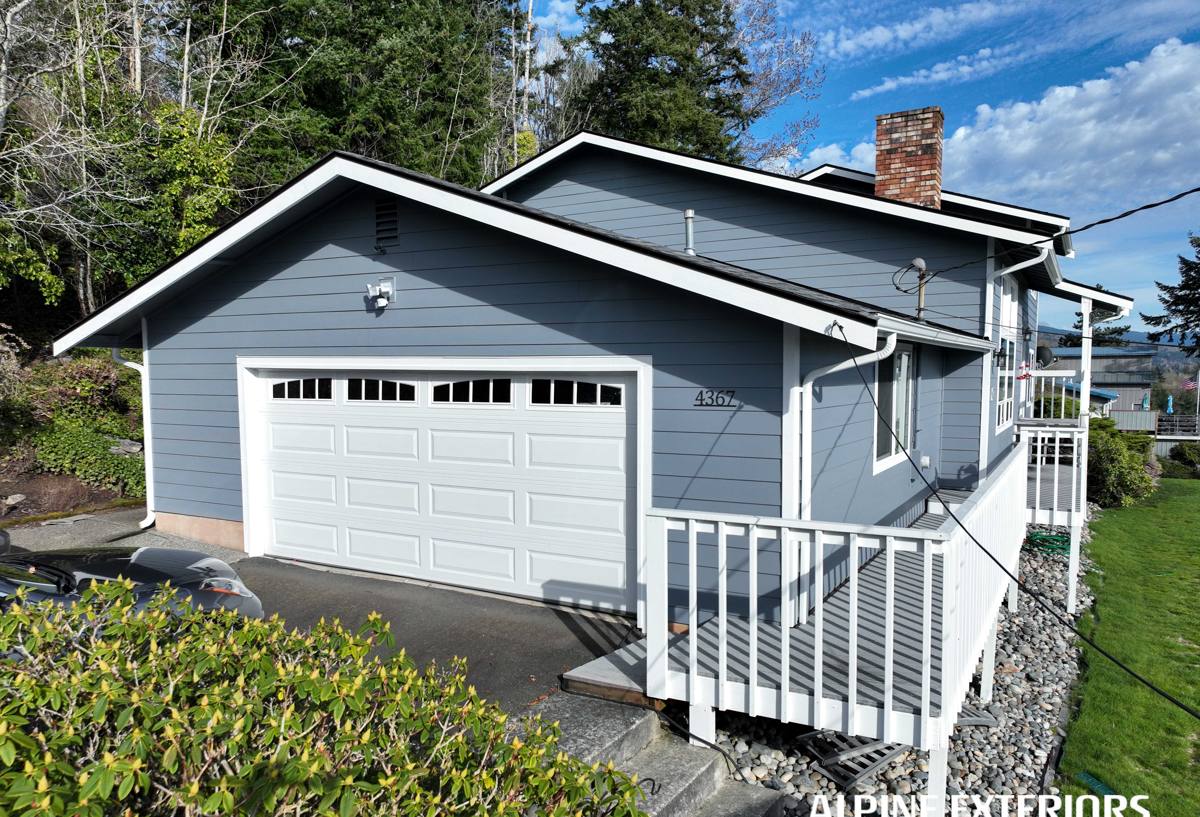
March Point sits out on the water, and that location cuts both ways. The views are part of why people build decks here in the first place, but the same exposure that makes the setting nice also makes it one of the tougher spots in Skagit County to keep a deck looking good for the long haul. Salt-laden air off the water, driving rain that comes in sideways during winter storms, and a moss season that can run from early fall through late spring all work on a deck at the same time, year after year.
Salt Air and Fasteners
Airborne salt doesn't just sit on the surface of a deck — it works into fastener heads, hidden clip systems, and any exposed metal edge. Over a few seasons, the wrong hardware will streak, corrode, or weaken at the exact points holding your boards down. This is one of the first things we check on any March Point job: what's specified for the fasteners and structural hardware, not just the decking boards themselves.
Moss, Algae, and Slip Risk
Anacortes gets a long stretch of wet, low-sun months, and shaded or north-facing decks near the water pick up moss and algae faster than decks further inland. Beyond looking dingy, a mossy deck surface gets genuinely slick. The board profile, gap spacing, and grain pattern you choose up front make a real difference in how much moss takes hold and how easy it is to knock back later.
What We Mean by "Composite Decking"
Composite decking is a manufactured board, usually a blend of wood fiber and recycled plastic, engineered to hold up better than solid wood against moisture, rot, and UV fading. It's not one single product — there's a real range in how boards are built, and that range matters more in a coastal, wet climate than it does somewhere dry.
Capped vs. Uncapped Boards
"Capped" composite has a polymer shell wrapped around the wood-plastic core on some or all sides. "Uncapped" composite is the same core material with no protective shell, left exposed to weather. Capped boards resist staining, moisture absorption, and moss growth noticeably better, especially at cut ends and drilled holes where the raw core would otherwise be open to the weather.
Our Standard for This Climate
Given how much rain and humidity March Point sees, we default to fully capped composite or solid PVC decking rather than uncapped composite. That's a professional judgment call based on moisture behavior, not a knock on any particular brand — uncapped boards can perform fine in drier climates. Here, exposed core material at cut ends and fastener holes is a long-term maintenance headache we'd rather help you avoid from day one. We'll walk through the actual trade-offs — upfront cost, warranty terms, and appearance — so you're deciding with full information, not guessing.
What a Correct Installation Looks Like Here
Composite boards are only as good as what's underneath them. A lot of deck problems we get called out to fix aren't board failures at all — they're substructure or drainage mistakes that would have caused trouble under any decking material.
Substructure Before the Boards
Joist spacing, joist tape, and framing material all need to match what the composite manufacturer requires to keep the warranty valid and the deck stable. In a wet climate, we pay particular attention to protecting the tops of joists from standing moisture, since that's where hidden rot starts on framing that never gets seen once the boards go down.
Spacing, Drainage, and Airflow
Board gapping isn't just cosmetic. Correct spacing lets water shed through instead of pooling on the surface, and it lets air move underneath so the structure can dry out between storms. On low, shaded, or waterside decks, we're deliberate about airflow underneath — a deck that never fully dries out is a deck that grows moss and mildew no matter what the board surface is rated to resist.
Fastening and Flashing at the Ledger
Where a deck attaches to the house is the single most common point of long-term water intrusion, and it's the hardest to inspect once the project is closed up. Proper ledger flashing, correctly lapped with the house's water-resistive barrier, matters more in this climate than almost any other detail on the job.
Comparing Decking Materials for This Climate
There's no universally "best" decking material — the right choice depends on budget, how the deck is used, and how much upkeep you actually want to do. Here's how the common options stack up specifically for a wet, salt-air, moss-prone site like March Point.
| Material | Upfront Cost | Upkeep in This Climate | Moss/Moisture Resistance | Realistic Lifespan |
|---|---|---|---|---|
| Capped Composite / PVC | Higher | Occasional wash-down | Strong | 25-30+ years |
| Uncapped Composite | Mid | Regular cleaning, cut-end sealing | Moderate | 15-20 years |
| Pressure-Treated Wood | Lower | Annual cleaning and re-sealing | Weak without upkeep | 10-15 years |
| Cedar | Mid-High | Regular oiling/sealing | Weak without upkeep | 10-15 years |
Composite carries a higher upfront number, but the maintenance column is where it earns that cost back on a site like this one — less time on your knees scrubbing moss, fewer re-sealing cycles, and less risk of the slow rot that wood decks near the water are prone to.
Our Process for a March Point Project
Site Visit and Design
We start on site, not over the phone. We look at sun exposure, slope, drainage paths, and how close the deck sits to the water or to shade that will feed moss growth. That shapes both the board choice and the framing plan before we ever talk numbers.
Permitting
Depending on where your parcel sits, a new deck build may fall under Skagit County or City of Anacortes permitting requirements, and waterfront-adjacent lots can carry additional review. We handle that process rather than leaving you to sort out which jurisdiction applies.
Build Day to Walkthrough
Once materials are on site, most composite deck rebuilds move faster than homeowners expect, since the slow part of the job is usually removing and disposing of what's there already. We walk the finished deck with you before we consider the job done — checking gaps, fastener lines, and any transitions at the house — rather than just leaving a punch list unaddressed.
Keeping a Composite Deck Looking Right Through Moss Season
Composite decking is low-maintenance, not no-maintenance, especially this close to the water. A little seasonal attention goes a long way toward keeping the surface clean and slip-safe through the wet months.
- Sweep debris and fir needles off the surface regularly — trapped organic matter is what moss and algae actually feed on
- Rinse or wash the deck surface a few times a year, more often on shaded sections, using a soft brush rather than a pressure washer turned up too high
- Keep gutters and downspouts near the deck clear so runoff isn't dumping extra water onto one section
- Check that furniture, planters, and rugs aren't sitting in one spot long enough to trap moisture underneath
- Confirm gaps between boards stay clear of debris so water and airflow can keep doing their job
Signs an Older Deck Is Overdue for Replacement
Not every March Point deck needs to be torn out — but there are warning signs worth taking seriously before they become a safety issue rather than a cosmetic one.
- Soft, spongy, or springy spots underfoot, especially near the house ledger
- Persistent moss or dark staining that comes back within weeks of cleaning
- Visible corrosion or staining around fastener heads
- Gaps that have widened, boards that have cupped, or noticeable movement in the railing
- Water pooling on the surface instead of draining through
Any one of these on its own might just need a repair. Several together usually mean the structure underneath has been dealing with moisture longer than the surface has let on.
Why Hire a Crew That Already Works in March Point
A lot of decking problems on the water side of Anacortes come from plans and products that were never really matched to this climate — details that would hold up fine in a drier part of the state but don't account for salt exposure, driving rain, or a moss season that lasts most of the year. A crew that already works this area knows which fastener systems hold up, which board profiles shed water instead of trapping it, and which framing details actually matter here versus which ones are just extra cost. That local pattern-matching is worth more than any brand name on the board itself.
If you're weighing a new composite deck or wondering whether an existing one on your March Point property is worth repairing or replacing, we're happy to take a look. Reach out for a free, no-pressure estimate using the form below — we'll walk the site, answer your questions honestly, and give you a straight recommendation either way.