 Anacortes Window
 Why Decks in Anacortes' Skyline Area Wear Out on Their Own Schedule
Fidalgo Island sits right where marine air, near-constant winter rain, and a long shoulder season of shade and dampness all meet. Homes in the Skyline area of Anacortes deal with the same combination as the rest of the city: salt-laden air off the water, driving rain that gets pushed sideways by wind, and stretches of the year where a deck barely dries out between storms. That combination is hard on decks in ways that don't always show up on a simple visual inspection.
Salt air accelerates corrosion on fasteners, hangers, and any exposed metal hardware. Driving rain finds its way into joints, ledger connections, and railing posts that would stay dry in a more sheltered climate. And a long moss season means algae and moss get a real foothold on any deck surface that stays shaded or doesn't drain and dry quickly — which, on a lot of Skyline lots with mature trees, is most of the deck for a good part of the year. None of this means a deck is doomed. It means the build has to account for the climate from the start, not just meet a minimum code standard.
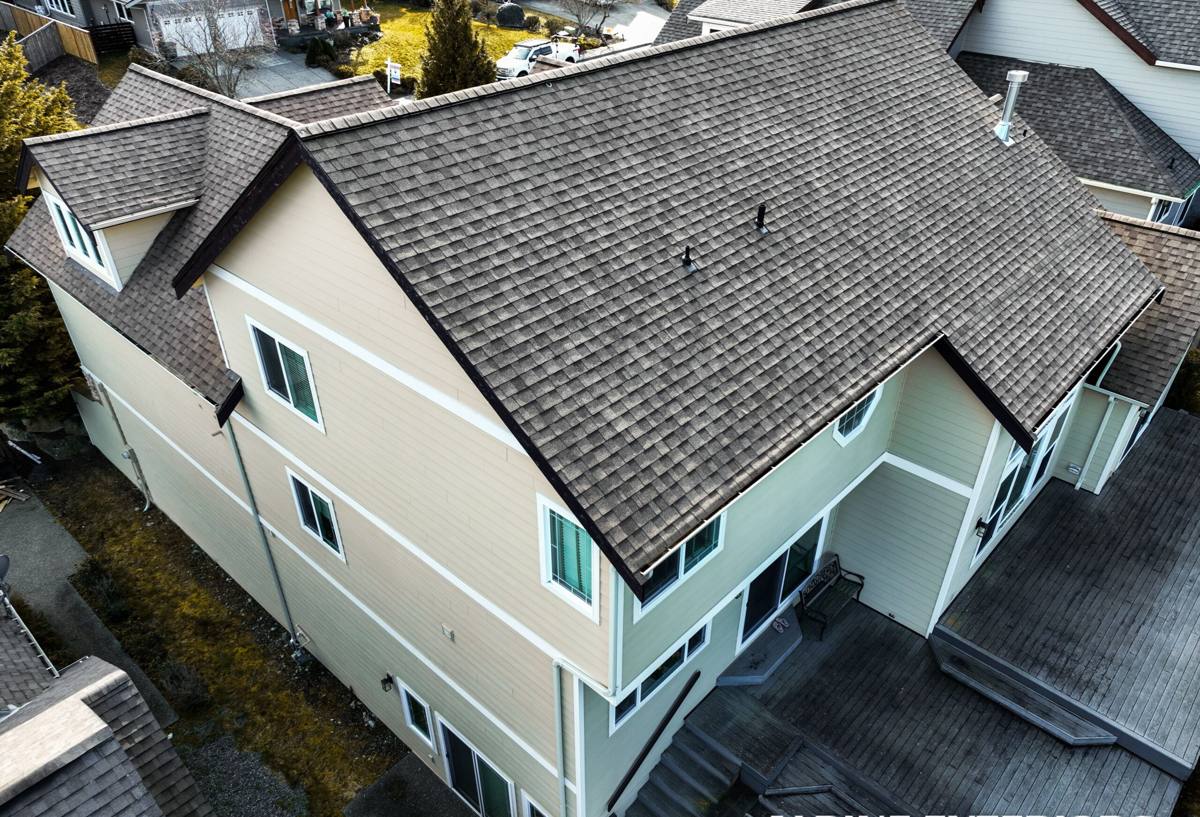
Repair or Replace? Reading the Signs Honestly
Not every tired-looking deck needs to come out. Part of doing this job right is telling you honestly when a repair will hold and when it won't.
Signs a repair may be enough
- Surface boards are cupping, splintering, or graying, but the framing underneath is solid and dry
- A handful of loose boards or a wobbly rail section, isolated to one area
- Cosmetic moss and algae staining with no soft or spongy spots when pressed
Signs you're better off replacing
- Soft, spongy, or springy decking in multiple spots — a sign moisture has reached the framing
- Rust streaking or corrosion around fastener heads and hardware
- Ledger board separation from the house, or visible gaps where the deck meets the siding
- Footings that have shifted, settled, or show visible rot at the post base
- A deck old enough that it predates current guardrail and connection code requirements
When the framing and connections are compromised, patching the surface just buys a little time before the same problems resurface. A full replacement lets us rebuild the whole system — substructure, drainage, and surface — to actually handle this climate.
Decking and Framing Materials That Hold Up Here
Material choice matters more in a marine climate than in a dry one. The table below reflects general trade-offs we weigh with Skyline homeowners, not brand endorsements.
| Material | Moisture Behavior | Moss/Algae Resistance | Maintenance | Typical Lifespan |
|---|---|---|---|---|
| Cedar | Naturally rot-resistant but needs sealing to stay that way | Moderate — needs periodic cleaning | Higher — restaining every few years | 15–20 years with upkeep |
| Pressure-treated lumber | Good if fasteners and flashing are rated for treated wood | Moderate — same care as cedar | Moderate — sealing recommended | 15–25 years |
| Composite/PVC decking | Excellent — doesn't absorb water or rot | Better, though moss can still grow on the surface film in deep shade | Low — periodic washing only | 25+ years, manufacturer-warrantied |
We don't push one product on every job. A well-built cedar or treated-wood deck can do fine here if it's detailed correctly and the owner is willing to keep up with sealing. Composite costs more up front and, in our experience, is the lower-maintenance choice for shaded, tree-covered lots where moss is a constant fight. The honest trade-off is maintenance time versus upfront cost — we'll walk through both for your specific lot.
What a Correctly Built Deck Replacement Actually Includes
Ledger board and flashing
This is where most rain-related deck failures start. The ledger connection to the house needs proper flashing, a water-shedding gap or membrane behind it, and corrosion-resistant fasteners rated for the wood treatment used. A ledger that's just bolted to the siding without flashing is one of the most common shortcuts we see on older decks in this area, and it's usually the first place water gets in.
Footings and framing
Footings need to sit below frost depth and bear on undisturbed or properly compacted soil. Joist spacing and beam sizing should match the actual load — decking material, railing type, and any features like a hot tub or built-in seating — not just the minimum span table.
Fasteners and hardware
In a salt-air environment, hardware grade is not a place to cut corners. Hot-dip galvanized or stainless connectors and fasteners cost more than standard coated hardware, but they're what keeps hangers and post bases from rusting out well before the wood itself fails.
Drainage and airflow underneath
Decks that stay damp underneath breed rot faster and give moss a place to establish. Grading, gapping, and ventilation under the deck all matter as much as what's on top.
Our Deck Replacement Process
- On-site assessment — we check the existing framing, ledger connection, footings, and drainage before quoting anything, so the estimate reflects what's actually there, not guesswork.
- Design and material selection — we go over decking, railing, and structural options based on your budget, sun/shade exposure, and how much maintenance you want to take on long-term.
- Permitting — we handle the paperwork required for the scope of work.
- Demolition and disposal — full removal of the old deck and hauling, with attention to protecting landscaping and the area around the house.
- Rebuild — footings, framing, flashing, decking, and railing installed to current code and detailed for this climate.
- Final walkthrough — we go over the finished deck with you, including what maintenance it will and won't need.
Permits and Code Considerations
Deck replacement in Anacortes generally requires a permit through the City of Anacortes building department, and setback or footing requirements can vary depending on your specific lot and its location relative to property lines and any critical areas. Guardrail height, baluster spacing, and stair requirements are also governed by current code, which is one more reason a straight rebuild-to-match-the-old-deck approach can leave you with something that doesn't actually pass inspection. We pull the appropriate permits and build to current code rather than to whatever the original deck happened to meet when it went in, which may have been decades ago.
Keeping a New Deck Ahead of Moss and Rot
A well-built deck in this climate still needs some seasonal attention. None of it is difficult, but skipping it is how a 25-year deck turns into a 12-year deck.
- Sweep leaves and debris off the surface regularly in fall, especially in shaded corners
- Rinse off moss and algae buildup before it gets a foothold, rather than after it's established
- Check and clear gaps between boards so water can drain instead of pooling
- Inspect the ledger flashing and any visible fasteners once a year for early rust or gaps
- Reseal wood decking on the manufacturer's recommended schedule, not just when it looks faded
- Keep gutters and downspouts near the deck clear so runoff isn't dumping directly onto it
Why a Crew That Already Works Skyline Matters
A deck built for a dry inland climate and a deck built for Fidalgo Island's combination of salt air, wind-driven rain, and long damp shoulder seasons are not the same project, even if they look identical from the driveway. A crew that regularly works in Skyline and the surrounding Anacortes neighborhoods already knows which details — flashing, hardware grade, drainage — actually matter here, instead of learning it on your project. We're also familiar with the local permitting process, so there are fewer surprises and delays once work starts. And because we're local, follow-up after the job — whether that's a quick warranty check or a question a year down the road — doesn't mean waiting on a crew that has to drive in from out of the area.
Cost Factors for a Skyline Deck Replacement
Every deck is priced on its own specifics, but the same handful of factors drive most of the difference between projects.
| Factor | Why It Affects Cost |
|---|---|
| Deck size and shape | More square footage and complex shapes mean more material and labor |
| Decking material | Composite and PVC cost more upfront than wood but need less long-term maintenance |
| Height and levels | Multi-level decks and taller decks need more substantial framing, footings, and stair/rail work |
| Structural condition found | Rotted framing, undersized footings, or a failed ledger connection add rebuild work beyond the surface |
| Railing style | Cable, glass, and custom railing systems cost more than standard baluster railing |
| Demolition and disposal | Larger or harder-to-access decks take more time and cost to remove and haul away |
If you're weighing whether to repair or fully replace, or just want a straight answer on what your Skyline-area deck actually needs, we're happy to take a look and put together a free, no-pressure estimate — no obligation either way.