 Anacortes Window
 Old Town Anacortes Homes Face a Tough Siding Environment
Old Town Anacortes is one of the older residential pockets in the city, and it shows in the housing stock — a mix of homes built across many decades, with siding materials ranging from original wood clapboard to later hardboard and vinyl replacements. That age and variety means siding problems here rarely look the same from house to house. What doesn't vary is the environment those materials have to survive: salt-laden marine air, wind-driven rain off the water, and a long, wet moss season that can run from fall through spring. Anacortes sits on Fidalgo Island in Skagit County, surrounded by saltwater on multiple sides, and siding in this part of town takes that exposure directly.
A repair job that works in a drier inland climate often falls short here. We've built our siding repair process around what actually happens to a wall assembly in this specific marine climate — not a generic checklist.
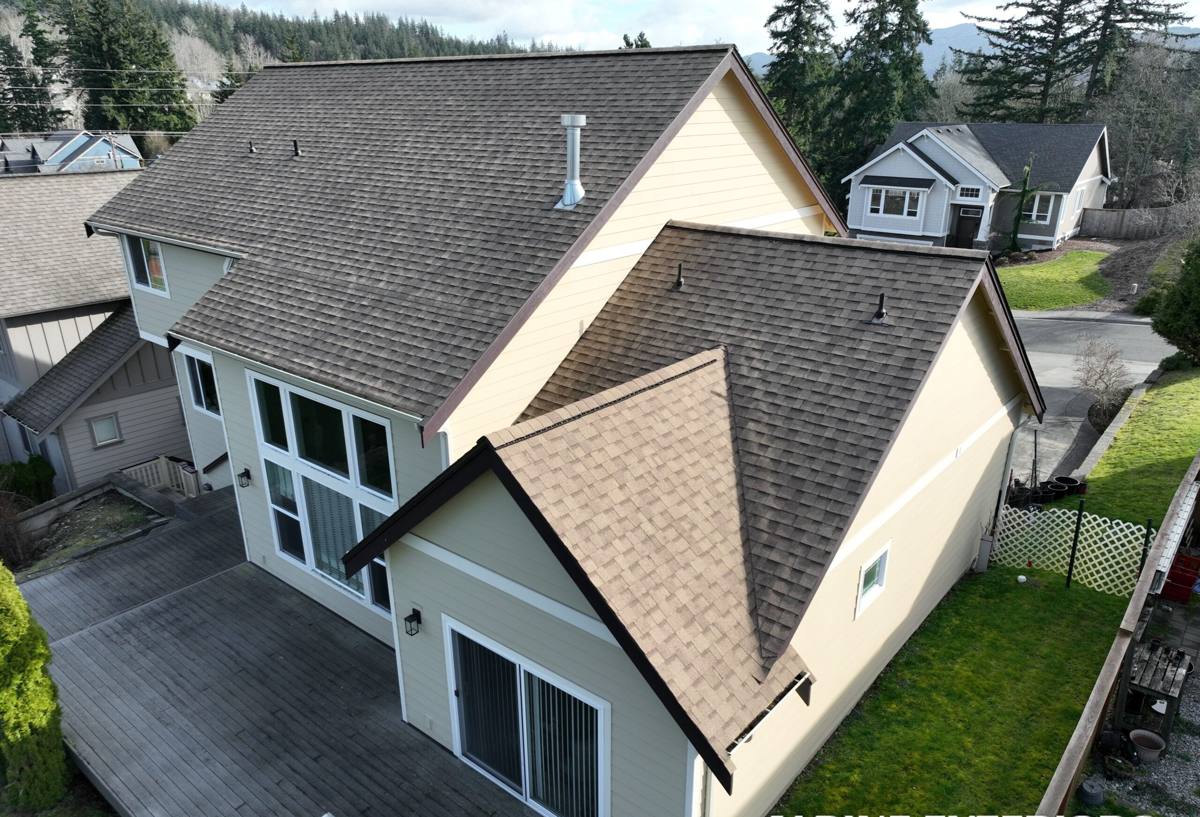
How Skagit County's Climate Wears Down Siding
Salt Air and Corrosion
Airborne salt doesn't just affect metal — it accelerates the breakdown of paint films, caulking, and fasteners on wood and hardboard siding. Nail heads rust and stain, paint loses adhesion faster than the label suggests it should, and the surface of older siding can look chalky or pitted well before its expected service life is up.
Wind-Driven Rain
Anacortes gets weather systems that push rain sideways, not just down. Wind-driven rain finds every gap in flashing, every open lap joint, and every place where caulk has shrunk or cracked. On a house with tight sightlines and standard lap siding, that means water gets forced up and under panels in ways vertical rain never would.
Moss, Algae, and Shade
Old Town's mature trees and closely spaced lots mean a lot of shaded, slow-drying wall surface. Moss and algae take hold on siding that stays damp too long, and their root structures hold moisture against the surface even longer, which speeds up rot on wood-based products and staining on almost everything else.
Signs Your Siding Needs Repair
Most siding failures give warning signs well before they become structural problems. Homeowners in this neighborhood should watch for:
- Soft, spongy, or crumbling spots when you press on the siding, especially near the bottom courses
- Paint that's peeling, bubbling, or repeatedly failing in the same spot within a year or two of repainting
- Visible gaps, warping, or buckling at panel seams and corners
- Dark streaking, green or black growth, or a persistently damp look on shaded walls
- Rust stains bleeding from nail heads or fasteners
- Cracked or missing caulk at trim, window, and door edges
- A musty smell or visible staining on interior walls that back up to exterior siding
Any one of these can be minor. Several together, especially clustered in one area, usually point to a water intrusion problem that's been developing for a while.
Repair or Replace? What We Actually Look At
Not every problem area needs a full re-side. But repair only makes sense when the damage is limited and the underlying wall assembly is sound. We look at scope, cause, and material condition before recommending either path.
| Factor | Favors Repair | Favors Replacement |
|---|---|---|
| Extent of damage | Isolated to one wall or a few panels | Spread across multiple elevations |
| Underlying sheathing | Dry, solid when probed | Soft, rotted, or delaminating |
| Cause of failure | One-time event (impact, flashing gap) | Systemic — material breaking down across the board |
| Age of existing siding | Newer, still within expected service life | Original or long past typical lifespan |
| Material match available | Compatible patch material on hand | Discontinued profile or product no longer made |
We'll give you a straight answer on which side of that line your house falls on — including telling you when a repair is the right call, even if a full replacement would be a bigger job for us.
What a Correct Siding Repair Involves
Diagnosing the Real Problem
A siding repair that only addresses what's visible tends to fail again within a season or two. Before we touch anything, we trace the damage back to its source — a gap in flashing, a failed caulk joint, a downspout dumping water against the wall, or moisture wicking up from grade. Patching over a symptom without fixing the cause just buys a little time.
Water Management First
Every repair we do addresses drainage and flashing before it addresses appearance. That means correcting how water sheds at windows, doors, penetrations, and horizontal trim — the details that matter most in a climate where wind-driven rain is routine.
Matching Materials the Right Way
On older homes with original wood or hardboard siding, matching profiles and reveals matters for the house to look right. Where we can, we match exposure and trim details closely. Where the existing material is a poor long-term bet — hardboard especially tends to swell and fail at cut edges — we'll walk you through a better option for that section rather than just replacing like-for-like out of habit.
Our Process for Old Town Anacortes Repairs
- On-site inspection, including probing suspect areas and checking flashing and caulk at penetrations
- A clear explanation of what's causing the damage — not just what's damaged
- A written scope and estimate that separates the repair from any related work (gutters, trim, paint) so you know exactly what you're paying for
- Repair work, including correcting the underlying water management issue, not just swapping panels
- Site cleanup and a final walkthrough before we consider the job done
We don't upsell a full re-side when a repair will genuinely hold. If a section is failing because of a real design or moisture problem that a patch can't fix, we'll say so and explain why.
Why We Repair and Patch with James Hardie Fiber Cement
We install James Hardie fiber cement exclusively as a company, and that applies to repair sections too, not just full re-sides. Original wood clapboard has real charm and can be worth preserving on a historic home, so we work with it where that's the client's priority. But when a section of siding needs to come off entirely and we're choosing what goes back up, we default to Hardie rather than matching failed material with more of the same.
The reasoning is simple: hardboard siding is prone to the same edge-swelling and moisture failure that likely caused the original damage, and vinyl doesn't hold paint or blend with an older wood-sided house the way a fiber cement patch can. Hardie's factory-applied ColorPlus finish and HZ5 formulation are engineered for exactly the wet, coastal conditions Skagit County sees, and it's non-combustible — a real consideration given wildfire season concerns even in Western Washington. We won't pretend fiber cement is a perfect color match to 60-year-old cedar clapboard in every case, and we'll tell you honestly when that's a real trade-off worth discussing before we start.
Why Hire a Crew That Already Works This Neighborhood
Old Town's housing stock isn't uniform, and that matters more than it sounds. A crew that's worked this specific area has already seen how water moves on these older homes, how prior additions and reroofs have changed drainage paths over the years, and where flashing tends to have been done wrong the first time. That's not something you get from a general contractor who mostly works new construction on the mainland side of the county.
It also matters for keeping a home's character intact. Many houses in this neighborhood have an established look — trim details, reveals, corner treatments — and a repair that clashes with that is a repair done wrong, even if it's technically watertight.
Between Repairs: Simple Maintenance That Extends Siding Life
A few habits go a long way in this climate, whether your siding is original wood or newer fiber cement:
- Clean moss and algae off shaded siding gently, rather than letting it establish and hold moisture against the surface
- Keep gutters and downspouts clear so water isn't overflowing onto walls below
- Re-caulk gaps at trim and penetrations before they widen, not after
- Keep shrubs and tree limbs trimmed back from siding to improve airflow and drying time
- Walk the exterior once or twice a year and press-test any soft-looking spots early
Catching a small problem during a routine check is almost always cheaper and less disruptive than waiting until it shows up as a soft wall or a stained ceiling inside.
Get an Honest Look at Your Siding
If you're seeing warning signs on a home in Old Town Anacortes — or you just want a second opinion before committing to a full re-side — we're happy to take a look. We'll give you a straightforward assessment of what's actually happening, what it will take to fix it, and whether repair or replacement makes more sense for your situation. Reach out for a free, no-pressure estimate using the form below.