 Anacortes Window
 Why Siding on Fidalgo Island Wears Differently
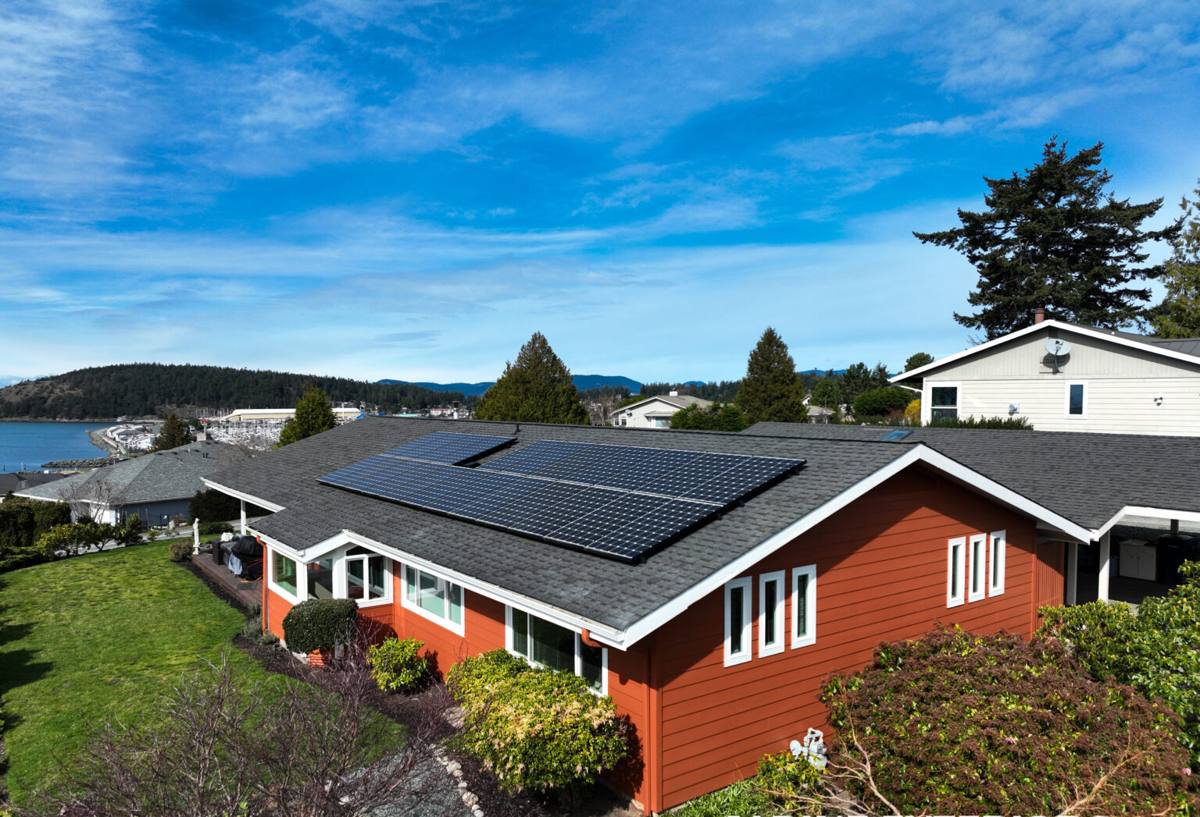
Anacortes sits on Fidalgo Island, surrounded by saltwater on nearly every side. That location is part of what makes the area beautiful, and it's also what makes siding here age faster and fail in different ways than siding thirty miles inland. Homes here deal with a combination that few Skagit County contractors think through carefully: salt-laden air that accelerates corrosion on fasteners and trim, wind-driven rain that gets pushed sideways into laps and joints instead of just running down the face of a wall, and a long, wet moss season that keeps north- and west-facing walls damp for months at a stretch.
None of that means siding is doomed here. It means repairs have to account for causes, not just symptoms. Patching a soft spot without figuring out why it went soft just buys a homeowner a year or two before the same failure shows up again, often larger and more expensive to fix.
How the Marine Climate Actually Damages Siding
Salt Air and Fasteners
Airborne salt accelerates corrosion on exposed or undersized nails, staples, and trim fasteners. Once a fastener starts to rust and lose its grip, the siding piece it's holding starts to move slightly with wind and temperature changes. That small movement opens hairline gaps at laps and seams, which is exactly where water gets in.
Driving Rain and Exposure
Fidalgo Island catches weather off Rosario Strait and the Salish Sea, and storms here frequently arrive with real wind behind the rain. Wind-driven rain doesn't behave like a gentle vertical rainfall — it gets forced up and under laps, around window and door trim, and into any gap that a calm-weather installation would have gotten away with. Walls facing the prevailing weather typically show damage years before more sheltered walls on the same house.
Moss, Algae, and Sustained Moisture
Long stretches of overcast, damp weather let moss and algae take hold on siding that doesn't get much direct sun, especially under tree cover or on north-facing walls. Moss itself doesn't eat through most siding materials, but it holds moisture against the surface far longer than bare siding would dry on its own. That extended dampness is what leads to paint failure, substrate softening on wood-based products, and steady deterioration behind the surface where nobody's looking.
Signs Your Siding Needs a Repair Call
Most siding problems give warning signs well before they become structural. Catching them early is the difference between a contained repair and a much larger project. Walk your exterior and look for:
- Soft or spongy spots when you press on the siding, especially near the bottom courses and around window sills
- Visible gaps, cracks, or separation at seams, corners, and butt joints
- Paint that's peeling, bubbling, or chalking in patches rather than evenly across the wall
- Dark streaking, persistent moss, or algae that keeps returning after cleaning
- Warping, buckling, or boards that look wavy from an angle
- Rust streaks below nail heads or trim fasteners
- Interior signs — musty smell, discolored drywall, or peeling interior paint on an exterior wall
- Increased pest activity around siding edges or penetrations
Any one of these on its own might be minor. Several of them clustered in the same area, or interior signs paired with exterior damage, usually mean water has been getting behind the siding for a while.
What a Correct Siding Repair Actually Involves
A repair that's done right takes longer than just popping out a bad board and nailing in a new one, because the visible damage is rarely the whole story. Here's what should happen on a proper repair, regardless of the siding material involved:
Find the Water Path First
Before anything gets replaced, the damaged section comes off far enough to see what's happening underneath — house wrap, flashing, sheathing. If the water intrusion point isn't identified and corrected, the new material fails the same way the old material did.
Check the Sheathing and Framing
If moisture has been present long enough to soften siding, it's worth checking whether it reached the sheathing underneath. Soft or delaminated sheathing needs to be cut out and replaced before new siding goes back on — covering it up only hides the problem for another season.
Correct the Flashing and Water Management
A large share of siding failures near windows, doors, and roof-to-wall intersections trace back to missing or improperly lapped flashing, not the siding material itself. A proper repair reinstalls flashing so water sheds outward and downward, not into the wall assembly.
Match or Transition the Material Thoughtfully
If the surrounding siding is still sound, a patch repair should match the existing profile, reveal, and finish as closely as possible. If the damage is spread across a wider area, or the existing product is one we don't stand behind long-term, replacing the full wall section with James Hardie fiber cement is often the more honest recommendation than chasing patches.
Reseal and Refasten to Spec
Corrosion-resistant fasteners, correct nailing patterns, and proper caulking at penetrations — not general-purpose exterior caulk slapped over gaps — are what keep a repair from becoming a callback.
Repair vs. Replace: How We Make the Call
Not every damaged section needs a full re-side, and not every homeowner needs to hear "you need all-new siding" when a targeted repair will genuinely hold up. We look at scope, cause, and the condition of what's around the damage before recommending either path.
| Factor | Repair Often Makes Sense | Replacement Usually Makes Sense |
|---|---|---|
| Extent of damage | Isolated to one board, corner, or small section | Spread across multiple walls or an entire elevation |
| Underlying material condition | Sheathing and house wrap are still sound | Sheathing is soft, rotted, or moisture is chronic |
| Cause of failure | A single identifiable flashing or fastener issue | Systemic issues — original product not suited to this exposure |
| Age and material of existing siding | Newer install, still within useful life | Original material near or past its practical lifespan |
| Cosmetic match | Discontinued or faded color isn't a dealbreaker for the homeowner | Visible patchwork would bother the homeowner long-term |
We'll tell you honestly which side of that table your house falls on. A repair-only recommendation isn't us trying to avoid a bigger job — it's what the house actually needs.
What We See Across Different Existing Siding Types
Fidalgo Island has a mix of home ages and siding types, and repair considerations differ by material. This isn't about which brand is "worst" — it's about what each material does when it's been exposed to this climate for years.
| Existing Material | Common Repair Issue Here | Repair Approach |
|---|---|---|
| Cedar or wood siding | Softening from sustained moisture, moss growth, checking/splitting | Replace affected boards, correct moisture source, repaint or reseal |
| Vinyl siding | Cracking in cold snaps, warping near heat sources, wind damage pulling panels loose | Panel replacement where color match is available; full-wall swap when it isn't |
| LP SmartSide or OSB-based products | Edge swelling and softening where moisture reaches cut ends or laps | Cut out affected sections, address the moisture path, patch or transition to fiber cement |
| Fiber cement (Hardie) | Caulk or paint touch-up, occasional impact damage, fastener issues from a prior installer | Board or plank replacement matching existing ColorPlus finish where possible |
When a damaged wall's existing material is one that struggles in this environment, we'll say so plainly and explain the trade-off — but the decision to patch, transition, or fully replace is always the homeowner's call, not ours.
Our Siding Repair Process on Fidalgo Island
- On-site inspection. We look at the damaged area and probe the surrounding siding, trim, and framing to understand how far the problem actually extends.
- Diagnosis and honest scope. We tell you what we found — cause, extent, and whether it's a contained repair or something bigger — before any work starts.
- Written estimate. Clear pricing for the repair scope we recommend, with options if there's a reasonable repair-versus-replace choice to make.
- Removal and inspection behind the siding. Damaged material comes off, sheathing and flashing get checked, and any hidden issues get flagged before covering anything back up.
- Correction of the root cause. Flashing, house wrap, or fastener issues get fixed — not just the visible siding.
- Repair or transition installation. Matching material where practical, or a clean transition to James Hardie fiber cement where the homeowner chooses to upgrade the affected section.
- Final seal and cleanup. Proper caulking at penetrations, site cleanup, and a walkthrough so you know exactly what was done and why.
Why James Hardie Is What We Use for Larger Repairs and Transitions
When a repair grows beyond a small patch — a full wall section, a chronically wet corner, or a homeowner who's tired of repeating the same repair every few years — we rebuild with James Hardie fiber cement rather than matching back to the original material. It's non-combustible, engineered for wet climates in its HZ5 product line, and its factory-applied ColorPlus finish resists the fading and moisture damage that repeatedly hits painted wood and some engineered wood products in marine air. It also carries a strong transferable warranty, which matters on a home that's likely to change hands at some point on an island where property turnover is common.
We don't push a full re-side when a repair will genuinely hold. But when the honest recommendation is "this section needs to come off and be rebuilt," Hardie is the only material we put back on, because it's what we're confident will hold up to Fidalgo Island's specific combination of salt, wind, rain, and moss without repeating the same call a few years later.
Why It Matters to Hire a Crew That Already Works This Island
Siding repair looks straightforward from the ground, but the causes of failure here are specific to this location — salt exposure on fasteners, wind direction off the water, and moss patterns that vary block to block depending on tree cover and sun exposure. A crew that works Fidalgo Island regularly recognizes these patterns quickly instead of treating every repair as a generic patch job. That local familiarity also means fewer surprises with permitting through the City of Anacortes or Skagit County, and a realistic sense of how a repair will hold up through the next few wet seasons rather than just looking fine on the day it's finished.
Keeping a Repair From Becoming a Repeat Repair
Once a repair is done, a little maintenance goes a long way toward making it last on this island:
- Keep gutters clear so overflow doesn't run down the face of the siding
- Trim back vegetation and tree cover that keeps walls shaded and damp
- Rinse moss and algae off before it has a chance to establish, rather than after it's thick
- Check caulking at trim, windows, and penetrations yearly and touch up before gaps open further
- Watch the same wall or corner that failed once — repeat failures usually mean the root cause wasn't fully corrected the first time
If you're seeing soft spots, gaps, or recurring moss and moisture on your Fidalgo Island home's siding, we're happy to take a look and give you a straight answer about what it needs. Reach out for a free, no-pressure estimate using the form below.