 Anacortes Window
 The Climate Sedro-Woolley Siding Has to Survive
Sedro-Woolley sits inland from Anacortes and Fidalgo Island, but it doesn't escape the moisture that defines Skagit County weather. Marine air off the Salish Sea pushes into the Skagit Valley through most of the year, and the result is a long wet season, heavy tree cover, and a moss season that can run from fall well into spring. Add driving rain that comes in sideways during winter storms and lingering fog off the river valley, and exterior siding here is working harder than siding in a drier inland climate ever has to.
Homes in this area deal with several problems at once: near-constant moisture exposure, organic growth (moss, algae, lichen) that thrives in shaded, damp conditions, and the freeze-thaw cycles that show up during cold snaps. Siding that isn't engineered for that combination tends to show it early — swelling at the bottom edges, soft spots around window trim, streaking and moss growth on north-facing walls, and paint that fails years ahead of schedule. It's a slower, quieter kind of wear than storm damage, but it adds up just as fast.
Why We Install Only James Hardie Fiber Cement
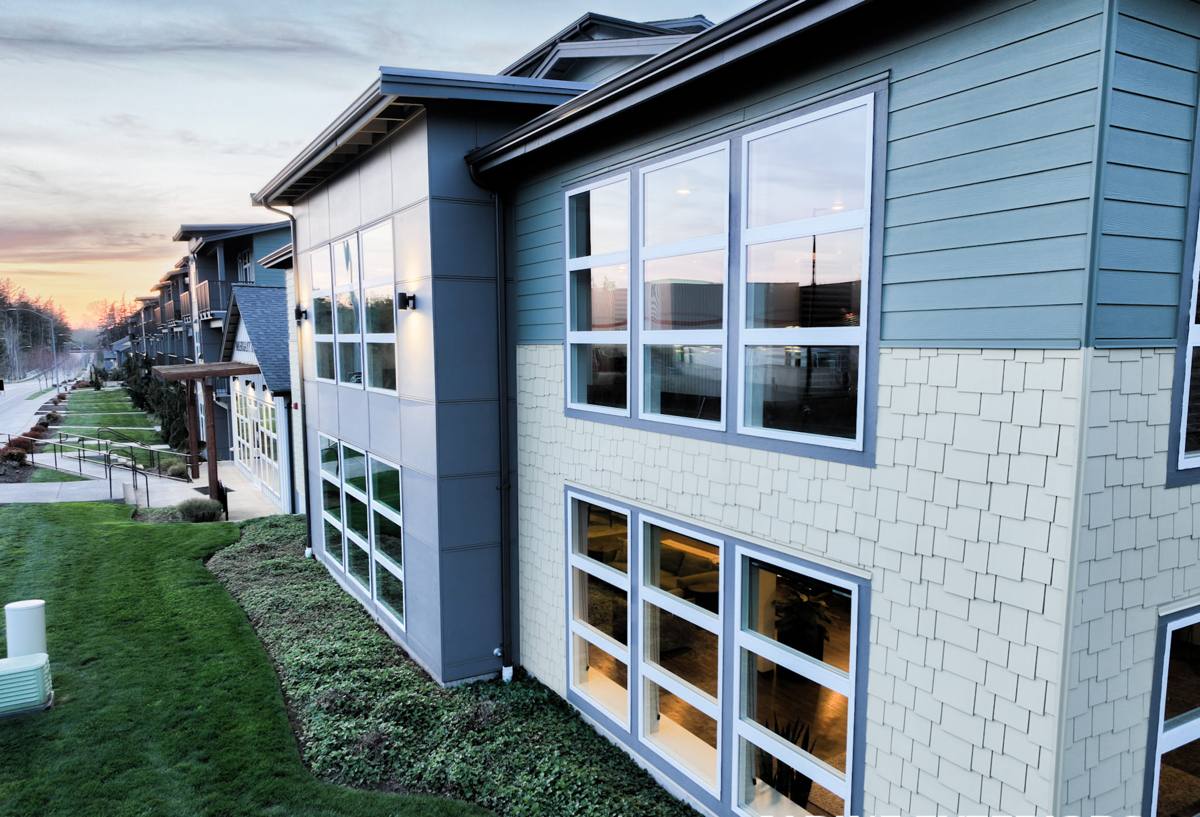
Anacortes Window Co installs one siding product: James Hardie fiber cement. We don't offer vinyl, LP SmartSide, Cemplank, Allura, primed spruce, or cedar, and that's a deliberate standard, not a limitation on what we're capable of installing. We made that call because of what we've consistently seen happen to other siding materials in this specific climate over years of exposure.
Fiber cement is cement, sand, and cellulose fiber pressed and cured into a rigid board. It doesn't absorb water the way wood-based products can, it won't soften or delaminate at cut edges the way engineered wood siding sometimes does once moisture gets behind it, and it's non-combustible. James Hardie's HardieZone system also engineers products specifically for the Pacific Northwest's wet marine climate (the HZ5 line), rather than shipping a single national spec everywhere. For a market like Sedro-Woolley — wet, shaded, and moss-prone — that regional engineering matters more than it would in a drier part of the country.
That doesn't mean every other product is a bad product. Vinyl is inexpensive and low-maintenance in the right setting. LP SmartSide performs well in many climates. Cedar has real curb appeal and a long history in this region. We simply don't think any of them hold up as well as fiber cement does against this area's combination of rain volume, humidity, and moss pressure, and we'd rather install one product well than offer several we don't fully stand behind.
ColorPlus Finish vs. Field-Applied Paint
Most of the siding failures we get called out to look at aren't the siding material itself — they're the paint. Field-applied paint on any siding substrate is exposed to UV, moisture, and temperature swings starting the day it's rolled or sprayed, and it's only as good as the prep work and coat thickness applied on-site, often in weather that isn't ideal for curing paint. James Hardie's ColorPlus Technology finish is baked on in a controlled factory environment, backed by a finish warranty that travels with the product. In a climate where a north-facing wall can go days between real drying time, that factory-cured finish is doing genuine work, not just adding curb appeal.
What a Correct Siding Installation Actually Involves
Siding is a water-management system, not just a covering. The visible board is only one layer. What's behind it — and how each layer overlaps the one below it — determines whether the wall assembly stays dry or slowly rots from the inside where nobody notices until the damage is expensive to fix.
Moisture Management Behind the Board
- A weather-resistive barrier (housewrap or building paper) installed and lapped correctly, shingle-style, so water sheds down and out instead of pooling behind a seam
- Rigid or self-adhered flashing at every window, door, and penetration, integrated with the weather-resistive barrier — not just caulked over the top after the fact
- A drainage plane or rainscreen gap where conditions call for it, so any moisture that does get behind the siding has somewhere to drain instead of sitting against the sheathing
- Proper kick-out flashing at rooflines where a roof edge meets a sidewall, one of the most common sources of hidden rot we find on homes in this region
Fastening, Clearances, and Exposure
James Hardie specifies fastener type, spacing, and placement for a reason. Under-driven or over-driven nails, wrong fastener spacing, or blind-nailing where face-nailing is required can void the manufacturer's warranty and shorten the siding's real service life, regardless of how good the board itself is. Ground clearance and gaps at decks, patios, and roof lines matter just as much: siding installed too close to grade, concrete, or roofing wicks moisture no matter what it's made of. Getting these details right the first time is the difference between siding that quietly lasts decades and siding that needs attention again in five years.
Comparing Siding Options for a Sedro-Woolley Home
| Factor | James Hardie Fiber Cement | Vinyl | Engineered Wood (LP SmartSide) | Cedar |
|---|---|---|---|---|
| Moisture behavior | Doesn't absorb water; resists rot and delamination | Doesn't absorb water, but can warp and gap at seams over time | Wood-based; vulnerable if moisture reaches cut edges or fasteners | Natural wood; absorbs and releases moisture constantly |
| Moss/algae resistance | Factory finish resists staining and cleans up well | Can stain and hold algae in shaded, damp areas | Prone to surface growth if the finish isn't maintained on schedule | Prone to moss and graying without regular upkeep |
| Fire rating | Non-combustible | Combustible; can soften or deform near heat sources | Combustible | Combustible |
| Finish durability | Factory-cured ColorPlus finish with its own warranty | Color is molded in but can fade or chalk over time | Field or factory finish; on its own maintenance cycle | Needs regular staining or sealing to hold color |
| Typical upkeep | Periodic rinse; long repaint cycle if not ColorPlus | Occasional wash, limited repair options if damaged | Regular inspection and touch-up of finish and seams | Annual to biannual staining or sealing |
This is a general comparison, not a claim that every other product is prone to failure — it's meant to show the trade-offs we weigh before recommending a material for a wet, shaded, coastal-influenced climate like this one.
What Drives the Cost of a Siding Job in This Area
Every home is different, so we don't quote pricing without seeing the house, but a few factors consistently move the number more than others:
| Cost Factor | Why It Matters |
|---|---|
| Condition of the existing sheathing | Hidden rot found during tear-off means repair before new siding can go on — this is common enough in this climate that we plan for the possibility |
| Siding profile chosen | Lap siding, panel siding, and shingle-style products differ in material and labor |
| Trim complexity | Homes with lots of window trim, corner boards, and roof intersections take more time to flash and finish correctly |
| Home height and access | Multi-story walls and steep or obstructed sites require more setup and safety equipment |
| Tear-off vs. new construction | Removing and disposing of old siding adds labor that a bare-wall install doesn't have |
Our Installation Process
- On-site evaluation of the existing siding, sheathing, and known trouble spots (window returns, roof-to-wall intersections, deck ledger areas)
- Removal of the old siding and inspection of the sheathing underneath for hidden moisture damage before anything new goes on
- Repair or replacement of any compromised sheathing — covering over rot is how a small problem quietly becomes a structural one
- Installation of the weather-resistive barrier and flashing system, detailed at every window, door, and penetration
- James Hardie lap, panel, or shingle siding installed to manufacturer fastening and clearance specifications
- Trim work, caulking at appropriate joints only, and a final walkthrough with the homeowner
We don't skip the tear-off-and-inspect step to save time. In a climate this wet, what's happening behind the old siding often tells us more than what we can see on the surface, and it's the only reliable way to make sure new siding isn't going over a problem that will keep growing underneath it.
Signs Sedro-Woolley Homeowners Should Watch For
Not every home needs full replacement right away. These are the signs worth having evaluated before they turn into structural repairs:
- Soft or spongy spots when you press on the siding, especially near the bottom courses or under windows
- Persistent moss or dark streaking that comes back quickly after cleaning
- Visible gaps, warping, or buckling in panels or boards
- Paint that's peeling, bubbling, or chalking well ahead of its expected life
- Musty smells, peeling paint, or discoloration on interior walls that back up to exterior siding
- Siding installed tight against a roofline, deck, or patio with little to no clearance gap
Why Local Experience in Skagit County Matters
A siding crew that mostly works drier inland climates doesn't always treat kick-out flashing, rainscreen gaps, or moss-resistant detailing as a first priority, because they haven't had to. Working Anacortes, Sedro-Woolley, and the rest of Skagit County day in and day out means we're used to designing every detail around water: where it comes from, where it wants to go, and how to make sure it never gets a chance to sit against a wall. That's not a sales point — it's just what the job actually requires here.
It also means we've opened up enough old siding on homes in this area to know what tends to fail first, and why. That experience is a big part of why we stopped installing anything but fiber cement in a climate this consistently wet.
Maintenance After Installation
James Hardie siding is low-maintenance, not no-maintenance. A rinse-down once or twice a year removes organic buildup before it gets a foothold, and keeping gutters clear and vegetation trimmed back from walls goes a long way in a climate where shade and moisture are the norm rather than the exception. If you ever notice caulking pulling away at a trim joint, having it addressed early keeps a small item from turning into a moisture problem behind the wall.
If your Sedro-Woolley home's siding is showing its age, or you're weighing a repaint against replacement, we're glad to take a look and give you a straightforward, no-pressure estimate — just an honest read on what your home actually needs.