 Anacortes Window
 Storm Damage Roof Repair, Built for Ship Harbor's Weather
Ship Harbor sits right where Rosario Strait weather meets the west side of Fidalgo Island, and that location makes for a rough combination: wind-driven rain off the water, salt-laden air that eats at exposed metal and fasteners, and a wet season that runs long enough for moss to get a real foothold on north-facing roof slopes. When a windstorm or heavy rain event does damage to a roof out here, the fix has to account for all three of those things at once — not just patch the visible hole and move on.
This page covers what storm damage roof repair actually involves for homes in and around Ship Harbor, what we look for during an inspection, and how we approach the repair so it holds up through the next storm season instead of becoming a repeat call.
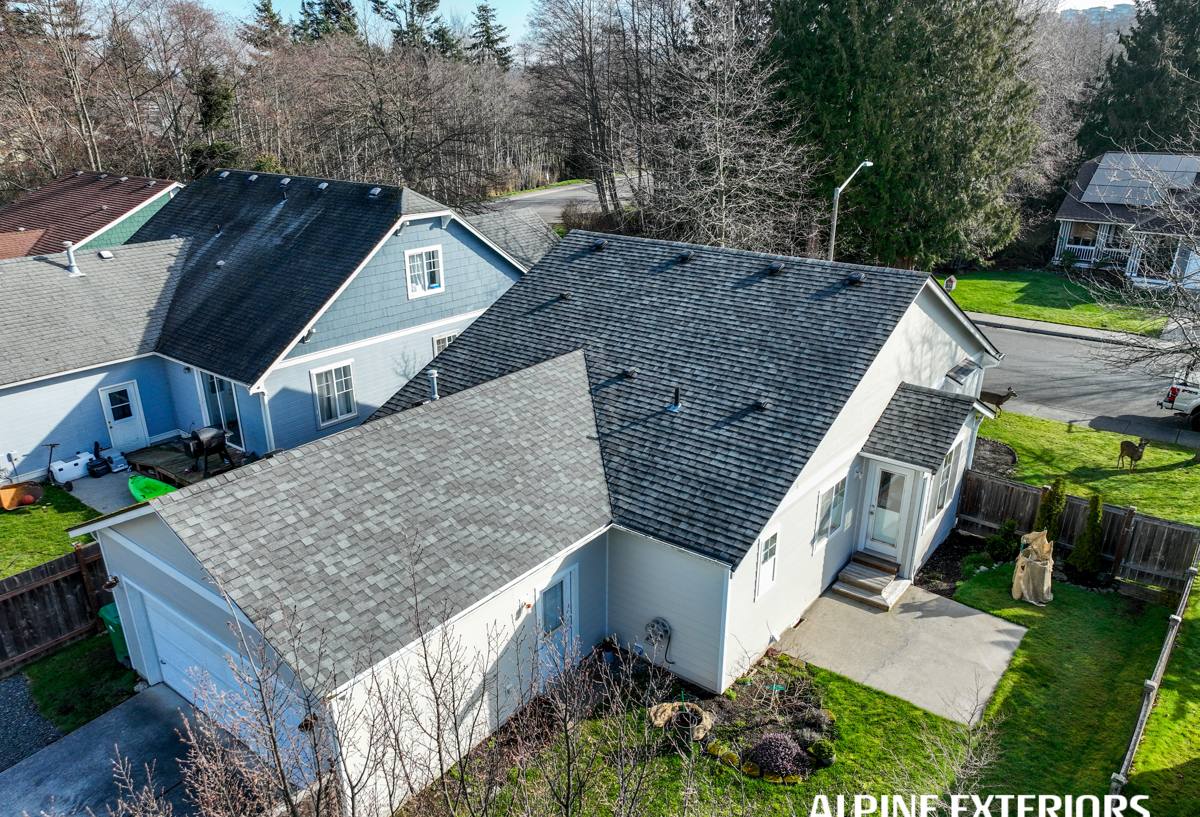
Why Ship Harbor's Climate Is Hard on Roofs
Every coastal community in Skagit County deals with wind and rain, but a few local conditions make Ship Harbor roofs age differently than roofs further inland.
Salt Air and Corrosion
Homes close to the water take on a steady dose of salt-laden air, even on calm days. Over time that air accelerates corrosion on exposed roofing fasteners, flashing seams, and any metal roof-vent components that aren't rated for coastal exposure. A fastener that's rusted through is a common hidden cause of a leak that shows up during a storm — the roof looks fine until wind pressure finds the weak point.
Driving Rain and Wind Direction
Storms coming off the Strait tend to drive rain sideways into a roof rather than straight down. That matters for repair work because a patch that would hold up fine on a calm-weather leak can still fail under wind-driven rain if flashing laps and shingle courses aren't oriented and sealed correctly for the direction the water is actually coming from.
A Long Moss Season
Anacortes gets enough sustained damp weather that moss can establish on shaded, north-facing, or tree-covered roof sections for much of the year. Moss doesn't just look bad — it holds moisture against the roofing material, lifts shingle edges, and works into nail holes and seams. A roof with an active moss problem is more vulnerable to storm damage because the surface is already compromised before the wind and rain show up.
What Counts as Storm Damage
Storm damage isn't always a dramatic hole in the roof. Some of the most common issues we find after a wind or rain event in Ship Harbor are easy to miss from the ground:
- Shingles lifted, cracked, or blown off entirely, especially along ridge lines and roof edges where wind uplift is strongest
- Flashing pulled loose or bent around chimneys, skylights, and roof-to-wall transitions
- Granule loss on asphalt shingles from wind-driven rain and debris impact, which shortens the shingle's remaining service life
- Gutter and downspout damage that redirects water onto the roof edge or fascia instead of away from the house
- Soft or discolored decking under a section of roofing, usually a sign that a slow leak was already underway before the storm made it worse
- Moss or debris buildup that trapped water against the roof surface during heavy rain, contributing to a leak that looks storm-related but has a longer history
Some of these are obvious after a walk around the property. Others only show up on the roof itself or from inside the attic, which is why a proper inspection matters more than a driveway assessment.
What a Correct Repair Actually Involves
A storm damage repair done right isn't just replacing the shingles you can see are missing. It involves a few steps in sequence:
1. Full-Slope Inspection, Not Just the Damaged Spot
Wind damage rarely stays contained to one small area. We check the whole affected slope and adjacent flashing points, because a storm strong enough to tear off a section of shingles has usually stressed the fasteners and seams around it too, even where nothing is visibly missing yet.
2. Decking Check Before Anything Goes Back On
If water got underneath the roofing material, the decking underneath needs to be checked for soft spots or rot before new shingles or underlayment go down. Covering over compromised decking is how a repair fails again within a season or two.
3. Matching Materials Where Possible
We match shingle type, color, and exposure as closely as the existing roof allows, so a repaired section doesn't stand out and, more importantly, so the repair integrates properly with the surrounding courses rather than sitting as a patch on top of them.
4. Flashing Done for Wind-Driven Rain
Given how often rain here comes in sideways, flashing laps, step flashing at wall intersections, and any exposed seams get extra attention. A flashing repair that would pass in calmer weather still needs to hold under lateral wind pressure.
5. Fasteners Rated for Coastal Exposure
Given the salt air near the water, we use fasteners and flashing components suited to that exposure rather than standard-grade hardware that will corrode faster this close to the Strait.
Our Process, Start to Finish
| Step | What Happens |
|---|---|
| Initial contact | We ask what you're seeing (missing shingles, active leak, ceiling stains) and how recent the storm event was, so we can prioritize active leaks |
| On-site inspection | Roof surface, flashing points, attic if accessible, and gutters — documented with notes on exactly what's damaged and why |
| Written scope and estimate | A clear breakdown of what needs repair versus what's still sound, so you're not paying to replace more roof than necessary |
| Repair work | Matched materials, correct flashing detail, decking replaced only where actually compromised |
| Cleanup and walkthrough | Debris removed, work areas checked, and we point out anything else worth keeping an eye on going forward |
If you're filing an insurance claim for storm damage, we can document the damage with clear notes and photos to support that process, though the claim itself is between you and your insurer.
Repair vs. Replace: What Actually Drives That Decision
Not every storm-damaged roof needs full replacement, and not every roof can be reasonably patched. The honest answer depends on a few factors:
| Factor | Leans Toward Repair | Leans Toward Replacement |
|---|---|---|
| Extent of damage | Isolated to one slope or section | Spread across multiple slopes or the whole roof |
| Roof age | Well within its expected lifespan | Already near end of service life |
| Decking condition | Solid, no rot found | Soft or rotted decking in multiple areas |
| Material availability | Matching shingles still available | Discontinued product, hard to match |
| History of moss or moisture issues | Isolated incident | Recurring problem across the roof |
We'll tell you plainly which side of that table your roof falls on. Recommending a full replacement when a targeted repair would genuinely hold up doesn't serve you, and it doesn't build the kind of local reputation we want in Ship Harbor.
What to Do Right After a Storm
How you handle the first day or two after storm damage affects how well the eventual repair goes. A quick checklist:
- Check your attic or top-floor ceilings for water stains, drips, or damp insulation — early signs of a leak
- Look at the roofline from the ground for obviously missing or lifted shingles, but don't get on the roof yourself
- Clear debris from gutters and downspouts if it's safe to do so, since blocked drainage can turn a minor leak into a bigger one
- Photograph visible damage from the ground for your own records, especially if you plan to file an insurance claim
- Get a temporary tarp over any active leak as soon as possible if you can safely access the area, or have a contractor do it
- Schedule a full inspection rather than waiting to see if it "dries out on its own" — hidden moisture doesn't resolve itself
Preventing the Next Round of Storm Damage
Given how often storms roll through Skagit County in the fall and winter, a repair is a good moment to address the conditions that made the damage worse in the first place.
Moss Management
If moss contributed to the damaged area, treating it and improving airflow to that section of roof (trimming back overhanging branches where possible) reduces how fast it comes back. Left unaddressed, moss will keep working into the same seams and shingle edges year after year.
Gutter and Drainage Upkeep
Roof edge damage is often made worse by gutters that can't keep up with heavy rain. Making sure gutters are clear and properly pitched before the next wet season reduces the chance water backs up under the roof edge during a storm.
Fastener and Flashing Checks
Because salt air corrodes exposed metal faster this close to the water, it's worth having flashing and exposed fasteners checked periodically rather than waiting for a leak to announce the problem.
Why It Matters to Hire a Crew That Already Works in Ship Harbor
Roofing crews that work regularly in this specific area already know what wind-driven rain does to flashing here, how fast salt air corrodes standard hardware near the water, and how long moss season really runs on shaded slopes in this part of Anacortes. That's not something you get from a crew that mostly works inland or in a different climate zone. It shows up in the details — which fasteners get specified, how flashing laps are oriented, and which roof sections get flagged for extra attention during an inspection.
It also means a faster, more accurate estimate. When you already understand the typical roofing systems and common trouble spots in a neighborhood, you spend less time guessing and more time getting the actual scope of work right the first time.
Get a Straight Answer on Your Roof
If a recent storm left you with missing shingles, a new leak, or just some peace-of-mind questions about your roof's condition, we're happy to take a look. We'll give you a clear, honest assessment of what's actually damaged, what it needs, and what it doesn't — no pressure, no inflated scope. Request a free estimate using the form below and we'll get back to you to schedule a time to come out.