 Anacortes Window
 Why Siding Choice Matters in Ship Harbor
Homes near Ship Harbor sit close to the water, which means they take a different kind of weathering than houses a few miles inland in Anacortes. The exposure here is a combination of three things working against a house at the same time: salt-laden air coming off the water, wind-driven rain that gets pushed sideways into wall assemblies rather than just falling straight down, and a long, damp shoulder season each year that gives moss, algae, and mildew plenty of time to take hold. Siding in this location isn't just a cosmetic layer — it's the first line of defense for the wall assembly behind it, and it needs to hold up to all three of those stressors at once, year after year.
We install fiber cement siding for homeowners throughout Skagit County, but Ship Harbor's shoreline exposure is a good example of why we don't treat every job the same. A house two blocks from the water needs different flashing details, different fastener choices, and a different maintenance conversation than a house set back in a more sheltered part of town.
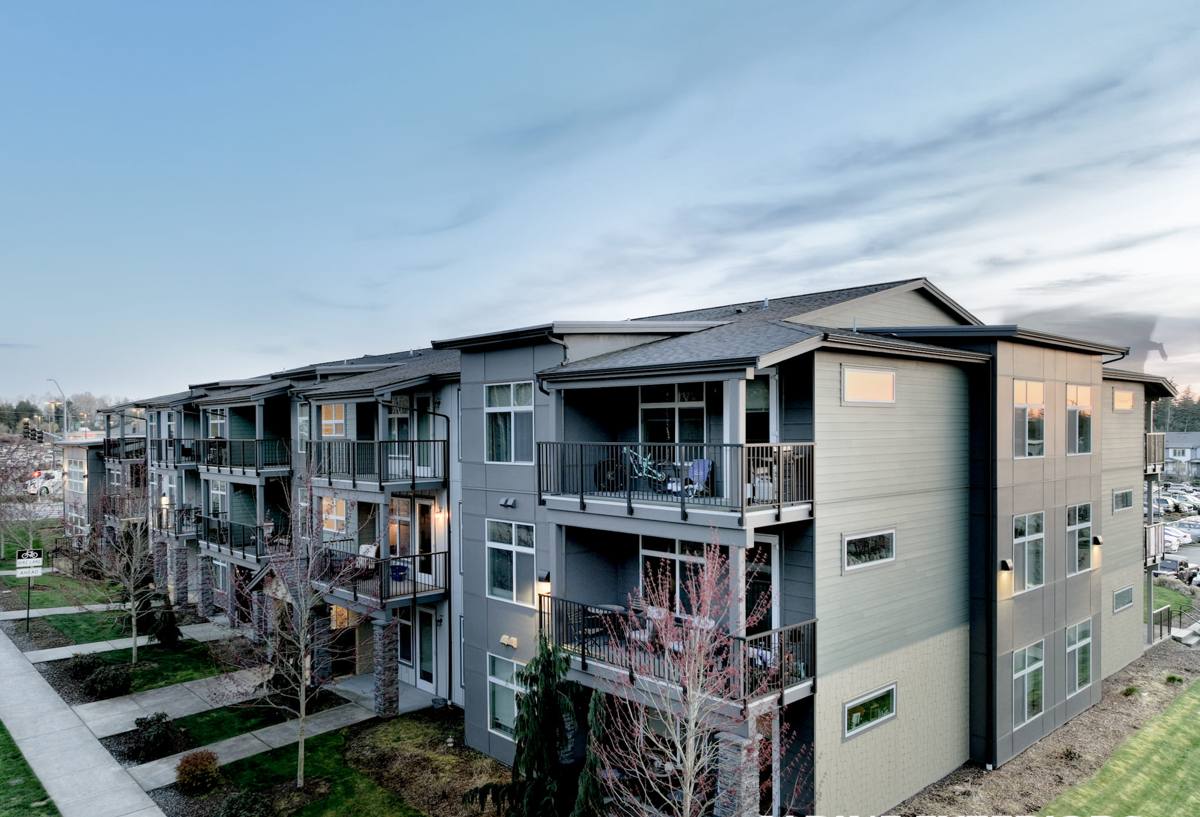
What Salt Air, Driving Rain, and Moss Season Actually Do
Salt Air
Airborne salt is corrosive to exposed metal — fasteners, flashing, trim edges, and hardware. Over time it also accelerates the breakdown of coatings that aren't formulated to resist it, leading to chalking, fading, and adhesion failure at the surface. Siding and trim near the water need factory finishes and hardware rated for that exposure, not standard-grade materials.
Driving Rain
Wind off the water doesn't let rain run straight down a wall — it drives it sideways and upward into laps, seams, and penetrations. Any siding system that relies on gravity alone to shed water, or that has gaps in its water-resistive barrier, will eventually let moisture behind the cladding. Once water gets behind the siding in a marine climate, it has very little chance to dry out before the next system rolls through.
Moss Season
Anacortes gets a long stretch of cool, wet weather each year, and shaded or north-facing walls near Ship Harbor can stay damp for extended periods. That's exactly the environment moss, algae, and mildew need to establish themselves on a wall surface. Porous or absorptive siding materials hold onto that moisture and feed the growth; a properly finished, low-absorption surface sheds it instead.
Why We Install Only James Hardie Fiber Cement
We standardized on James Hardie fiber cement siding and don't install vinyl, LP SmartSide, or other fiber cement brands. That's a deliberate call based on what actually performs in a coastal-influenced climate like Ship Harbor's, not a sales preference.
- Non-combustible material: Fiber cement doesn't contribute fuel to a fire the way wood-based products can.
- Moisture-resistant composition: Fiber cement doesn't absorb and swell the way engineered wood siding can when it takes on repeated wetting.
- Factory-applied ColorPlus finish: The finish is baked on under controlled conditions, which gives it better fade and chalk resistance than field-applied paint, and it's backed by its own finish warranty.
- Climate-engineered HZ5 product line: James Hardie makes region-specific formulations, and the HZ5 line is engineered for the Pacific Northwest's freeze-thaw and moisture cycling.
- Transferable warranty: A meaningful warranty only matters if the installation meets the manufacturer's spec — which is why our install details are not optional line items.
We're upfront with homeowners about the trade-offs of other products when asked — vinyl is inexpensive and low-maintenance but can warp under heat reflection and doesn't hold paint; engineered wood siding costs less up front but is more sensitive to sustained moisture exposure. Those trade-offs matter more in a marine environment than they would somewhere drier, and they're a big part of why we don't put those products on Ship Harbor homes.
What Correct Installation Involves Here
Fiber cement siding performs the way it's supposed to only when it's installed to spec. In a location like Ship Harbor, a few details matter more than they might elsewhere:
Water-Resistive Barrier and Flashing
A continuous, properly lapped weather-resistive barrier behind the siding is non-negotiable this close to the water. Every window, door, and penetration needs flashing that directs water out and down, not into the wall cavity. Butt joints and laps in the siding itself need to be flashed or sealed per manufacturer instructions, not just caulked over.
Clearances and Fastening
James Hardie specifies minimum clearances between the bottom of the siding and grade, roofing, decks, and walkways — those clearances exist specifically to keep splash-back and standing moisture away from the cut edges of the board, which are the most vulnerable point in the whole system. Fasteners need to be corrosion-resistant and set to the manufacturer's depth and spacing, especially given the salt exposure near the shoreline.
Cut-Edge Sealing
Any field-cut edge of a Hardie board needs to be primed or sealed before installation. This is a step that's easy to skip and impossible to see once the wall is closed up — and it's one of the most common places a shortcut installation fails first in a wet climate.
Our Process for a Ship Harbor Siding Job
- On-site assessment: We look at wall orientation, drainage patterns, existing moisture damage, and how exposed the home is to wind off the water before we scope the job.
- Tear-off and sheathing check: Old siding comes off and we inspect the sheathing underneath for rot or hidden moisture damage before anything new goes up.
- Water-resistive barrier and flashing installation: This layer goes in correctly the first time — it's the part of the job nobody sees again once the siding is on.
- Hardie panel or lap installation: Installed to manufacturer clearance, fastening, and joint-treatment specs.
- Trim, caulking, and final inspection: We walk the whole exterior before calling the job done, checking laps, corners, and penetrations.
- Site cleanup: Old materials and debris are hauled off; we don't leave a job site looking worse than we found it.
Comparing Siding Materials for a Marine-Exposed Home
| Factor | Vinyl Siding | Engineered Wood Siding | James Hardie Fiber Cement |
|---|---|---|---|
| Salt air resistance | Fair — can fade and become brittle over time | Fair — coating can wear faster near salt exposure | Good — factory finish engineered for coastal fade resistance |
| Moisture absorption | Low, but seams can trap water behind panels | Higher — swells and delaminates with sustained wetting | Low — resists swelling when installed correctly |
| Moss/algae resistance | Moderate — smooth surface, but sheltered areas still grow moss | Lower — porous surface holds moisture that feeds growth | Better — dense, low-absorption surface sheds moisture faster |
| Fire performance | Combustible | Combustible | Non-combustible |
| Finish warranty | Varies by manufacturer | Varies, often shorter | Backed by factory ColorPlus finish warranty |
A Homeowner's Checklist Before Hiring a Siding Crew Near Ship Harbor
- Ask whether the crew has worked on homes in the immediate area and understands the wind-driven rain exposure here.
- Confirm they follow James Hardie's published installation instructions for clearances, fastening, and joint treatment — not just "how we've always done it."
- Ask how field-cut edges are sealed and how flashing is detailed at windows, doors, and penetrations.
- Get written confirmation of what warranty applies — manufacturer product warranty, finish warranty, and workmanship warranty are three different things.
- Ask what happens to the sheathing if rot or hidden moisture damage is found during tear-off, and how that's priced.
Maintenance in a Marine Climate
Fiber cement siding is genuinely low-maintenance compared to wood, but "low-maintenance" doesn't mean "no maintenance," especially this close to the water. A rinse-down once or twice a year helps clear salt residue and organic buildup before it has a chance to establish itself, particularly on shaded, north-facing walls that stay damp longest through Anacortes's wetter months. Keeping gutters clear and grade/vegetation clearances intact around the base of the walls also goes a long way toward keeping moisture away from the most vulnerable parts of the siding system.
Why Local Experience Matters for This Job
A siding job done to spec in a dry inland climate can still fail early near the water if the crew doesn't account for the added exposure. Knowing how hard the wind pushes rain off Ship Harbor, how long north-facing walls stay wet into the season, and how much salt exposure the hardware needs to tolerate isn't something that shows up in a generic installation manual — it comes from having done the work in this specific area and seen what holds up and what doesn't over time.
If you're planning a siding project on a home near Ship Harbor, we're happy to take a look and walk you through what your house specifically needs. Reach out for a free, no-pressure estimate using the form below.