 Anacortes Window
 Windows Built for Ship Harbor's Weather, Not Just Any Weather
Ship Harbor sits close enough to the water that homes here take a different kind of beating than houses a few miles inland in Skagit County. Salt-laden air works on window hardware and finishes year-round. Wind-driven rain off Rosario Strait and the Guemes Channel finds its way into gaps that would stay dry elsewhere. And the long stretch of wet, low-sun months every fall through spring means moss and algae get a real foothold on anything that stays damp — including window sills, tracks, and trim. An energy-efficient window that works well in Spokane or even in a drier part of Puget Sound isn't automatically the right choice here. The frame material, the glass package, and the installation details all need to account for what this specific stretch of coastline throws at a house.
This page is about one job, done right, in one neighborhood: replacing or upgrading windows for energy efficiency in Ship Harbor. Not a general overview of window brands, not a sales pitch — just what actually matters for homes in this area and what a correct installation looks like.
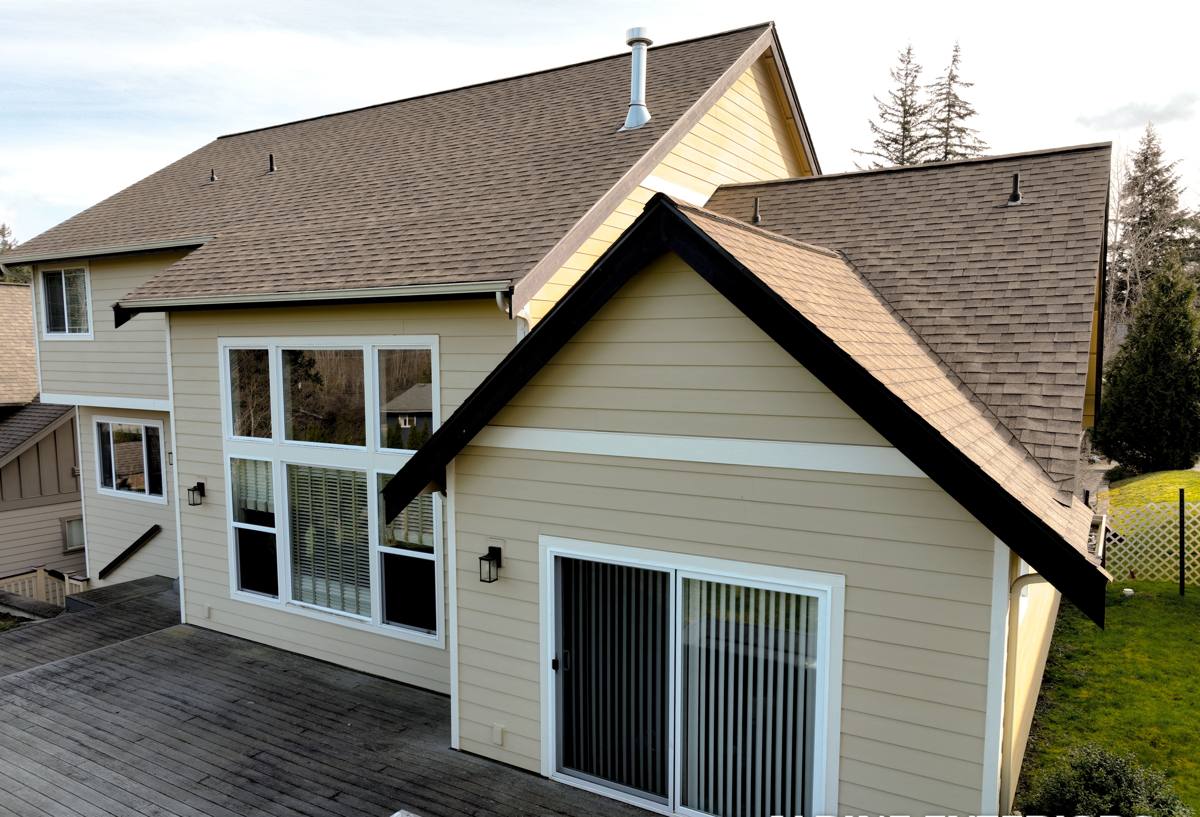
What Ship Harbor Homes Actually Need From Their Windows
Salt Air and Hardware Longevity
Airborne salt accelerates corrosion on exposed metal — hinges, locks, balance systems, and screen frames all take the hit over time. Vinyl and fiberglass window frames handle salt exposure better than bare aluminum because they don't corrode the same way, but the hardware inside any window is still metal. The difference between a window that operates smoothly in year ten and one that's seized up or streaked with corrosion often comes down to the quality of the hardware and whether it was rated for coastal exposure in the first place.
Driving Rain and Water Management
Wind off the water doesn't just rain down — it pushes rain sideways and up under trim, sills, and poorly sealed flanges. A window can have excellent glass and still leak if the flashing, sill pan, and sealant details around it aren't done correctly. In our experience, most window-related water problems in this area trace back to the installation, not the window unit itself. That's a big part of why we treat the install process as seriously as the product selection.
Moss, Algae, and Prolonged Dampness
Skagit County's long wet season means anything that holds moisture — a sill that doesn't shed water, a track that collects debris, a frame corner that stays shaded and damp — becomes a place for moss and algae to take hold. That's mostly a maintenance and design issue rather than a glass issue, but it affects which frame profiles and sill details make sense for a home in Ship Harbor versus a drier inland location.
Energy Efficiency: What It Actually Means Here
"Energy-efficient" gets used loosely in this industry. For a Ship Harbor home, the practical goals are:
- Reducing heat loss through the glass and frame during the long heating season common to the Pacific Northwest
- Cutting drafts and cold spots near windows, which is often what homeowners actually notice most
- Controlling condensation on interior glass during cold, damp stretches
- Keeping the building envelope sealed against wind-driven moisture, which protects both energy performance and the structure behind the wall
Double-pane or triple-pane glass with a low-E coating and an insulated spacer is the baseline for this climate. Triple-pane adds cost and weight and isn't always the right call for every opening — for a lot of homes in this area, well-installed double-pane low-E glass with a good frame delivers most of the comfort benefit at a more reasonable price point. We'll walk through that trade-off honestly rather than defaulting to the most expensive option.
Frame Material Comparison for Coastal Skagit County Homes
| Frame Material | Salt/Moisture Behavior | Maintenance | Typical Fit for Ship Harbor |
|---|---|---|---|
| Vinyl | Does not corrode; won't rot | Low — occasional cleaning | Strong all-around choice for coastal exposure and value |
| Fiberglass | Excellent — very stable, resists warping | Low | Good for larger openings or where long-term stability matters most |
| Wood (unclad) | Vulnerable to moisture without diligent upkeep | High — repainting/sealing needed | Requires real commitment to upkeep this close to the water |
| Wood-clad | Better than bare wood; cladding protects the exterior face | Moderate | Workable if interior wood look is a priority |
| Aluminum | Prone to corrosion and higher heat transfer | Moderate | Generally not our first recommendation for direct coastal exposure |
These are general trade-offs, not a ranking of specific manufacturers — plenty of good products exist in each category, and the right pick depends on the home, the budget, and how much upkeep a homeowner wants to take on.
What a Correct Installation Involves
The window unit is maybe half the job. The other half — arguably the more important half for a coastal property — is how it's installed. For Ship Harbor homes, we pay particular attention to:
- Removing old windows without damaging the surrounding framing, and inspecting that framing for hidden rot or water staining before anything new goes in
- Installing a proper sill pan flashing so any water that gets past the window drains outward instead of into the wall
- Sealing and flashing the head and side flanges in the correct shingle-lap order so water sheds down and out, not into the seams
- Using sealants and materials rated for exterior, UV, and salt exposure rather than generic caulk
- Insulating the gap between the window frame and rough opening properly — under-insulating leaves cold spots, over-packing can bow the frame
- Checking that the window operates smoothly and sits plumb and square before final trim goes back on
Skipping any one of these steps is how a good window ends up with a bad reputation. We treat the installation checklist as non-negotiable, regardless of which product line a homeowner chooses.
Signs a Ship Harbor Home May Be Due for a Window Upgrade
- Visible condensation or fogging between panes, which usually means a failed seal
- Drafts near the window frame even when it's fully closed and locked
- Hardware that's stiff, corroded, or won't latch securely anymore
- Soft or discolored trim and sill wood, which can point to water intrusion behind the window
- Moss or dark staining building up on sills or lower frame sections year after year
- Noticeably colder rooms near windows during winter compared to the rest of the house
Any one of these on its own might just need a repair. Several together, especially on an older window, usually mean replacement makes more sense than continuing to patch it.
Our Process for Ship Harbor Projects
1. On-Site Assessment
We look at the actual condition of each opening — framing, existing flashing, sun and wind exposure — rather than quoting off a general assumption. Homes even a few blocks apart in Ship Harbor can have different exposure depending on how they sit relative to the water and prevailing wind.
2. Product Recommendation Based on the Opening, Not a Default Package
We'll tell you where triple-pane makes sense, where it doesn't, and where a mid-range vinyl window with solid installation will outperform a premium window installed poorly. The goal is the right fit for the home and budget, not the most expensive line item.
3. Careful Removal and Installation
Old units come out with attention to the surrounding structure. New sill pans, flashing, and air-sealing go in following the sequence above, every time, on every window.
4. Final Check and Walkthrough
Before we consider a job finished, every window gets operated, checked for square and smooth function, and reviewed with the homeowner so there are no surprises later.
Why a Crew That Already Works Ship Harbor Matters
There's a real difference between a crew that installs windows generically and one that already understands the specific exposure conditions of a neighborhood like Ship Harbor. Knowing which direction the driving rain typically comes from, how much salt exposure a given block gets, and how long moisture tends to sit on north-facing sills during Skagit County's wet season all shape small decisions during installation — the kind of decisions that determine whether a window is still performing well in fifteen years or leaking in three. We work in Anacortes and the surrounding Skagit County area regularly, and that familiarity with local conditions is part of what we bring to every estimate.
Get a Straightforward, No-Pressure Estimate
If your windows in Ship Harbor are drafty, fogging, showing water damage, or just old enough that you're wondering whether repair or replacement makes more sense, we're happy to take a look and give you an honest read on the options. Use the form below to request a free estimate — no pressure, no upsell, just a clear assessment of what your home actually needs.