 Anacortes Window
 Building a Deck That Holds Up in Sedro-Woolley
Sedro-Woolley sits inland from the water, but it doesn't escape what makes deck-building in Skagit County different from deck-building in a drier climate. Long stretches of driving rain, ground that stays damp well into late spring, and a moss season that can run from October through April all put real, ongoing stress on an outdoor structure. A deck that's built the way it would be built in Arizona or eastern Washington will not hold up the same way here. The materials, the fastener choices, and even the framing details need to account for a place where wood surfaces rarely get more than a few dry days in a row for months at a time.
That's the lens we build through: not "what's the cheapest way to get a deck up" but "what actually survives a Skagit County winter, and the one after that, and the one after that."
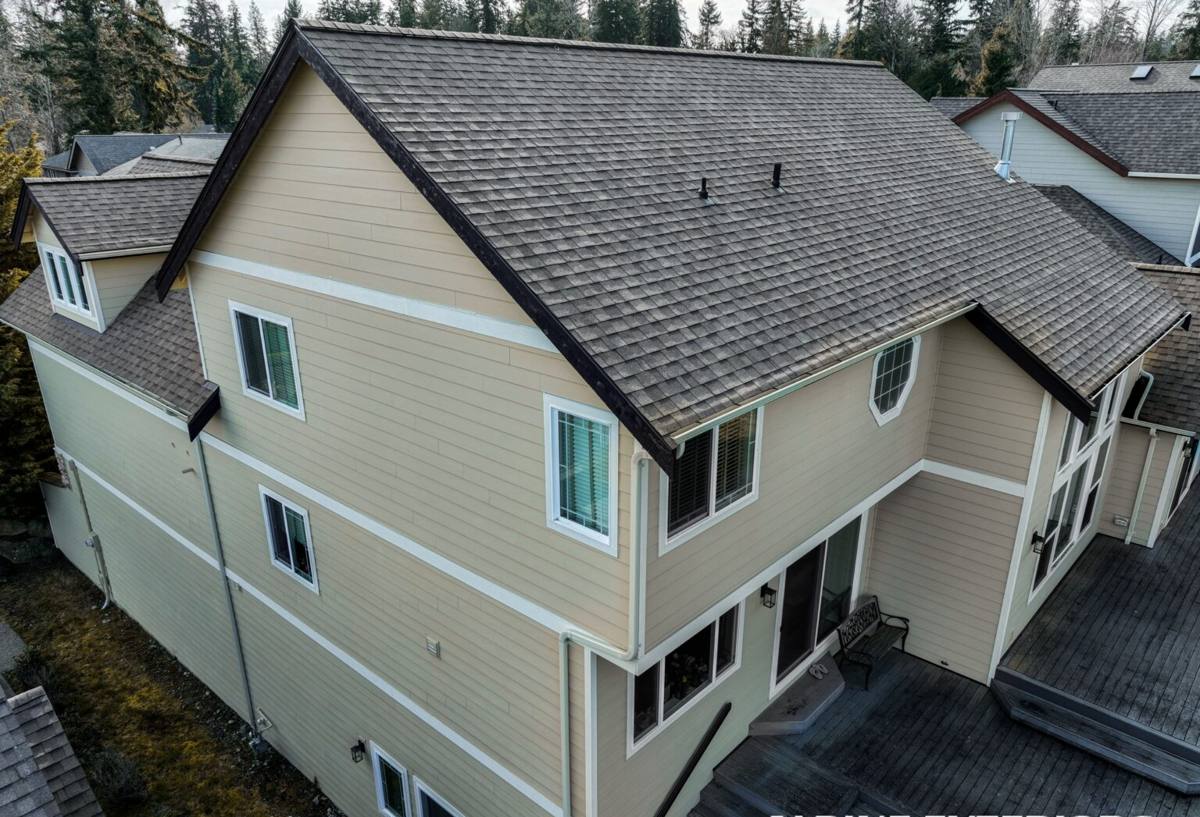
What Local Conditions Actually Do to a Deck
Homeowners often assume deck problems are about the boards wearing out. In practice, most failures start underneath or at the connection points, not on the walking surface.
Moisture that doesn't fully leave
Skagit County's damp air and driving rain mean decks here dry out slower than in most parts of the country. Water gets driven sideways under eaves and against house walls, and it settles into low spots, end grain, and anywhere two pieces of material meet without a gap. If a deck's framing was built assuming quick drying, moisture just sits there instead.
Moss and organic growth
The same conditions that make Skagit County green make moss and algae grow readily on any horizontal wood surface that stays shaded and damp. Moss holds moisture against the board even longer than the rain alone would, and on stairs and ramps it turns a walking surface slick. A deck built without airflow underneath, or with boards installed too tight, gives moss exactly the environment it wants.
Ground moisture and slower-drying soil
Inland lots around Sedro-Woolley often have heavier, slower-draining soil than you'd find right on the water. That matters for footings and posts — if water pools around a support post base instead of draining away, that post is sitting in wet ground for weeks at a stretch, which accelerates rot at exactly the point that's hardest to inspect and hardest to fix.
Where Decks Actually Fail: The Connection Points
Almost every deck failure we get called out to inspect traces back to one of a handful of connection points, not the decking boards themselves.
- Ledger board attachment — where the deck meets the house. If this isn't flashed correctly, water gets behind the ledger and rots both the ledger and the house sheathing behind it, often invisibly for years.
- Post bases — posts set directly in concrete, or sitting flush against a base with nowhere for water to drain, rot from the bottom up.
- Joist tops — un-flashed joists absorb water through the top edge every time it rains, which is most of the year here.
- Fastener corrosion — the wrong screws or nails corrode, streak the decking, and eventually let go, especially in a damp climate that never fully dries between rain events.
- Stair stringers and treads — high-moisture, high-moss, high-use — these need attention that a lot of standard deck builds skip.
A correct deck build treats every one of these as a detail worth getting right the first time, because every one of them is expensive and disruptive to fix after the fact.
Decking Material Options: An Honest Comparison
There's no single "best" decking material — there's a best fit for how a homeowner wants to use and maintain the deck. Here's how the common options actually compare for a Skagit County climate.
| Material | Moisture behavior | Maintenance | Moss resistance | Typical lifespan here |
|---|---|---|---|---|
| Pressure-treated wood | Absorbs and releases moisture readily; needs to be allowed to dry and move | Regular cleaning and re-sealing/staining | Low — moss takes hold quickly if not cleaned | 10–15 years with upkeep |
| Cedar | Naturally moisture- and rot-resistant, but still an organic material | Periodic cleaning and finish maintenance to hold color and resist graying | Better than PT pine, still needs cleaning | 15–20 years with upkeep |
| Composite decking | Doesn't absorb water the way wood does; some older composites could hold surface moisture | Occasional washing; no staining or sealing | Moderate — surface texture matters, some composites shed moss more easily than others | 25+ years |
| PVC/capped composite | Fully moisture-sealed surface | Lowest — mostly just washing | Best of the manufactured options | 25–30+ years |
We don't push one material on everyone. A homeowner who wants a wood deck and is willing to keep up with cleaning and refinishing every couple of years can get a great result from cedar or quality pressure-treated lumber. A homeowner who wants to spend their weekends doing something other than deck maintenance is usually better served by composite or PVC decking, even with the higher upfront cost. What we won't do is put in an under-built substructure and call it done regardless of what decking goes on top — the framing has to be right no matter what surface material is chosen.
How We Build a Deck for This Climate
1. Site and drainage assessment
Before any design talk, we look at how water actually moves across the lot — where it drains, where it pools, how close the deck will sit to grade, and whether the ground under it holds moisture longer than it should.
2. Design around airflow, not just looks
Spacing, joist height above grade, and skirting choices are all decided with airflow in mind, not just appearance. A deck that can't breathe underneath will hold moisture and grow moss regardless of what decking material sits on top.
3. Correct flashing at every connection
Ledger boards get proper flashing and a water-tight connection to the house. Joist tops get flashing tape. Post bases are set to drain, not to trap water against the wood.
4. Fasteners matched to the material
Coated or stainless fasteners rated for ground contact and outdoor exposure — matched to whatever decking and framing material is actually being used, so there's no galvanic reaction or premature corrosion.
5. Permitting and inspection
Deck work in Skagit County jurisdictions typically requires a permit once you're above a certain height or attached to the structure — we handle that process and build to pass inspection, not just to look finished.
6. Final walkthrough
We walk the finished deck with the homeowner, point out what maintenance (if any) their chosen material needs, and make sure drainage and railings are exactly where they should be before we consider the job done.
Why a Crew That Already Works Sedro-Woolley Matters
Deck-building know-how that comes from working somewhere dry doesn't automatically transfer here. A crew that's used to Skagit County conditions already knows to flash a ledger board like it's going to see driving rain sideways, because it will. They already know which post base setups actually drain in the heavier soil common around Sedro-Woolley, and which ones just look fine until the third wet winter. That's not marketing — it's the difference between a deck that needs a rebuild in eight years and one that's still solid in twenty-five.
It also matters for permitting and inspection. A crew that regularly pulls permits in Skagit County jurisdictions knows what inspectors are actually looking for locally, which keeps the project moving instead of stalling on a correction.
What Ongoing Maintenance Actually Looks Like
Regardless of material, every deck in this climate needs some level of seasonal attention. Here's a realistic baseline:
- Sweep off leaves and debris regularly, especially in fall — trapped organic matter holds moisture and feeds moss growth
- Wash the deck surface at least once or twice a year to remove moss and algae before it takes hold, especially on shaded sections and stairs
- Check that gaps between boards haven't closed up from swelling or debris buildup — airflow between boards is part of what keeps them dry
- Inspect railings and stair connections annually for looseness
- For wood decks: reapply sealant or stain on the manufacturer's recommended schedule, not just "when it looks bad"
- Confirm downspouts and grading near the deck still direct water away from posts and footings
- Look underneath once a year — post bases and joist undersides are where problems start and are the easiest to miss
Cost Factors to Expect
Deck pricing depends on more than square footage. The factors below move the number the most:
| Factor | Effect on cost |
|---|---|
| Decking material (PT wood vs. cedar vs. composite vs. PVC) | Largest single factor — material cost per square foot varies widely |
| Height above grade / need for stairs | Taller decks need more substantial framing, railings, and stair structures |
| Attached vs. freestanding | Attached decks need ledger flashing work; freestanding decks need their own full footing system |
| Site access and grading | Difficult access or uneven ground adds labor for excavation and footings |
| Railing style | Cable, glass, or custom railing systems cost more than standard wood or metal baluster railing |
| Permit requirements | Adds time and a modest fee, but is not optional where required |
We give straightforward, itemized estimates so a homeowner can see exactly where the cost is going and where there's room to adjust the scope without cutting corners on the parts that determine how long the deck lasts.
Getting Started
If you're weighing a new deck, a rebuild, or you're just not sure whether an existing deck in Sedro-Woolley is sound, we're glad to come take a look. We'll give you a straight assessment of what your options are, what it would cost, and what it would take to build something that actually holds up to this climate. Use the form below to request a free, no-pressure estimate.