 Anacortes Window
 Why Roofs Wear Out Faster Near Oak Harbor
Oak Harbor sits close enough to the water — just across Deception Pass from Anacortes — that roofs here take a different kind of beating than roofs twenty miles inland. Salt-laden air corrodes exposed metal faster than it should. Driving rain off the Sound doesn't just fall straight down, it gets pushed sideways into laps, valleys, and flashing seams that were never designed to handle wind-driven moisture. And the mild, wet winters that make this part of Washington so livable are exactly the conditions moss and algae need to take hold and spread.
None of that means Oak Harbor roofs are doomed to fail early. It means the materials, the details, and the workmanship matter more here than they would in a drier climate. A roof that's installed correctly for this environment will hold up fine. One that's installed to a generic spec, or repaired one patch at a time for too many years, usually doesn't.
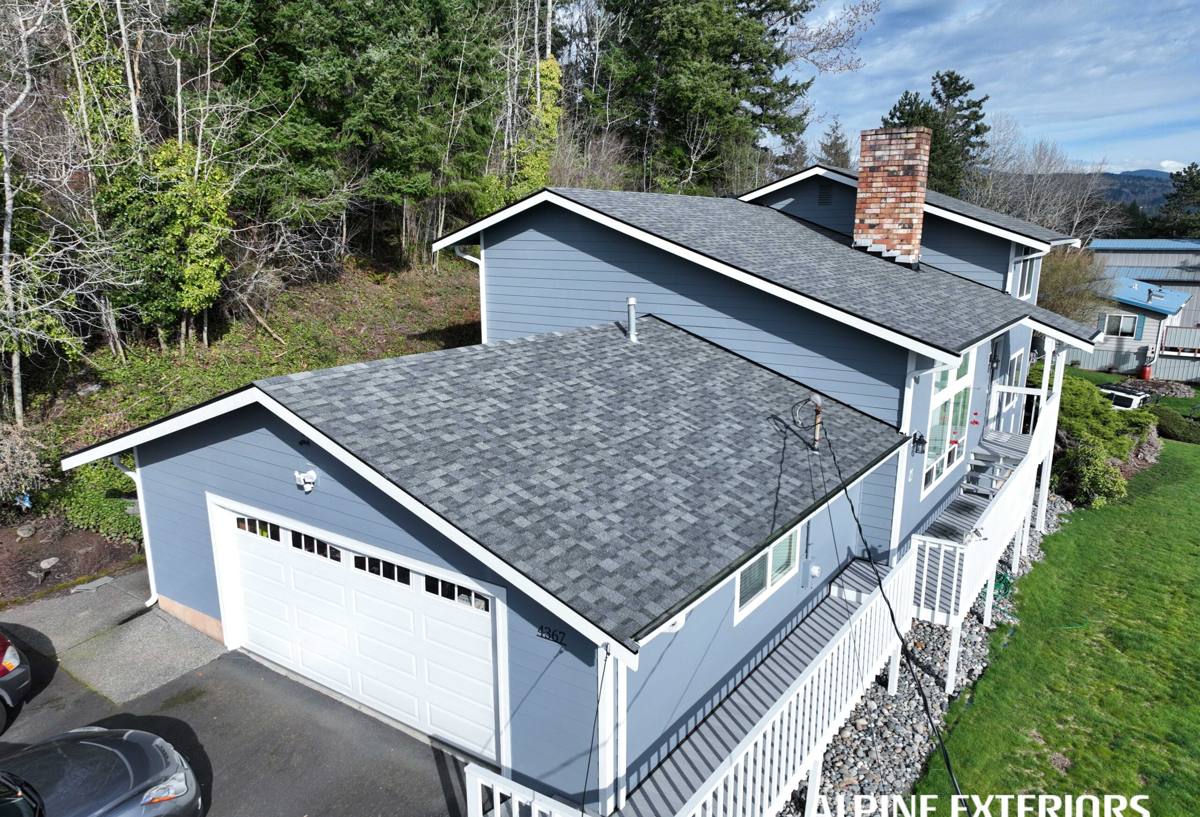
Signs a Roof Needs Replacing, Not Just Patching
A lot of homeowners call us assuming they need a full replacement when a repair would do — and a fair number call for "just a repair" when the roof is actually past the point where patching makes sense. Here's how we tell the difference.
Moss, Algae, and Granule Loss
Light surface moss on a shingle roof isn't automatically a replacement trigger — it can often be treated and controlled. What matters more is what's happening underneath. Moss that's been left to grow for several seasons lifts shingle edges, holds moisture against the roof deck, and accelerates rot in a way that surface treatment can't undo. Heavy, uneven granule loss (showing up as dark streaking or bald patches) means the shingles have lost the UV and weather protection they were built with, regardless of how the roof looks from the ground.
Wind and Storm Damage
Winter storms off the Strait can lift and crease shingles without tearing them off completely, which is deceptive — the roof looks intact but the seal is broken and water gets underneath during the next rain. Repeated storm damage in the same areas, especially on a roof that's already 15-20 years old, is usually a sign that patch-and-repair has stopped being cost-effective.
Choosing a Roofing Material for This Climate
There's no single "best" roofing material — there's a best material for your roof's pitch, your budget, and how much maintenance you're willing to do. For Oak Harbor's mix of salt air, wind, and moss pressure, the tradeoffs usually come down to these three options.
| Material | Moisture & Moss Behavior | Maintenance | Typical Lifespan |
|---|---|---|---|
| Asphalt composition shingle | Good when properly ventilated; algae-resistant granule options help but don't eliminate moss risk | Periodic moss/debris removal | 20-30 years |
| Standing seam metal | Sheds water and moss very well due to smooth, steep surface; needs correct fastener and coating spec near salt air | Low; occasional fastener/seam check | 40-50+ years |
| Synthetic/composite shingle | Resists moisture absorption better than wood shakes; moss resistance varies by product line | Low to moderate | 30-50 years |
We don't install cedar shake on this coastline as a standard recommendation. It's a beautiful material, but wood shake in a marine, moss-heavy climate demands a maintenance schedule most homeowners underestimate — and the moisture retention that makes it prone to rot and moss colonization is a structural risk over time, not just a cosmetic one. If a homeowner wants that look, we'll talk through synthetic shake alternatives that get closer to it without the same upkeep burden.
What a Correct Roof Replacement Actually Involves
A roof replacement is more than swapping old shingles for new ones. The parts that don't show are usually what determine whether the roof lasts 15 years or 30.
Tear-Off and Deck Inspection
We remove the old roofing down to the deck rather than layering over it. That's the only way to actually inspect the sheathing for soft spots, rot, or delamination — problems that are common under roofs that have been holding moisture near the eaves or in valleys for years. Any damaged decking gets replaced before anything new goes down; covering rotten sheathing with new shingles just hides the problem for a while.
Underlayment and Water Barriers
Along eaves, valleys, and around penetrations — the places wind-driven rain actually gets pushed into — we install ice-and-water shield membrane, not just standard felt or synthetic underlayment. This is one of the details that matters more here than in a drier inland climate, because it's the backup layer that keeps the house dry when wind pushes rain past the shingles themselves.
Flashing and Ventilation
Flashing at chimneys, skylights, sidewalls, and roof-to-wall transitions is one of the most common failure points on any roof, and it's where a lot of corner-cutting happens on cheap replacements. We rebuild flashing rather than reuse old pieces where there's any doubt about their condition. Attic and roof ventilation gets checked and corrected as part of the job too — proper airflow keeps the deck dry from underneath, which matters as much for moss and rot prevention as anything happening on the surface.
How We Handle a Replacement, Start to Finish
- On-site inspection and honest assessment — we tell you if repair is a reasonable option before we ever pitch a replacement.
- Written estimate that breaks out material, labor, and any deck repair contingencies, so there are no surprise change orders mid-project.
- Material selection conversation based on your roof's pitch, sun/shade exposure, and how much moss and maintenance you want to deal with long-term.
- Tear-off, deck inspection and repair, and full underlayment and flashing installation.
- New roofing installed to manufacturer spec, with attention to ventilation and the wind/rain details specific to this area.
- Site cleanup, including magnetic sweep for nails and debris removal, and a final walkthrough with you before we consider the job done.
Ventilation and Long-Term Moss Control
Moss and algae aren't a one-time problem you solve during a roof replacement and never think about again — they're an ongoing condition of living near the water in a mild, wet climate. What a good replacement does is stack the odds in your favor: correct ventilation to reduce the moisture the roof deck holds, algae-resistant shingle options where they make sense, and zinc or copper strip installation near the ridge on shingle roofs, which releases trace metal ions in rainwater runoff that inhibit moss growth on the surfaces below it. None of this makes a roof moss-proof. It reduces how often you need to deal with it and how aggressive that maintenance needs to be.
What Affects the Cost of a Roof Replacement
We're not going to quote a number here that doesn't mean anything without seeing your roof — every job is different — but these are the factors that actually move the price up or down.
| Factor | Why It Matters |
|---|---|
| Roof size and pitch | Steeper roofs take longer to work safely and require more fall-protection setup |
| Number of existing layers | Tear-off and disposal cost more when there are multiple layers of old roofing to remove |
| Deck condition | Rotted or soft sheathing found during tear-off adds material and labor not visible from the ground |
| Material choice | Asphalt, metal, and synthetic products carry different material and installation costs |
| Roof complexity | Valleys, dormers, skylights, and chimneys all add flashing work and time |
| Access | Steep lots, limited driveway access, or tight setbacks affect staging and disposal logistics |
A firm, itemized estimate after an in-person inspection is the only way to get a number you can actually rely on — anything given over the phone without seeing the roof is a guess.
What to Look for When Hiring a Roofer in Oak Harbor
- Washington state contractor license in good standing, plus liability insurance and workers' comp coverage
- Willingness to inspect the roof in person before quoting, not just from satellite photos
- A written estimate that itemizes tear-off, materials, underlayment, and any deck repair contingency pricing
- Clear manufacturer warranty terms in writing, separate from the contractor's own workmanship warranty
- Experience with the specific wind and moisture exposure of homes near the water, not just general roofing volume
- References or past work you can actually verify locally, not just a claim of experience
Why a Local Crew Matters for This Job
A roof replacement done by a crew that regularly works Oak Harbor and the surrounding Anacortes area isn't just a convenience — it changes how the roof is built. We know which flashing details tend to fail first on homes exposed to wind off the water, where ventilation problems typically show up in this climate, and how much moss pressure a given roof orientation is realistically going to see. That's the kind of judgment that comes from doing this work repeatedly in this specific environment, not from a generic install checklist.
It also means we're a known, reachable business if a question comes up two years after the job — not a crew that worked its way through the area once and moved on. If your roof is showing its age, or you're just not sure whether repair or replacement makes more sense, we're happy to take a look and give you a straight answer. Fill out the form below for a free, no-pressure estimate.