 Anacortes Window
 Fidalgo Island Puts Roofs Through a Different Kind of Wear
Homes on Fidalgo Island sit at the edge of the water, and that location shapes everything about how a roof ages here. The salt air coming off the surrounding waterways is corrosive to exposed metal fasteners, flashing, and vent housings well before most asphalt shingles reach the end of their service life. Add in wind-driven rain that comes sideways during winter storms, and you have a climate that finds every weak seam, every under-nailed shingle, and every gap in flashing far faster than a drier inland climate would.
Then there's moss. Fidalgo Island's mix of shade, moisture, and mild temperatures year-round creates a long moss season that can run nearly ten months out of twelve on north-facing slopes and roofs tucked under tree cover. Moss doesn't just look bad — it holds moisture against the roof deck, lifts shingle edges, and accelerates granule loss. A roof repair strategy built for a hot, dry climate simply doesn't hold up out here, and treating every leak the same way regardless of cause is how homeowners end up calling the same contractor back every year.
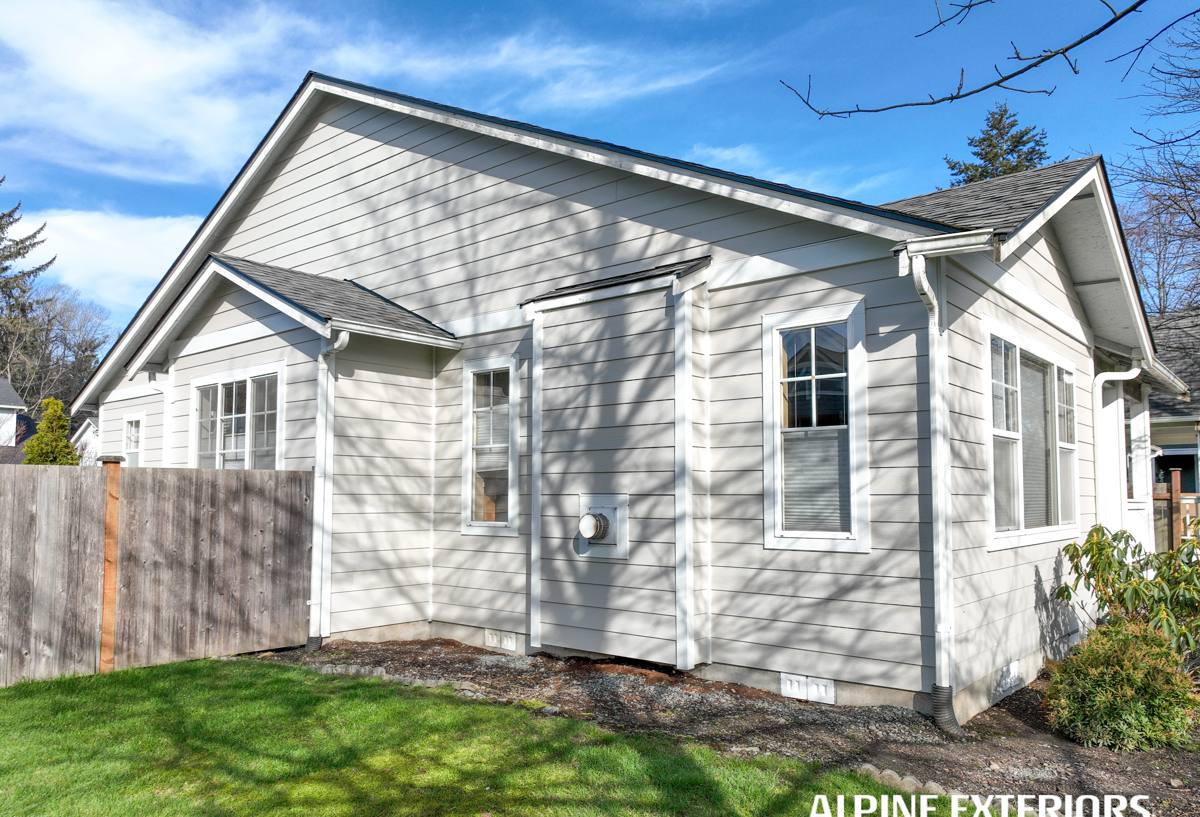
Signs Your Roof Needs a Repair — Not Necessarily a Full Replacement
Most roofs don't fail all at once. They fail in specific spots, usually where two materials meet or where wind and water find a shortcut. Catching these signs early is what keeps a repair a repair, instead of letting a small problem spread into deck rot that forces a full tear-off.
Interior warning signs
- Brown or yellow staining on ceilings, especially near chimneys, skylights, or where a lower roofline meets a wall
- Peeling paint or bubbling drywall in an upstairs room after a heavy rain
- A musty smell in an attic or upper closet that wasn't there before
- Daylight visible through the roof deck when viewed from the attic
Exterior warning signs
- Shingles that are cupping, curling, or missing granules in patches (not evenly across the whole roof)
- Cracked or lifted flashing around chimneys, vents, and skylights
- Moss buildup thick enough to hold visible moisture, particularly along shaded edges
- Granules collecting in gutters after storms
- Sagging in a specific section rather than the whole roofline
If what you're seeing is localized — one valley, one chimney, one section under a tree — that's usually a repair situation. Widespread granule loss, soft decking in multiple areas, or a roof already past its expected lifespan is a different conversation, and we'll tell you that honestly rather than patching something that needs to come off.
What a Correct Roof Repair Actually Involves
A lot of "roof repairs" are really just a bead of sealant over a symptom. That might stop a leak for a season, but it doesn't address why water found its way in. A repair done right traces the water back to its actual entry point, which is often several feet from where the stain shows up inside, since water travels along the deck and rafters before it drips.
| Quick patch approach | Correct repair approach |
|---|---|
| Sealant applied over the visible gap or crack | Flashing, underlayment, or shingles removed to find the true entry point |
| No inspection of the deck underneath | Deck checked for soft spots or rot before new material goes down |
| New shingles matched loosely by eye | Shingles matched for type, color, and exposure to blend properly |
| Old, failed flashing left in place | Flashing replaced, not just re-sealed, in corrosion-prone areas |
| Fix addresses today's leak only | Fix accounts for wind direction and water flow specific to that roof plane |
The difference matters most in a marine climate like ours, where a repair that isn't fully sealed against wind-driven rain will fail again the next time a storm comes through the strait — not in five years, but in one winter.
Moss and Salt Air: The Two Problems That Compound Each Other
Moss and salt exposure don't just each cause their own damage — they make each other worse. Moss holds moisture against shingles and flashing, which speeds up corrosion on any exposed metal. Corroded fasteners and flashing then loosen their grip, which gives moss and wind-driven rain an easier path underneath the shingle. It's a cycle, and a repair that only addresses one half of it doesn't last.
Why moss removal alone isn't a repair
Cleaning moss off a roof is maintenance, not repair. It's worth doing — a soft wash and proper removal extends shingle life — but if moss has already lifted shingle tabs or worked its way under flashing, removing the moss doesn't undo that damage. Part of an honest repair visit is telling you which sections just need cleaning versus which ones need material replaced underneath.
Where salt air does the most damage
- Exposed nail heads and fastener lines, which corrode faster than the shingle itself
- Metal flashing around chimneys, skylights, and roof-to-wall transitions
- Vent boots and pipe collars, especially plastic ones that become brittle with age
- Gutter hangers and metal drip edge along the roof's lowest courses
Our Repair Process
We keep the process straightforward because a homeowner shouldn't need to decode a roofing quote to understand what they're paying for.
1. On-site inspection
We walk the roof (or use a camera on steep or fragile sections) to find every affected area, not just the spot you called about. We also check the attic when accessible, since interior moisture signs often tell us more than the exterior does.
2. Plain-language assessment
You get a clear explanation of what's actually wrong, what caused it, and whether it's a repair or something bigger. If a section is beyond repair, we'll say so — and explain why — rather than patching over a problem that will resurface.
3. The repair itself
We remove and replace what's actually failed — shingles, flashing, underlayment, or deck material — rather than layering new material over old damage. Fasteners and flashing in salt-exposed areas get upgraded where the original materials weren't built for this environment.
4. Cleanup and follow-through
Debris and old material leave the site with us. We'll also flag anything else we noticed during the inspection — even if it's not urgent — so you can plan for it instead of being surprised later.
Repair or Replace? How We Help You Decide
This is the question every homeowner with an aging roof eventually asks, and the honest answer depends on more than just age.
| Factor | Leans toward repair | Leans toward replacement |
|---|---|---|
| Extent of damage | Isolated to one section or feature | Spread across multiple roof planes |
| Roof deck condition | Solid, no soft spots found | Soft or rotted decking in more than one area |
| Remaining shingle life | Still within expected lifespan | Already past it, granule loss widespread |
| Repair history | First or second issue on this roof | Recurring leaks in different spots each year |
| Underlying cause | A specific, fixable failure point | General wear from age and long-term moss/moisture exposure |
We're not incentivized to push a replacement you don't need — a properly done repair on a roof with life left in it is good work, and we'd rather earn your call next time than sell you something premature.
Materials and Why We Use Them
Our standard for repair materials in this climate favors corrosion-resistant fasteners and flashing, and underlayment rated for the amount of wind-driven rain Fidalgo Island actually sees rather than a builder-grade minimum. We match shingle type and manufacturer where possible so a repair blends in rather than creating a visible patch, and we're upfront when an exact match isn't available due to product age or discontinued lines — that's a trade-off we'll explain rather than gloss over.
Why It Matters to Hire a Crew That Already Works This Area
Roof repair isn't one-size-fits-all, and a crew that mostly works drier, inland parts of Skagit County will approach a Fidalgo Island roof differently than one that works this shoreline regularly. Knowing which roof orientations catch the worst of the wind off the water, which neighborhoods hold onto shade and moss longest, and how fast salt air corrodes standard fasteners here isn't something you learn from a manual — it's something you learn from doing the work on this specific island, season after season.
That local experience shows up in small decisions that add up: which flashing detail to use on a west-facing valley, how much ventilation an attic needs to fight moisture buildup, and when moss cleaning should happen in the yearly cycle to do the most good. A generic approach isn't wrong, exactly — it's just not calibrated to what this specific coastline does to a roof.
A Practical Maintenance Checklist for Fidalgo Island Homeowners
Between repairs, a little seasonal attention goes a long way toward avoiding the next one.
- Check gutters for granule buildup after major fall and winter storms
- Have moss professionally removed before it thickens, rather than after it's visibly heavy
- Look at flashing around chimneys and vents once a year for lifting or rust staining
- Trim back tree limbs that keep sections of the roof shaded and damp
- Check the attic for musty odors or daylight gaps after the first hard rain of the season
- Note any new interior stains right away — the sooner a leak is traced, the smaller the repair
If you're seeing any of these signs, or just want a second opinion on a roof issue before it turns into a bigger one, we're happy to come take a look. Fill out the form below for a free, no-pressure estimate — we'll give you a straight answer on what your roof actually needs.