 Anacortes Window
 Old Town Anacortes Decks Face a Tougher Climate Than Most
Old Town Anacortes sits close enough to the water that salt air is a daily fact of life, not an occasional nuisance. Combine that with the driving rain that rolls through Skagit County for much of the year and the deep shade thrown by mature trees on many of the neighborhood's older lots, and you get a climate that is genuinely hard on wood, fasteners, and framing. It's a different set of conditions than a deck sitting in a sunny, open yard inland, and it calls for a different approach to repair.
We see decks in this neighborhood fail in predictable ways — not because the original work was necessarily bad, but because the materials or details weren't matched to what this location actually does to a structure over ten, twenty, or thirty years. A repair that doesn't account for salt air corrosion or persistent moss growth is a repair you'll be paying for again in a few years.
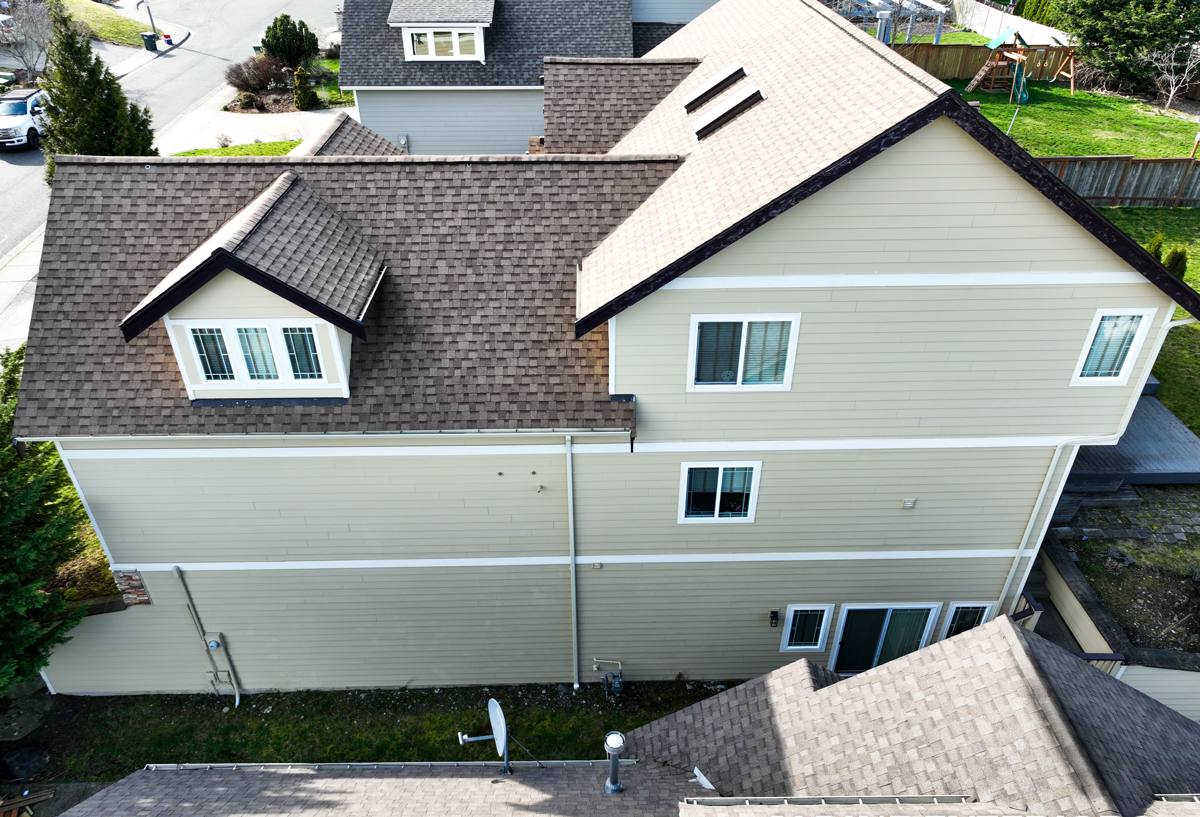
The Deck Problems We See Most Often in This Neighborhood
Fastener and Hardware Corrosion
Salt-laden air accelerates corrosion on anything metal — nails, screws, joist hangers, bolts. On older decks built with standard galvanized hardware, we routinely find rust staining on the decking, weakened joist hangers, and screws that shear off the moment you try to back them out. This is one of the most common reasons a deck that "looks fine" from a distance turns out to have real structural weakness underneath.
Moss, Algae, and Trapped Moisture
Anacortes' long moss season isn't just cosmetic. Moss and algae hold moisture against the wood surface far longer than bare boards would dry on their own, especially on shaded, north-facing decks that are common on tree-lined lots in Old Town. That constant dampness softens wood fiber, accelerates rot, and makes boards genuinely slick and dangerous underfoot — a real fall hazard on stairs and ramps.
Ledger Board and Rim Joist Rot
The ledger board — where the deck attaches to the house — is the single most important structural connection on most decks, and it's also the one most exposed to water intrusion if flashing was skipped or installed incorrectly. Driving rain pushes water into any gap at this joint. When we find soft wood, dark staining, or gaps at the ledger, that's a structural issue, not a cosmetic one.
Post Base and Stair Stringer Rot
Wherever wood meets grade or sits close to damp soil — post bases, stair stringers, the underside of low decks — sustained moisture works from the bottom up. These areas often look solid from the top while the actual load-bearing wood underneath has already gone soft.
Structural Repair vs. Cosmetic Repair — Know Which One You Need
Not every deck problem is the same kind of problem, and treating a structural issue like a cosmetic one is how homeowners end up with a deck that looks great and isn't actually safe. Loose or cupped decking boards, faded finish, and surface moss are cosmetic — annoying, but not dangerous on their own. Soft or spongy spots, movement at the ledger connection, wobbly railings, rusted-through hardware, and rot at posts or stringers are structural, and they affect whether the deck can safely hold weight.
Part of our job on every inspection is telling you honestly which category you're dealing with. Sometimes a deck that looks rough only needs board replacement and hardware upgrades. Sometimes a deck that looks fine has a ledger problem that needs to be opened up and fixed properly before anything else matters.
What a Correct Deck Repair Actually Involves
- Full inspection from the ground up — not just the walking surface, but the ledger connection, joists, posts, footings, and stair framing.
- Probing suspect wood with an awl or screwdriver to find soft spots that aren't visible from the surface, especially at the ledger, post bases, and stair stringers.
- Checking flashing at the ledger board — this is where most water-related deck failures in this area actually start, and it's frequently missing or improperly lapped on older decks.
- Replacing corroded fasteners and connectors with hardware rated for coastal, high-moisture environments rather than reusing standard galvanized parts.
- Removing and replacing rotted framing or decking rather than sistering over compromised wood or covering it up.
- Restoring proper drainage and airflow under the deck, including board spacing and, where needed, clearing debris that traps moisture against framing.
- Addressing moss and algae at the source — shade, drainage, and surface treatment — rather than just pressure-washing it off for a season.
Skipping any of these steps is how a deck ends up needing the same repair again in a few years. We'd rather do fewer, correct repairs than come back and redo work that should have held.
Choosing Repair Materials for This Climate
What you repair with matters as much as how you repair it. Here's how the common options actually perform in a salt-air, high-moisture, moss-prone setting like Old Town Anacortes:
| Material | Moisture & Rot Resistance | Moss/Algae Behavior | Maintenance | Best Use |
|---|---|---|---|---|
| Cedar | Naturally decay-resistant heartwood, but sapwood and cut ends still absorb water | Can host moss in shaded, damp spots without regular cleaning | Needs periodic sealing/staining to hold up | Matching an existing cedar deck; homeowners who want the look and will maintain it |
| Pressure-Treated Lumber | Good resistance when properly sealed and detailed; end cuts need field treatment | Prone to surface algae in shade if not kept clean and dry | Moderate — periodic cleaning and sealing | Structural framing repairs (joists, posts, stringers) regardless of decking material |
| Composite Decking | Doesn't rot, but board and substructure detailing still needs to manage water | Won't feed rot, but can still get slick with algae film if shaded and damp | Low — occasional cleaning, no sealing/staining | Walking surfaces on decks that see heavy shade or repeated moss issues |
A common approach we take on repairs in this neighborhood: keep pressure-treated lumber for the structural framing (it's proven, affordable, and does its job when detailed correctly), and consider composite for the decking surface itself if moss and slickness have been a recurring problem. There's no single right answer — it depends on your budget, the age and material of the existing deck, and how much upkeep you want going forward.
What Actually Drives the Cost of a Deck Repair
| Factor | Why It Matters |
|---|---|
| Extent of structural vs. cosmetic damage | Ledger, joist, or post repairs involve more labor and framing work than swapping surface boards |
| Accessibility | Decks with limited underside access or tight side-yard clearance take longer to work on safely |
| Material choice | Cedar, pressure-treated, and composite carry different material costs and labor time |
| Size of the affected area | Spot repairs cost far less than repairs spanning multiple sections or the full deck |
| Hardware and flashing needs | Coastal-grade fasteners and proper ledger flashing add cost but prevent repeat failures |
| Railing and stair condition | Code-related railing or stair repairs are often bundled in once a deck is opened up |
We'll always give you a range based on what we can see and probe during the inspection, and we'll flag anywhere the scope might change once we open up a suspect area — no surprise add-ons sprung on you after the fact.
Signs Your Deck Needs Attention Now
- Boards that feel spongy, bouncy, or soft underfoot
- Visible gaps, cracks, or dark staining where the deck meets the house
- Rust streaks running down from screws, bolts, or joist hangers
- Railings or posts that wobble or shift when pushed
- Persistent moss or algae that returns quickly after cleaning
- Stairs that feel unstable or have visibly worn or split stringers
- Standing water or slow drainage on or under the deck after rain
- Cupped, splitting, or delaminating boards, especially on shaded sections
Any one of these is worth a look. Several at once usually means the deck has been dealing with moisture problems for a while, even if it still looks usable day to day.
Permits and Working Within Anacortes Requirements
Deck repair work in Anacortes can fall under different rules depending on scope — replacing a few boards is typically treated differently than rebuilding structural framing, altering the footprint, or doing significant railing and stair work. Because requirements can change and depend on the specifics of your deck, we handle the determination of what does and doesn't need a permit as part of our process rather than guessing, and we take care of that paperwork when it applies so you're not left navigating it on your own.
Why It Matters to Hire a Crew That Already Works in Old Town Anacortes
A contractor who works this neighborhood regularly already knows what to expect before the inspection ladder comes out: which areas tend to hold shade and moss, how salt air has typically treated the hardware on decks of a certain age, and where ledger flashing was commonly skipped or done poorly on homes built in earlier decades. That familiarity means fewer surprises, a more accurate first estimate, and repairs built around how this specific location actually behaves — not a generic approach carried over from a different climate.
It also means accountability. A crew that's planning to keep working in Old Town Anacortes for years has every reason to do the repair right the first time, because the same neighbors, referrals, and return visits are how that work continues.
If your deck is showing any of the signs above, or you just want an honest opinion on its condition, we're happy to take a look. Reach out for a free, no-pressure estimate using the form below — we'll tell you straight what we find and what it would take to fix it right.